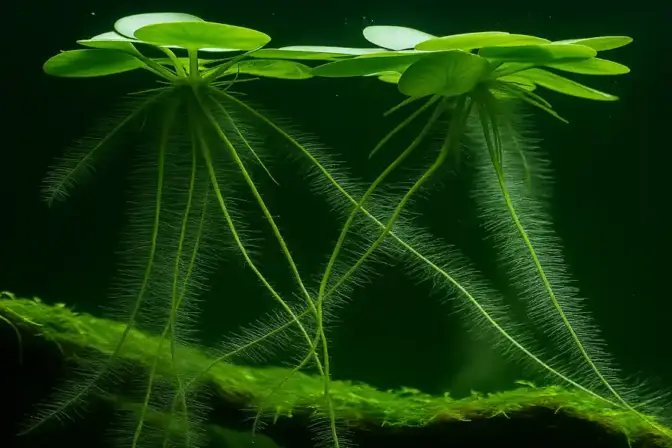
Floating Aquarium Plants: Best Species for Your Planted Tank
What you’ll learn in this lesson
- What floating aquarium plants are and how they differ from other aquatic plants
- The best floating plant species for beginners and aquascapers
- How floating plants improve water quality and fish behavior
- Lighting, nutrients, and flow requirements
- How to control overgrowth and prevent common problems
- Floating plants in low-tech and high-tech planted tanks
- Design tips for using floating plants in aquascaping
- FAQ for real-world aquarium setups
Introduction
Floating aquarium plants are one of the easiest and most effective ways to improve a planted tank. By growing directly on the water surface, they absorb nutrients rapidly, soften strong lighting, and create a more natural environment for fish and shrimp.
Many aquascapers initially focus on substrate plants like carpeting species or tall background stems. However, surface plants add a completely different ecological layer to the aquarium. Their dangling roots provide shelter for fry and shrimp, their leaves diffuse harsh lighting, and their rapid nutrient uptake helps stabilize water chemistry.
When used correctly, floating plants can dramatically improve aquarium health while adding depth and realism to the aquascape. However, they also require management: too many can block light, interfere with gas exchange, or spread faster than expected.
This guide explores the most popular floating aquarium plants, explains how to care for them properly, and shows how to integrate them into both beginner and advanced planted tanks.
What Are Floating Aquarium Plants?
Floating plants are aquatic species that grow at the surface of the water rather than being rooted in the substrate. Their leaves remain above the waterline while their roots extend downward into the water column.
This growth pattern gives them several advantages over submerged plants. Because their leaves are exposed to atmospheric carbon dioxide and strong surface light, floating plants often grow extremely quickly and absorb nutrients efficiently.
Most floating aquarium plants develop long, decorative roots that provide additional benefits. These roots act as natural hiding areas for shrimp, baby fish, and timid species while also trapping fine organic particles that would otherwise remain suspended in the water.
Floating Plants vs Free-Floating Stem Plants
Not every plant that floats behaves the same way. Some species are true surface floaters, while others are simply stem plants that can survive without being planted.
True floating plants stay at the surface permanently. They produce leaves adapted for direct air exposure and roots that hang downward into the water.
Examples include:
- Amazon Frogbit
- Red Root Floater
- Duckweed
- Salvinia species
Free-floating stem plants are different. These species normally grow rooted in substrate but can also survive floating in the water column.
- Hornwort
- Anacharis
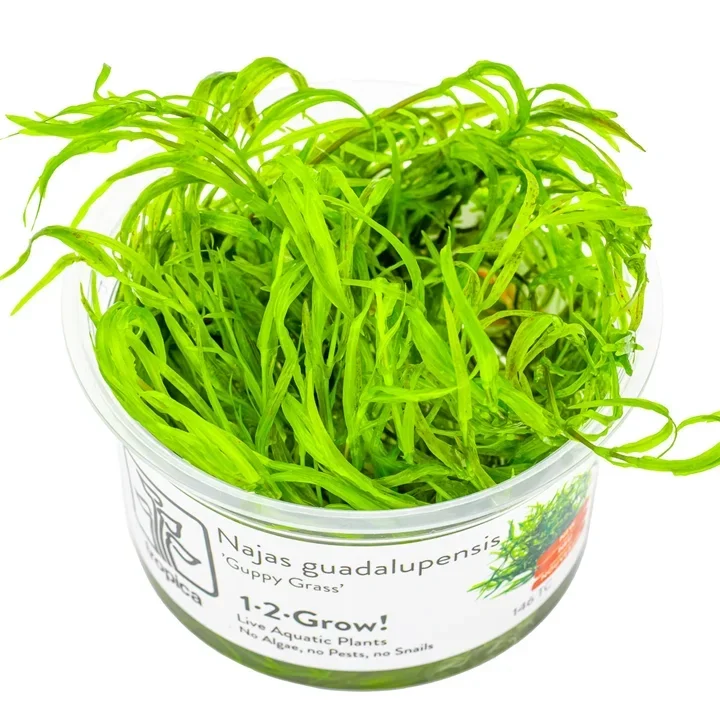
- Guppy Grass
These plants create movement below the surface rather than forming a surface canopy.
Why Use Floating Aquarium Plants?
- Nutrient absorption: Floating plants absorb nitrate and phosphate directly from the water column.
- Algae control: By consuming excess nutrients and reducing light intensity, they can help prevent algae outbreaks.
- Fish security: Surface cover reduces stress for species like bettas, rasboras, and gouramis.
- Shrimp habitat: Hanging roots provide excellent grazing surfaces for shrimp.
- Natural aesthetics: Surface vegetation creates a more realistic and balanced ecosystem.
18 Popular Floating Aquarium Plants
- Water Lettuce
- Duckweed
- Red Root Floater
- Amazon Frogbit
- Salvinia natans
- Salvinia auriculata
- Salvinia cucullata
- Riccia fluitans
- Hornwort
- Anacharis
- Brazilian Pennywort
- Phyllanthus fluitans
- Salvinia molesta
- Guppy Grass
- Azolla filiculoides
- Limnobium laevigatum
- Limnobium spongia
- Dwarf Water Lettuce


Best Floating Plants for Beginners
Not all floating aquarium plants behave the same way. Some species grow aggressively and can overwhelm a tank within weeks, while others are slower and easier to manage. For beginners, the best floating plants combine fast nutrient uptake with predictable growth and simple maintenance.
Amazon Frogbit is often considered the ideal starter species. It produces attractive round leaves and long root systems that provide shelter for shrimp and fry. Frogbit spreads steadily but is still easy to control by removing excess plants during water changes.
Salvinia natans is another excellent beginner option. Its small leaves form dense clusters on the water surface and its growth rate is moderate compared to aggressive floaters like duckweed. Because of its compact size, it works well in both nano aquariums and larger planted tanks.
Red Root Floater is slightly more demanding but extremely popular among aquascapers due to its striking coloration. Under strong lighting the leaves develop orange and red tones while the roots become deep crimson.
Beginners should generally avoid duckweed at first. While it is highly effective at nutrient absorption, it reproduces extremely quickly and can become difficult to remove once established.
Best Floating Plants for Shrimp and Fry
Floating aquarium plants are especially valuable in shrimp tanks and breeding setups. Their hanging root systems collect biofilm, fine organic particles, and microorganisms that shrimp constantly graze on. At the same time, dense surface cover gives baby fish and shrimplets a sense of security.
Amazon Frogbit is one of the best all-round options for shrimp tanks because its long roots create a dense feeding zone without being too difficult to control. Salvinia natans is also excellent, especially in smaller aquariums where compact growth is preferred. For breeding tanks, even fast spreaders like Duckweed can be useful because they provide maximum nutrient uptake and soft shade.
If your goal is shrimp comfort rather than a clean display look, prioritize floating plants with fine or medium-length roots and leave enough surface coverage to create calm, shaded areas.
Lighting Requirements for Floating Plants
Floating plants sit directly under the aquarium light, so they typically receive more intense illumination than submerged species. Because of this, they often grow extremely fast even in moderate lighting.
- Low light: slower growth but stable
- Medium light: ideal for most aquariums
- High light: rapid spread and dense root systems
Strong lighting can intensify coloration in species like Red Root Floater, which develops deep red roots and leaves under bright conditions.
Nutrients and Fertilization
Floating plants absorb nutrients directly from the water column rather than through substrate roots. This makes them extremely efficient at removing nitrate, phosphate, and dissolved organic compounds from the aquarium.
In heavily planted aquariums, floating plants can even compete with rooted plants for nutrients. Because they sit closest to the light source and access atmospheric carbon dioxide, they often grow faster than submerged species.
If floating plants begin to pale or show yellowing leaves, the most common cause is nutrient deficiency. Iron and nitrogen are particularly important for healthy growth.
Many aquarists use liquid fertilizers to maintain balanced nutrient levels in planted aquariums. Because floating plants react quickly to nutrient changes, they can also act as visual indicators of nutrient availability.
If you are dosing fertilizers regularly, you can calculate precise nutrient levels using the AquariumLesson dosing tool.
Use the Aquarium Fertilizer Dosing Calculator to estimate nutrient levels for your planted tank.
Water Flow and Surface Movement
Most floating plants prefer calm water surfaces. Strong filter output can push plants underwater, damage leaves, or break delicate root systems.
- Use spray bars or lily pipes to reduce turbulence
- Keep part of the surface calm
- Consider floating rings to control plant spread
How to Add Floating Plants to Your Aquarium
Adding floating aquarium plants is simple, but the way you introduce them affects how well they adapt. Instead of covering the entire surface at once, it is usually better to begin with a small amount and let the plants multiply gradually.
- Start with a small portion
- Allow plants to spread gradually
- Monitor shading on lower plants
- Thin excess growth regularly
In the first few weeks, observe how the floating plants interact with your light, flow, and submerged plant mass. Some aquariums benefit immediately, while others need small adjustments in filter direction or maintenance routine.
Managing Overgrowth
Floating plants can reproduce extremely quickly, sometimes doubling their population within days. If left unmanaged, they can completely cover the aquarium surface.
- Remove excess plants weekly
- Maintain open surface areas
- Use feeding rings to create light gaps
Floating Plants and Algae Control
Floating plants are one of the most natural ways to prevent algae outbreaks in aquariums. Because they grow quickly and absorb nutrients directly from the water column, they compete with algae for the same resources.
In newly established aquariums, floating plants can significantly reduce the risk of algae blooms by stabilizing nutrient levels while the biological filtration matures.
The shading effect of floating plants also reduces light intensity reaching the lower parts of the aquarium. Since excessive light is one of the main drivers of algae growth, this natural shading can help maintain a balanced ecosystem.
However, floating plants should not completely cover the water surface. Maintaining open areas ensures proper gas exchange and prevents oxygen depletion during nighttime respiration.
Gas Exchange and Oxygen Considerations
Floating plants are beneficial, but too much surface coverage can become a problem. When the entire water surface is sealed off by dense floating growth, gas exchange becomes less efficient. Oxygen enters the water more slowly, and carbon dioxide can accumulate differently than expected.
In most healthy planted tanks this is only an issue when floating plants are left completely unmanaged. A good rule is to always keep part of the surface open. This improves oxygen exchange, helps maintain stable water conditions, and ensures that fish still have access to open swimming zones at the surface.
This is especially important in warm aquariums, heavily stocked tanks, and aquariums with strong nighttime respiration from plants and livestock. Bettas and labyrinth fish appreciate floating cover, but even they benefit from having at least some open surface area.
Common Problems With Floating Plants
Plants melting or turning yellow
This often occurs due to insufficient nutrients or excessive condensation on aquarium lids.
Roots staying short
Short roots can indicate weak growth or strong surface flow.
Plants covering the entire surface
Regular pruning and removal are essential to maintain healthy light distribution.
Condensation damage under aquarium lids
Floating plants often struggle in aquariums with tightly sealed lids. Condensation constantly dripping onto the leaves can damage sensitive species such as Red Root Floater or Salvinia. If possible, leave small ventilation gaps or use open-top aquariums.
Surface agitation destroying leaves
Strong filter outlets or wavemakers can force floating plants underwater. This damages their leaves and prevents normal growth. Adjusting filter direction or using spray bars can help create calmer surface areas.
Nutrient imbalance
If floating plants grow poorly while algae appear, the aquarium may have insufficient nutrients for plants but enough light for algae growth. Balanced fertilization and regular water changes typically solve this issue.
Floating Plants in Aquascaping Design
Surface plants can dramatically influence how an aquascape looks and feels. In nature-style aquascapes they soften harsh light and create a layered visual structure.
Many aquascapers intentionally leave open gaps between floating plants to create beams of light that highlight specific areas of the hardscape.
In modern aquascaping, floating plants are often used strategically rather than covering the entire surface. Many aquascapers create floating clusters near the corners of the tank while leaving open water above the main hardscape.
This technique creates dramatic light beams that highlight stones, driftwood, or carpeting plants. The contrast between bright open areas and shaded zones gives aquascapes a more natural appearance.
Surface plants also add a vertical layer to aquascapes. Their roots extend downward, visually connecting the surface with the midground and background plants.
Floating Plants in Low-Tech vs High-Tech Tanks
Floating aquarium plants can work in both low-tech and high-tech setups, but their role is different depending on the aquarium style.
- Low-tech aquariums: floating plants help absorb excess nutrients, soften lighting, and stabilize the tank with very little maintenance.
- High-tech aquascapes: they must be controlled more carefully to avoid shading demanding carpeting plants or red stems below.
In low-tech tanks, floating plants are often a major advantage because they improve stability and reduce algae pressure. In high-tech layouts, they are more of a precision tool: useful in selected areas, but rarely allowed to dominate the full surface.
Floating Plant Species Comparison
| Plant | Growth Speed | Difficulty | Special Features |
|---|---|---|---|
| Amazon Frogbit | Fast | Easy | Long decorative roots |
| Red Root Floater | Medium | Medium | Red coloration under strong light |
| Salvinia natans | Medium | Easy | Compact floating clusters |
| Duckweed | Very fast | Very easy | Extreme nutrient absorption |
Key Takeaways
- Floating plants improve water quality and provide natural shade.
- They grow rapidly and absorb nutrients efficiently.
- Surface flow and lighting strongly affect their growth.
- Regular trimming is necessary to prevent overgrowth.
- They benefit shrimp, fry, and surface-dwelling fish species.
Conclusion
Floating aquarium plants are one of the simplest ways to improve both the function and appearance of a planted aquarium. They stabilize nutrients, soften lighting, and create natural habitats for fish and shrimp.
When managed properly, surface plants add depth, realism, and ecological balance to almost any aquarium setup.
FAQ – Floating Aquarium Plants
Do floating plants need CO₂?
No. Because their leaves are exposed to air, they usually receive enough carbon dioxide naturally.
Are floating plants good for shrimp?
Yes. The roots collect microorganisms that shrimp feed on.
Can floating plants cause oxygen problems?
Only if the entire surface is covered. Always leave open water areas for gas exchange.
Which floating plants grow the fastest?
Duckweed, Salvinia, and Amazon Frogbit are among the fastest-growing species.
Which floating plant is best for beginners?
Amazon Frogbit and Salvinia natans are among the best beginner choices because they grow reliably, look attractive, and are easier to control than duckweed.
Do floating plants reduce algae?
Yes. Floating plants absorb nutrients directly from the water column and reduce light intensity below, which helps limit algae growth in many aquariums.
Why are my floating plants turning yellow?
Yellowing usually points to nutrient deficiency, poor adaptation, or damage from condensation and excessive surface movement.
Can floating plants block light for other plants?
Yes. If surface coverage becomes too dense, submerged plants below may lose too much light. Regular thinning keeps the aquarium balanced.
Explore the Plant Database: Floating Aquarium Plants
The Plant Database currently contains 73 aquarium-suitable matches for this structured classification. The editorial recommendations above are a short list; open a profile to compare complete care data.
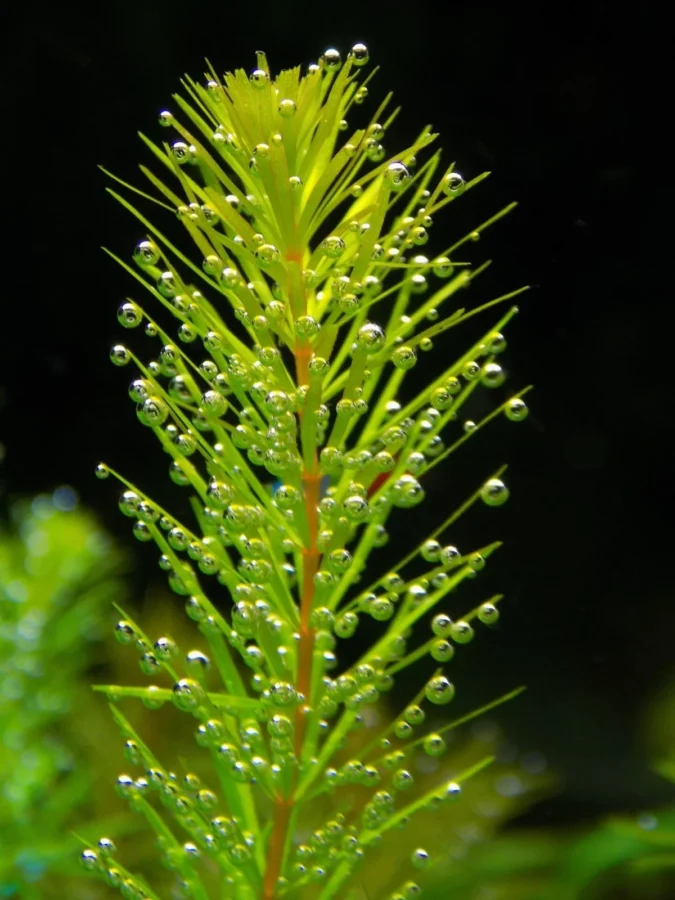 Beginner Friendly
Ceratophyllum demersum


 10–30°C
 Medium Light
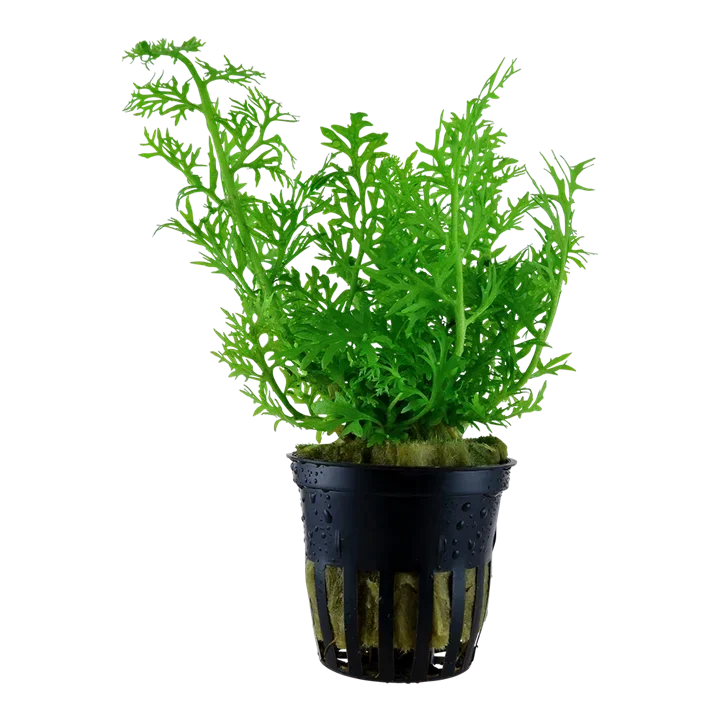 Intermediate
Ceratopteris thalictroides
 22–28°CMedium Light
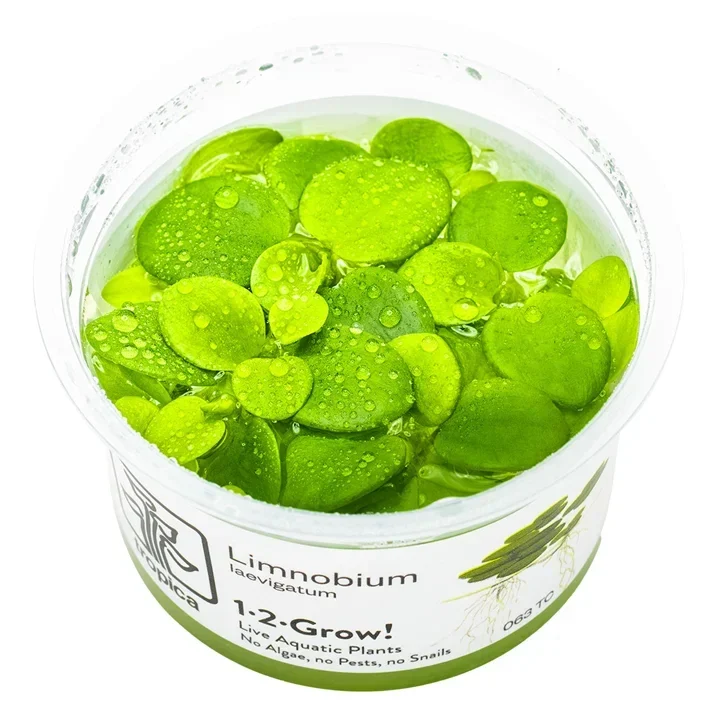 Beginner
Limnobium laevigatum
20–27°C Low Light
 Beginner Friendly
Najas guadalupensis
20–30°CLow Light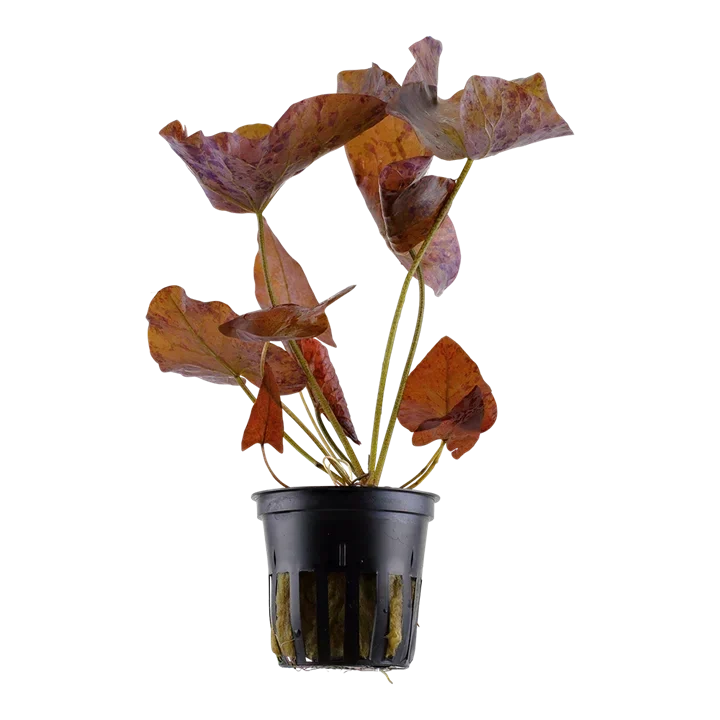 Intermediate
Nymphaea lotus 'red'
15–30°CLow Light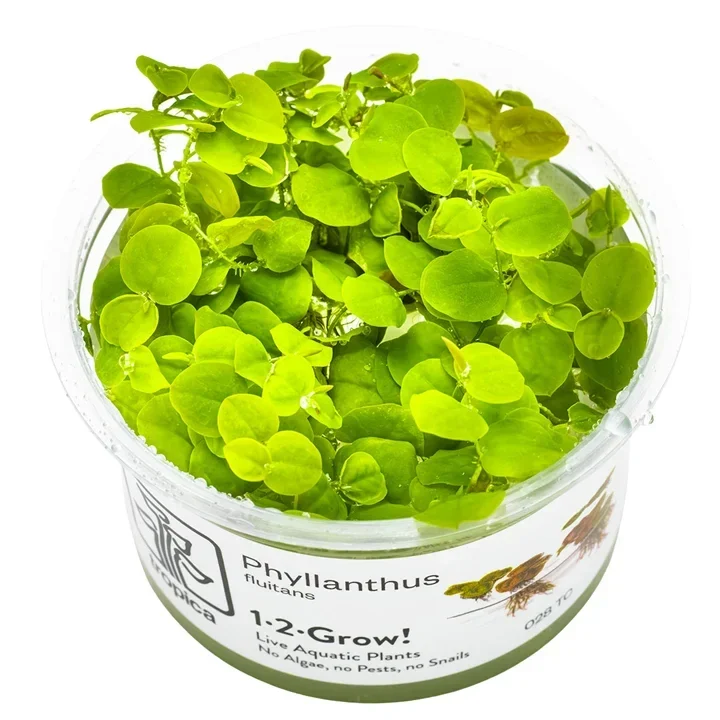 Intermediate
Phyllanthus fluitans
24–28°CMedium Light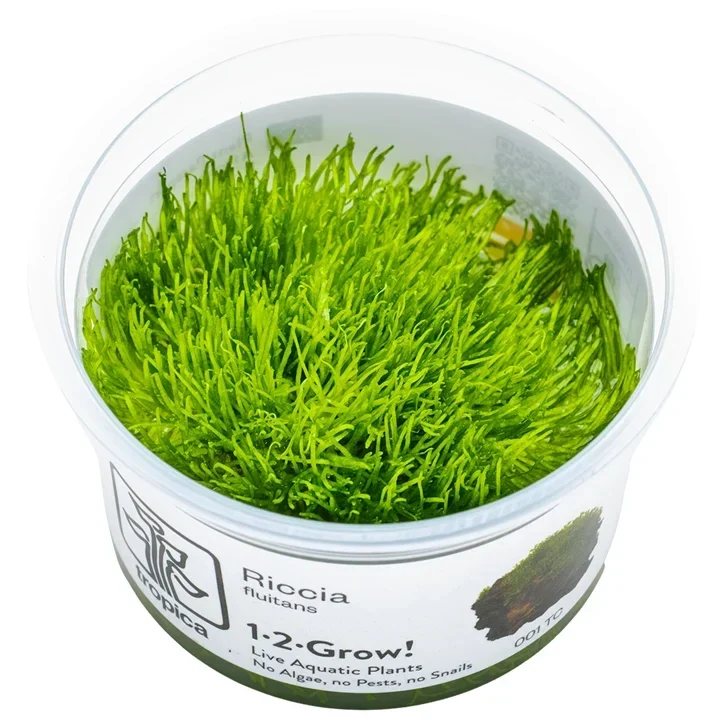 Intermediate
Riccia fluitans
20–27°CMedium Light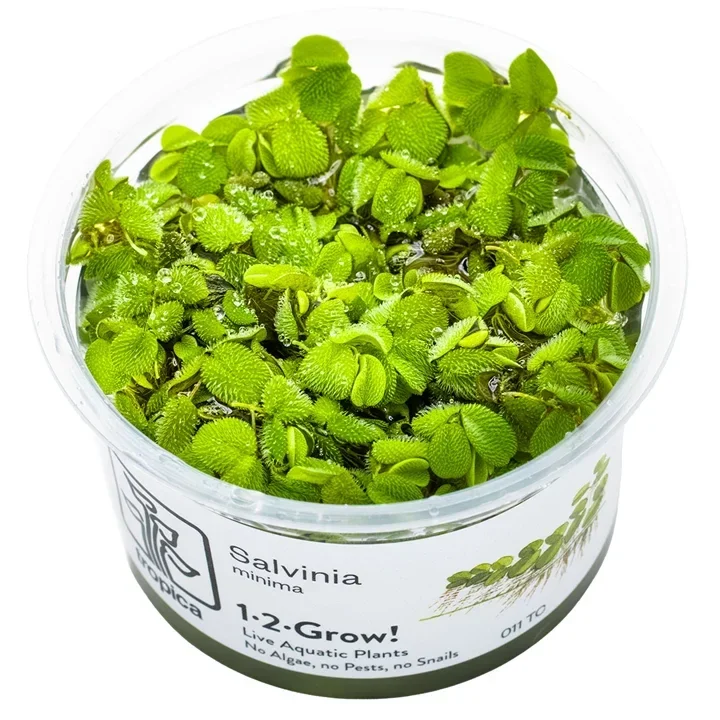 Beginner
Salvinia minima
24–28°CMedium LightNew to AquariumLesson? Start with our complete Aquarium Lessons Hub or return to the homepage at AquariumLesson.com.