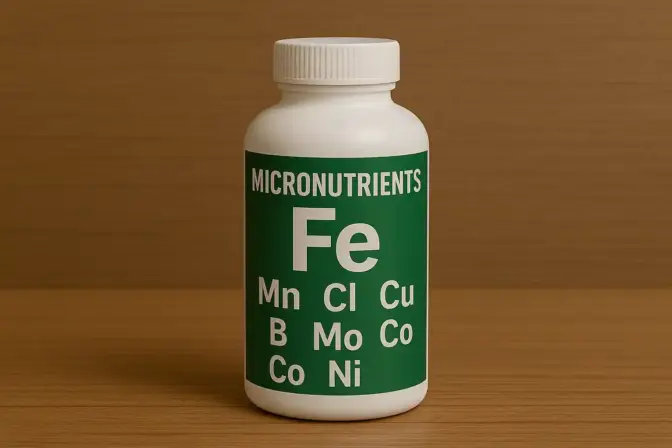
Aquarium Micronutrients Guide: Boost Plant Health the Right Way
Introduction
Aquarium micronutrients, often called trace elements, are nutrients that aquatic plants need in very small amounts. Even though the required quantities are tiny, they are essential for healthy growth. They support chlorophyll production, enzyme activity, new leaf development, pigment formation, metabolism, and the plant’s ability to use light, CO₂ and macronutrients properly.
In planted aquariums, the most familiar micronutrient is iron. But iron is only one part of the full trace element system. Manganese, zinc, boron, copper, molybdenum, nickel and other ultra-trace nutrients also play important roles. When micronutrients are missing or unavailable, plants may show pale new growth, distorted leaves, weak shoot tips, poor color, stalled growth or general decline.
The challenge is that trace element problems are difficult to diagnose individually. A lack of manganese, zinc or boron can look similar to iron deficiency, calcium issues, CO₂ instability, light imbalance or general nutrient shortage. For most aquarists, the best solution is not to dose every trace element separately. It is to use a stable, complete micronutrient fertilizer routine and keep the whole planted tank balanced.
This guide explains what aquarium micronutrients do, which trace elements matter most in planted aquariums, how deficiency symptoms appear, why trace elements can become unavailable, how to dose them safely, and how to avoid overcomplicating your fertilizer routine. For the broader nutrient system, compare this article with Macronutrients for Aquarium Plants. If your main symptom is pale new growth, also read Iron Deficiency in Aquarium Plants.
Quick answer: Aquarium micronutrients include trace elements such as iron, manganese, zinc, boron, copper, molybdenum and nickel. Most planted tanks should supply them through a complete micronutrient fertilizer rather than dosing each element separately. Deficiency often appears as pale new growth, distorted leaves, weak shoot tips or stalled growth.
What you’ll learn in this lesson
- What aquarium micronutrients and trace elements are
- Which trace elements aquarium plants need
- How micronutrients differ from macronutrients
- Why iron is important but not the whole micronutrient system
- How manganese, boron, zinc, copper and molybdenum support plant growth
- How trace element deficiencies usually appear
- Why diagnosing one trace element is difficult
- How pH, hardness and chelation affect micronutrient availability
- How to dose trace elements safely without overcomplicating the tank
- How to avoid common micronutrient mistakes in planted aquariums
What Are Aquarium Micronutrients?
Aquarium micronutrients are nutrients that aquatic plants require in very small amounts. They are often called trace elements because the required quantity is tiny compared with macronutrients such as nitrogen, phosphorus and potassium. But small quantity does not mean low importance.
A planted aquarium can have good nitrate, phosphate and potassium availability and still struggle if micronutrients are missing or chemically unavailable. Trace elements help plants run the internal processes that turn light, CO₂ and macronutrients into real growth.
Important trace elements for aquarium plants include:
- Iron for chlorophyll support, new growth and plant color
- Manganese for enzyme systems and photosynthesis support
- Zinc for metabolism, hormone-related functions and growth regulation
- Boron for new tissue development and cell-wall processes
- Copper for enzyme systems in very small amounts
- Molybdenum for nitrogen metabolism and enzyme function
- Nickel and other ultra-trace elements in very tiny amounts depending on plant needs and water chemistry
Most aquarists do not manage these elements individually. They use a complete micro or trace fertilizer designed to supply them in safe proportions.
Micronutrients vs Macronutrients
The easiest way to understand micronutrients is to compare them with macronutrients. Macronutrients are needed in larger amounts. Micronutrients are needed in smaller amounts, but they often control whether plants can use larger nutrients efficiently.
Macronutrients are the main building blocks and fuel supply. Micronutrients are more like internal control tools. They support enzymes, chlorophyll, metabolism, photosynthesis, pigment formation and new tissue development.
| Nutrient Group | Examples | Main Role | Typical Aquarium Management |
|---|---|---|---|
| Macronutrients | Nitrogen, phosphorus, potassium | Large-scale growth, tissue building, plant mass | Macro fertilizer, fish waste, substrate, water changes |
| Secondary nutrients | Calcium, magnesium, sulfur | Mineral balance, chlorophyll, structure and metabolism | GH, remineralizer, fertilizer, source water |
| Micronutrients / trace elements | Iron, manganese, zinc, boron, copper, molybdenum | Enzymes, pigments, new growth and metabolism | Complete micro or trace fertilizer |
If macronutrients are missing, plants may lack the raw materials for growth. If micronutrients are missing, plants may be unable to process growth properly even when raw materials are present.
For the macro side of the system, read Macronutrients for Aquarium Plants. For individual macro deficiency patterns, compare Nitrogen Deficiency in Aquarium Plants, Phosphate Deficiency in Aquarium Plants and Potassium Deficiency in Aquarium Plants.
Why Trace Elements Matter in Planted Aquariums
Trace elements matter because aquarium plants are constantly building new tissue. Every new leaf, shoot tip, root, stem and runner depends on internal processes that require micronutrients. In a low-demand aquarium, trace element use may be slow. In a high-light, CO₂-injected aquascape, trace element demand can rise quickly.
Micronutrients support the parts of plant growth that are often noticed visually: fresh green leaves, healthy shoot tips, compact growth, stable color and recovery after trimming. When the micro side of the nutrient system is weak, plants may look washed out, tired or stalled even when nitrate and phosphate are available.
Trace elements become especially important in:
- High-light planted aquariums
- CO₂-injected aquascapes
- Dutch-style layouts with many stem plants
- Red plant layouts
- Dense carpeted aquariums
- Low-tech tanks with very soft water
- RO water setups
- Shrimp tanks with careful remineralization
- Aquariums with fast trimming and regrowth cycles
- Tanks using lean fertilizer routines
The more strongly you push plant growth with light and CO₂, the more important complete nutrient support becomes.
Main Trace Elements Aquarium Plants Need
Aquarium plants use many micronutrients, but a few are especially relevant for planted tank fertilization. You do not need to memorize every biochemical pathway. What matters is understanding the practical role each trace element plays and why complete micro dosing is safer than guessing one element at a time.
| Trace Element | Main Plant Role | Practical Aquarium Note |
|---|---|---|
| Iron | Chlorophyll support, new growth, plant color | Most familiar trace element; deficiency often shows on new leaves |
| Manganese | Photosynthesis support and enzyme function | Can be confused with iron and other micro issues |
| Zinc | Growth regulation, metabolism and enzyme systems | Needed in tiny amounts; excess can become harmful |
| Boron | New tissue development and cell-wall processes | Deficiency may affect new growth and shoot tips |
| Copper | Enzyme function and plant metabolism | Essential in tiny amounts but toxic if overdosed, especially for invertebrates |
| Molybdenum | Nitrogen metabolism and enzyme function | Needed in very small amounts; usually supplied by complete trace fertilizers |
| Nickel | Ultra-trace enzyme-related roles | Usually not managed separately in aquariums |
| Chloride | Water balance and photosynthesis support | Deficiency is extremely rare and should not be confused with chlorine in tap water |
The practical takeaway is simple: use a complete trace fertilizer from a reputable planted aquarium brand instead of trying to build a custom bottle of every individual element unless you have advanced dosing experience.
Iron: The Most Familiar Trace Element
Iron is the trace element aquarists talk about most often. It supports chlorophyll formation, healthy new growth and color development. A classic iron deficiency pattern is pale new leaves, yellow shoot tips or new growth that looks washed out while older leaves remain greener.
Iron is important, but it should not be treated as the only micronutrient. Many aquarists dose iron for every yellow leaf even when the actual problem is nitrogen, magnesium, potassium, CO₂ or lighting. Iron deficiency is most likely when the newest growth is pale, not when older leaves are yellow or full of holes.
- Iron supports chlorophyll and new growth.
- Iron deficiency often appears on new leaves first.
- Iron availability depends on water chemistry and fertilizer form.
- Iron does not replace complete micronutrient dosing.
- Iron alone will not automatically make red plants red.
- Too much iron does not fix poor light, CO₂ or macronutrient balance.
For a full diagnosis guide, read Iron Deficiency in Aquarium Plants.
Manganese: Photosynthesis and Enzyme Support
Manganese is a trace element involved in photosynthesis and enzyme activity. It helps plants process energy and maintain healthy growth. Because its symptoms can overlap with iron and other micronutrient issues, manganese deficiency is rarely diagnosed confidently by beginners from appearance alone.
Possible manganese-related problems may include pale or weak new growth, poor shoot development, spotting, chlorosis or general growth problems. But these symptoms can also be caused by iron, magnesium, nitrate, phosphate, CO₂ or light imbalance.
- Manganese supports photosynthesis-related processes.
- It is needed only in small amounts.
- Symptoms overlap with other micronutrient deficiencies.
- It is usually supplied through complete micro fertilizer.
- Separate manganese dosing is rarely needed in normal aquariums.
If manganese is missing, the better beginner solution is usually a complete trace fertilizer, not isolated manganese correction.
Zinc: Growth Regulation and Metabolism
Zinc is required in very small quantities for plant metabolism, enzyme systems and growth regulation. It helps plants maintain normal internal function, but both deficiency and excess can be problematic.
In aquariums, zinc deficiency is difficult to isolate visually. Symptoms may resemble general micronutrient shortage: poor growth, small leaves, pale or distorted new growth and weak development. Because these signs are not specific, zinc should usually be managed through complete trace fertilization.
- Zinc supports enzyme systems and plant metabolism.
- Plants need only tiny amounts.
- Deficiency symptoms are not easy to separate visually.
- Overdosing trace metals can be harmful.
- Complete fertilizer is usually safer than individual zinc dosing.
Zinc is a good example of why trace elements should be treated as a balanced group. They matter, but they should not be randomly overdosed.
Boron: New Growth and Tissue Development
Boron supports new tissue development, cell-wall processes and growing tips. When boron availability is poor, plants may struggle with new leaves, shoot tips or deformed growth. But like other trace element issues, boron symptoms can overlap with calcium deficiency, iron deficiency, CO₂ instability and general growth stress.
Boron is especially important because new tissue formation is one of the first things aquarists notice when plants are growing poorly. If new leaves are twisted, small or deformed, a trace element issue is possible, but it is not the only explanation.
- Boron supports new growth and tissue formation.
- Deficiency may affect shoot tips and young leaves.
- Symptoms can resemble calcium or general micronutrient issues.
- It is needed in very small quantities.
- Complete trace fertilizer usually supplies enough for normal tanks.
Do not dose boron separately unless you understand the full fertilizer chemistry. A balanced micro routine is the safer path for almost every planted aquarium.
Copper: Essential but Easy to Overdo
Copper is essential for plants in tiny amounts, but it is also one of the trace elements aquarists worry about most because excess copper can harm shrimp, snails and other invertebrates. This creates confusion: plants need trace copper, but aquariums should never be dosed with copper casually.
Reputable planted aquarium fertilizers include copper in very small, controlled amounts when needed. That is very different from adding copper medication, copper plumbing contamination or random copper chemicals to the tank.
- Copper is a plant micronutrient in tiny quantities.
- Too much copper can be dangerous, especially for invertebrates.
- Shrimp tanks should avoid uncontrolled copper sources.
- Use only aquarium-safe fertilizer products.
- Do not confuse trace copper in fertilizer with copper medication.
- Never dose copper separately unless you know exactly what you are doing.
For normal planted tanks, copper should come only from a trusted complete micronutrient fertilizer at safe trace levels.
Molybdenum: Nitrogen Metabolism Support
Molybdenum is needed in tiny amounts and supports enzyme systems involved in nitrogen metabolism. This means it helps plants process and use nitrogen properly. It is rarely discussed by beginners because the required amount is extremely small and deficiency is difficult to diagnose visually.
If molybdenum were missing, symptoms could overlap with nitrogen-related growth problems. But in most planted aquariums, molybdenum is handled automatically by complete trace fertilizers.
- Molybdenum supports nitrogen-related enzyme function.
- Plants need very tiny amounts.
- Deficiency is difficult to diagnose visually in aquariums.
- It is usually included in complete trace fertilizers.
- Separate molybdenum dosing is rarely appropriate for normal hobby tanks.
Molybdenum is another reason complete trace formulas exist: aquarists should not need to manage every micro-element manually.
Trace Element Deficiency Symptoms in Aquarium Plants
Trace element deficiencies often affect new growth because many trace elements are not easily moved from old leaves into new tissue. This is why pale new leaves, weak shoot tips, deformed growth and poor recovery are common warning signs.
However, symptoms are rarely specific enough to identify one trace element with certainty. A pale new leaf may suggest iron, but it could also involve manganese, magnesium, CO₂, light, substrate transition or general nutrient imbalance.
| Symptom | Possible Trace Element Link | Other Causes to Check |
|---|---|---|
| Pale new leaves | Iron or general micronutrient shortage | Low light, high pH, CO₂ instability, magnesium issue |
| Yellow new growth with green veins | Iron and related micro availability | Magnesium if older leaves are affected |
| Small or weak shoot tips | Trace element imbalance | Phosphate, CO₂, light, nitrate limitation |
| Twisted or deformed new leaves | Boron, calcium or general micro issue | CO₂ instability, transition stress, severe nutrient imbalance |
| Poor red plant color | Iron and micro support may be involved | Light intensity, nitrate level, CO₂ and genetics |
| Stalled growth despite macros | Micro routine may be incomplete | CO₂, PAR, substrate, flow and plant adaptation |
| Death of growth tips | Severe micro or mineral issue | Calcium, CO₂, toxicity, melting or environmental stress |
The safest diagnosis is pattern-based. Look across several plants, compare new and old leaves, review your fertilizer, and avoid reacting to one isolated leaf.
Trace Element Deficiency vs Macro Deficiency
Many aquarists confuse trace element problems with macro deficiencies. This usually happens because the symptom is described too generally. “Yellow leaves” is not enough. You need to know which leaves are yellow, whether holes are present, whether growth is stunted, and whether the tank has enough NPK.
Trace element deficiencies often show most clearly in new growth. Macro deficiencies often show broader growth limitation or older-leaf symptoms depending on the nutrient. But there are exceptions, and multiple deficiencies can happen together.
| Pattern | More Likely Category | What to Check |
|---|---|---|
| Pale new leaves with darker veins | Trace element / iron issue | Micro fertilizer, pH, iron availability |
| Older leaves yellow first | Nitrogen or magnesium issue | Nitrate, GH, magnesium, old-vs-new growth |
| Pinholes and necrosis on older leaves | Potassium issue | Potassium dosing, livestock damage, old leaf damage |
| Very slow growth and small shoot tips | Phosphate, CO₂ or micro issue | PO₄, CO₂ stability, micro routine |
| Weak growth across the whole tank | System imbalance | Light, CO₂, macros, micros, substrate and flow |
If NPK is missing, trace dosing alone will not fix the tank. If trace elements are missing, NPK alone will not complete the system. Healthy planted tanks need both.
Trace element problems are not always caused by complete absence. Sometimes the element is present but not available long enough for plants to use. Iron is the best-known example, but availability matters for other trace elements too.
Trace elements can become unavailable because of pH, hardness, chelation, precipitation, interactions with other compounds, old fertilizer, poor storage, chemical filtration or irregular dosing. This is why two aquariums can use the same fertilizer and get different results.
| Cause | How It Affects Trace Elements | Better Approach |
|---|---|---|
| High pH or hard water | Some trace forms may become less available | Use a fertilizer suited to your water conditions |
| Old or poorly stored fertilizer | Micronutrients may become less reliable | Use fresh fertilizer and store it correctly |
| Very rare dosing | Trace availability may drop between doses | Dose smaller amounts more consistently if needed |
| Strong light and CO₂ | Plants consume traces faster | Match micro dosing to plant demand |
| Chemical filtration | Some media may remove or bind nutrients | Avoid unnecessary nutrient-adsorbing media in planted tanks |
| Unstable macro dosing | Plant growth stalls before traces can help | Balance NPK and micros together |
If you dose trace elements and plants still show symptoms, do not only add more. Review availability, dosing rhythm, water chemistry and the rest of the system.
Chelation: Why Iron Form Matters
Chelation means that a trace element is bound in a form that helps it stay dissolved and plant-available for longer. This is especially important for iron, because unchelated or poorly matched iron can become unavailable quickly, especially in harder or higher-pH water.
You do not need to become a fertilizer chemist, but it helps to understand why the same iron dose can behave differently in different aquariums.
| Iron Chelate | Typical Stability Range | Practical Use | Beginner Note |
|---|---|---|---|
| EDTA | Best in lower to neutral pH | Soft or slightly acidic planted tanks | Common, but less reliable in harder water |
| DTPA | Useful through moderately higher pH | Most general planted aquariums | Often a strong all-round option |
| EDDHA | Very stable in high pH | Hard-water or high-pH setups | Can tint water reddish and is not always necessary |
If your aquarium has hard or high-pH water and plants show pale new growth despite regular fertilization, the issue may not be the amount of iron. It may be the form and availability of the iron.
Trace Elements in Low-Tech Aquariums
Low-tech aquariums still need trace elements, but demand is usually lower than in high-tech aquascapes. Slow plant growth means trace uptake is slower. This makes consistency more important than aggressive dosing.
In a low-tech tank, trace deficiencies often appear when there is no liquid fertilizer routine, very soft water, many plants, regular water changes with low-mineral water, or slow epiphytes showing weak new growth. The solution is usually a modest complete fertilizer routine, not separate dosing of every trace element.
- Use low to moderate lighting to keep demand realistic.
- Choose a complete fertilizer if plants show pale new growth.
- Dose consistently rather than aggressively.
- Watch new leaves, not old damaged leaves.
- Do not add isolated trace elements randomly.
- Check magnesium and GH if older leaves show chlorosis.
- Keep water changes predictable.
If the whole tank is low-energy, small consistent dosing often works better than large correction doses.
Trace Elements in High-Tech Aquascapes
High-tech aquascapes have higher trace element demand because strong light and CO₂ drive faster plant growth. Fast stem plants, carpets and red plants can expose micro limitations quickly after trimming or during strong growth phases.
In these tanks, trace dosing is part of the full performance system. If light, CO₂ and macros are strong but trace dosing is too lean, new growth may become pale, weak or distorted. If trace dosing is excessive while the rest of the system is unstable, algae and imbalance may still occur.
- Use consistent micro dosing, often in smaller regular doses.
- Coordinate trace elements with NPK, CO₂ and lighting.
- Watch stem plant tips after trimming.
- Do not run high light with very lean micros.
- Do not use iron alone as a replacement for complete traces.
- Observe plant response rather than chasing a single test number.
- Adjust slowly so you can identify the real limiting factor.
For high-energy planning, use Aquarium PAR Explained and Aquarium Lighting and Algae. Strong light exposes nutrient gaps quickly.
Trace Elements in Shrimp Tanks
Shrimp tanks need extra care with trace elements because shrimp and other invertebrates can be sensitive to heavy metal overdose. This does not mean planted shrimp tanks should receive no micronutrients. It means dosing should be controlled, conservative and based on aquarium-safe products.
Complete planted aquarium fertilizers usually contain trace copper and other elements at very low levels designed for aquarium use. That is different from adding copper medication or raw chemical supplements. The risk increases when aquarists dose isolated trace metals without understanding concentration, water volume or livestock sensitivity.
- Use only aquarium-safe fertilizers.
- Avoid uncontrolled copper sources.
- Do not dose individual trace metals casually.
- Start conservatively in sensitive shrimp tanks.
- Keep water changes and remineralization stable.
- Watch both plant growth and shrimp behavior.
- Do not confuse trace copper in fertilizer with unsafe copper medication.
For shrimp tanks, stability matters more than chasing maximum plant speed.
Complete Micro Fertilizer vs Individual Trace Dosing
Most aquarists should use a complete micro fertilizer rather than dosing individual trace elements. Individual dosing can be useful in advanced systems, but it requires precise knowledge, accurate measurements, and a clear reason. For normal planted tanks, it creates more risk than benefit.
A complete micronutrient fertilizer is designed to supply trace elements in balanced proportions. It may include iron, manganese, zinc, boron, copper, molybdenum and other elements in plant-available forms. This is simpler, safer and more consistent.
| Approach | Best For | Main Risk |
|---|---|---|
| Complete micro fertilizer | Most planted aquariums | Must be dosed consistently and matched to demand |
| All-in-one fertilizer | Beginner and low-tech tanks | Check whether it includes both macros and micros |
| Dedicated iron supplement | Clear iron limitation with otherwise complete routine | Does not replace all trace elements |
| Individual trace dosing | Advanced aquascapes with precise control | Overdose, toxicity and misdiagnosis risk |
| No trace dosing | Very low-demand tanks with nutrient-rich source water | Deficiency may appear as plant mass increases |
How to Dose Trace Elements Safely
Trace element dosing should be stable, measured and conservative. Because the required quantities are small, random large corrections are rarely appropriate. Plants need a steady supply, not occasional panic dosing.
The correct dose depends on plant mass, light intensity, CO₂, water changes, source water and fertilizer concentration. Always follow the product instructions as a starting point, then adjust based on plant response.
- Use a trusted complete micro or all-in-one fertilizer.
- Start with the recommended dose or a conservative fraction in sensitive tanks.
- Dose consistently instead of randomly.
- Keep light stable while changing the fertilizer routine.
- Do not change macros, CO₂, light and traces all at once.
- Watch new growth over several weeks.
- Remove old damaged leaves gradually.
- Adjust based on plant response, not one test result only.
If plants improve after a stable trace routine, continue the routine rather than constantly increasing the dose. Stability is usually more valuable than intensity.
Micro Dosing Strategies
There are different ways to dose micronutrients. The best option depends on the aquarium’s energy level, plant mass, fertilizer system and how much consistency you can maintain.
| Dosing Strategy | Best For | Practical Note |
|---|---|---|
| Small daily micro doses | High-tech aquascapes, dense stem plants, red plant layouts | Very stable, but requires discipline |
| Several doses per week | Most balanced planted tanks | Good compromise between stability and simplicity |
| Alternate macro and micro days | Structured fertilization systems | Can reduce direct mixing issues and keeps routines organized |
| Weekly micro dose | Low-tech or low-demand tanks | Simple, but less stable for demanding layouts |
| Iron-only supplement | Specific iron limitation with complete base fertilization | Should not replace full micronutrient dosing |
Beginners should avoid overcomplicated routines at the start. A complete fertilizer used consistently is usually better than an advanced schedule that is followed inconsistently.
How to Diagnose Trace Element Problems
Trace element diagnosis should start with the plant growth pattern, not a random supplement bottle. The most useful clues are leaf age, new growth quality, shoot tip shape, growth speed and whether the tank already has complete macro support.
Before blaming trace elements, check light, CO₂ and macronutrients. A tank with low nitrate or weak CO₂ may show pale or weak growth that will not be fixed by trace dosing alone.
Trace element diagnosis checklist
- Are the newest leaves pale, weak or deformed?
- Are several plants affected, not just one old leaf?
- Are macronutrients available and stable?
- Is CO₂ stable if the tank uses strong light?
- Is the lighting level appropriate for the plant demand?
- Does your fertilizer include iron and trace elements?
- Is the fertilizer fresh and stored correctly?
- Is pH or hardness affecting trace element availability?
- Are you using chemical media that may remove nutrients?
- Does new growth improve after consistent micro dosing?
If several answers point toward trace limitation, improve the complete micro routine before dosing individual elements.
Common Mistakes With Trace Elements
Trace elements are important, but they are easy to misunderstand. Many aquarists either ignore them completely or overfocus on one element, especially iron.
| Mistake | Why It Causes Problems | Better Approach |
|---|---|---|
| Dosing iron for every yellow leaf | Yellowing can come from nitrogen, magnesium, light or old leaves | Check leaf age and symptom pattern |
| Ignoring trace elements completely | Plants may stall despite available NPK | Use complete micro fertilizer when needed |
| Dosing individual trace metals randomly | Overdose and toxicity risk | Use complete formulas unless you are advanced |
| Running high light with lean micros | Plant demand exceeds trace supply | Match traces to light, CO₂ and plant mass |
| Using old fertilizer | Micronutrients may become unreliable | Use fresh products and store correctly |
| Ignoring water chemistry | Trace availability can change with pH and hardness | Choose fertilizer suited to your water |
| Changing everything at once | You cannot identify the real cause | Adjust one main variable at a time |
The best trace element strategy is simple: complete, consistent, proportional dosing matched to the energy level of the aquarium.
Trace Elements and Algae
Trace elements do not automatically cause algae. Algae usually appears when the full system is unbalanced: too much light for the available CO₂, unstable nutrients, weak plant mass, organic waste, poor maintenance or plants that are no longer growing strongly.
However, trace element mistakes can contribute to imbalance. If traces are missing, plants may stall and algae can take advantage of unused light and instability. If traces are overdosed randomly while the tank is already unstable, the system may become harder to interpret.
- Do not starve trace elements to fight algae.
- Do not overdose trace elements to force growth.
- Fix light, CO₂, macros and maintenance together.
- Keep plant growth active and predictable.
- Remove decaying leaves that release organics.
- Use stable water changes to reset excesses.
- Judge algae problems through the whole system, not one nutrient.
If algae appears after changing light or fertilizer, use Aquarium Lighting and Algae to review the full balance.
Trace Elements and Red Plant Color
Trace elements support healthy plant color, but they are not a magic red-plant switch. Red plant color depends on genetics, light intensity, CO₂ stability, nitrate balance, overall nutrition and trimming. Iron and other trace elements help plants grow healthily, but they do not replace light and carbon.
If red plants are pale, stunted or weak at the tips, trace element shortage may be involved. If they are healthy but green, lighting or nitrate balance may be more important. If they are algae-covered, the issue may be system imbalance rather than missing iron.
- Trace elements support healthy pigment systems.
- Strong red coloration usually needs adequate light.
- High light needs stable CO₂ and complete nutrients.
- Iron alone will not make every plant red.
- Healthy new growth matters more than chasing color alone.
For light-related plant performance, read Aquarium Plant Light Requirements.
Best Trace Element Routine for Beginners
Beginners should keep trace element fertilization simple. Use a complete all-in-one fertilizer or a complete micro fertilizer depending on whether your tank also needs macronutrients. Do not start by buying separate bottles for iron, manganese, zinc, boron and copper.
A good beginner routine should be easy to repeat, safe for livestock and matched to the tank’s plant load. Low-light aquariums need less. High-light aquariums need more complete support.
| Aquarium Type | Trace Element Strategy | Practical Note |
|---|---|---|
| Low-light beginner tank | Complete all-in-one fertilizer at modest dose | Simple and usually enough |
| Epiphyte-heavy tank | Water-column micro fertilizer | Anubias, Java Fern and Bucephalandra feed from the water column |
| High-tech aquascape | Structured macro and micro dosing | Trace demand rises with CO₂ and light |
| RO water planted tank | Remineralizer plus fertilizer | Rebuild minerals before fine-tuning traces |
| Shrimp tank | Conservative complete fertilizer | Use shrimp-safe aquarium products and avoid copper misuse |
| Red plant layout | Complete micros with stable light and CO₂ | Do not rely on iron alone |
The best routine is not the most complex. It is the one you can keep stable every week.
What to Watch After Improving Trace Element Dosing
After improving trace element dosing, watch new growth. Old damaged leaves may not recover. Pale or deformed leaves may stay imperfect, but new leaves should grow cleaner, greener and stronger if micronutrient availability was the problem.
Fast stem plants may show improvement sooner than slow plants. Epiphytes such as Anubias, Java Fern and Bucephalandra may take much longer because they produce new leaves slowly.
- New leaves should become greener and stronger.
- Shoot tips should stop looking pale or weak.
- New leaf deformation should become less common.
- Stem plants should recover better after trimming.
- Red plants may show healthier color if the full system supports it.
- Old damaged leaves may need gradual removal.
- Algae pressure may reduce if plant growth improves.
If there is no improvement after several weeks, trace elements may not be the main limiting factor. Recheck NPK, CO₂, PAR, GH, magnesium, substrate and plant adaptation.
Final Aquarium Micronutrients Checklist
Use this checklist before changing your fertilizer routine:
- Are new leaves pale, weak, twisted or deformed?
- Are several plants affected, especially fast growers?
- Are nitrate, phosphate and potassium already available?
- Are magnesium and GH stable if using soft or RO water?
- Does your fertilizer include iron and trace elements?
- Is the fertilizer fresh and stored correctly?
- Is the tank high-light or CO₂-injected, increasing demand?
- Are shrimp or snails present, requiring careful trace dosing?
- Are you using complete micro dosing rather than random trace metals?
- Are you judging progress by new growth instead of old leaves?
If several answers point toward trace limitation, a stable complete micronutrient routine is the safest next step.
Key Takeaways
- Aquarium micronutrients are needed in tiny amounts but are essential for healthy plant growth.
- Iron is important, but it is only one part of the trace element system.
- Manganese, zinc, boron, copper, molybdenum and nickel also support plant metabolism.
- Deficiency symptoms often appear on new growth, but they overlap with CO₂, light and macro problems.
- Most aquarists should use complete micro fertilizer rather than dosing individual trace elements.
- High light and CO₂ increase trace element demand.
- Shrimp tanks require careful, conservative and aquarium-safe trace dosing.
- Chelation and water chemistry affect whether iron and other traces stay available.
- Healthy planted tanks need balance between macros, micros, light, CO₂ and maintenance.
Conclusion
Aquarium micronutrients are needed in tiny amounts, but they are essential for healthy planted tank growth. Iron, manganese, zinc, boron, copper, molybdenum and other trace nutrients support chlorophyll, enzyme function, new tissue development, metabolism and plant recovery.
The most important lesson is balance. Trace elements do not replace macronutrients, CO₂, lighting or good maintenance. They complete the nutrient system. If they are missing, plants may show pale new growth, weak shoot tips, deformed leaves or stalled growth. If they are overdosed randomly, sensitive livestock and system balance can suffer.
For most aquariums, the best approach is a complete micronutrient fertilizer dosed consistently and matched to plant demand. Use individual trace elements only if you have a clear reason and enough experience to dose them safely. When traces, macros, light and CO₂ work together, planted aquariums grow more predictably, recover better and stay healthier long term.
💬 Join the Conversation
Are you adjusting trace elements, iron, micros or complete fertilizer dosing in your planted aquarium?
Tag us on Instagram @AquariumLesson — we’d love to see your planted tank growth, fertilizer routine and new leaf recovery.
FAQ
What are aquarium micronutrients?
Aquarium micronutrients are nutrients plants need in very small amounts. Important examples include iron, manganese, zinc, boron, copper, molybdenum and nickel. They support chlorophyll, enzymes, new growth and metabolism.
Are trace elements the same as micronutrients?
In aquarium plant care, trace elements are usually discussed as part of micronutrients. They are needed in small quantities compared with macronutrients such as nitrogen, phosphorus and potassium.
Do aquarium plants need trace elements?
Yes. Aquarium plants need trace elements for healthy new growth, chlorophyll production, enzyme activity, metabolism and color development. Even though the required amounts are tiny, deficiency can limit plant growth.
What are signs of trace element deficiency in aquarium plants?
Possible signs include pale new leaves, yellow young growth, weak shoot tips, deformed leaves, poor recovery after trimming, stalled growth and washed-out plant color. Symptoms overlap with macro, CO₂ and light problems.
Should I dose iron separately?
Only dose iron separately if iron is clearly limiting and your general nutrient routine is otherwise stable. For most tanks, a complete micro fertilizer is better than iron-only dosing because plants need more than iron.
Which iron type should I use in a planted aquarium?
For many planted aquariums, DTPA iron is a useful all-round option. EDTA iron is more suitable for softer, lower-pH tanks, while EDDHA iron can be useful in harder or higher-pH water, although it may tint the water and is not always necessary.
Is copper in plant fertilizer dangerous for shrimp?
Aquarium-safe fertilizers may contain tiny controlled amounts of copper because plants need it as a trace element. This is different from copper medication or uncontrolled copper dosing. Shrimp tanks should use trusted products and avoid random copper sources.
Can too many trace elements cause algae?
Algae is usually caused by overall imbalance, not one trace element alone. Missing traces can weaken plants, while random overdosing can make the system harder to control. Balance light, CO₂, macros, micros and maintenance together.
What is the best trace element fertilizer for beginners?
The best option for beginners is usually a complete all-in-one planted aquarium fertilizer or a complete micronutrient fertilizer from a reputable brand. Avoid individual trace element dosing unless you understand the chemistry clearly.
How often should I dose aquarium micronutrients?
It depends on the aquarium. Low-tech tanks may only need modest regular dosing, while high-tech aquascapes often benefit from smaller, more frequent micro doses. Consistency matters more than aggressive correction dosing.
New to AquariumLesson? Start with our complete Aquarium Lessons Hub or return to the homepage at AquariumLesson.com.
References
- Aquasabi — Deficiency Symptoms in Aquatic Plants
- Aquasabi — Water Tests in a Planted Aquarium
- Aquasabi — Aqua Rebell Micro Fertilizer Comparison
- Aqua Rebell — Deficiency Symptoms
- Aqua Rebell — Manganese Mn Nutrient Information
- Aquarium Co-Op — Which Planted Tank Fertilizer Is Right for You?
- Aquarium Co-Op — Nutrient Deficiencies: Why Your Aquarium Plants Are Dying
- Buce Plant — Nutrient Deficiencies in Aquatic Plants