Aquarium Starter Bacteria: Complete Guide to Cycling & Water Health
Introduction
Aquarium starter bacteria can help establish the biological filter in a new freshwater tank, support the nitrogen cycle and reduce the risk of dangerous ammonia and nitrite spikes. But they are often misunderstood. A bottle of bacteria does not magically make every aquarium safe overnight. It works best when you combine it with proper filtration, dechlorinated water, oxygen, an ammonia source and regular water testing.
In a healthy aquarium, beneficial bacteria live mainly on surfaces such as filter media, substrate, hardscape, plant roots and glass. Their job is to process fish waste, uneaten food and decaying organic matter into less harmful compounds. Without a stable bacterial colony, toxic ammonia and nitrite can build up quickly, especially in a new aquarium.
This guide explains what aquarium starter bacteria actually do, how they support cycling, when to use them, how to dose them safely and how to tell whether your aquarium is becoming biologically stable.
What you’ll learn in this lesson
- What aquarium starter bacteria are and how they work
- Where beneficial bacteria live inside your tank
- How starter bacteria support the nitrogen cycle
- How to use bacteria products during fishless and fish-in cycling
- How to know when your aquarium is cycled
- Common mistakes that can damage bacterial colonies
- How to maintain stable bacteria for long-term water health
Ready to set up your own aquarium?
Save this lesson and keep the relevant water targets available for your aquarium.
What Are Aquarium Starter Bacteria?
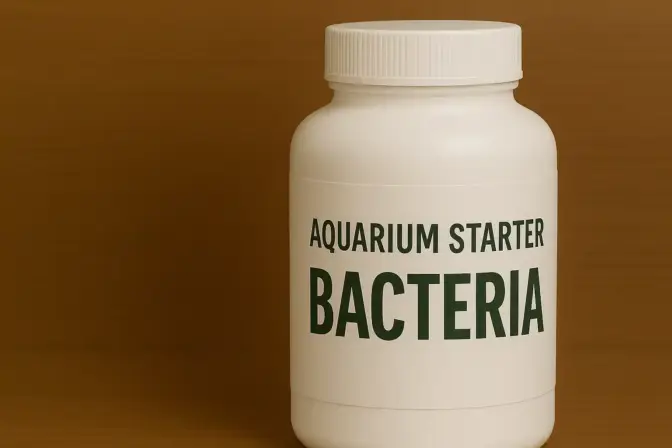
Aquarium starter bacteria are beneficial microorganisms used to help establish biological filtration in a new or unstable aquarium. They are commonly sold as bottled bacterial supplements and are added to the tank during setup, after major cleaning, after filter changes or when water tests show signs of instability.
The most important bacteria for aquarium cycling are nitrifying bacteria. These bacteria help convert toxic nitrogen waste into less harmful forms. In simple terms, one group of bacteria converts ammonia into nitrite, and another group converts nitrite into nitrate. Nitrate is still something you need to control, but it is much less immediately dangerous than ammonia or nitrite and can be reduced through water changes, plant growth and responsible stocking.
Starter bacteria are not the same as a water conditioner. A water conditioner makes tap water safer by neutralizing chlorine or chloramine. Starter bacteria help establish the biological filter. In most new aquariums, you need both: a conditioner to make tap water safe and bacteria to support the cycling process.
💡 Key idea: Starter bacteria support the nitrogen cycle, but they do not replace testing. A tank is only safe when ammonia and nitrite remain at 0 ppm under normal conditions.
Where Beneficial Bacteria Live in an Aquarium
One of the biggest beginner mistakes is assuming that beneficial bacteria mainly live in the water. In reality, the most important bacterial colonies live on surfaces. This is why your filter media is so important. Sponge, ceramic rings, biomedia, substrate, rocks, wood and plant roots all provide surface area where bacteria can settle and multiply.
This also explains why replacing all filter media at once can cause problems. When you throw away mature filter media, you may remove a large part of the aquarium’s biological filter. The water may still look clear, but the tank can lose its ability to process ammonia and nitrite efficiently.
For this reason, aquarium starter bacteria work best when your aquarium has a running filter with enough biological media. The bacteria need oxygen-rich water flow and surfaces to colonize. Simply adding bacteria to stagnant water without filtration will not create a stable cycle.
How Starter Bacteria Support the Nitrogen Cycle
The nitrogen cycle is the biological process that keeps toxic waste from building up in your aquarium. Fish waste, leftover food, dying plant leaves and other organic matter produce ammonia. Ammonia is highly toxic to fish and shrimp, especially at higher pH and warmer temperatures.
During cycling, ammonia is converted into nitrite. Nitrite is also dangerous because it affects the ability of fish to transport oxygen in the blood. A second bacterial group then converts nitrite into nitrate. Nitrate is less toxic in typical freshwater aquarium concentrations, but it should still be controlled through water changes, plant uptake and good maintenance habits.
A fully cycled aquarium is not a tank with “clean-looking” water. It is a tank where the biological filter can consistently process the waste produced by your livestock. That means ammonia and nitrite should stay at 0 ppm, while nitrate may slowly accumulate over time.
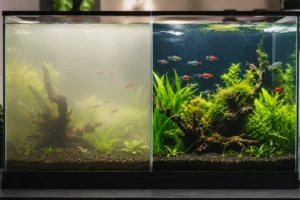
👀 Attention: Clear water does not prove that an aquarium is cycled. Always confirm cycling with ammonia, nitrite and nitrate tests.
Do Aquarium Starter Bacteria Really Work?
Aquarium starter bacteria can work, but results vary. Some products can shorten the cycling process or reduce the severity of ammonia and nitrite spikes. However, they are not a guarantee that your tank is instantly safe for fish. Their effectiveness depends on product quality, storage conditions, expiration date, temperature, oxygen levels, filter media, chlorine exposure and whether the bacteria have a food source.
Starter bacteria are most useful when they are added to a properly prepared aquarium. The tank should have dechlorinated water, a running filter, stable temperature and enough surface area for bacterial growth. If you add bacteria to chlorinated water, let the filter dry out or replace all media too early, the bacterial colony may fail to establish.
The most reliable approach is to treat starter bacteria as a support tool, not a shortcut. They can help the cycle develop, but your test results decide when the aquarium is ready.
When Should You Use Aquarium Starter Bacteria?
Starter bacteria are most commonly used when setting up a new aquarium. They can also be useful after disruptions that may reduce the bacterial colony. This includes deep filter cleaning, replacing old filter media, moving a tank, treating disease, recovering from a power outage or restarting a neglected aquarium.
You can also use them when adding a new filter to an existing tank or when increasing the biological load. For example, if you add more fish too quickly, the bacterial population may need time to adjust. In that situation, starter bacteria may help stabilize the system, but they should still be combined with careful feeding and water testing.
| Situation | Can starter bacteria help? | What to watch |
|---|---|---|
| New aquarium setup | Yes | Test ammonia and nitrite until stable |
| Fishless cycle | Yes | Provide an ammonia source |
| Fish-in cycle | Yes, but with caution | Protect fish with testing and water changes |
| After replacing filter media | Yes | Avoid replacing all media at once |
| After medication | Sometimes | Test water closely after treatment |
| Cloudy water | Sometimes | Find the cause instead of relying only on additives |
How to Use Aquarium Starter Bacteria Step by Step
The exact dosage depends on the product, so always follow the manufacturer’s instructions. However, the basic process is similar for most freshwater aquariums.
- Fill the aquarium with dechlorinated water. Chlorine and chloramine can damage beneficial bacteria, so always condition tap water first.
- Start the filter and heater. Bacteria need oxygen-rich water flow and stable conditions to colonize the filter media.
- Add starter bacteria according to the product instructions. Shake the bottle if required and dose directly into the aquarium or filter area.
- Provide an ammonia source. In a fishless cycle, this may be pure ammonia or a controlled amount of fish food. In a fish-in cycle, fish waste becomes the ammonia source, but this requires much more caution.
- Test ammonia, nitrite and nitrate regularly. Do not guess. Water tests show whether the biological filter is developing.
- Avoid cleaning or replacing filter media too early. Let bacteria settle and multiply before making major changes.
- Wait for stable results before fully stocking the tank. A cycled aquarium should process ammonia and nitrite consistently.
For best results, keep the filter running continuously. Turning the filter off for long periods can reduce oxygen supply and weaken bacterial activity. Beneficial bacteria need both surface area and oxygen to function well.
Using Starter Bacteria in a Fishless Cycle
A fishless cycle is usually the safest way to cycle a new aquarium. You establish the biological filter before adding fish or shrimp. Starter bacteria can help introduce nitrifying bacteria earlier, but they still need ammonia to feed on. Without an ammonia source, the bacterial colony may not grow strongly enough to support livestock later.
During a fishless cycle, you add bacteria, provide a controlled ammonia source and test the water over time. At first, ammonia may rise. Then nitrite may appear. Later, nitrate appears as nitrite is processed. The tank is considered cycled when ammonia and nitrite can return to 0 ppm after a controlled ammonia source has been processed.
This process can take several weeks. Starter bacteria may reduce the timeline, but patience is still important. Adding fish too early can turn a controlled cycle into an emergency.
Using Starter Bacteria in a Fish-In Cycle
A fish-in cycle means fish are already present while the biological filter is still developing. This situation is more stressful and risky because ammonia and nitrite can harm livestock. Starter bacteria can be helpful here, but they must be combined with daily or frequent water testing.
If fish are already in the tank, feed lightly, avoid adding more livestock and test ammonia and nitrite often. If either rises, perform a water change with temperature-matched, dechlorinated water. The goal is to keep toxic compounds as low as possible while the bacteria colony catches up.
Do not rely on starter bacteria alone to protect fish. They may help stabilize the system, but water changes and testing are the real safety tools during a fish-in cycle.
💡 Tip: If you are cycling with fish already in the tank, test daily at the beginning. Ammonia and nitrite should not be allowed to build up while the filter matures.
How Long Do Starter Bacteria Take to Work?
Starter bacteria may begin working quickly, but a stable aquarium cycle usually still takes time. In many tanks, cycling can take anywhere from about two to eight weeks depending on temperature, pH, ammonia availability, filter media, oxygen, product quality and whether mature media is used.
Using established filter media from a healthy aquarium is often one of the fastest ways to seed bacteria because it transfers living colonies directly onto usable media. Bottled bacteria can also help, but the response may be less predictable. Some tanks cycle faster, while others still need several weeks.
The timeline matters less than the test results. A tank is not ready because a certain number of days has passed. It is ready when ammonia and nitrite remain stable at 0 ppm and the system can handle the expected biological load.
How to Know If Starter Bacteria Are Working
You can tell whether starter bacteria are helping by watching the pattern of your water tests. During cycling, ammonia should eventually begin to fall. Nitrite may appear as ammonia is processed. Later, nitrite should also fall, while nitrate becomes detectable.
In a developing cycle, nitrate is usually a sign that nitrogen waste is being processed. However, nitrate alone does not prove the tank is safe. You still need ammonia and nitrite to stay at 0 ppm before adding sensitive livestock.
- Ammonia drops: The first stage of the cycle is becoming active.
- Nitrite appears: Ammonia is being converted, but the tank is not yet fully safe.
- Nitrite drops: The second stage of biological filtration is developing.
- Nitrate appears: Nitrogen waste is being converted into a less toxic form.
- Ammonia and nitrite stay at 0 ppm: The aquarium is becoming biologically stable.
Common Mistakes With Aquarium Starter Bacteria
Starter bacteria are useful, but they are often used incorrectly. Many cycling problems happen not because bacteria products are useless, but because the aquarium conditions do not support bacterial growth.
- Adding bacteria to chlorinated water: Chlorine and chloramine can damage bacteria. Always condition tap water first.
- Expecting an instant cycle: Bacteria may speed up the process, but the tank still needs testing and time.
- No ammonia source: Beneficial bacteria need nitrogen waste to grow and maintain their population.
- Replacing all filter media: This can remove much of the biological filter.
- Overcleaning the aquarium: Deep cleaning substrate, decor and filter media at the same time can destabilize the tank.
- Turning the filter off: Low oxygen and stagnant water can reduce bacterial activity.
- Adding too many fish too soon: The bacterial colony may not be large enough to handle the sudden waste load.
- Not testing water: Cycling cannot be judged reliably by appearance or smell.
What Can Damage Beneficial Bacteria?
Beneficial bacteria are resilient once established, but they can still be weakened by poor maintenance or sudden changes. The most common problem is cleaning too aggressively. Rinsing filter media under untreated tap water, replacing all media at once or letting filter media dry out can reduce bacterial colonies significantly.
Medication, low oxygen, long power outages, extreme temperature changes and untreated tap water can also affect bacterial stability. This is why mature aquariums can still experience ammonia or nitrite spikes after major disruptions.
To protect your bacteria, clean filter media gently in removed aquarium water, keep the filter running, avoid unnecessary deep cleaning and make changes gradually. Stability is one of the most important principles in aquarium keeping.
How to Maintain a Stable Bacterial Colony
Once your aquarium is cycled, your goal is to keep the bacterial colony stable. A healthy colony adjusts to the amount of waste produced in the aquarium. If you suddenly add too many fish, overfeed heavily or remove filter media, the balance can break.
Good long-term habits are simple: avoid overfeeding, maintain the filter, perform regular water changes, remove decaying plant matter and test water whenever fish behave unusually. Live plants can also support stability by taking up nitrate and competing with algae for nutrients.
- Keep the filter running continuously.
- Clean filter media gently, not aggressively.
- Do not replace all biological media at once.
- Use water conditioner for every water change.
- Stock slowly and avoid sudden increases in waste load.
- Test ammonia and nitrite after major changes.
- Remove uneaten food and decaying plant material.
Starter Bacteria vs. Mature Filter Media
Bottled starter bacteria and mature filter media both aim to seed the aquarium with beneficial bacteria, but they are not exactly the same. Mature filter media from a healthy, established aquarium already contains living bacterial colonies attached to a usable surface. This can make it very effective for speeding up a new cycle.
Bottled bacteria are more convenient because they do not require access to another aquarium. However, their performance can vary depending on the product and how it was stored. For many aquarists, the best approach is to use both when possible: mature media for strong seeding and starter bacteria as additional support.
| Method | Strength | Limitation |
|---|---|---|
| Bottled starter bacteria | Easy to use and widely available | Effectiveness can vary |
| Mature filter media | Transfers established bacteria directly | Requires a healthy donor tank |
| Substrate from an established tank | Adds extra microbial life | Less reliable than mature filter media |
| Plants from an established tank | Can add surface bacteria and nitrate uptake | Not enough alone for heavy stocking |
Can Starter Bacteria Prevent New Tank Syndrome?
Starter bacteria may reduce the risk of new tank syndrome, but they cannot prevent it if the aquarium is stocked too quickly or not tested. New tank syndrome happens when a new aquarium does not yet have enough biological filtration to process the waste produced by fish and food. The result is often an ammonia or nitrite spike.
The safest prevention is a complete cycling process, slow stocking, careful feeding and regular testing. Starter bacteria can be part of that strategy, especially in new aquariums, but they should never be used as an excuse to rush the setup.
Conclusion
Aquarium starter bacteria are a useful tool for building and supporting the biological filter in a freshwater tank. They help establish the bacteria responsible for processing ammonia and nitrite, making them especially valuable during cycling, after filter disruption or when recovering from instability.
The most important lesson is that starter bacteria support the cycle, but they do not replace patience, filtration or water testing. A healthy aquarium depends on stable bacterial colonies living mainly in the filter and on surfaces throughout the tank. Protect those colonies, test your water and stock slowly.
When used correctly, aquarium starter bacteria can make the cycling process safer and more predictable. When misunderstood, they can give beginners false confidence. Let your test results guide your decisions, and your aquarium will have a much stronger biological foundation.
FAQ – Aquarium Starter Bacteria
What are aquarium starter bacteria?
Aquarium starter bacteria are beneficial bacteria added to a tank to help establish biological filtration. They support the nitrogen cycle by helping convert toxic ammonia and nitrite into less harmful nitrate.
Do aquarium starter bacteria instantly cycle a tank?
No. Starter bacteria can help speed up cycling, but they do not guarantee an instant cycle. A tank is only cycled when ammonia and nitrite stay at 0 ppm under normal conditions.
How long do aquarium starter bacteria take to work?
They may begin working quickly, but a stable cycle often still takes several weeks. The exact timeline depends on filter media, oxygen, temperature, ammonia source, product quality and tank conditions.
Can I add fish after using starter bacteria?
You should only add fish when water tests show that ammonia and nitrite remain at 0 ppm. Starter bacteria can support the process, but test results decide whether the tank is safe.
Can I use starter bacteria with fish already in the aquarium?
Yes, but you still need frequent water testing and water changes if ammonia or nitrite appears. Starter bacteria may help stabilize the tank, but they are not a substitute for safe fish-in cycling practices.
Where do beneficial bacteria live in an aquarium?
Most beneficial bacteria live on surfaces, especially inside filter media. They also colonize substrate, hardscape, plant roots and glass. They do not mainly live freely in the water.
Can water changes remove starter bacteria?
Normal water changes do not remove most beneficial bacteria because they live mainly on surfaces and in the filter. However, untreated tap water, deep cleaning and replacing filter media can harm bacterial colonies.
Do I need starter bacteria if I use old filter media?
Mature filter media from a healthy aquarium is often very effective because it already contains established bacteria. Starter bacteria can still be used as additional support, but mature media is usually stronger than water alone.
New to AquariumLesson? Start with our complete Aquarium Lessons Hub or return to the homepage at AquariumLesson.com.
References
- Hovanec, T. A. & DeLong, E. F. – Comparative analysis of nitrifying bacteria associated with freshwater aquaria.
- Daims, H. et al. – Complete nitrification by Nitrospira bacteria.
- U.S. Environmental Protection Agency – Nitrification and nitrogen compounds in aquatic systems.
- University aquarium and aquaculture extension resources on biological filtration, ammonia and nitrite management.
Start building your aquarium in My Aquariums
Save this lesson and keep the relevant water targets available for your aquarium.