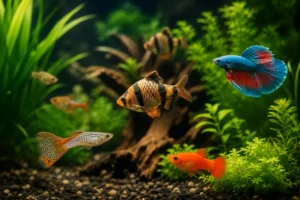
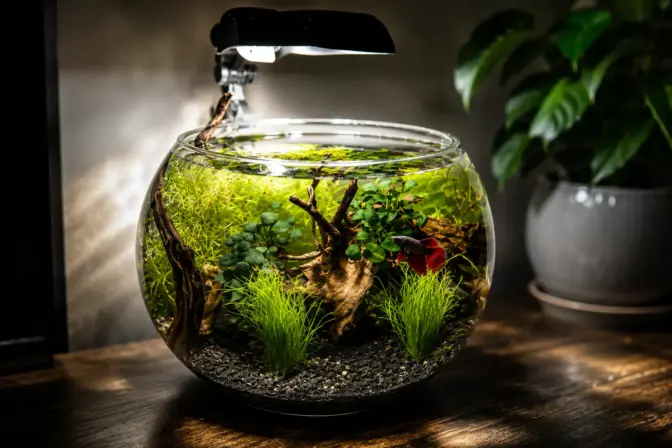
Betta Bowl Aquarium
Introduction
Maybe you received a fish bowl as a gift. Maybe your child would love to keep one beautiful fish in it. Or maybe the bowl is already sitting at home, and now you want to set it up the right way. That is a good instinct — because a fish bowl should never be filled with water and a fish on the same day without checking whether it can actually support a living animal.
A betta bowl aquarium can work only if it is treated like a real aquarium, not like a decoration. A betta should not be kept in a tiny, unfiltered, unheated bowl with almost no swimming space. That old image may be common, but it does not match responsible fishkeeping.
This guide is written for beginners, parents and children who already have a fish bowl and want to know what to do next. It explains how to measure the bowl, decide whether it is large enough, choose the right equipment, prepare safe water, cycle the aquarium and set up one betta responsibly if the bowl is suitable. If the bowl is too small, you will also learn kinder alternatives.
Quick Answer
- Do not add a fish to a new bowl on the same day.
- First measure how much water the bowl actually holds.
- A tiny traditional fish bowl is not suitable for a betta.
- A responsible betta bowl should ideally hold at least 20 liters / 5 gallons or more.
- The bowl must be heated, covered, cycled and kept stable.
- A gentle sponge filter or low-flow nano filter is strongly recommended.
- Choose a wide bowl rather than a tall narrow vase-style bowl.
- Use smooth decoration, soft plants and safe resting places.
- Keep only one betta, not several fish.
- If the bowl is too small, use it for plants instead and choose a larger aquarium for the fish.
What you’ll learn in this lesson
- What to do first if you received a fish bowl
- How to check whether the bowl is suitable for a betta
- Why tiny bowls are not responsible fish homes
- The minimum bowl size for one betta
- Which equipment a betta bowl needs
- Why the bowl must be cycled before adding fish
- How to set up the bowl step by step
- How to keep water safe and stable
- What to do if the bowl is too small
- Which common fish bowl mistakes to avoid
You Received a Fish Bowl — What Should You Do First?
If you have just received a fish bowl, the first step is not buying a fish. The first step is checking whether the bowl can safely support one. Many bowls sold or gifted as “fish bowls” are too small for long-term fishkeeping, especially if they have no filter, no heater, no lid and very little water volume.
This does not mean the gift is useless. A small bowl can still become a planted water garden, a moss bowl, a decorative aquatic plant display or a learning project about water, plants and nature. But if you want to keep one betta, the bowl must be large enough and prepared like a real aquarium.
The kindest question is not “Which fish fits into this bowl?” The better question is: “Can this bowl be made safe, stable and comfortable for a fish?”
Step One: Measure the Bowl
Before choosing a fish, measure how much water the bowl actually holds. Do not guess by looking at it. Round bowls often look larger than they are, and the usable water volume is usually lower than expected because you should not fill the bowl to the very rim.
- Place the empty bowl on a stable surface.
- Use a measuring jug or marked container.
- Fill the bowl slowly with water.
- Count how many liters or gallons it holds.
- Leave some space at the top instead of filling it to the rim.
- Write down the real usable volume.
If the usable volume is far below 20 liters / 5 gallons, the responsible choice is not to keep a betta in it. Use the bowl for plants and choose a larger aquarium for the fish.
Step Two: Decide Whether the Bowl Is Big Enough
The best betta bowl size is larger than most people expect. A tiny desktop bowl should not be used for a betta. The safest recommendation is to use a bowl-shaped aquarium of at least 20 liters / 5 gallons, with larger being better.
More water volume gives you more stability. Temperature changes more slowly, waste is diluted more effectively, and the fish has more usable space. This is especially important for beginners because small water volumes leave very little room for mistakes.
| Bowl Volume | Best Use | Fishkeeping Advice |
|---|---|---|
| Under 10 liters / 2.6 gallons | Plants, moss or decoration | Not suitable for a betta |
| 10–15 liters / 2.6–4 gallons | Planted water bowl or learning project | Still too small for a responsible betta setup |
| 20 liters / 5 gallons | One betta with proper equipment | Minimum responsible starting point |
| 25–30 liters / 6.5–8 gallons | One betta | Better and more stable |
| 35+ liters / 9+ gallons | One betta with more stable conditions | Much easier to maintain responsibly |
A wider bowl is better than a tall narrow bowl. Bettas need easy surface access and usable swimming space. A tall vase-style bowl may hold water, but much of that volume is vertical height rather than comfortable swimming room.
Can a Betta Live in a Fish Bowl?
A betta should not live in a traditional tiny fish bowl. Most classic bowls are too small, unstable, difficult to filter, difficult to heat and too exposed. They often lack the equipment needed to maintain safe water quality and stable tropical temperature.
However, the round shape itself is not the main problem. The real problem is the typical bowl setup: very little water, no filter, no heater, no lid, no cycle and no proper structure. If the bowl is large enough and equipped like a real aquarium, it can become a responsible bowl-shaped betta tank.
So the simple answer is: a tiny decorative fish bowl is not suitable, but a large, heated, covered and carefully maintained bowl-shaped aquarium can be suitable for one betta when planned correctly.
What Makes a Betta Bowl Responsible?
A responsible betta bowl is not defined by how cute or simple it looks. It is defined by whether the fish can live in stable water, swim normally, breathe easily, rest safely, avoid stress and show natural behavior.
For a betta bowl to be responsible, it should meet the same basic standards as any proper betta aquarium.
- The bowl should be large enough for normal movement.
- The aquarium should be fully cycled before the fish is added.
- Ammonia and nitrite should remain at 0 ppm.
- The temperature should be warm and stable.
- A gentle filter is strongly recommended for beginners.
- The surface should be easy to reach because bettas breathe air from the surface.
- The setup should include plants, cover and resting places.
- The bowl should have a secure lid or cover.
- Decorations must be smooth and safe for delicate fins.
- Maintenance must be consistent and gentle.
If these conditions cannot be met, choose a standard rectangular nano aquarium instead. A rectangle is usually easier to filter, heat, cover and maintain.
Step Three: Choose the Right Bowl Shape
Not every bowl shape is equally useful. A round aquarium can be attractive, but many bowls are tall, narrow and difficult to equip. For a betta, the best bowl shape is wide, stable and open enough to allow heating, filtration and easy surface access.
Choose a wide bowl
A wide bowl gives the betta more horizontal swimming room. It also creates more surface area for gas exchange and makes it easier for the fish to reach the surface.
Avoid tall vase-style bowls
Tall narrow bowls are usually poor choices. They may technically hold water, but they often provide little practical swimming space. They can also be harder to heat evenly and harder to maintain.
Check equipment fit before buying anything else
Before buying a fish, check whether a heater, thermometer, cover and ideally a gentle filter can actually fit. If equipment cannot be installed safely, the bowl is not a good betta aquarium.
Step Four: Get the Essential Equipment
A responsible betta bowl needs equipment. The idea that bettas can live happily in tiny bowls without filtration, heating or stable water is one of the most harmful myths in the hobby. Bettas are hardy compared with some delicate fish, but hardy does not mean they should be kept in poor conditions.
| Equipment | Why It Matters | Best Choice for a Bowl |
|---|---|---|
| Heater | Keeps tropical temperature stable | Small adjustable heater suitable for the bowl volume |
| Thermometer | Shows the real water temperature | Small digital or glass thermometer |
| Lid | Prevents jumping and reduces evaporation | Glass or acrylic cover with small air gaps |
| Filter | Supports biological stability and gentle water movement | Small sponge filter or low-flow nano filter |
| Water conditioner | Makes tap water safe | Reliable dechlorinator |
| Test kit | Tracks ammonia, nitrite, nitrate and pH | Liquid water test kit if possible |
| Light | Helps plants grow and makes observation easier | Small low-to-medium aquarium light |
The equipment should be chosen before the fish. If the bowl cannot support the equipment, it is better to keep the bowl as a plant display and buy a proper aquarium for the betta.
Does a Betta Bowl Need a Filter?
A gentle filter is strongly recommended for a betta bowl, especially for beginners. A filter does not only make water look clear. It provides a home for beneficial bacteria that help process fish waste through the nitrogen cycle.
For a bowl, the filter must be gentle. Bettas have delicate fins and do not enjoy strong current. A harsh filter can push the fish around, make feeding difficult and cause stress. The best option is usually a small sponge filter powered by an air pump with an adjustable valve.
Good filter options
- Small sponge filter
- Air-driven corner filter
- Low-flow nano internal filter
- Adjustable filter with pre-filter sponge
Can you set up a betta bowl without a filter?
A filterless betta bowl is possible in theory, but it is not the safest recommendation for beginners, children or first-time fishkeepers. Without a filter, the aquarium has less biological backup, less water movement and much less margin for mistakes. Waste, uneaten food and unstable water conditions can become a problem quickly.
If someone wants a very minimal setup, the safer compromise is not to remove the filter completely. Instead, use a small sponge filter hidden behind plants or decoration. This keeps the bowl simple and quiet while still supporting water stability.
A filtered betta bowl is far safer than a stagnant bowl, but filtration does not replace water changes. It supports stability; it does not make the aquarium maintenance-free.
Heating a Betta Bowl Safely
Bettas are tropical fish and usually need warm, stable water. Room temperature is often too cool or too inconsistent, especially in homes where temperature drops at night or during winter.
A small adjustable heater is usually the best choice. Preset heaters can work in some cases, but an adjustable heater gives more control. Always use a thermometer to confirm the real water temperature because heater settings are not always perfectly accurate.
Heating checklist
- Use a heater suitable for the bowl volume.
- Choose an adjustable heater when possible.
- Place the heater where water can circulate around it.
- Use a thermometer on the opposite side of the bowl.
- Avoid sudden temperature changes during water changes.
- Do not place the bowl near windows, radiators or cold drafts.
Stable temperature is one of the biggest reasons a proper aquarium is safer than a small decorative bowl.
Why a Betta Bowl Needs a Lid
A lid is important because bettas can jump. A bowl without a lid may look cleaner visually, but it creates a real safety risk. A lid also reduces evaporation, helps maintain warmth and keeps dust or household particles out of the water.
The lid should not seal the bowl completely airtight. Bettas need access to the surface, and the aquarium still needs gas exchange. A glass or acrylic cover with small openings for equipment and air exchange is usually ideal.
- Use a secure cover to prevent jumping.
- Leave safe openings for cables and airline tubing.
- Do not block all air exchange.
- Keep the water level slightly below the lid.
- Check condensation and evaporation regularly.
Substrate for a Betta Bowl
The substrate should be safe, easy to clean and suitable for the plants you want to use. In a small bowl-shaped aquarium, avoid overly deep substrate beds because they can trap waste and reduce usable water volume.
Fine gravel, aquarium sand or aquasoil can all work. For a simple beginner setup, fine gravel or sand is often easiest. If you use aquasoil, remember that it can affect water parameters at first and may require more careful testing.
| Substrate Type | Best Use | Caution |
|---|---|---|
| Fine gravel | Simple beginner bowl setups | Vacuum gently to avoid trapped waste |
| Sand | Natural look and smooth surface | Avoid deep compacted layers |
| Aquasoil | Planted setups | Can affect water parameters at first |
| Bare bottom | Temporary hospital or quarantine use | Less natural and not ideal for a display bowl |
For most beginner bowls, a shallow layer of safe substrate is enough. Do not overfill the bowl with substrate because the fish needs water volume more than decoration depth.
Plants and Safe Decoration
Plants and decoration should make the bowl safer, not just prettier. Bettas benefit from soft cover, shaded areas and resting places near the surface. But the setup should still leave open swimming room and clear access to the top of the water.
Live plants are helpful because they create a more natural environment. If live plants are not possible, use soft silk plants instead of sharp plastic plants. Sharp or rough decoration can damage delicate fins.
| Plant or Decoration | Why It Works | Safety Tip |
|---|---|---|
| Anubias | Hardy and low-maintenance | Attach to wood or stone, do not bury the rhizome |
| Java fern | Easy beginner plant | Attach to hardscape |
| Java moss | Soft cover and natural texture | Keep it tidy so debris does not build up |
| Floating plants | Provide shade and security | Do not block the entire surface |
| Smooth driftwood | Creates structure and hiding areas | Check for sharp edges |
| Rounded stones | Natural decoration | Use only aquarium-safe stones |
| Soft silk plants | Alternative if live plants are not possible | Avoid sharp plastic leaves |
If a decoration feels sharp against delicate fabric or your own skin, it is probably not safe for a betta’s fins.
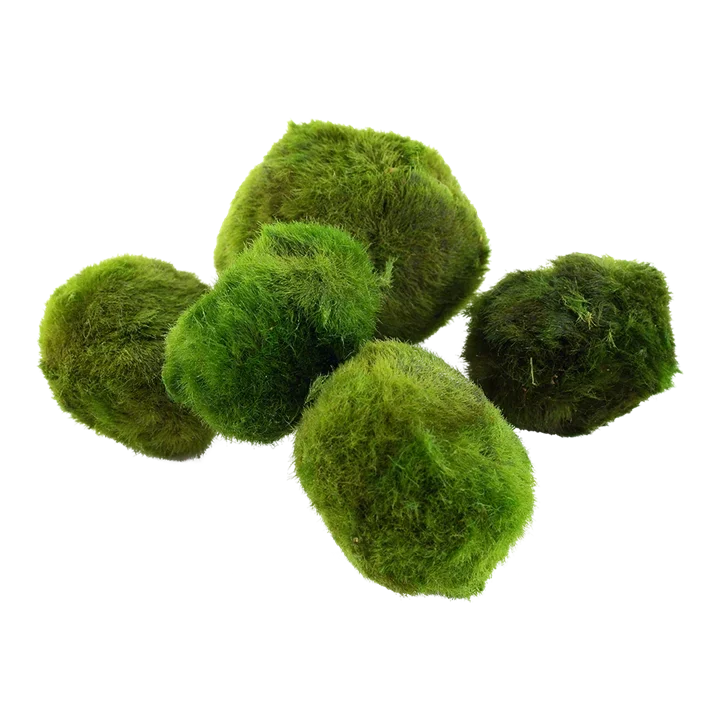 Beginner
Aegagropila linnaei


 15–24°C
 Low Light
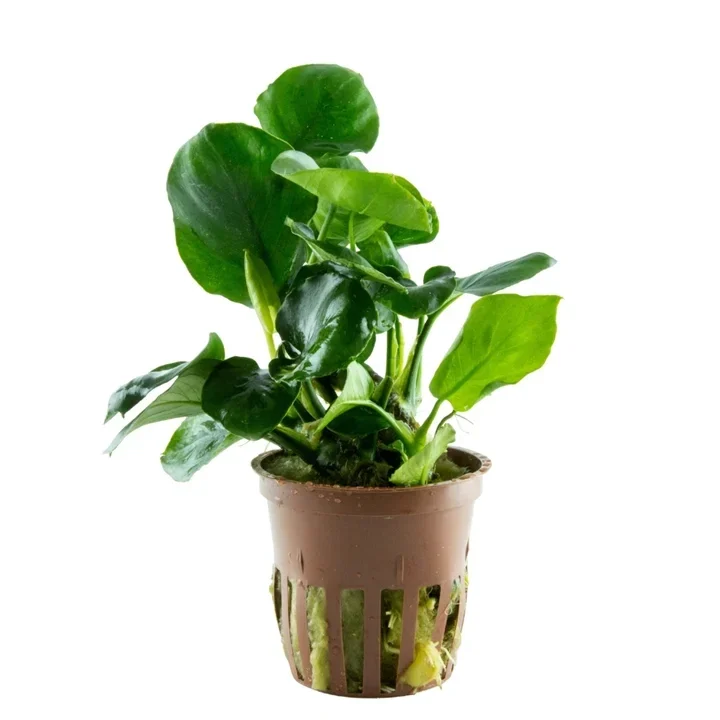 Beginner Friendly
Anubias barteri 'Coin Leaf'
 Low Light
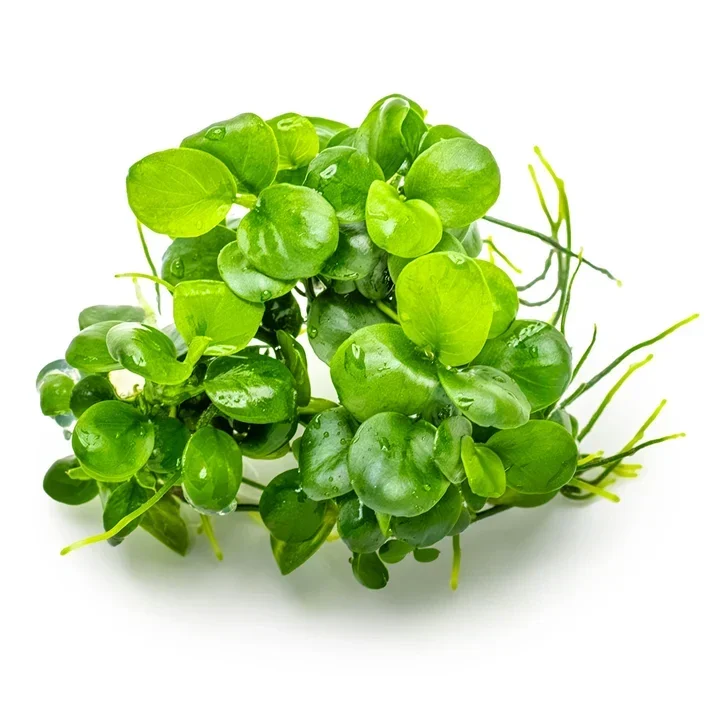 Beginner Friendly
Anubias barteri 'Mini Coin'
Low Light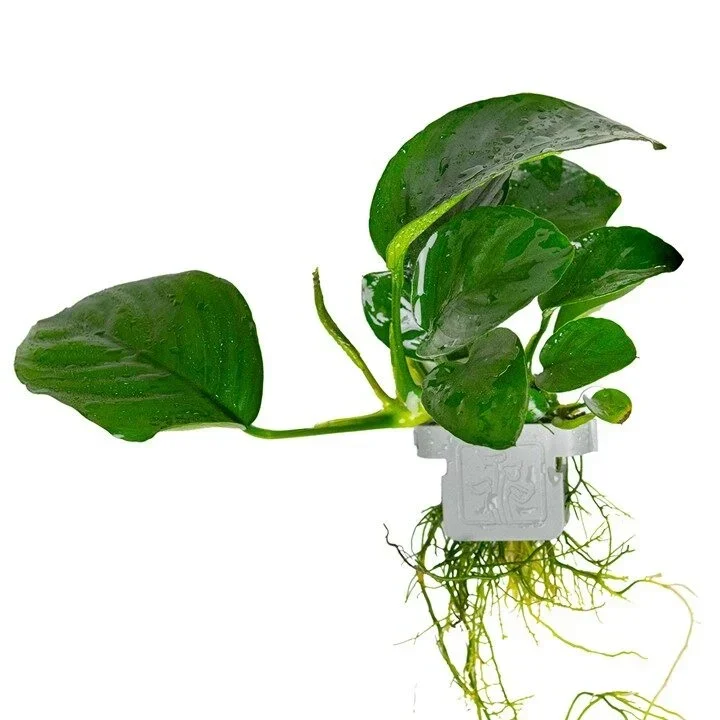 Beginner
Anubias barteri var. caladiifolia

 22–26°CLow Light
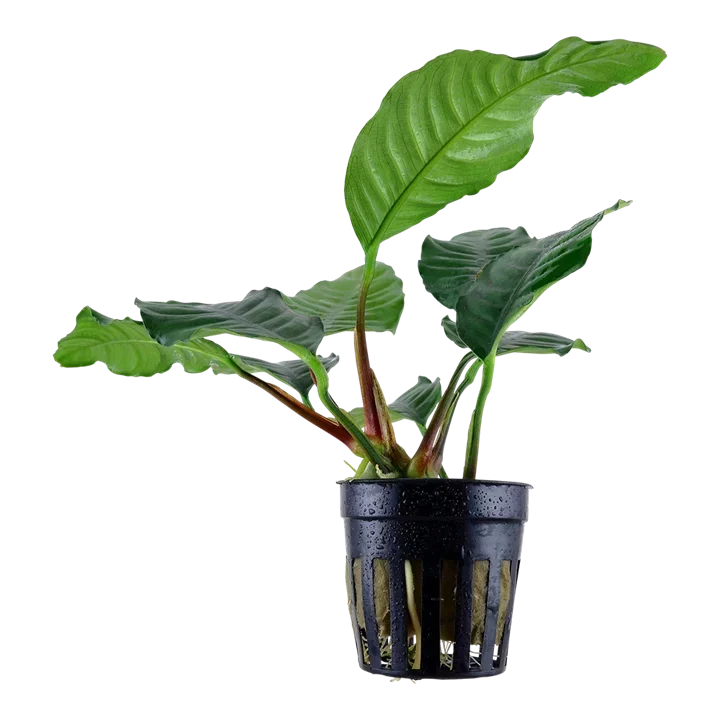 Beginner Friendly
Anubias barteri var. coffeifolia
22–26°CLow Light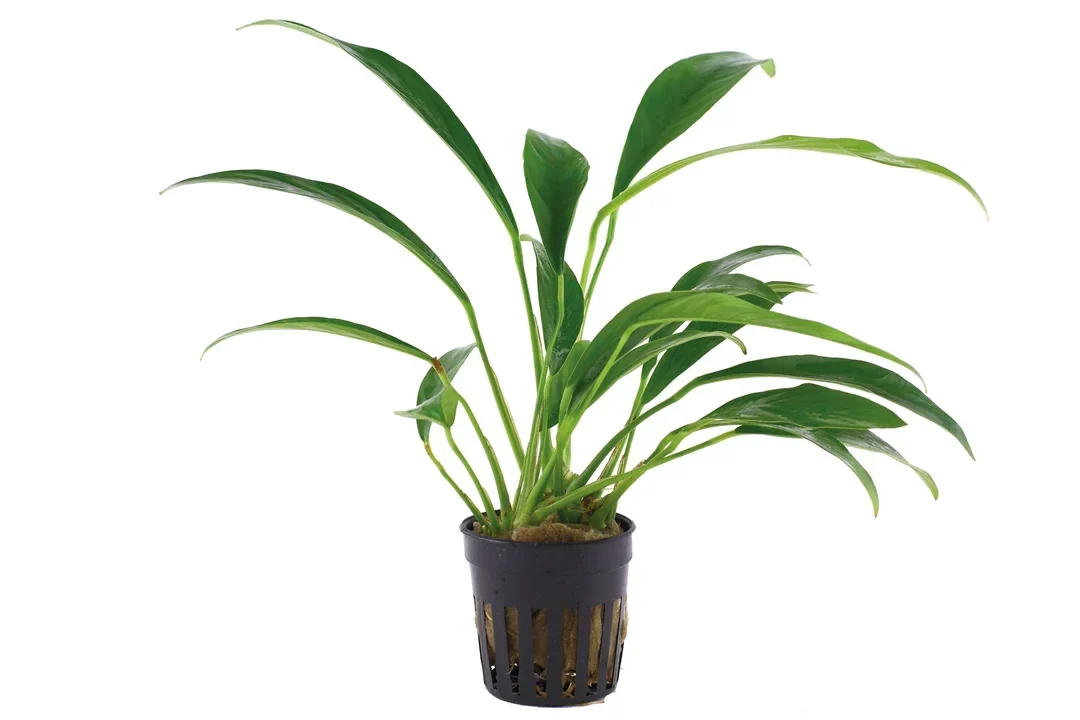 Beginner Friendly
Anubias barteri var. glabra
22–26°CLow LightHow to Arrange the Bowl Safely
A betta bowl should be arranged for safety first. The goal is to create a simple, calm environment with open swimming space, resting points and places where the fish can feel secure. Do not fill the bowl so heavily that the betta has no room to move.
Simple safe layout
- Add a shallow substrate layer.
- Place one smooth decoration or plant group to one side.
- Leave open swimming space in the middle and front.
- Add soft plants or resting leaves near the surface.
- Keep the surface open enough for breathing.
- Hide equipment only if it does not block function.
- Avoid narrow gaps where the fish could get stuck.
- Make sure nothing can fall or collapse.
The best beginner betta bowl is simple, safe and easy to clean. It does not need to be a complex aquascape.
Cycling the Bowl Before Adding the Betta
A betta bowl must be cycled before the fish is added. Cycling means building a colony of beneficial bacteria that can process toxic ammonia and nitrite. This is essential in every aquarium, but it is especially important in small setups because water quality can change quickly.
Do not set up the bowl and add the betta on the same day. Even if the water looks clear, it may not be biologically safe. Clear water is not the same as cycled water.
Cycling checklist
- Set up the bowl with substrate, plants, heater, thermometer and filter.
- Fill it with conditioned water.
- Start the heater and filter.
- Use a responsible cycling method.
- Test ammonia, nitrite and nitrate.
- Wait until ammonia and nitrite can remain at 0 ppm.
- Only add the betta when the aquarium is biologically stable.
For a full beginner explanation, read Fishless Cycle Guide and How Long Does Cycling Take.
Water Parameters for a Betta Bowl
Stable water is more important than chasing perfect numbers. Bettas can adapt to a reasonable range of freshwater conditions, but they do poorly when temperature, ammonia, nitrite or pH change suddenly.
| Parameter | Responsible Target | Why It Matters |
|---|---|---|
| Ammonia | 0 ppm | Toxic to fish |
| Nitrite | 0 ppm | Toxic and dangerous |
| Nitrate | Keep controlled | Shows waste buildup over time |
| Temperature | Warm and stable | Bettas are tropical fish |
| pH | Stable rather than constantly adjusted | Sudden changes can stress fish |
| GH/KH | Consistent and suitable for your water source | Supports mineral balance and pH stability |
Because bowl aquariums are often smaller than standard tanks, test water regularly during the first weeks after adding the betta. Early testing prevents small problems from becoming serious welfare issues.
Step-by-Step Betta Bowl Setup
Use this step-by-step process if your bowl is large enough for one betta.
Prepare the bowl
Clean the empty bowl with water only. Do not use soap, cleaning sprays or household chemicals. Place the bowl on a stable surface away from direct sun, radiators, cold drafts and busy areas where it may be knocked over.
Add substrate
Add a shallow layer of aquarium-safe substrate. Rinse gravel or sand if needed. Avoid deep substrate in a small bowl because it can trap debris and reduce water volume.
Add safe decoration and plants
Add smooth decoration, soft plants and simple hiding or resting areas. Leave open swimming space and make sure the betta can easily reach the surface.
Install equipment
Add the heater, thermometer and gentle filter. Make sure the filter flow is soft and the heater is positioned where water can circulate around it.
Fill with safe water
Use conditioned tap water. Pour slowly to avoid disturbing the layout. Leave a little space at the top so the betta has safe surface access under the lid.
Cycle the aquarium
Run the heater and filter while the bowl cycles. Test water until ammonia and nitrite remain at 0 ppm. Do not add the betta before the aquarium is stable.
Add the betta slowly
Acclimate the betta carefully. Keep lights low during introduction and observe behavior. The fish should be able to swim, rest, breathe at the surface and explore without being pushed around by flow.
Maintenance for a Betta Bowl Aquarium
A betta bowl is not maintenance-free. Because bowl-shaped aquariums are often smaller than standard tanks, consistent care is essential. The exact routine depends on volume, filtration, feeding, plants and water test results.
Weekly maintenance checklist
- Check temperature with a thermometer.
- Test ammonia and nitrite if the setup is new or unstable.
- Check nitrate levels.
- Remove uneaten food and visible debris.
- Trim dead or melting plant leaves.
- Clean algae from glass gently if needed.
- Perform a partial water change based on water quality.
- Use temperature-matched, conditioned replacement water.
- Observe fins, breathing, appetite and behavior.
Do not perform extreme full water changes unless there is an emergency. Large sudden changes can stress the fish and disrupt stability. Small, consistent water changes are usually safer.
Feeding a Betta in a Bowl Aquarium
Feeding should be controlled. Overfeeding is one of the fastest ways to pollute a small aquarium. Bettas need high-quality food, but they do not need large amounts.
Use betta pellets, small frozen foods or other appropriate foods depending on your care routine. Feed only what the betta can eat quickly and remove leftovers where possible.
- Feed small portions.
- Use food designed for bettas or carnivorous freshwater fish.
- Watch whether the fish actually eats the food.
- Remove uneaten food.
- Do not let food sink and rot behind decoration.
- Adjust feeding if nitrate rises quickly.
- Avoid using feeding as entertainment too many times per day.
In a betta bowl, clean feeding habits are part of animal welfare because water quality can change quickly.
Can You Keep Tankmates in a Betta Bowl?
In most betta bowl setups, tankmates are not recommended. Even if the bowl is large enough for one betta, it may not be large enough for a community. Adding tankmates increases waste, competition and stress.
If the bowl is around 20 liters / 5 gallons, keep it as a single-betta setup. If the bowl is much larger, very careful additions such as some snails may be possible, but only if water quality remains stable and the betta does not harass them.
- Do not add other fish to a small betta bowl.
- Avoid shrimp if the betta is aggressive or if shrimp breeding matters.
- Snails may work in some larger setups, but they still add waste.
- Do not use tankmates to “clean” the bowl.
- Choose a larger rectangular aquarium if you want a community tank.
For most responsible bowl-shaped setups, one betta is enough.
What If the Bowl Is Too Small?
If the bowl is too small for a betta, the best decision is not to force a fish into it. You can still use the bowl in a positive way. This is especially helpful for children, because it turns disappointment into a better learning project.
Better uses for a small fish bowl
- Create a planted water bowl without fish.
- Grow moss, Anubias or floating plants.
- Use it as a decorative aquatic plant display.
- Use it to teach children about water testing and plant growth.
- Keep it as a future plant-only project while choosing a proper aquarium for the betta.
This is not a failure. It is responsible fishkeeping. The bowl can still be useful, and the fish can get a better home.
Betta Bowl Troubleshooting Table
Use this table if your betta shows stress or the bowl becomes unstable.
| Problem | Possible Cause | First Action |
|---|---|---|
| Betta gasps at the surface constantly | Ammonia, nitrite, low oxygen or poor water quality | Test water immediately and increase gentle aeration |
| Betta hides all day | Stress, strong flow, exposed layout or poor water | Check parameters, reduce flow and add cover |
| Betta is pushed around | Filter flow too strong | Reduce flow or switch to a sponge filter |
| Temperature changes often | No heater, weak heater or bad placement | Use an appropriate heater and thermometer |
| Water smells bad | Overfeeding, waste buildup or poor filtration | Remove debris, test water and review feeding |
| Fins look torn | Sharp decoration, fin biting or stress | Remove sharp objects and check water quality |
| Ammonia appears | Uncycled tank, overfeeding or filter disruption | Perform safe corrective care and protect the cycle |
| Algae grows quickly | Too much light, excess nutrients or overfeeding | Reduce light duration and improve maintenance |
| Betta jumps or tries to escape | No lid, stress, poor water or disturbance | Add lid and test water immediately |
When something looks wrong in a small aquarium, test water first. Guessing wastes time and can put the fish at risk.
Responsible Betta Bowl Checklist
Use this checklist before adding a betta to a bowl-shaped aquarium.
- The bowl holds at least 20 liters / 5 gallons or more.
- The bowl is wide, not tall and narrow.
- The heater is installed and stable.
- A thermometer is visible and working.
- The bowl has a secure lid or cover.
- A gentle filter is installed or the setup is managed by an experienced keeper.
- The aquarium is fully cycled.
- Ammonia is 0 ppm.
- Nitrite is 0 ppm.
- Nitrate is controlled.
- All decorations are smooth and safe.
- The betta has plants, cover and resting places.
- The surface remains accessible.
- Flow is not too strong.
- Water changes can be done without disturbing the whole setup.
- You have a test kit and water conditioner ready.
- You are keeping one betta, not a crowded bowl community.
Common Betta Bowl Mistakes
Most betta bowl problems happen because people treat the bowl as decoration instead of a living aquarium. Avoid these mistakes if you want to keep the fish safely.
- Adding a fish immediately: the bowl must be prepared and cycled first.
- Using a tiny bowl: very small bowls are unstable and do not provide enough usable space.
- Skipping the heater: bettas need warm, stable water in most homes.
- Skipping filtration as a beginner: a gentle filter adds important biological stability.
- Using sharp decoration: rough objects can damage delicate fins.
- Creating strong flow: bettas need gentle movement, not a washing-machine current.
- Leaving the bowl uncovered: bettas can jump.
- Overfeeding: extra food quickly pollutes small water volumes.
- Adding tankmates: most bowls are best kept as single-betta aquariums.
- Changing all water at once: sudden full changes can shock fish and disrupt stability.
- Choosing the bowl over the fish’s needs: if the bowl is too small, use it for plants instead.
Quick Takeaways
- Do not add a betta to a new fish bowl immediately.
- Measure the bowl before deciding whether it can hold a fish.
- A tiny traditional fish bowl is not suitable for a betta.
- A responsible betta bowl should ideally hold at least 20 liters / 5 gallons or more.
- Choose a wide bowl rather than a tall narrow bowl.
- Use a heater, thermometer, lid and preferably a gentle filter.
- Cycle the bowl before adding the betta.
- Keep ammonia and nitrite at 0 ppm.
- Use smooth decoration, soft plants and resting places.
- Keep only one betta in a suitable bowl-shaped aquarium.
- If the bowl is too small, use it for plants and choose a larger aquarium for the fish.
Conclusion
A fish bowl can be a lovely gift, but it should not automatically become a fish home. Before adding a betta, measure the bowl, check whether equipment fits, prepare safe water, cycle the aquarium and make sure the fish will have enough space, warmth and stability.
If the bowl is large enough, a bowl-shaped betta aquarium can be set up responsibly for one betta. If the bowl is too small, the kindest choice is to use it for plants and choose a larger aquarium for the fish. The goal is not to keep a betta in the smallest container possible. The goal is to help the fish live well.
From here, continue with Fishless Cycle Guide
Next step:
Measure your fish bowl first. If it is large enough, prepare it like a real aquarium before adding one betta. If it is too small, turn it into a plant bowl and choose a larger tank for the fish.
💬 Join the Conversation
Tag us on Instagram @AquariumLesson — we’d love to see how you turned a simple fish bowl into a safer, more responsible aquatic setup.
👉 Did you receive a fish bowl as a gift, or are you planning a proper betta setup from the start?
FAQ
Can a betta live in a fish bowl?
A betta should not live in a tiny unfiltered fish bowl. A large bowl-shaped aquarium can work only if it has enough volume, stable heating, a lid, safe decoration, fully cycled water and preferably gentle filtration.
What should I do first if I received a fish bowl?
Measure how much water the bowl actually holds. Do not buy a fish first. If the bowl is too small, use it for plants and choose a larger aquarium for the betta.
What size bowl does a betta need?
A responsible betta bowl should ideally hold at least 20 liters / 5 gallons or more. Larger is better because it provides more stable water and more usable space.
Does a betta bowl need a filter?
A gentle filter is strongly recommended, especially for beginners. A small sponge filter or low-flow nano filter helps support beneficial bacteria and water stability.
Can I keep a betta in an unfiltered bowl?
A filterless betta bowl is not recommended for beginners. Without a filter, the bowl has less biological stability and less margin for mistakes. A hidden sponge filter is usually the safer minimalist option.
Does a betta bowl need a heater?
In most homes, yes. Bettas are tropical fish and need warm, stable water. A small adjustable heater and thermometer are recommended.
Are round bowls bad for bettas?
The round shape is not the main problem. The problem is usually that bowls are too small and lack equipment. A large, wide, heated and properly maintained bowl-shaped aquarium can be suitable, but a tiny decorative bowl is not.
What can I do if my fish bowl is too small?
Use it as a planted water bowl, moss bowl or decorative aquatic plant display. Then choose a larger aquarium if you want to keep a betta responsibly.
Can a betta bowl have tankmates?
Most betta bowls should be single-betta setups. Tankmates add waste and may cause stress. If you want a community tank, choose a larger rectangular aquarium.
Is a betta bowl cruel?
A tiny unfiltered bowl can be harmful and should be avoided. A large, heated, covered, cycled and properly maintained bowl-shaped aquarium is different because it is designed around the fish’s needs rather than decoration alone.
Lesson completed!
You've finished this lesson. Keep building your aquarium knowledge, one lesson at a time.
Continue learning →New to AquariumLesson? Start with our complete Aquarium Lessons Hub or return to the homepage at AquariumLesson.com.
References
- RSPCA Knowledgebase. How should I care for my Siamese fighting fish?
- Oldfield, R. G. Life in a fishbowl: Space and environmental enrichment affect behaviour of Betta splendens. Animal Welfare.
- PetMD. Betta Fish Care Sheet.
- RSPCA. Choosing an Aquarium for Pet Fish.