Black Beard Algae in Aquarium
Compact, firmly attached dark brush-like tufts on leaves, hardscape, wood and equipment. Heavy coverage can burden plant tissue.
Save this guide or add this issue to one of your aquariums.
Need help with Black Beard Algae?
Explore compatibility, care or problems using this guide and your aquarium’s conditions.
Identification
- Main color
- Dark gray, black, dark green, and reddish brown
- Growth form
- Tuft
- Attachment
- Strong
- Typical surfaces
- Plant leaves, rocks, wood, and hardscape, equipment, driftwood, and glass
- Texture
- Fuzzy
- Behavior
- Hard to scrape
- Diagnostic confidence
- High
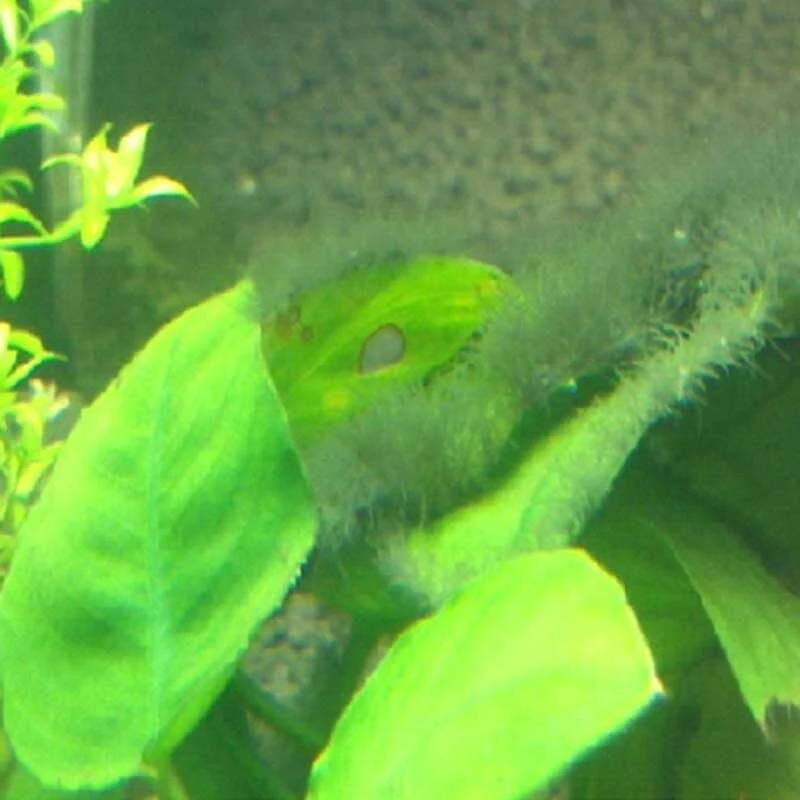
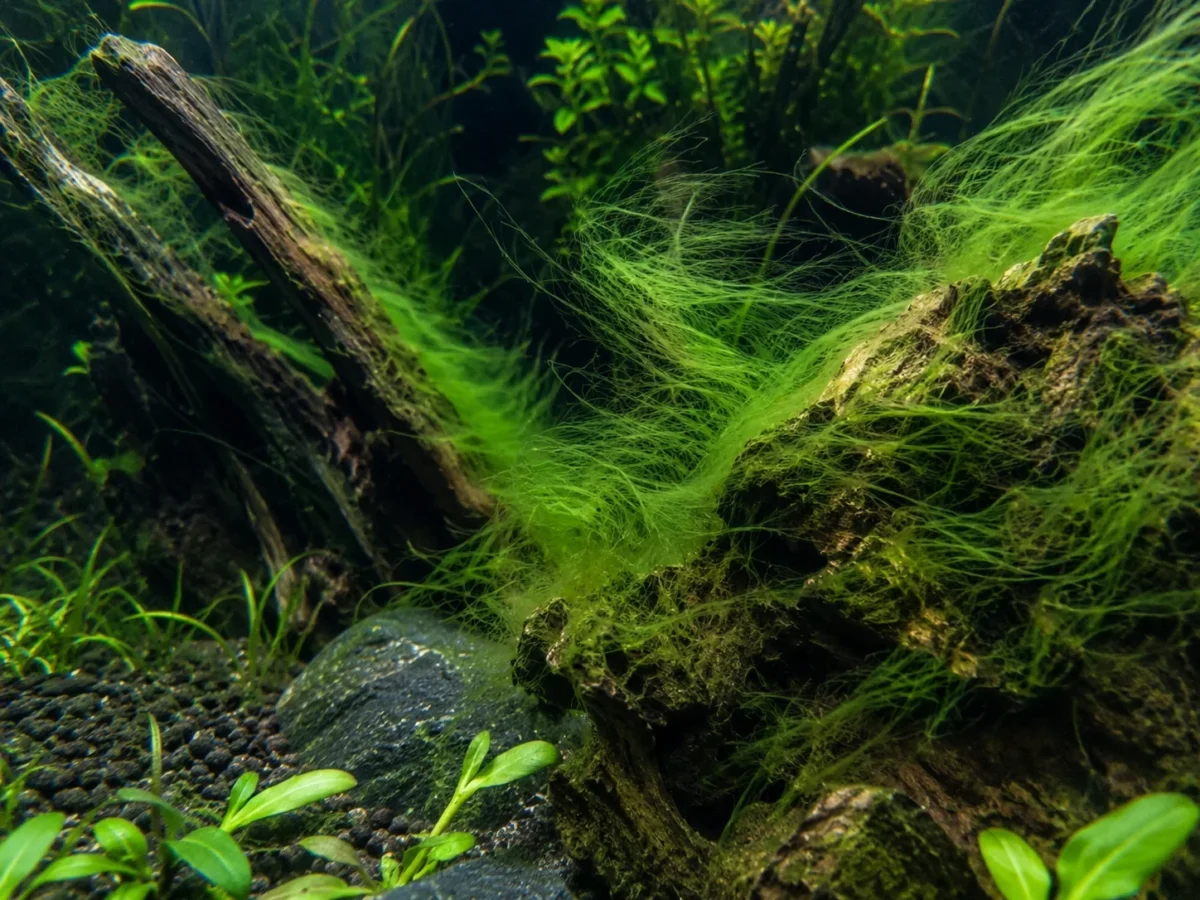
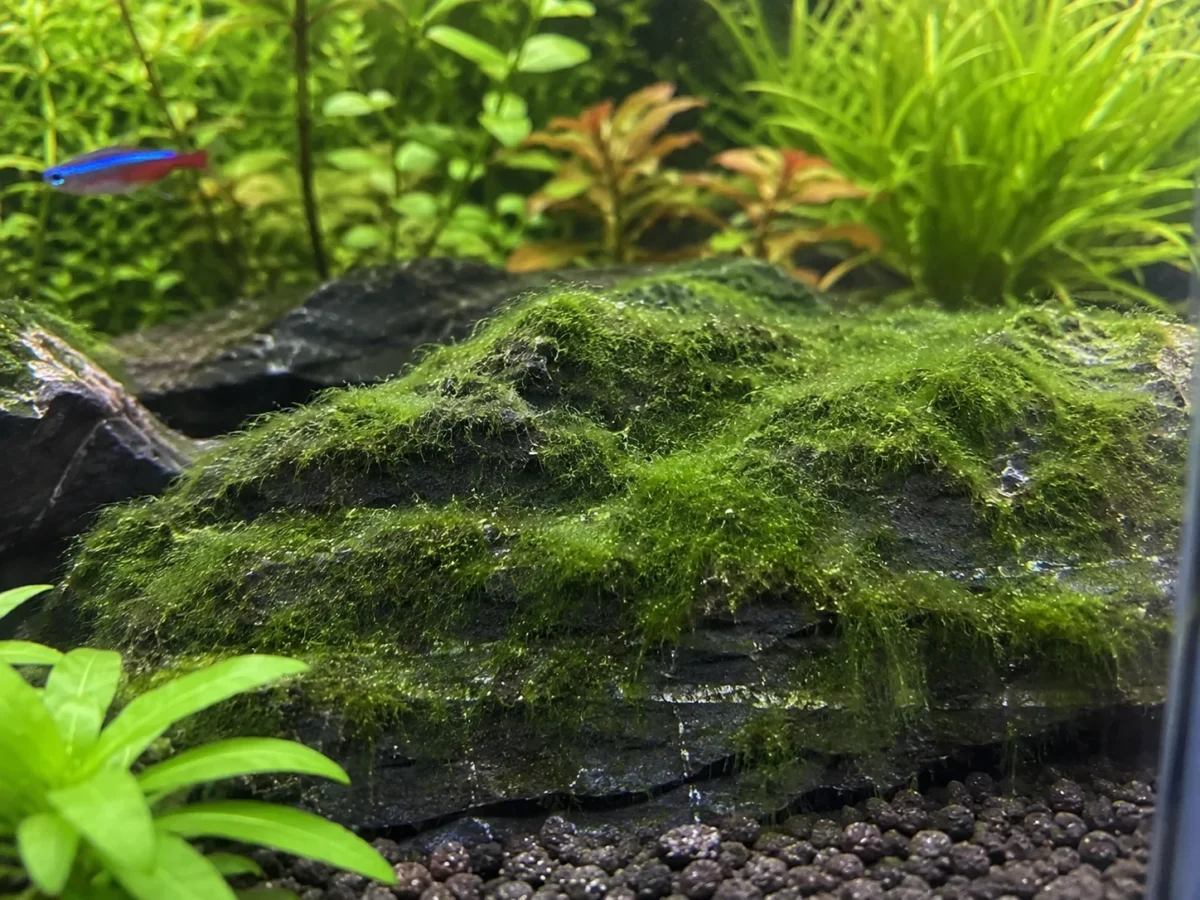
- Short dense dark gray to black or dark-green tufts, sometimes reddish-brown, with a brush- or beard-like appearance and strong attachment, especially on older slow-growing leaves, hardscape, driftwood, outlets, and equipment.
- Compact dark brushes are a useful BBA recognition clue, but appearance does not establish a particular Audouinella or Rhodochorton species.
Probably not this algae if…
- Staghorn forms longer, visibly branching or antler-like growth rather than compact brushes.
- Hair Algae forms longer softer green strands that are generally easier to pull or wind out.
- Short Green Beard Algae is greener, less standardized, and usually softer-looking than classic dark BBA.
Your fix plan
Today
- Remove the worst visible tufts and heavily colonized old leaves.
- Export loosened debris.
- Inspect plant health, detritus, lighting, local flow and—if CO2 is injected—CO2 stability before escalating treatment.
This week
- Brush, scrape, or lift off as much attached growth as practical and collect loosened material.
- Remove the worst colonized old leaves and retain clean active tissue.
Keep it away
- Maintain healthy plant growth.
- Remove deteriorating tissue and detritus.
- Avoid running more light than plant mass can use, and in CO2-injected tanks prioritize stable distribution while retaining gas exchange.
Causes
No single aquarium parameter is an established universal BBA cause. Practical evidence most consistently links outbreaks with stressed plant tissue, accumulated organics, and system instability; CO2 instability is especially relevant in injected tanks, while flow is contextual. Iron excess is not retained as a direct cause.
- Stressed, aging, or slow-growing plant surfaces are common colonization sites in planted aquariums.
- Organic detritus and neglected maintenance are consistently associated with outbreaks in aquarium practice.
- In CO2-injected tanks, fluctuating or poorly distributed CO2 is a common husbandry correlate.
- Strong light can increase algae pressure when plant growth and carbon supply are not stable enough to use that light effectively.
- Local flow exposure can influence where BBA establishes; low flow is not a universal cause.
What to check
- Look for compact, firmly attached dark brushes rather than longer antler-like forks.
- Inspect deteriorating leaves, detritus and light exposure; in injected tanks check CO2 delivery and circulation without sacrificing gas exchange.
Nutrient guidance
- Relevance: Low
- No specific nitrate, phosphate, or iron concentration is established as a universal BBA trigger; iron-overdose claims remain contested.
- Supply nutrients according to plant needs and correct documented deficiencies/excesses for plant health; do not deliberately create iron or macronutrient deficiency as a BBA treatment.
Treatment options
- Fish
- Low
- Invertebrates
- Low
- Plants
- Meaningful
- Aquarium system
- Low
Mechanical removal and pruning are the foundation. Reduce accumulated organics and plant stress, moderate excessive light pressure where needed, and stabilize rather than blindly increase CO2 in injected tanks. Chemical spot methods are secondary tools.
Manual removal
First lineBrush, scrape, or lift off as much attached growth as practical and collect loosened material.
Best for: Accessible tufts on hardscape, wood, equipment, glass, and robust plant surfaces.
Details and cautions
Not for: Aggressive scrubbing of delicate or badly deteriorated leaves.
Limitations: Strong attachment means removal may be incomplete and does not prevent recurrence.
Plants caution: Avoid damaging delicate leaves.
System caution: Collect loosened algae and debris.
Pruning
First lineRemove the worst colonized old leaves and retain clean active tissue.
Best for: Old, deteriorating, or heavily colonized leaves.
Details and cautions
Not for: Removing so much healthy plant mass that recovery is compromised.
Limitations: Does not correct conditions that allowed BBA to establish.
Plants caution: Avoid excessive one-session pruning.
Organic-load reduction
SupportingRemove detritus, dead leaves, trapped organics, and clogged mechanical debris while preserving biological filtration.
Best for: Tanks with accumulated detritus, decay, dirty substrate zones, or clogged mechanical debris.
Details and cautions
Not for: Using cleaning as the only treatment while plant stress remains.
Limitations: Organic-load reduction is supportive rather than a direct BBA-killing method.
System caution: Do not sterilize or replace the entire biofilter.
Lighting adjustment
SupportingReduce excessive light pressure enough to match current plant mass/growth.
Best for: Tanks where light exceeds current plant growth capacity, especially after trimming or plant decline.
Details and cautions
Not for: Using darkness as a stand-alone BBA cure.
Limitations: Existing BBA still requires removal.
Plants caution: Over-reducing light can weaken demanding plants.
CO2 stabilization
SituationalPrioritize repeatable CO2 timing and even distribution while maintaining adequate gas exchange.
Best for: CO2-injected tanks where BBA followed inconsistent injection, poor distribution, flow changes, or plant stress.
Details and cautions
Not for: Low-tech tanks or simply raising CO2 aggressively.
Limitations: The CO2-BBA relationship is strong hobby consensus but not a universal biological cause.
Fish caution: Excessive CO2 can cause respiratory distress.
Invertebrates caution: Avoid aggressive CO2 increases.
System caution: Maintain adequate surface gas exchange.
Spot treatment
SituationalIf used, prefer a controlled treatment of removable/exposed affected material using a validated aquarium protocol rather than an unrestricted whole-tank dose.
Best for: Stubborn localized BBA on removable hardscape or robust plant material after mechanical control.
Details and cautions
Not for: Routine whole-tank dosing, unidentified algae, or sensitive plants without a small test exposure.
Limitations: Can weaken visible algae but does not prevent recurrence; standardized BBA-specific dosing evidence is limited.
Fish caution: Avoid unnecessary direct exposure.
Invertebrates caution: Avoid unnecessary direct exposure.
Plants caution: Sensitive plants may be damaged; test a limited area first.
System caution: Do not infer whole-tank safety from specific aquaculture drug approvals.
Match the response to severity
- LocalizedA few isolated tufts on one plant, hardscape piece, or equipment surface. Treat locally and inspect the affected surface for aging tissue, concentrated flow, debris, or excessive light.
- SpreadingNew tufts are appearing on multiple plant groups, hardscape areas, or equipment after routine removal. Shift to a tank-level review of plant health, detritus, lighting and CO2 stability where applicable.
- Heavy plant coverageDense BBA covers substantial leaf area, multiple slow-growing plants, or broad hardscape/equipment areas. Remove badly compromised tissue and reduce attached biomass before relying on localized chemical methods.
Grazers
- Siamese algae eater (Crossocheilus spp.) · UsefulJuveniles commonly graze BBA, but adults may prefer prepared foods; they grow relatively large and must fit the aquarium.
- Amano shrimp (Caridina multidentata) · LimitedMay graze weakened/accessibly BBA, but established outbreaks usually exceed their practical control capacity.
If it returns and prevention
Why it returns and what to inspect
Why it may return
- BBA often returns because killing/removing visible tufts does not remove the conditions that created favorable colonization sites.
- Aging or stressed leaves remain.
- Detritus/decay continues to accumulate.
- CO2 remains unstable or poorly distributed in an injected tank.
- Lighting remains too strong for current plant growth.
- The same local flow pattern repeatedly exposes/stresses the affected surface.
What to inspect
- Inspect old/deteriorating plant tissue.
- Inspect substrate, filter, and hardscape gaps for detritus.
- Review light relative to healthy plant mass.
- In injected tanks review CO2 timing/distribution/gas exchange.
- Check whether outbreaks repeatedly appear in the same local flow path.
Aquarium-specific guidance and prevention
- Planted aquarium
- Prioritize healthy new growth and removal of old/damaged/chronic leaves; slow-growing plants under strong light deserve special attention.
- CO2 injected
- Review CO2 stability/timing/distribution rather than simply increasing injection; maintain gas exchange.
- Low tech
- Do not add CO2 solely because BBA appeared; use conservative lighting, organic-waste removal, healthy plant mass, and steady maintenance.
- Shrimp aquarium
- Amano shrimp may provide limited support, but manual methods remain primary and off-label chemical safety should not be assumed.
Long-term prevention
- Maintain healthy plant growth, remove deteriorating tissue and detritus, avoid running more light than plant mass can use, and in CO2-injected tanks prioritize stable distribution while retaining gas exchange. Do not chase BBA by starving iron.