Cladophora in Aquarium
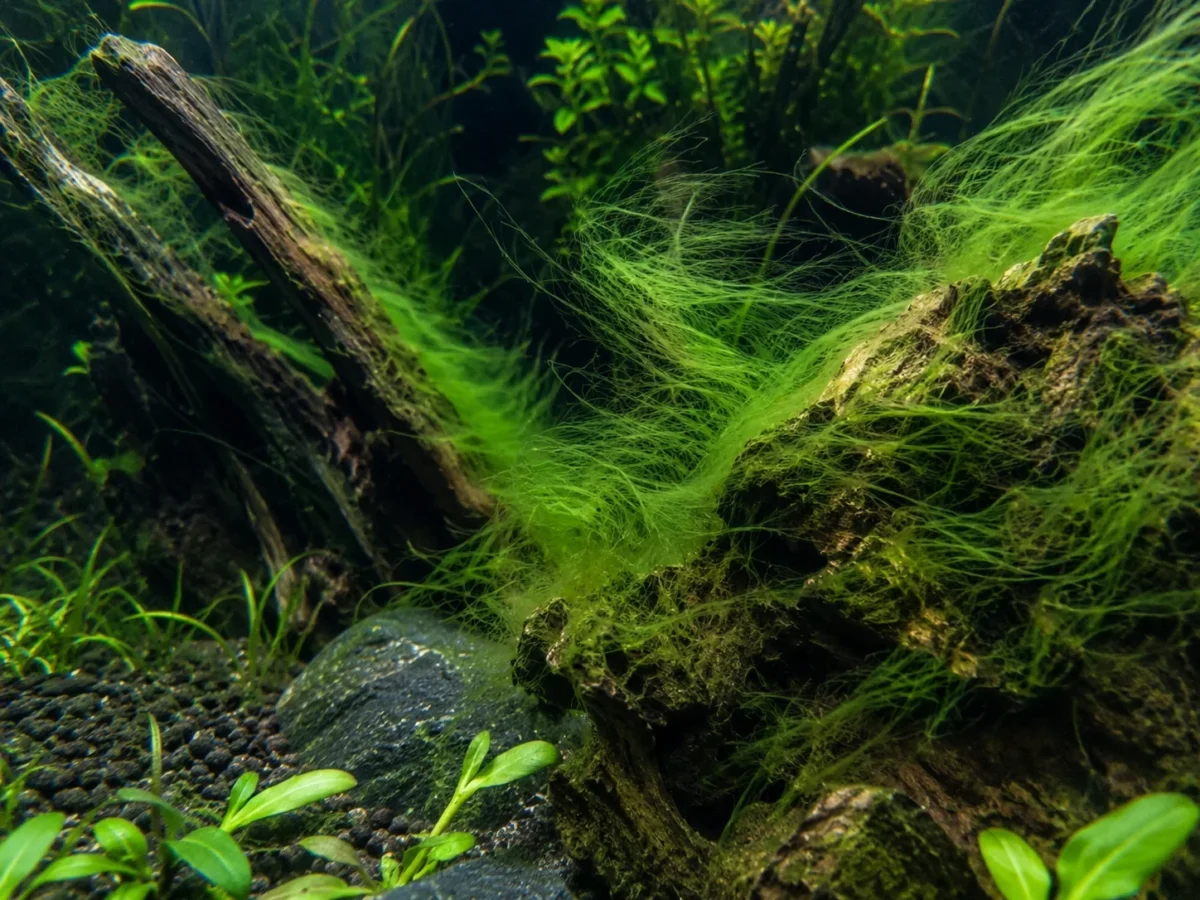
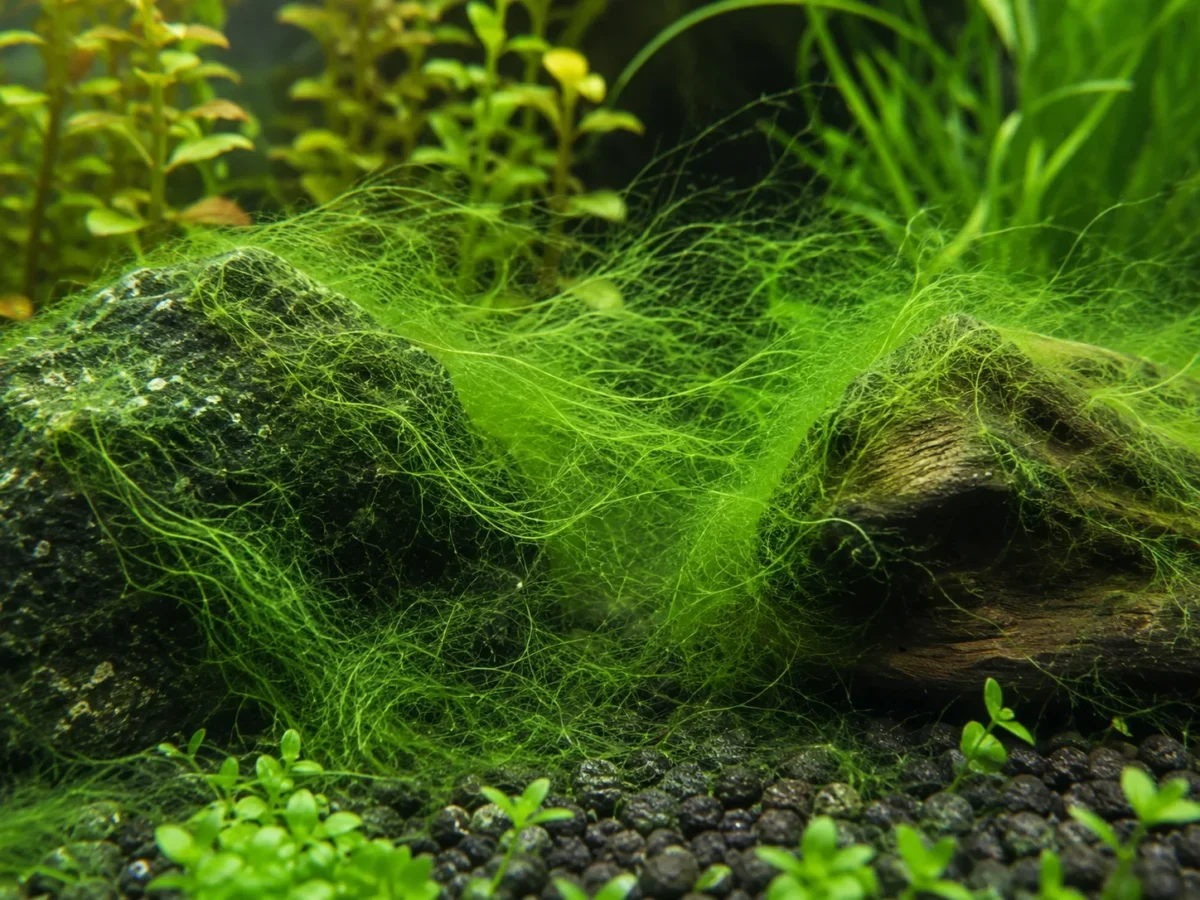
A stubborn branching green filamentous algae with a wiry texture and strong attachment; detached fragments can survive and establish new colonies.
Save this guide or add this issue to one of your aquariums.
Need help with Cladophora?
Explore compatibility, care or problems using this guide and your aquarium’s conditions.
Identification
- Main color
- Green and dark green
- Growth form
- Branching
- Attachment
- Strong
- Typical surfaces
- Plant leaves, on moss, rocks, wood, and hardscape, and substrate
- Texture
- Wiry
- Behavior
- Fragments spread and hard to scrape
- Diagnostic confidence
- Practical
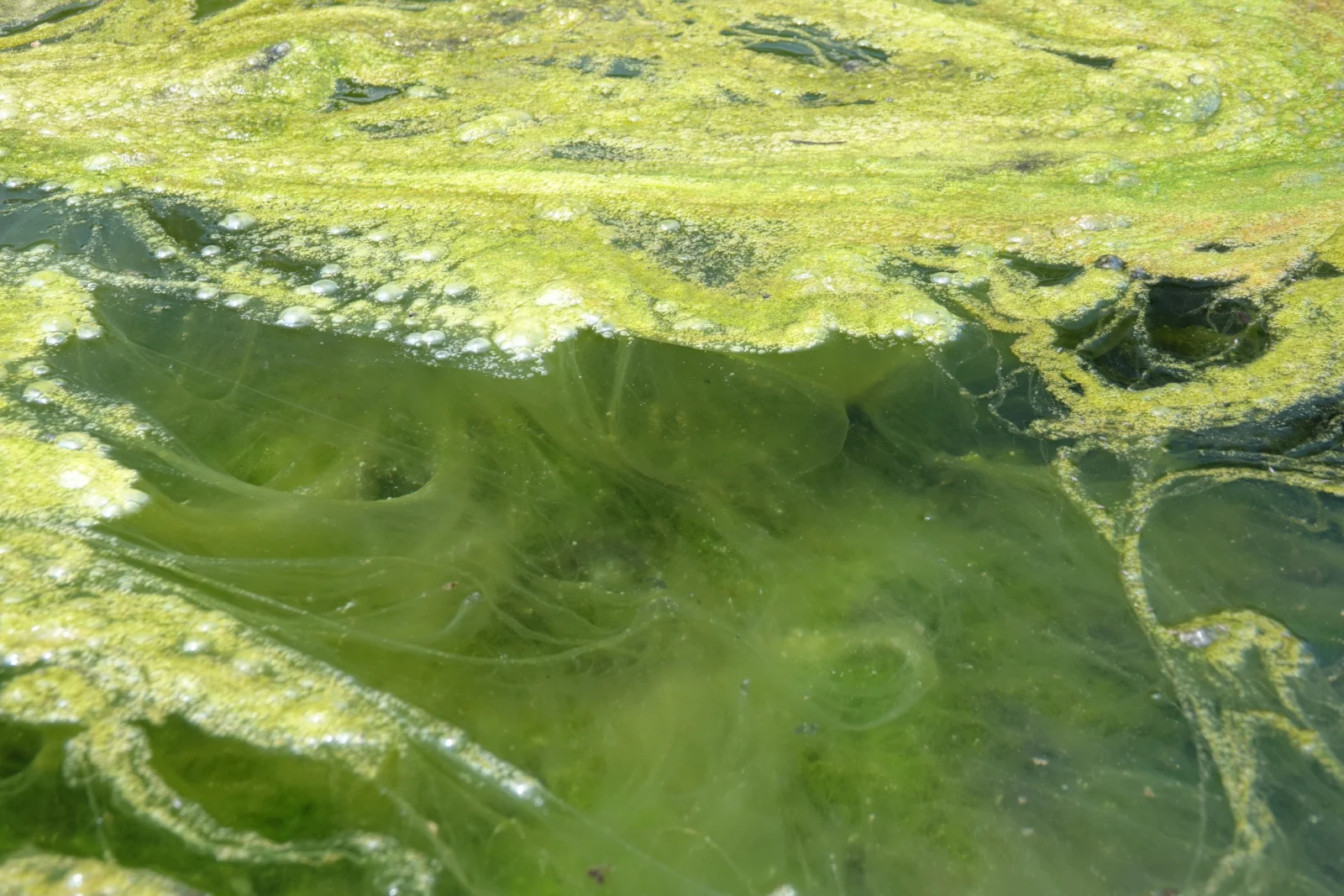
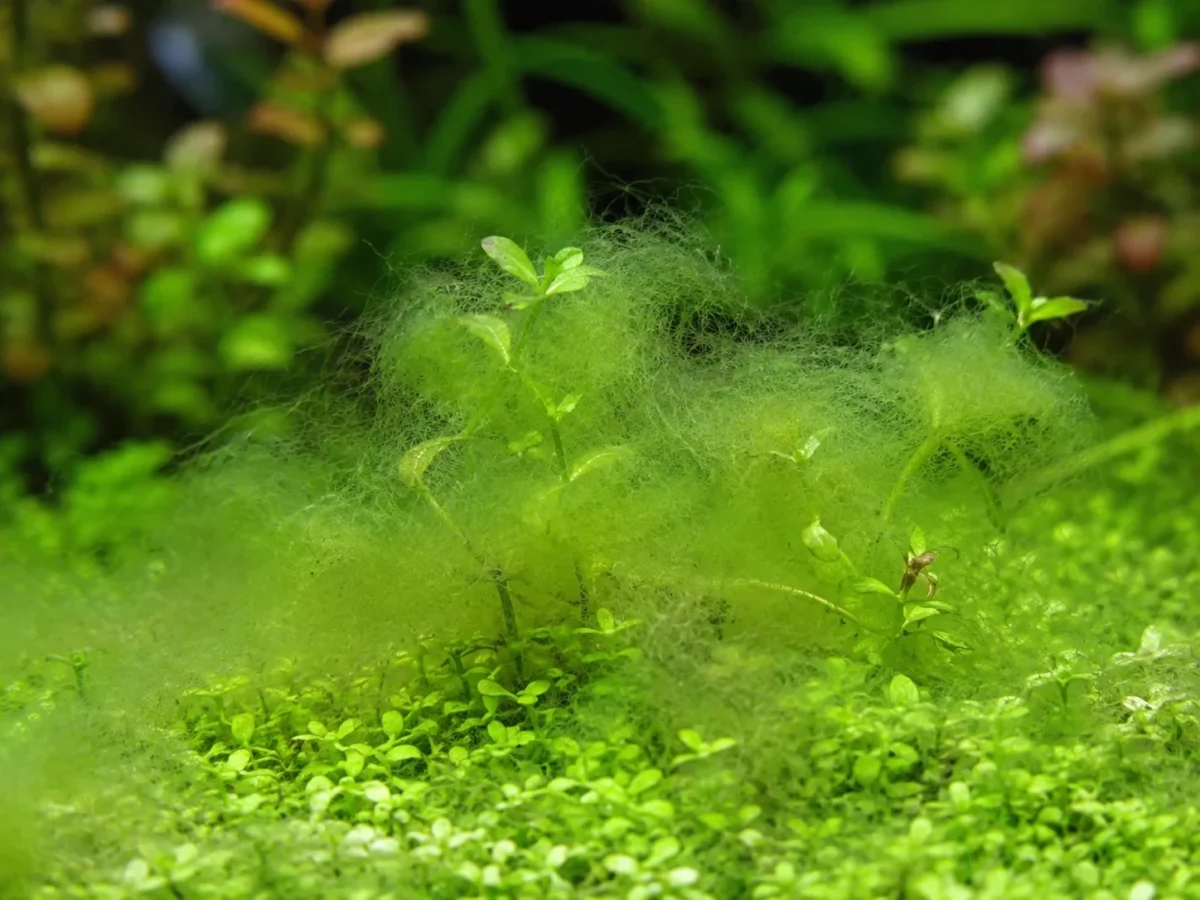
- Dense green tufts or irregular branched masses made from comparatively stiff, wiry filaments, commonly embedded in moss, carpets, plant bases, hardscape, or substrate.
- Wiry, repeatedly branching growth is a strong practical clue for Cladophora-like algae, but Cladophoraceae taxonomy is morphologically plastic and visual aquarium identification cannot establish species.
Probably not this algae if…
- Hair Algae is generally softer, less distinctly branched, and easier to wind or pull away.
- Green Thread Algae describes softer simpler filamentous strands.
- Spirogyra-like strands are smoother, silkier, and more slippery.
Your fix plan
Today
- Remove small colonies carefully before they spread, contain and siphon loose fragments, and prune badly embedded plant material rather than shredding the algae through the aquarium.
This week
- Remove entire tufts as intact as possible and siphon/net loose fragments immediately.
- Remove heavily infested plant material intact and take it out before further manipulation.
Keep it away
- Inspect incoming plants and wet aquarium material.
- Avoid transferring infested décor.
- Remove small colonies intact.
Causes
Cladophora is unusually persistent because it is strongly attached, branching, and capable of vegetative spread through fragments. Introduction/redistribution of viable material matters more diagnostically than chasing one nutrient value.
- Cladophora fragments can survive physical disruption and establish new attached growth.
- Transfer of infested aquarium plants or other wet aquarium material can introduce viable fragments.
- Light and nutrient availability support growth, but no single aquarium nutrient imbalance is an established universal trigger.
- Dense moss, carpets, plant bases, and other difficult-to-clean structures can provide persistent attachment sites.
What to check
- Check moss, carpets and plant bases for embedded colonies before pulling a patch apart.
- Review recent additions of plants or wet decor and collect detached fragments while removing growth.
Nutrient guidance
- Relevance: Low
- Cladophora can grow under nutrient-rich conditions, and changing one fertilizer parameter often does little once colonies are established.
- Maintain appropriate plant nutrition and correct documented problems, but do not attempt arbitrary nutrient starvation.
Treatment options
- Fish
- Low
- Invertebrates
- Low
- Plants
- Meaningful
- Aquarium system
- Low
Early complete physical removal is especially important because fragments can establish new colonies. Prune or remove heavily embedded plant material, clean removable hardscape separately where practical, and prevent transfer of contaminated material.
Manual removal
First lineRemove entire tufts as intact as possible and siphon/net loose fragments immediately.
Best for: Small localized colonies that can be separated without shredding them through the aquarium.
Details and cautions
Not for: Rapid rough scrubbing that produces many uncollected fragments.
Limitations: Tiny remaining fragments or embedded basal growth can regenerate.
Plants caution: Avoid tearing delicate moss/carpets unnecessarily.
System caution: Do not allow detached fragments to circulate and settle elsewhere.
Pruning
First lineRemove heavily infested plant material intact and take it out before further manipulation.
Best for: Cladophora deeply embedded in old leaves, moss, carpets, or small plant sections.
Details and cautions
Not for: Removing excessive healthy biomass when colonies can be separated cleanly.
Limitations: Does not prevent recurrence when colonies remain elsewhere.
Plants caution: Preserve enough healthy plant mass.
System caution: Handle removed material so fragments do not fall back into the aquarium.
Manual removal
SituationalRemove and clean outside the aquarium so loosened fragments cannot disperse.
Best for: Colonies on removable rock, wood, equipment, or decoration.
Details and cautions
Not for: Moving infested hardscape between aquariums without first removing viable growth.
Limitations: Living fragments left in cracks may survive.
System caution: Do not introduce household-cleaner residues.
Lighting adjustment
SupportingMatch lighting to current plant growth while infestation is physically reduced.
Best for: Infestations concentrated in high-light areas where plant mass/condition is inadequate.
Details and cautions
Not for: Using darkness as a substitute for physical removal.
Limitations: Established colonies usually remain after light correction.
Plants caution: Do not unnecessarily deprive healthy plants of required light.
Match the response to severity
- LocalizedOne or a few discrete branching tufts can be removed intact. Prioritize complete early removal before colonies become embedded.
- SpreadingMultiple colonies appear across different plants, mosses, carpets, or hardscape areas. Treat the aquarium as a fragment-containment problem, not merely cosmetic cleanup.
- Embedded or heavyCladophora is deeply interwoven with moss, carpet, dense planting, or porous hardscape and cannot be removed intact. Removing heavily infested material may be more reliable than repeatedly shredding colonies in place.
If it returns and prevention
Why it returns and what to inspect
Why it may return
- Cladophora can return from surviving fragments, embedded basal growth, or reintroduction on aquarium material.
- Small fragments remained after removal.
- Colonies remain embedded in moss, carpet, cracks, or plant bases.
- Infested material was transferred back into the aquarium.
- Plants or decoration from another aquarium introduced viable fragments.
What to inspect
- Inspect previous colony sites closely.
- Inspect moss/carpets for embedded branching fragments.
- Check recently introduced plants and transferred decoration.
- Review removal technique for fragment dispersal.
Aquarium-specific guidance and prevention
- Planted aquarium
- Treat colonies in moss, carpets, and fine plants early because complete removal becomes progressively harder once branching filaments interweave with plant tissue.
Long-term prevention
- Inspect incoming plants and wet aquarium material, avoid transferring infested décor, remove small colonies intact, and collect fragments during maintenance. Do not rely on nutrient starvation or cleanup livestock.