Green Algae Coats in Aquarium
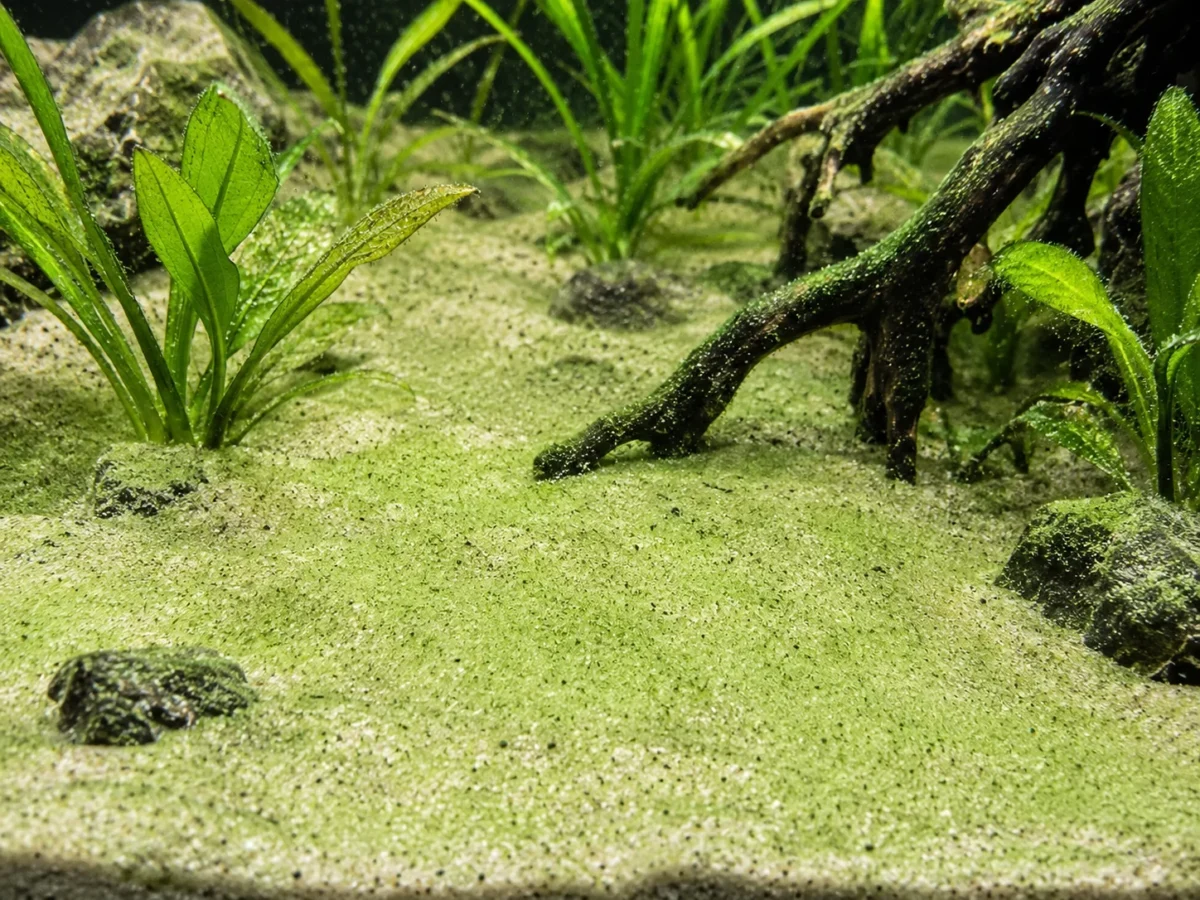
A practical category for broad flat green coatings or patina on exposed aquarium surfaces that are not clearly Green Dust or Green Spot Algae.
Save this guide or add this issue to one of your aquariums.
Need help with Green Algae Coats?
Explore compatibility, care or problems using this guide and your aquarium’s conditions.
Identification
- Main color
- Green and dark green
- Growth form
- Film
- Attachment
- Moderate
- Typical surfaces
- Glass, rocks, wood, and hardscape, and equipment
- Diagnostic confidence
- Practical
- Flat green surface growth ranging from a thin natural-looking patina to thicker attached coats; the category intentionally covers multiple possible green algae.
- Green Algae Coats is intentionally a visual support category rather than a taxonomic diagnosis; different green algae can produce similar patina.
Probably not this algae if…
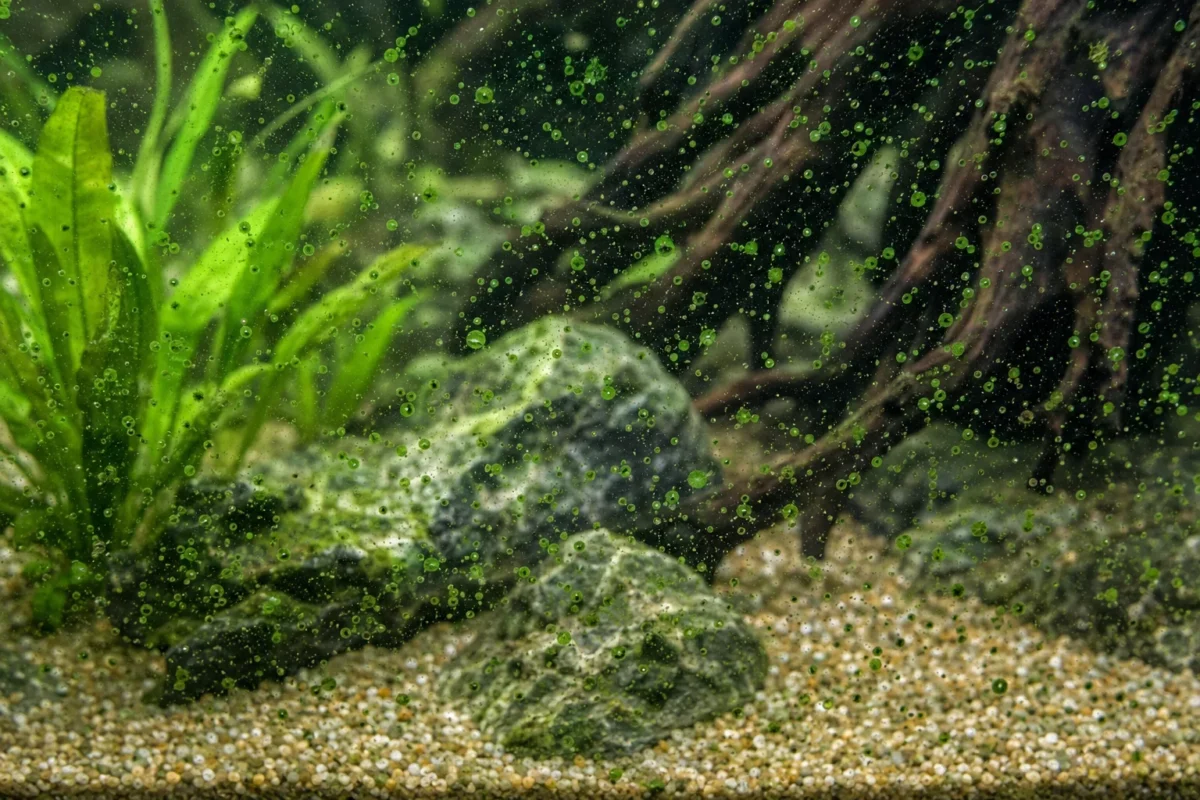
- GDA is a loose, easily wiped green dust that often returns rapidly.
- GSA forms distinct hard circular spots.
- Green Fuzz Film has visible short fuzzy texture rather than a flat patina.
Your fix plan
Today
- If growth is only a thin patina on hardscape or glass, observation or routine cleaning is usually enough., Re-check diagnosis if it becomes hard dots, loose dust, visible fuzz, or slimy mats.
This week
- Leave mild patina in place when aesthetically acceptable.
Keep it away
- No sterile-algae-free endpoint is required.
- Keep light appropriate and maintain routine surface cleaning where desired.
Causes
A thin green surface coating can be an ordinary part of aquarium growth. Check whether it is hard, dusty, hairy or slimy before deciding which guide applies.
- Ordinary green surface algae commonly colonizes well-lit aquarium surfaces over time.
- Green coats frequently occur during normal new-tank succession after earlier brown diatom growth.
- Excessive light relative to current plant growth can increase nuisance coating.
- Different organisms can produce similar coats, so no universal nutrient cause should be assigned.
What to check
- Inspect the coating closely: hard dots, loose dust, short hairs and peeling slime need different identification pathways.
- Compare a small cleaned area over subsequent maintenance checks rather than treating every green coating as a single organism.
Treatment options
- Fish
- Low
- Invertebrates
- Low
- Plants
- Context dependent
- Aquarium system
- Low
A thin green patina may need only routine cleaning. Compare its texture and attachment first; hard spots, loose dust, short hairs and peeling mats should not all receive the same treatment.
Observation
First lineLeave mild patina in place when aesthetically acceptable.
Best for: Thin stable patina on hardscape, equipment, or glass that is not harming plants.
Details and cautions
Not for: Growth that develops stronger diagnostic signs of another algae type.
Limitations: A broad morphology diagnosis can hide a more specific algae type.
Manual removal
SituationalWipe softer coats and scrape more strongly attached coats with a surface-appropriate tool.
Best for: Coating on viewing glass or hardscape where a cleaner appearance is desired.
Details and cautions
Not for: Aggressive scraping of delicate leaves or inappropriate tools on acrylic.
Limitations: Different green-coat organisms have different attachment strengths and return rates.
Plants caution: Avoid aggressive cleaning of delicate leaves.
System caution: Use acrylic-safe tools where applicable.
Lighting adjustment
SupportingModerate unnecessary light intensity or duration when growth outpaces routine maintenance.
Best for: Rapid nuisance coating in a strongly lit aquarium where light exceeds current plant demand.
Details and cautions
Not for: Treating every thin patina as evidence of excessive light.
Limitations: Green patina can remain normal even in a balanced aquarium.
Plants caution: Maintain adequate light for intended plant growth.
Grazers
- Neritid snails · UsefulEffective surface-film grazers but still require suitable long-term conditions and food.
- Amano and dwarf grazing shrimp · LimitedCan graze softer coatings and biofilm but are less effective against hard mature crusts.
If it returns and prevention
Why it returns and what to inspect
- What to expect
- A thin green patina may persist at a low level as ordinary aquarium surface growth without becoming harmful.
- When observation is reasonable
- Growth is thin, slow, mainly on hard surfaces, plants remain healthy, and stronger features of another type are absent.
- Investigate sooner if
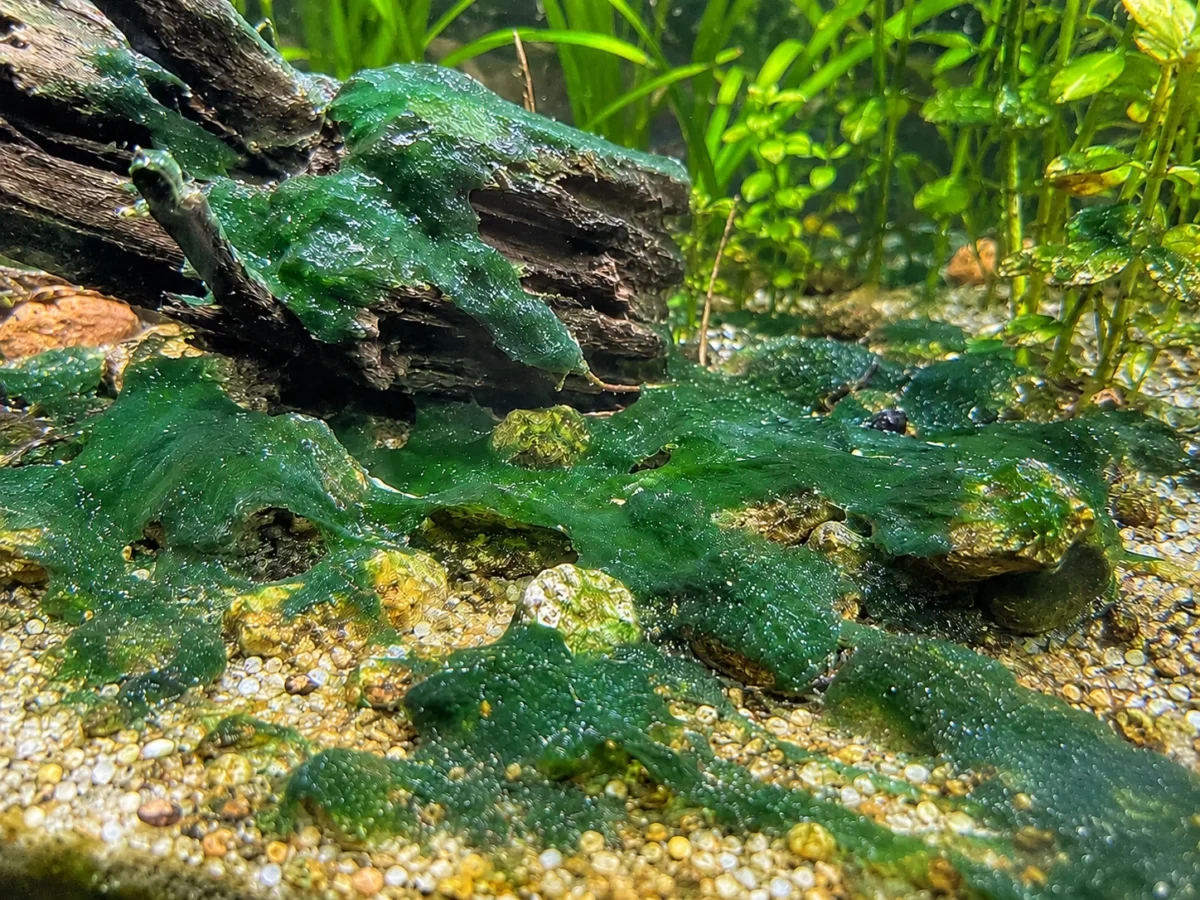
- Growth becomes rapidly thicker, covers living leaves, forms hard separate dots, wipes off as rapidly returning dust, develops fuzz, or becomes slimy and mat-like. Check whether growth is flat rather than fuzzy or filamentous. Check whether it forms discrete hard spots. Check whether it wipes away like loose dust. Check for slimy sheet-like texture or odor.
Aquarium-specific guidance and prevention
- New aquarium
- Ordinary green coats commonly follow the early brown-diatom phase; a thin stable patina can be observed unless another specific pattern develops.
Long-term prevention
- No sterile-algae-free endpoint is required. Keep light appropriate and maintain routine surface cleaning where desired.