Green Spot Algae in Aquarium
Hard, strongly attached green spots on aquarium glass, hardscape and older slow-growing plant leaves.
Save this guide or add this issue to one of your aquariums.
Need help with Green Spot Algae?
Explore compatibility, care or problems using this guide and your aquarium’s conditions.
Identification
- Main color
- Dark green, green, and bright green
- Growth form
- Spot
- Attachment
- Strong
- Typical surfaces
- Glass, plant leaves, rocks, wood, and hardscape, and equipment
- Texture
- Hard and crusty
- Behavior
- Hard to scrape
- Diagnostic confidence
- High
- Small distinct dark-to-bright green circular spots that adhere strongly and may merge into larger crust-like patches over time.
- Discrete green spots that resist wiping are a useful identification clue; appearance alone cannot establish the species.
Probably not this algae if…
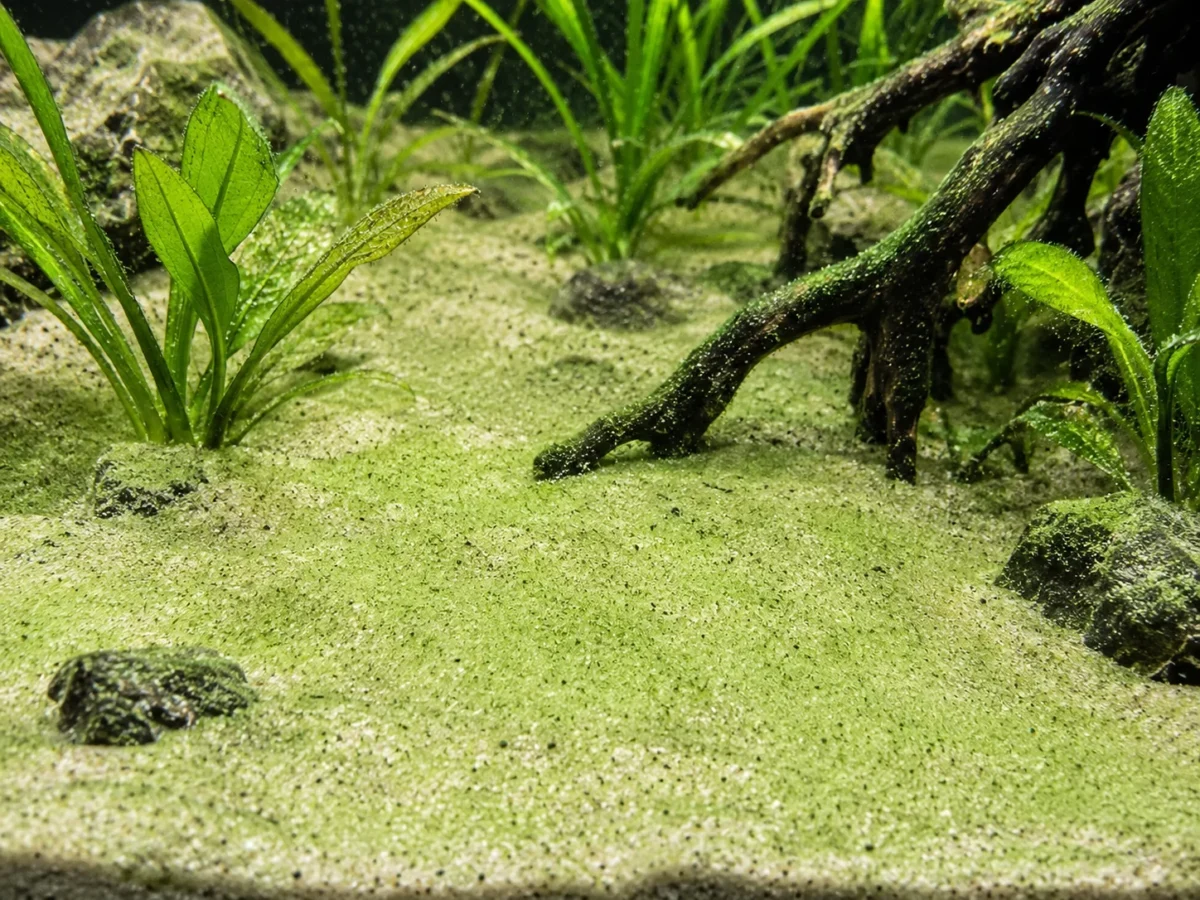
- GDA is a soft wipeable green dust film.
- Green Algae Coats form broader flat patina rather than discrete hard dots.
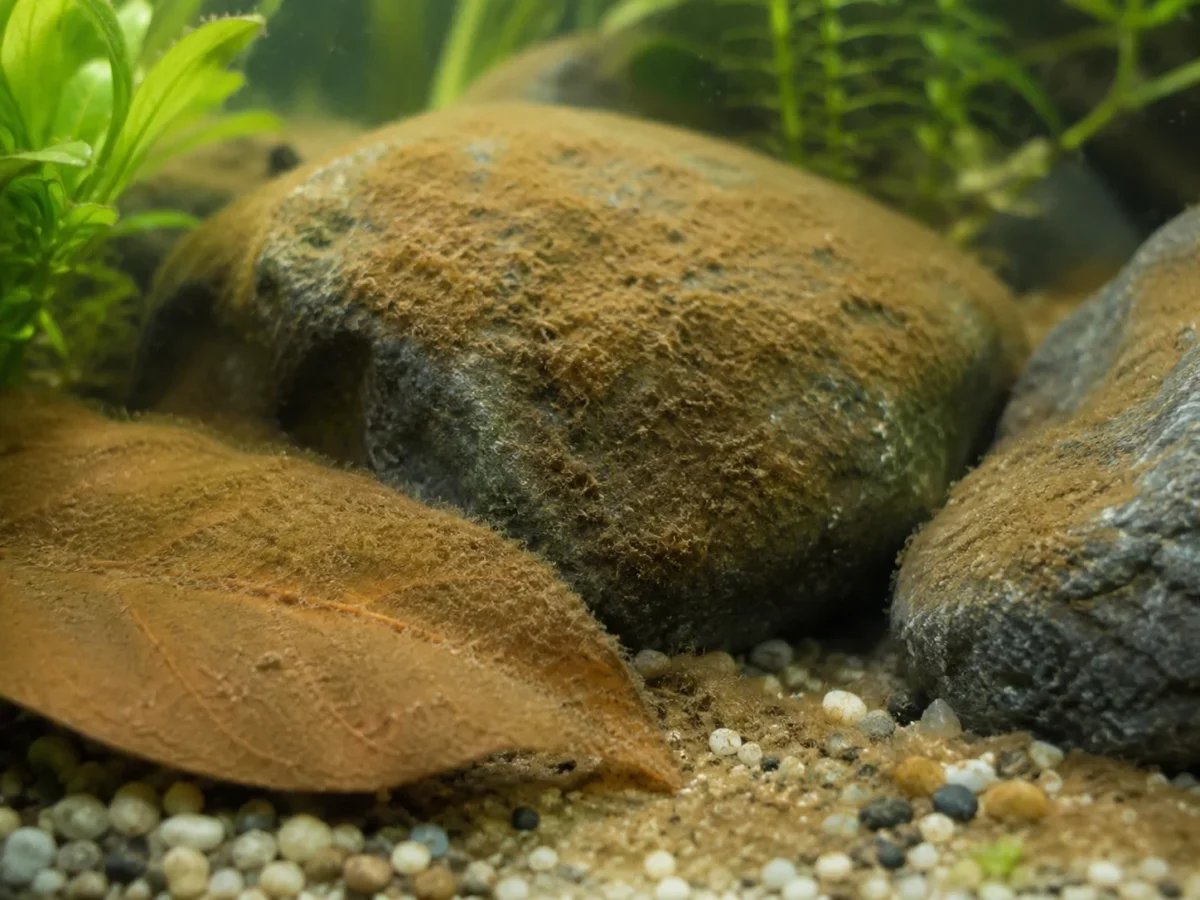
- Brown Diatoms are tan/brown, powdery, and weakly attached.
Your fix plan
Today
- Scrape affected glass with the correct aquarium-safe tool, prune badly affected old leaves if needed.
- Review light exposure and plant vigor before changing nutrient dosing.
This week
- Use an aquarium-safe blade or scraper appropriate to the tank material.
- Use an acrylic-safe plastic scraper or manufacturer-approved tool.
Keep it away
- Match light to plant growth.
- Remove heavily aged foliage.
- Maintain balanced plant nutrition and routine maintenance.
Causes
GSA is most usefully associated with long-exposed surfaces, strong light pressure, and slow plant growth. Low phosphate is a longstanding hobby association rather than a universal diagnostic cause.
- Strong light exposure can increase GSA pressure, especially on slow-growing or long-lived leaves.
- Old slow-growing leaves provide stable surfaces for strongly attached spots.
- Low phosphate is a common planted-aquarium association, but not an established universal cause.
- Poor overall plant vigor can coincide with increasing GSA.
What to check
- Check whether spots are concentrated on slow-growing old leaves or the most brightly lit glass.
- If phosphate deficiency is suspected, check the water test and fertilizer routine before adding extra phosphate.
Nutrient guidance
- Relevance: Medium
- Low phosphate is commonly associated with GSA in planted aquariums, but no validated universal threshold was established.
- Do not infer phosphate deficiency from green spots alone.
- Correct a documented or strongly supported phosphate deficiency as part of balanced plant nutrition; do not automatically increase phosphate solely because GSA is present.
Treatment options
- Fish
- Low
- Invertebrates
- Low
- Plants
- Context dependent
- Aquarium system
- Low
Physical removal is primary. Use material-appropriate scraping, prune heavily affected old leaves, moderate excessive light on slow growers, and correct real plant-growth deficiencies without treating phosphate as a universal cure.
Manual removal
First lineUse an aquarium-safe blade or scraper appropriate to the tank material.
Best for: Hard GSA on glass panels.
Details and cautions
Not for: Metal blades on acrylic or scratch-sensitive surfaces.
Limitations: Scraping removes existing spots but not recurrence.
System caution: Avoid damaging silicone seams.
Manual removal
First lineUse an acrylic-safe plastic scraper or manufacturer-approved tool.
Best for: GSA on acrylic panels.
Details and cautions
Not for: Metal blades or abrasive tools.
Limitations: Mature spots may require repeated careful cleaning.
System caution: Acrylic scratches easily.
Pruning
SituationalRemove the worst affected old leaves and retain healthy new growth.
Best for: Older slow-growing leaves that are heavily encrusted.
Details and cautions
Not for: Removing excessive healthy plant mass.
Limitations: Does not address recurring light or plant-health conditions.
Plants caution: Avoid excessive pruning of slow-growing plants.
Lighting adjustment
SupportingReduce unnecessary intensity/duration or reposition slow-growing plants.
Best for: Slow growers or exposed surfaces receiving more light than current plant growth supports.
Details and cautions
Not for: Assuming every GSA outbreak is caused only by light.
Limitations: Existing hard spots still require removal.
Plants caution: Match reductions to actual plant requirements.
Nutrient correction
SituationalRestore balanced plant nutrition and correct the documented limiting factor.
Best for: A planted aquarium with independent evidence of overly lean nutrition or genuine phosphate deficiency.
Details and cautions
Not for: Automatically dosing phosphate because GSA appeared.
Limitations: The phosphate-GSA relationship is hobby consensus, not a universal rule.
Plants caution: Avoid abrupt fertilizer swings.
Grazers
- Nerite snails (Neritidae) · UsefulAmong the few aquarium grazers that reliably eat hard GSA, but they require suitable water, minerals, food, and tank mates; females may leave white egg capsules.
If it returns and prevention
Why it returns and what to inspect
Why it may return
- Rapid recurrence means removal did not change the conditions favoring colonization of exposed surfaces.
- Slow-growing or aging leaves remain strongly exposed to light.
- Lighting remains high relative to plant growth.
- Plant health remains poor because of nutrition, carbon, adaptation, or maintenance problems.
What to inspect
- Compare returning spots with the brightest exposed surfaces.
- Inspect slow-growing plants for old leaves.
- Evaluate plant nutrition without assuming phosphate deficiency.
- In CO2-injected tanks, review overall plant growth and CO2 consistency if plants are struggling.
Aquarium-specific guidance and prevention
- Planted aquarium
- Old slow-growing leaves are especially vulnerable; prioritize healthy new growth and balanced plant nutrition.
- CO2 injected
- If plant growth is weak, include CO2 consistency in the broader plant-health review rather than treating GSA as proof of CO2 deficiency.
- Low tech
- Keep lighting moderate enough for naturally slower plant growth.
Long-term prevention
- Match light to plant growth, remove heavily aged foliage, maintain balanced plant nutrition and routine maintenance, and avoid assuming every outbreak requires phosphate dosing.