Hair Algae in Aquarium
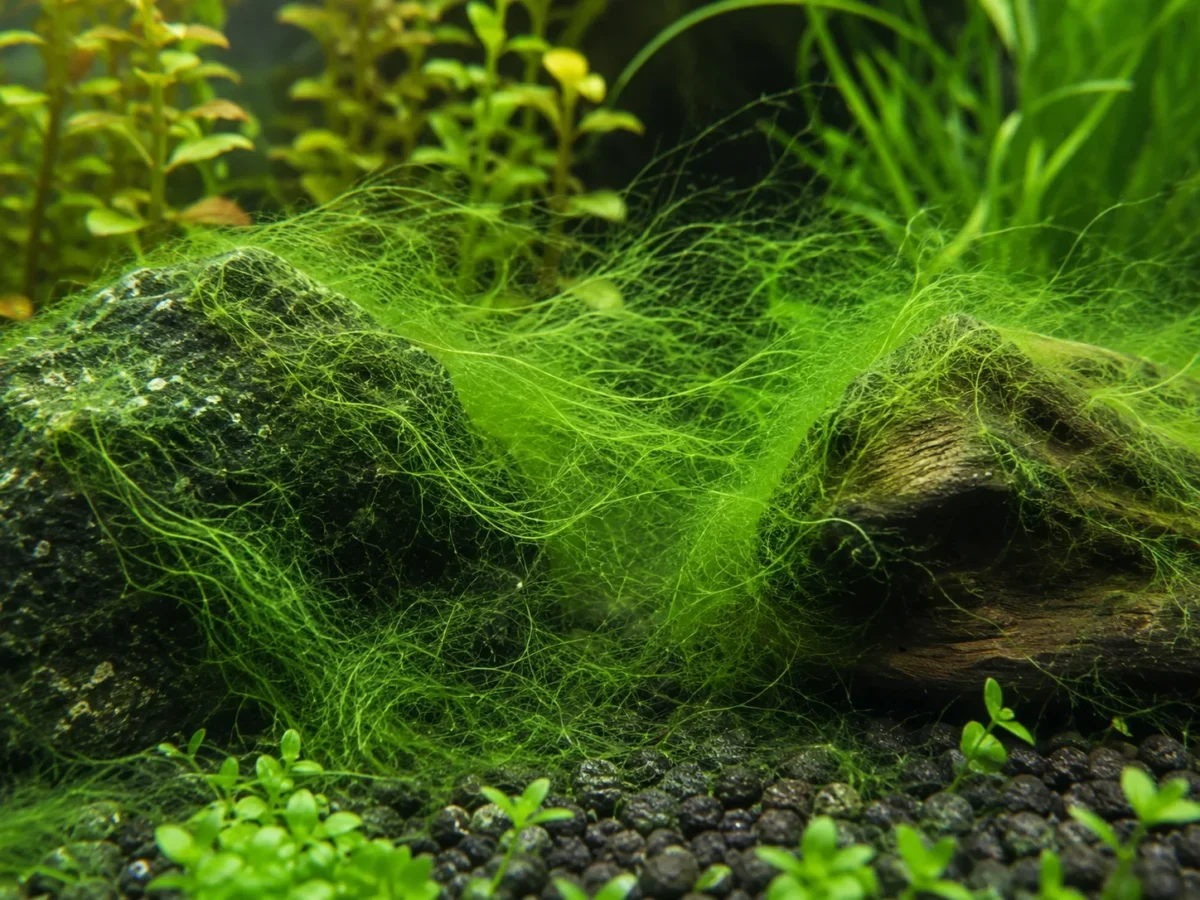
A broad aquarium label for long green filamentous algae that grows through plants, moss, hardscape, and equipment and can form tangled mats when allowed to spread.
Save this guide or add this issue to one of your aquariums.
Need help with Hair Algae?
Explore compatibility, care or problems using this guide and your aquarium’s conditions.
Identification
- Main color
- Green and bright green
- Growth form
- Filament
- Attachment
- Moderate
- Typical surfaces
- Plant leaves, rocks, wood, and hardscape, on moss, and equipment
- Behavior
- Waves in current
- Diagnostic confidence
- Practical
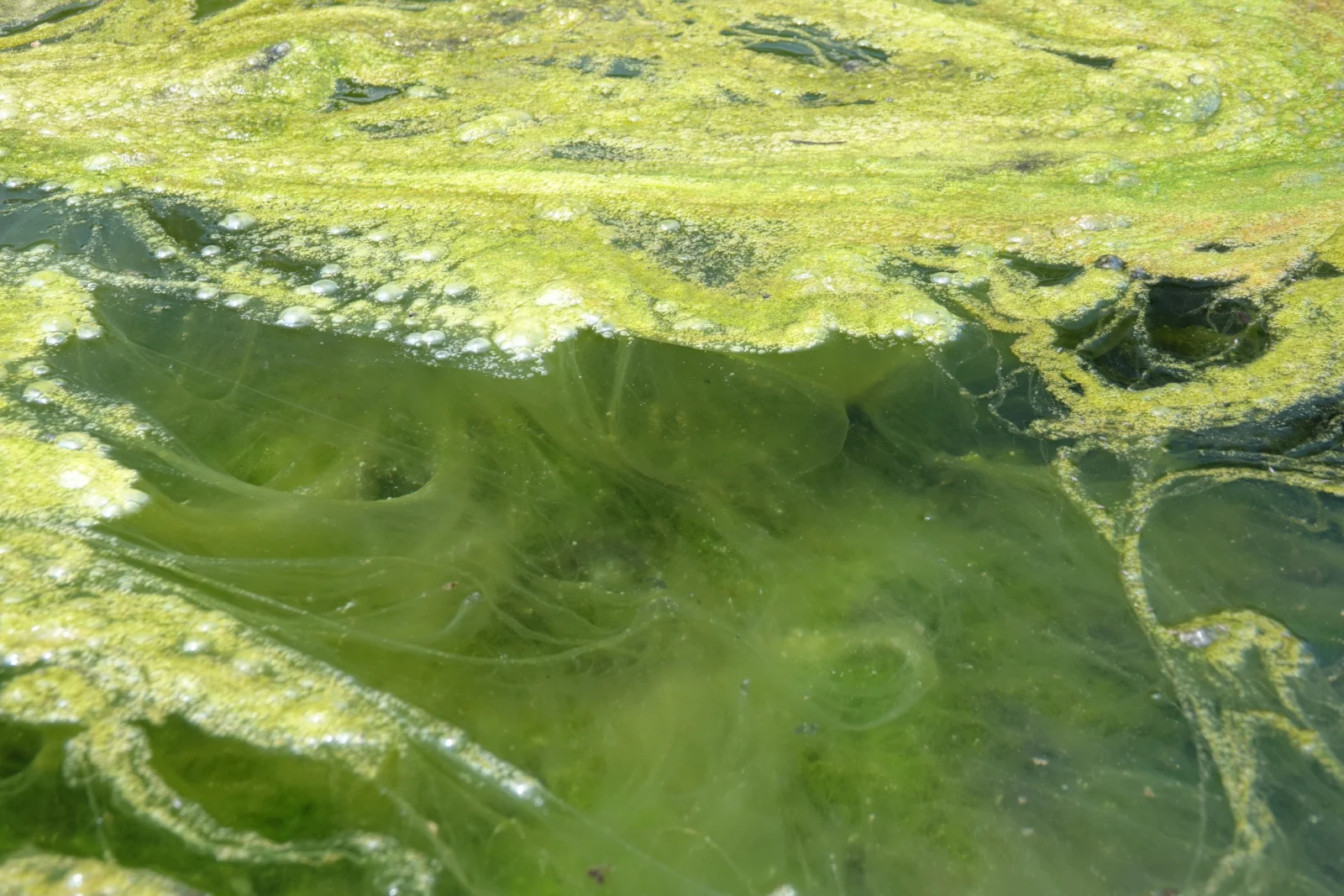
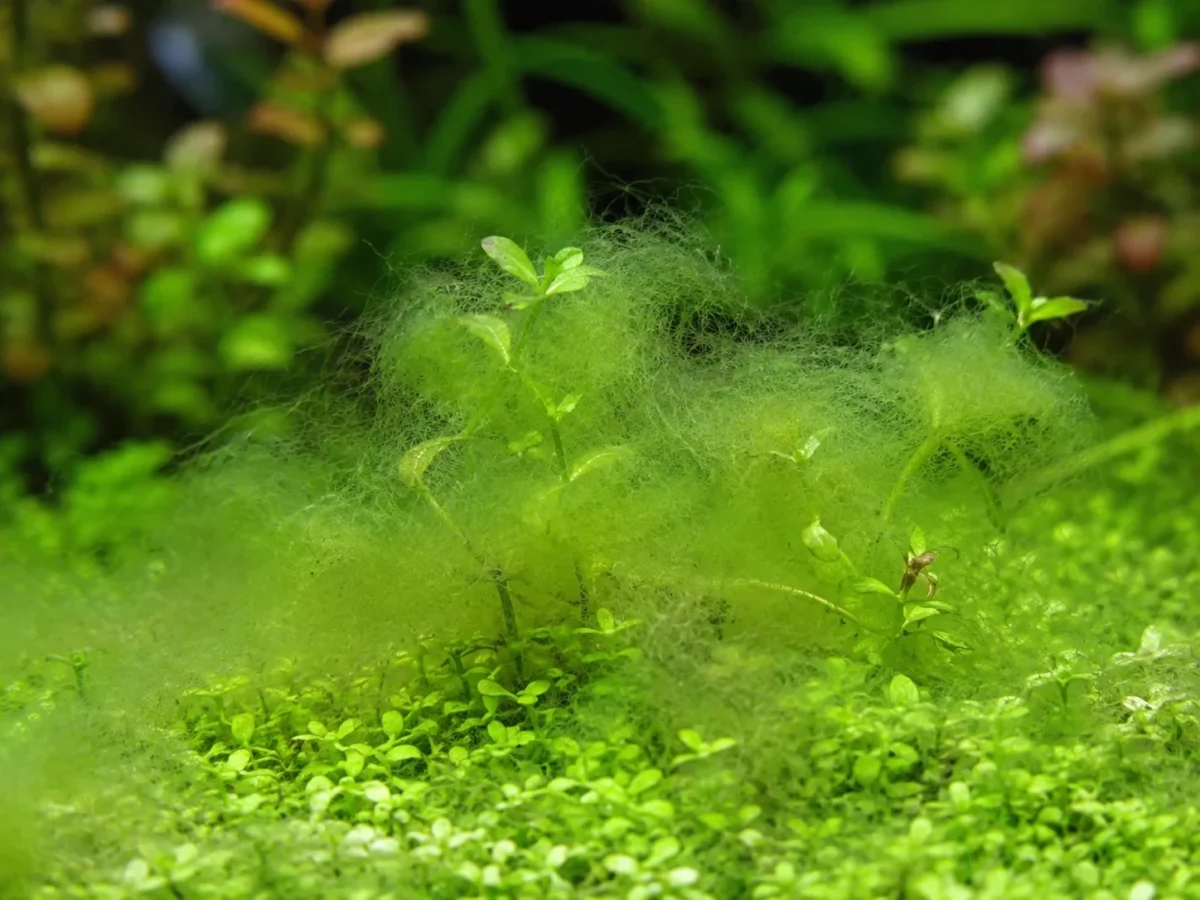
- Long green hair-like filaments ranging from loose individual strands to tangled mats, usually attached to plants, moss, hardscape, or equipment and often moving in the current.
- Hair Algae is a useful aquarium morphology category rather than a reliable genus or species diagnosis; multiple freshwater green algae can produce hair-like growth.
Probably not this algae if…
- Green Thread Algae substantially overlaps generic Hair Algae and is often used for longer thread-like growth.
- Spirogyra-like growth is especially smooth, silky, or slippery.
- Rhizoclonium-like growth is often paler/looser and has low visual genus confidence.
Your fix plan
Today
- Wind out the largest strands, trim badly overgrown or deteriorating plant tissue.
- Remove trapped debris.
- Reduce excessive light pressure while checking plant health and CO2 stability where applicable.
This week
- Twirl strands around an aquarium-safe tool and remove the collected algae.
- Remove the worst affected old growth so healthy tissue can replace it.
Keep it away
- Support consistent healthy plant growth, match light to the aquarium's real growth capacity.
- Export trapped organic debris.
- Avoid abrupt changes.
Causes
Hair Algae is a morphology shared by many filamentous green algae, so no single aquarium parameter explains every outbreak. Light, resource availability, plant condition, organic loading, and aquarium stability interact; CO2 is context-specific to injected tanks.
- High light availability can accelerate filamentous growth when healthy plant growth cannot keep pace.
- Nutrient availability supports filamentous algae, but Hair Algae has no universal nitrate, phosphate, iron, or nitrogen-deficiency trigger.
- Stressed/adapting plants and reduced plant competition are common planted-aquarium associations.
- In CO2-injected tanks, unstable or poorly distributed CO2 is a common husbandry correlate.
- Accumulated organic debris, decaying material, and sudden organic-loading events are common husbandry correlates.
- Young or recently disturbed aquariums may be more vulnerable while plant and microbial communities stabilize.
What to check
- Check the light timer and direct sunlight, then inspect plants for melt and trapped debris.
- If CO2 is already injected, check delivery timing and circulation; do not increase gas blindly or restrict surface exchange.
Nutrient guidance
- Relevance: Medium
- No universal nitrogen-deficiency threshold is established as a direct Hair Algae cause; filamentous algae can also grow productively in nutrient-rich conditions.
- Correct demonstrated plant deficiencies and maintain consistent plant nutrition without randomly increasing or restricting nitrogen, phosphate, or iron because Hair Algae is present.
Treatment options
- Fish
- Low
- Invertebrates
- Low
- Plants
- Meaningful
- Aquarium system
- Low
Physical removal and pruning provide immediate control. Durable improvement depends on matching light to healthy plant growth, exporting organic debris, and correcting documented plant-growth limitations; in injected tanks stabilize CO2 rather than simply increasing it.
Manual removal
First lineTwirl strands around an aquarium-safe tool and remove the collected algae.
Best for: Long accessible filaments on plants, hardscape, moss, and equipment.
Details and cautions
Not for: Pulling aggressively through delicate moss or rooted plants.
Limitations: Reduces biomass but does not stop new growth if favorable conditions remain.
Plants caution: Work carefully around delicate moss, carpets, and stems.
System caution: Export loose fragments during the same maintenance session.
Pruning
First lineRemove the worst affected old growth so healthy tissue can replace it.
Best for: Heavily covered, old, melting, or deteriorating plant tissue.
Details and cautions
Not for: Removing excessive healthy plant biomass.
Limitations: Does not correct recurring light, organic, nutrient, or CO2 problems.
Plants caution: Retain enough healthy plant mass for recovery.
Organic-load reduction
SupportingExport trapped detritus, remove decay, avoid excess feeding, and restore routine maintenance.
Best for: Tanks with visible detritus, overfeeding, decay, dirty moss/carpet zones, or a recent organic-loading event.
Details and cautions
Not for: Assuming all Hair Algae is caused by dirty water.
Limitations: Supportive rather than taxon-specific.
System caution: Avoid sterilizing established biological filtration.
Lighting adjustment
SupportingTemporarily moderate excessive light while plant health recovers.
Best for: Aquariums receiving more light than current healthy plant growth can use.
Details and cautions
Not for: Treating low light as a substitute for fixing stressed plants or organic problems.
Limitations: Filamentous algae still requires physical removal.
Plants caution: Avoid prolonged under-lighting of genuinely high-light plants.
CO2 stabilization
SituationalRestore repeatable CO2 timing/distribution and maintain appropriate gas exchange.
Best for: CO2-injected planted tanks where filamentous algae followed inconsistent injection, impaired distribution, or flow/equipment changes.
Details and cautions
Not for: Low-tech aquariums or aggressive CO2 increases made solely to kill algae.
Limitations: The CO2-Hair relationship is planted-tank husbandry consensus, not a universal biological cause.
Fish caution: Avoid excessive CO2 or reduced oxygenation.
Invertebrates caution: Avoid aggressive CO2 increases.
System caution: Maintain adequate gas exchange.
Nutrient correction
SituationalCorrect the actual plant-growth limitation and return to consistent fertilization.
Best for: A planted tank with independent evidence of poor plant nutrition or a documented deficiency.
Details and cautions
Not for: Treating a guessed nitrate, phosphate, or iron target as a universal cure.
Limitations: The algae morphology cannot identify which nutrient, if any, is limiting plants.
Plants caution: Avoid abrupt fertilizer swings based solely on algae appearance.
Match the response to severity
- LocalizedA small amount is confined to one plant group, moss patch, or hardscape area. Remove it early and inspect that area for plant stress, trapped debris, or excessive light.
- SpreadingNew strands are appearing across several plant groups or surfaces after routine removal. Shift from cosmetic removal to a tank-level review of plant growth, light, organics, and CO2/nutrients where relevant.
- Heavy plant coverageDense mats substantially cover moss, carpeting plants, stems, or foliage and manual removal no longer keeps pace. Reduce algae biomass and heavily damaged tissue before focusing on long-term plant recovery.
Grazers
- Amano shrimp (Caridina multidentata) · UsefulThey graze hair/thread algae but may prefer prepared foods and cannot compensate for a severe outbreak by themselves.
- Siamese algae eater (Crossocheilus spp.) · UsefulJuveniles readily graze hair algae, but these fish grow relatively large, need suitable space, and may consume dwarf shrimp; older fish may favor prepared food.
- Mollies (Poecilia spp.) · LimitedThey can pull at Hair Algae but have their own size, water-chemistry, social, and stocking requirements.
- Florida flagfish (Jordanella floridae) · UsefulCan actively remove Hair Algae, but temperament, plant damage, aquarium size, and dwarf-shrimp predation can make them unsuitable.
If it returns and prevention
Why it returns and what to inspect
Why it may return
- Hair Algae often returns because manual removal exports existing biomass without changing the conditions that continue to favor filamentous growth.
- Small filaments remain embedded in moss, carpets, or dense planting.
- Light remains too strong for current plant health or biomass.
- Decaying material and trapped detritus continue to accumulate.
- Plants remain stressed or poorly adapted.
- CO2 timing or distribution remains unstable in an injected aquarium.
- A real plant nutrient limitation remains uncorrected.
What to inspect
- Inspect moss, carpets, and plant bases for remaining strands and debris.
- Compare lighting with actual healthy plant growth.
- Check deteriorating leaves and organics.
- In CO2-injected tanks review timing and distribution.
- Assess plant nutrition independently rather than diagnosing a deficiency from algae alone.
Aquarium-specific guidance and prevention
- New aquarium
- Keep lighting conservative while plants and microbial communities establish, remove visible filaments early, and avoid adding livestock solely as a temporary cleanup crew.
- Planted aquarium
- Prioritize clean new growth, remove deteriorating tissue, and match light/fertilization to actual plant performance.
- CO2 injected
- Review CO2 timing and distribution when plant growth stalls or Hair Algae follows equipment/flow changes; do not simply increase CO2.
- Low tech
- Because plant growth is slower without injected CO2, use correspondingly moderate lighting.
- Shrimp aquarium
- Amano shrimp may provide useful support; larger fish marketed as algae eaters may be unsuitable for dwarf shrimp.
Long-term prevention
- Support consistent healthy plant growth, match light to the aquarium's real growth capacity, export trapped organic debris, and avoid abrupt changes. Correct documented plant limitations rather than treating one nutrient value as a universal trigger.