Rhizoclonium in Aquarium
A tentative aquarium diagnosis for Rhizoclonium-like filamentous green algae, often described as pale, loose thread growth but difficult to identify reliably without microscopy.
Save this guide or add this issue to one of your aquariums.
Need help with Rhizoclonium?
Explore compatibility, care or problems using this guide and your aquarium’s conditions.
Identification
- Main color
- Light green, green, and brownish green
- Growth form
- Filament
- Attachment
- Moderate
- Typical surfaces
- Plant leaves, on moss, rocks, wood, and hardscape, and substrate
- Diagnostic confidence
- Tentative
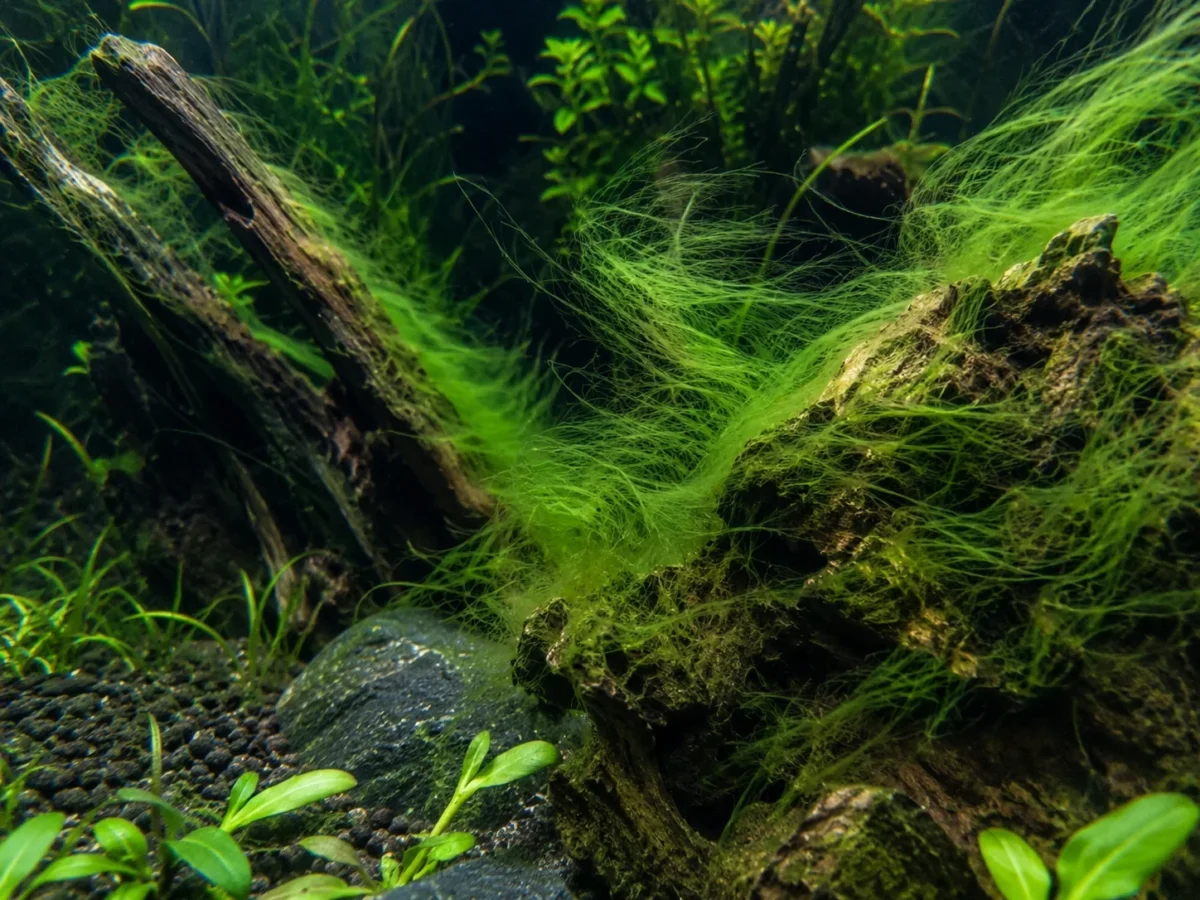
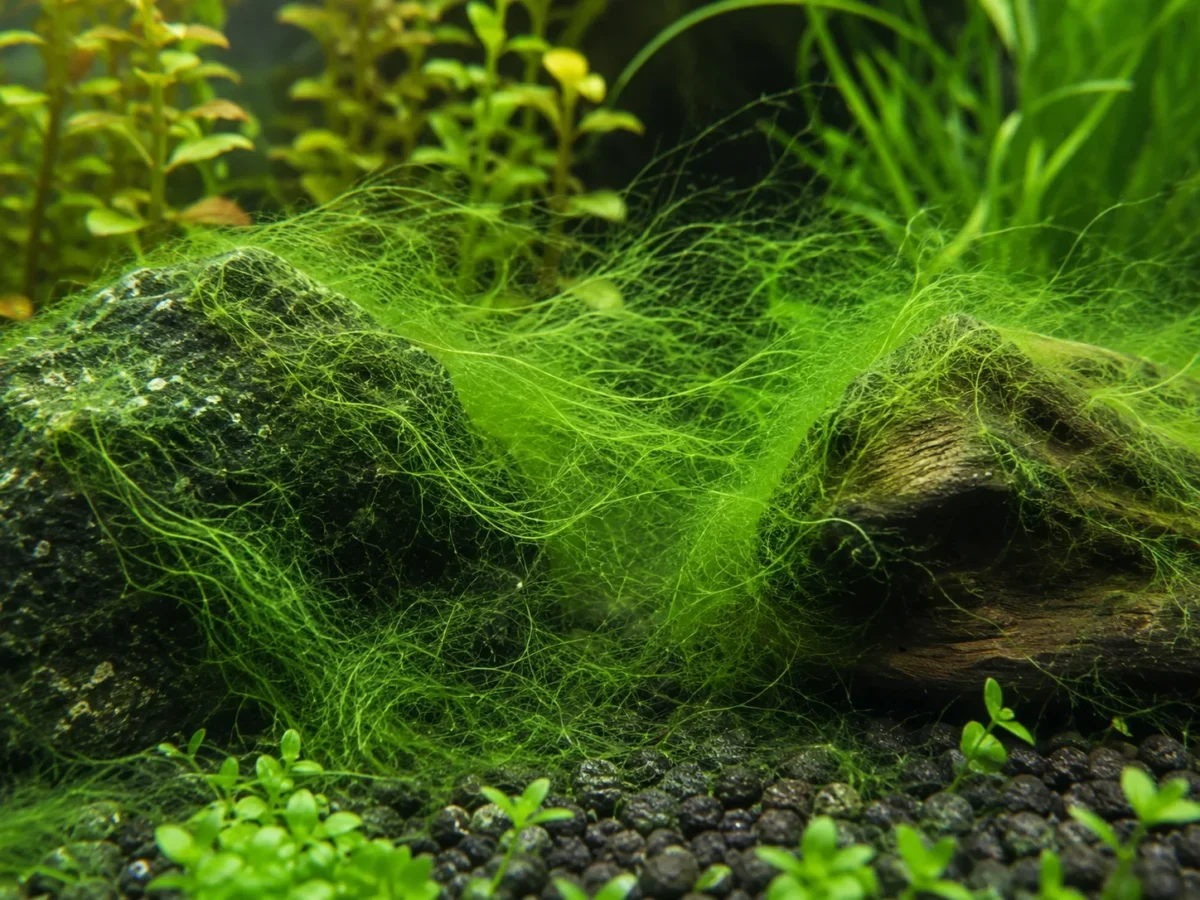
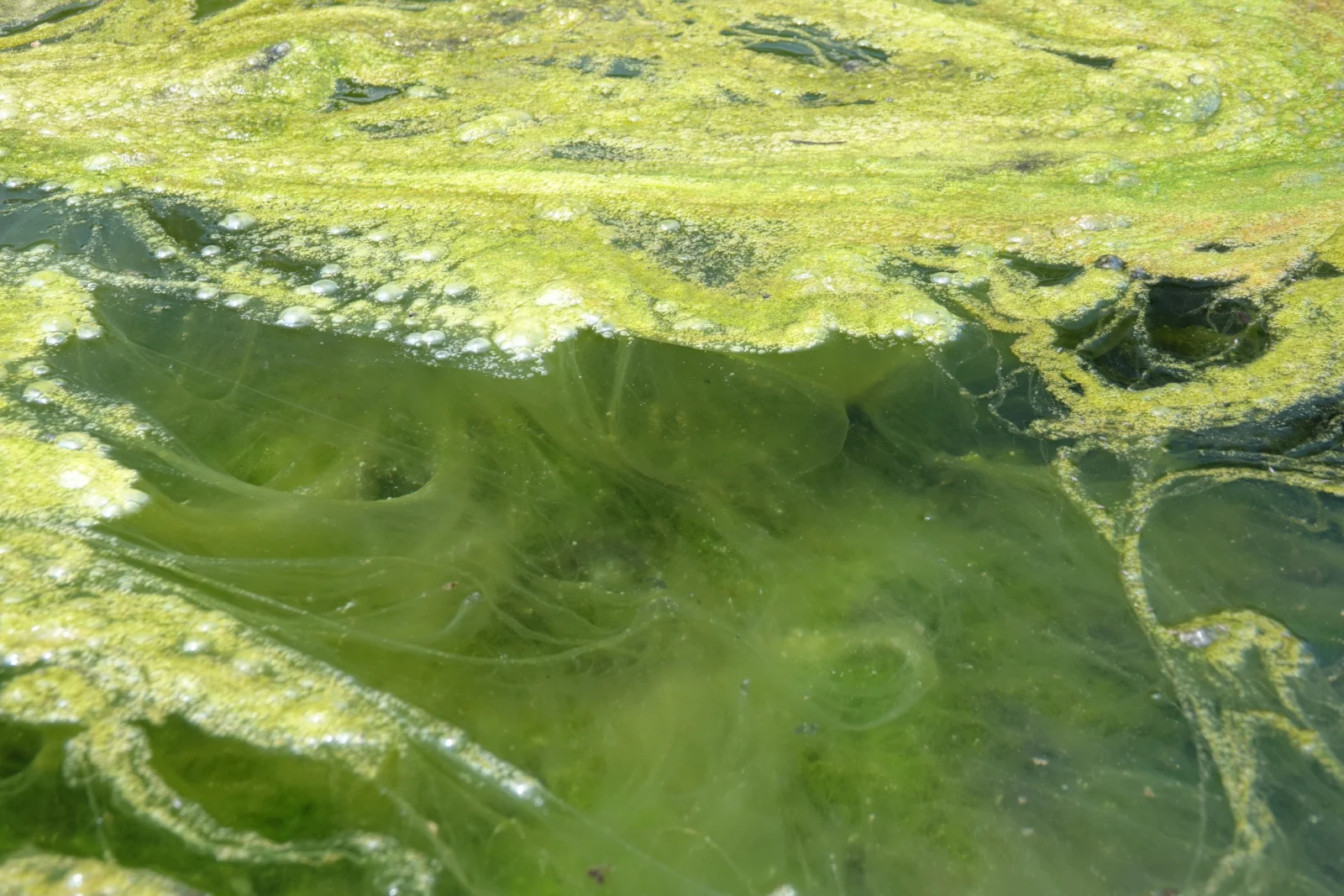
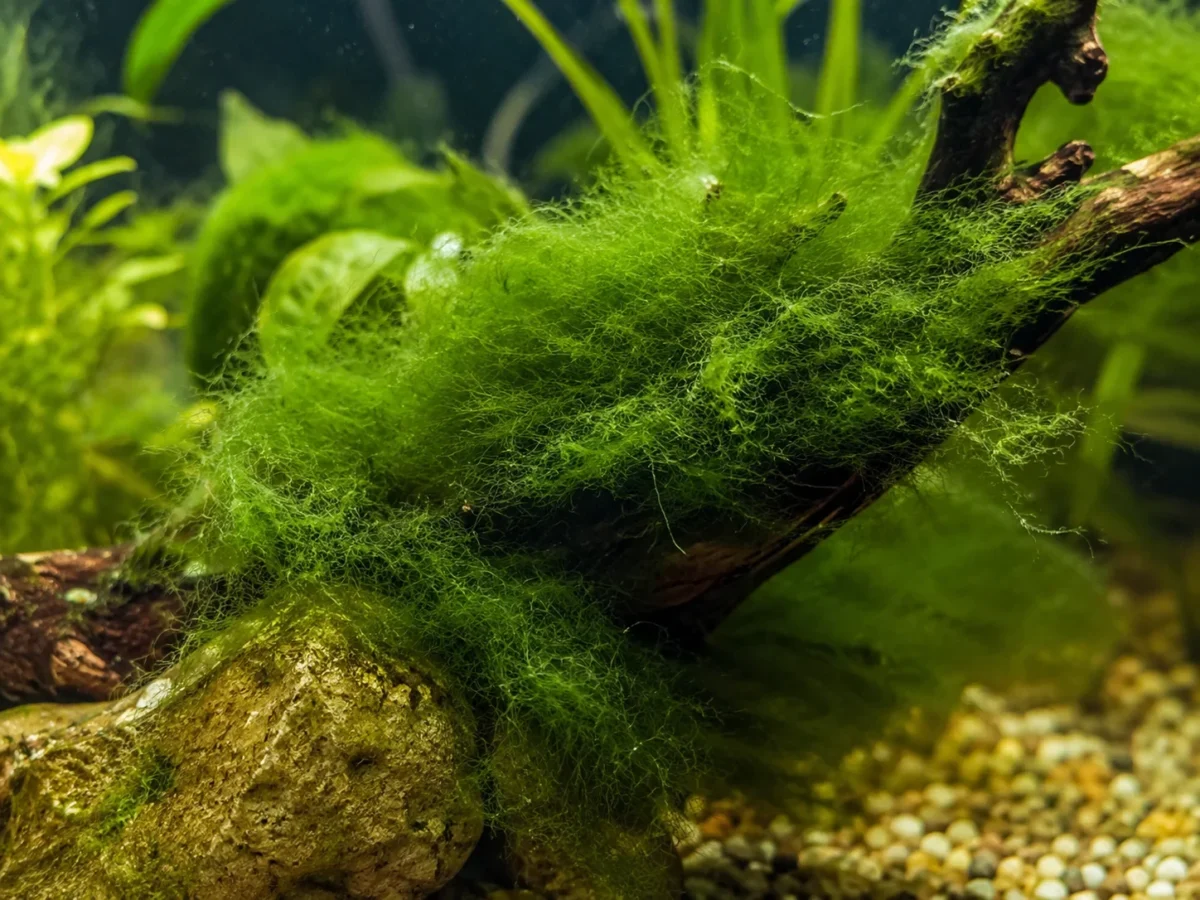
- Fine unbranched or minimally branched green filaments that aquarium guides often describe as pale, greenish-gray, loose, or cottony and that may become entangled with plants, moss, hardscape, or substrate.
- Rhizoclonium is a genuine genus, but its taxonomy is difficult because of limited distinguishing morphology and complicated Cladophoraceae phylogeny; visual aquarium identification should normally remain Rhizoclonium-like.
Probably not this algae if…
- Hair Algae is the safer broad practical diagnosis when growth is simply long green filamentous material.
- Green Thread Algae is another broad hobby label that may overlap Rhizoclonium-like strands.
- Spirogyra is more strongly suggested by very smooth slippery filaments and spiral chloroplasts microscopically.
Your fix plan
Today
- Remove loose filamentous biomass and treat the genus diagnosis as provisional.
- If stronger genus-level clues are absent.
- Use the broader Hair/Thread Algae management pathway.
This week
- Pull or wind out strands and siphon detached material.
Keep it away
- Remove loose strands and trapped debris during maintenance.
- Check that new plant growth is healthy and review the lighting routine after planting or pruning.
- Avoid changing several nutrient or CO2 settings at once.
Causes
There is little evidence for a uniquely Rhizoclonium-specific aquarium cause; interpret it within the broader filamentous-algae context of aquarium maturity, plant competition, light, nutrient availability, and organic conditions.
- Rhizoclonium-like filamentous growth is frequently reported in young or recently stabilizing aquariums.
- Weak or adapting plant growth may leave more ecological opportunity for filamentous algae.
- Light and available nutrients support growth, but no aquarium-specific nutrient deficiency is established as a genus-level cause.
- Rhizoclonium occurs across different flow environments, so low flow is not a universal cause.
What to check
- Check whether strands form loose tangles or firmly attached, wiry branches.
- Look for melting plants and trapped debris; check recent planting and lighting changes rather than assuming one nutrient deficiency.
Treatment options
- Fish
- Low
- Invertebrates
- Low
- Plants
- Context dependent
- Aquarium system
- Low
Management largely overlaps ordinary soft filamentous algae: physical removal, realistic lighting, healthy plant recovery, and correction of actual aquarium problems. No distinct Rhizoclonium-specific chemical or nutrient protocol is supported.
Manual removal
First linePull or wind out strands and siphon detached material.
Best for: Loose accessible filamentous strands on plants, moss, substrate, and hardscape.
Details and cautions
Not for: Using ease of removal as proof of genus identity.
Limitations: Other soft filamentous algae can behave the same way.
Plants caution: Work gently through moss and fine plants.
Lighting adjustment
SupportingUse a conservative light level while aquarium and plants stabilize.
Best for: Young or stressed planted aquariums where filamentous growth accelerates under unnecessarily strong light.
Details and cautions
Not for: Treating light as a genus-specific Rhizoclonium cause.
Limitations: This is generic filamentous-algae management.
Plants caution: Maintain enough light for healthy plant recovery.
If it returns and prevention
Why it returns and what to inspect
- What to expect
- Some soft filamentous growth associated with a young aquarium may decline as plants and biological communities become established, but this cannot be assumed solely from a tentative Rhizoclonium diagnosis.
- When observation is reasonable
- Growth is sparse, aquarium is young, plant growth is improving, and strands are not rapidly spreading or smothering plants.
- Investigate sooner if
- Growth spreads rapidly, becomes wiry or distinctly branched, heavily covers plants, or persists in a mature stable aquarium. Confirm the aquarium is genuinely young or recently stabilizing. Check whether growth is better explained by Hair, Spirogyra, Fuzz, or Cladophora. Assess plant health and spread rate.
Aquarium-specific guidance and prevention
- New aquarium
- Use conservative filamentous-algae management and allow healthy plant growth to establish rather than making genus-specific nutrient corrections from an uncertain visual ID.
Long-term prevention
- Remove loose strands and trapped debris during maintenance. Check that new plant growth is healthy and review the lighting routine after planting or pruning; avoid changing several nutrient or CO2 settings at once.