Fuzz Algae
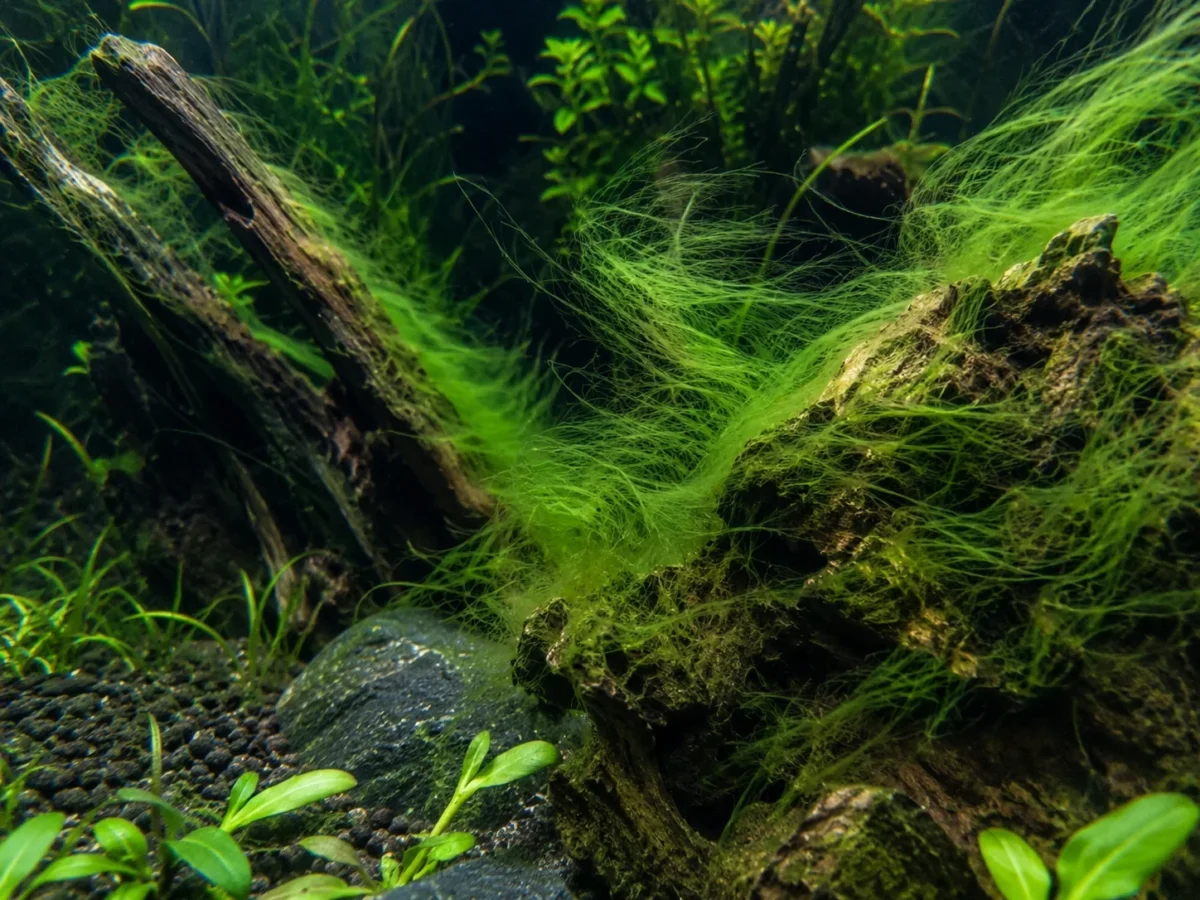
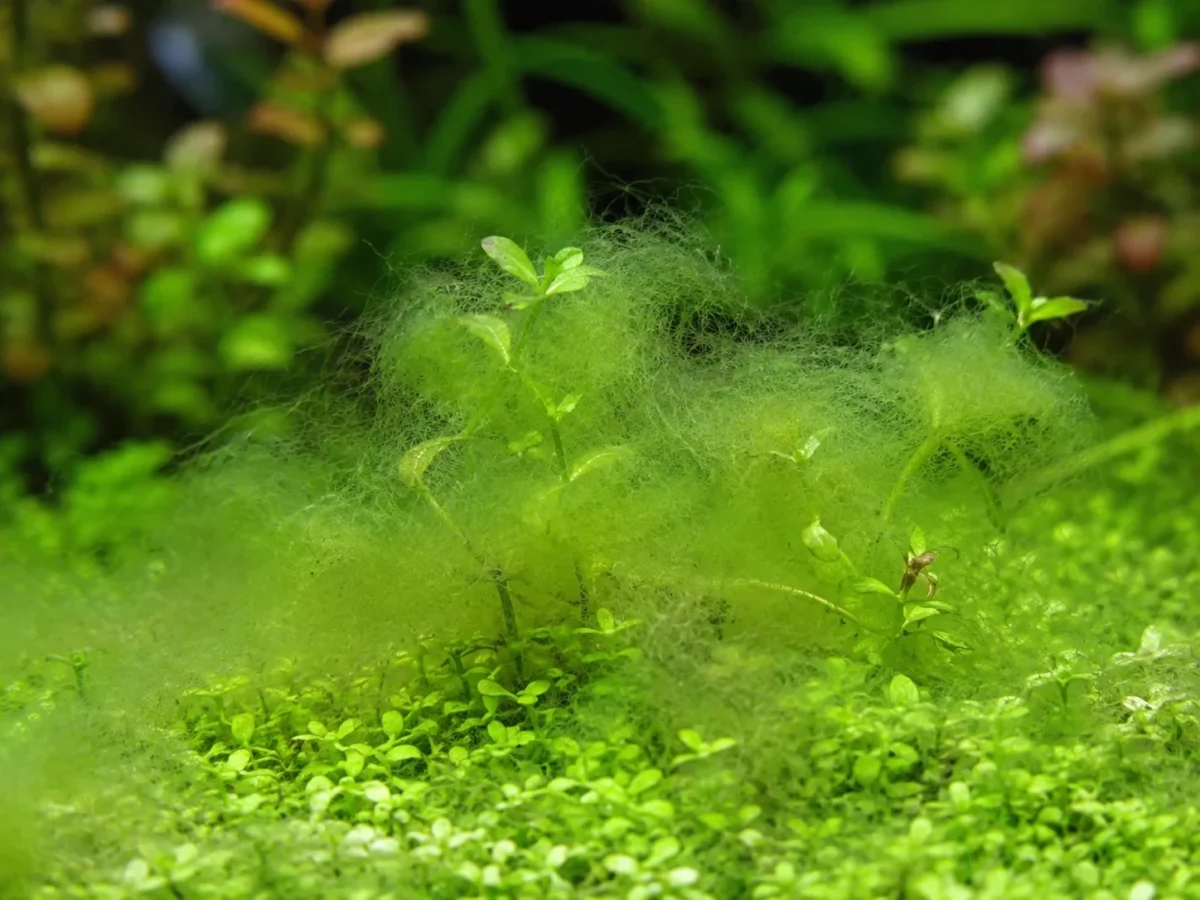
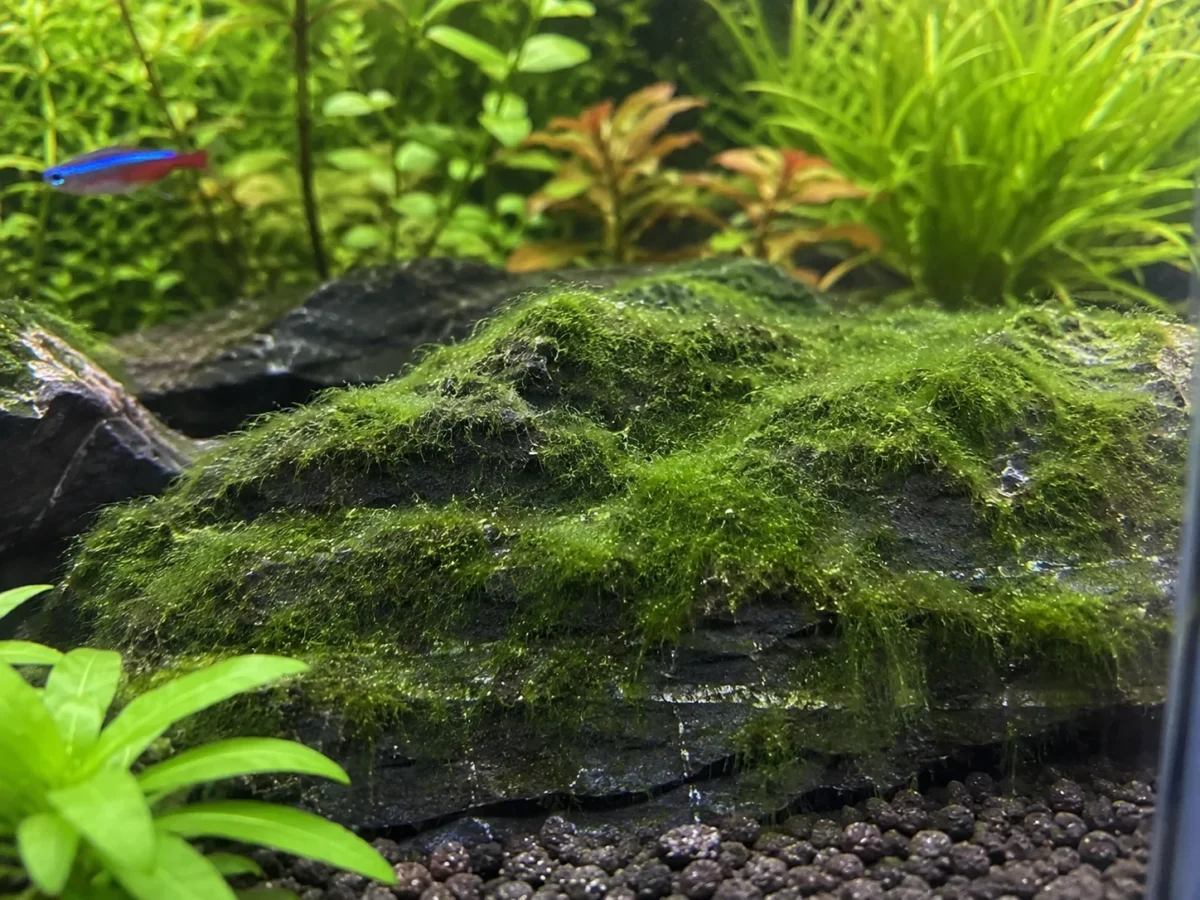
A practical aquarium diagnosis for short individual green filaments that create a fine fuzzy coating on leaves and surfaces; aquarium sources often associate this growth with Oedogonium, but appearance alone does not prove the genus.
Save this guide or add this issue to one of your aquariums.
Need help with Fuzz Algae?
Explore compatibility, care or problems using this guide and your aquarium’s conditions.
Identification
- Main color
- Green, bright green, and yellow green
- Growth form
- Fuzz
- Attachment
- Moderate
- Typical surfaces
- Plant leaves, on moss, rocks, wood, and hardscape, glass, and equipment
- Texture
- Fuzzy
- Diagnostic confidence
- Practical
- Short bright- to yellow-green filaments growing individually or as a fine fuzzy layer rather than long flowing strands, especially on plant leaves, moss, equipment, glass, and hardscape.
- Short green fuzz is a useful aquarium morphology diagnosis. Oedogonium is a genuine attached filamentous genus, but reliable genus identification depends on microscopic characteristics not normally established from aquarium appearance.
Probably not this algae if…
- Hair Algae develops much longer strands and tangled coats.
- Green Fuzz Film is another name used for a short fuzzy coating, not a reliably separate organism. Check for individual hairs rather than a flat film.
- Rhizoclonium-like growth is generally represented as longer, looser filamentous material.
Your fix plan
Today
- Remove or prune the most heavily fuzzed plant tissue.
- Reduce excessive light pressure.
- Check plant growth.
This week
- Remove accessible growth gently and export loosened material.
- Prune the worst affected old foliage and encourage clean replacement growth.
Keep it away
- Inspect new leaves for fresh fuzz.
- Remove deteriorating leaves without stripping healthy plant mass.
- Use a consistent light timer and fertilizer routine.
Causes
Fuzz Algae is best treated as a short-filament morphology associated in aquarium practice with young or stressed planted systems. Low-CO2 and NPK-deficiency explanations are husbandry patterns rather than proven universal Oedogonium biology.
- Fuzz Algae is commonly reported during the unstable early phase of planted aquariums.
- Short fuzz frequently colonizes stressed, adapting, or poorly growing plant surfaces.
- Strong light can increase growth pressure when plant growth is weak.
- In CO2-injected planted tanks, unstable or inadequate CO2 delivery is a common hobby association.
- Inconsistent plant nutrition is a common hobby association, but no single NPK deficiency is an established universal cause.
What to check
- Look closely for individual short green hairs rather than flat film, long strands or dark brush-like tufts.
- Compare new and old leaves for healthy growth; check the light timer and the consistency of the existing fertilizer routine.
- In an injected setup, inspect CO2 delivery and distribution without assuming that fuzz alone proves carbon deficiency.
Nutrient guidance
- Relevance: Medium
- Oedogonium can grow efficiently in nutrient-rich water, so the fuzz phenotype does not itself prove nitrogen, phosphate, potassium, or carbon deficiency.
- Correct demonstrated plant-growth limitations and maintain consistent fertilization rather than dosing toward an algae-specific NPK target.
Treatment options
- Fish
- Low
- Invertebrates
- Low
- Plants
- Context dependent
- Aquarium system
- Low
Small amounts can often be tolerated or grazed. For expanding fuzz, remove heavily affected tissue, support healthy plant recovery, align lighting with plant growth, and correct genuine nutrition or CO2 problems only when independently supported.
Manual removal
First lineRemove accessible growth gently and export loosened material.
Best for: Short fuzz on glass, robust hardscape, equipment, or leaves that can be cleaned without damage.
Details and cautions
Not for: Aggressive rubbing of delicate leaves.
Limitations: Short attached filaments can be difficult to remove completely from living leaves.
Plants caution: Avoid damaging delicate foliage.
Pruning
First linePrune the worst affected old foliage and encourage clean replacement growth.
Best for: Old or heavily covered leaves where fuzz cannot be removed without damage.
Details and cautions
Not for: Removing large amounts of otherwise healthy plant biomass.
Limitations: Does not correct recurring plant stress.
Plants caution: Retain adequate healthy plant mass.
Lighting adjustment
SupportingMatch light intensity/duration to current healthy plant growth.
Best for: Fuzz concentrated on stressed or slow-growing plants under strong exposure.
Details and cautions
Not for: Using low light as a substitute for correcting poor plant health.
Limitations: Existing fuzz may remain until removed or grazed.
Plants caution: Do not unnecessarily under-light healthy plants.
CO2 stabilization
SituationalRestore stable CO2 timing/distribution while maintaining safe gas exchange.
Best for: CO2-injected planted aquariums with poor plant growth or recent instability in CO2 timing/distribution.
Details and cautions
Not for: Low-tech aquariums or aggressive CO2 increases made solely because fuzz appeared.
Limitations: The CO2-Fuzz relationship is hobby consensus, not a universal biological cause.
Fish caution: Avoid excessive CO2.
Invertebrates caution: Avoid aggressive CO2 increases.
System caution: Maintain adequate gas exchange.
Nutrient correction
SituationalCorrect the documented plant limitation and return to stable fertilization.
Best for: A planted aquarium with independent evidence that plant growth is nutrient-limited.
Details and cautions
Not for: Blindly adjusting NPK values because fuzz appeared.
Limitations: The phenotype cannot identify a specific nutrient deficiency.
Plants caution: Avoid abrupt fertilizer changes.
Grazers
- Amano shrimp (Caridina multidentata) · UsefulCan graze short green fuzz effectively but do not replace correction of plant stress or an expanding outbreak.
- Dwarf grazing shrimp · LimitedSome graze soft early fuzz, but their control capacity is lower than a management plan for a spreading outbreak.
If it returns and prevention
Why it returns and what to inspect
- What to expect
- A small stable amount of short fuzz can remain as ordinary aquarium grazing growth without developing into a major outbreak.
- When observation is reasonable
- Growth is sparse, plants remain healthy, livestock is normal, and fuzz is not expanding noticeably.
- Investigate sooner if
- Fuzz rapidly spreads across new leaves, plant growth deteriorates, or strands become long enough that another filamentous diagnosis is more likely. Confirm growth is genuinely short fuzz rather than long Hair Algae. Check whether affected leaves are old, damaged, or adapting. Review current plant growth and light exposure.
Aquarium-specific guidance and prevention
- New aquarium
- A small amount of fuzz is common during early planted-tank stabilization; avoid turning a minor transient growth into an aggressive chemical-treatment problem.
- CO2 injected
- Review stability/distribution when both plant performance and fuzz worsen rather than increasing CO2 solely from the algae diagnosis.
- Low tech
- Use light levels appropriate to naturally slower plant growth.
Long-term prevention
- Inspect new leaves for fresh fuzz, remove deteriorating leaves without stripping healthy plant mass, and use a consistent light timer and fertilizer routine. In tanks already using CO2, check delivery timing and circulation while preserving gas exchange.