Spirogyra in Aquarium
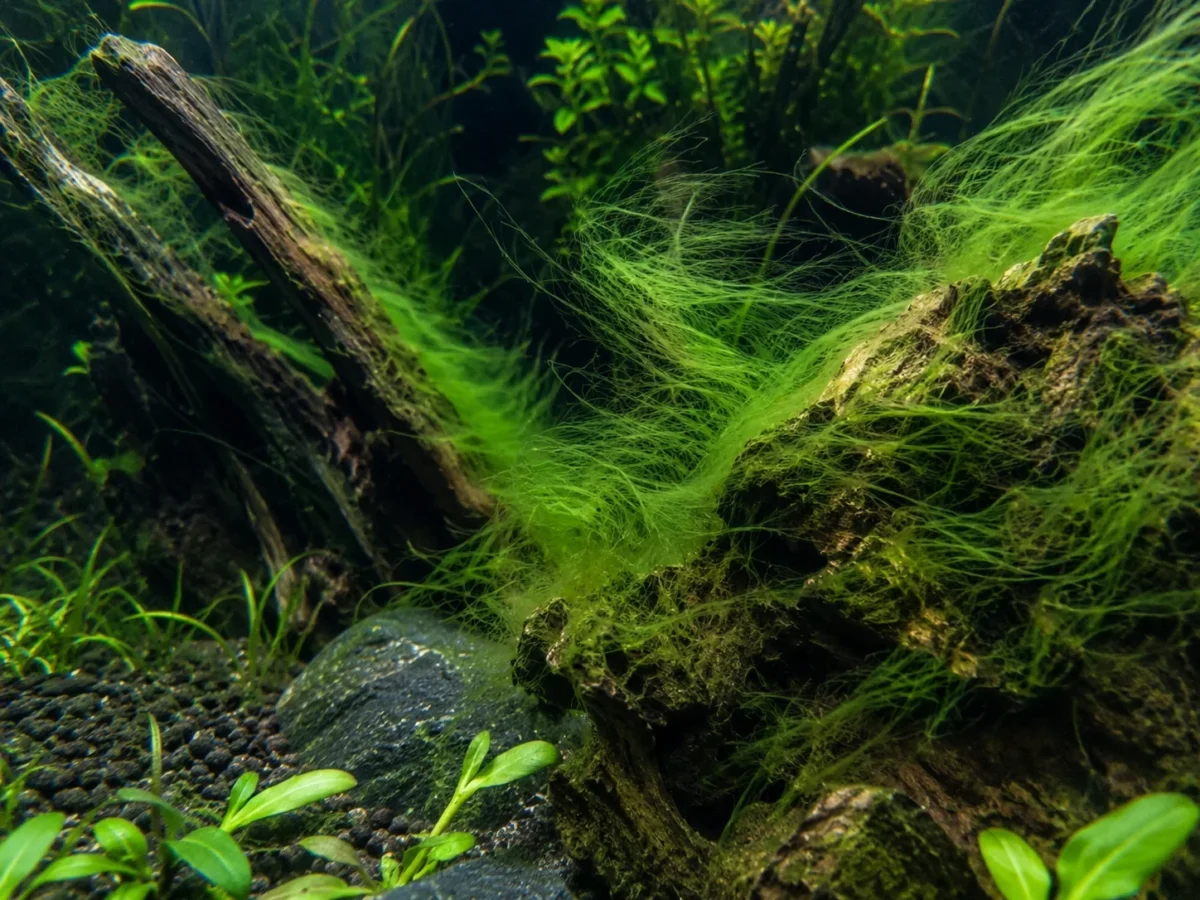
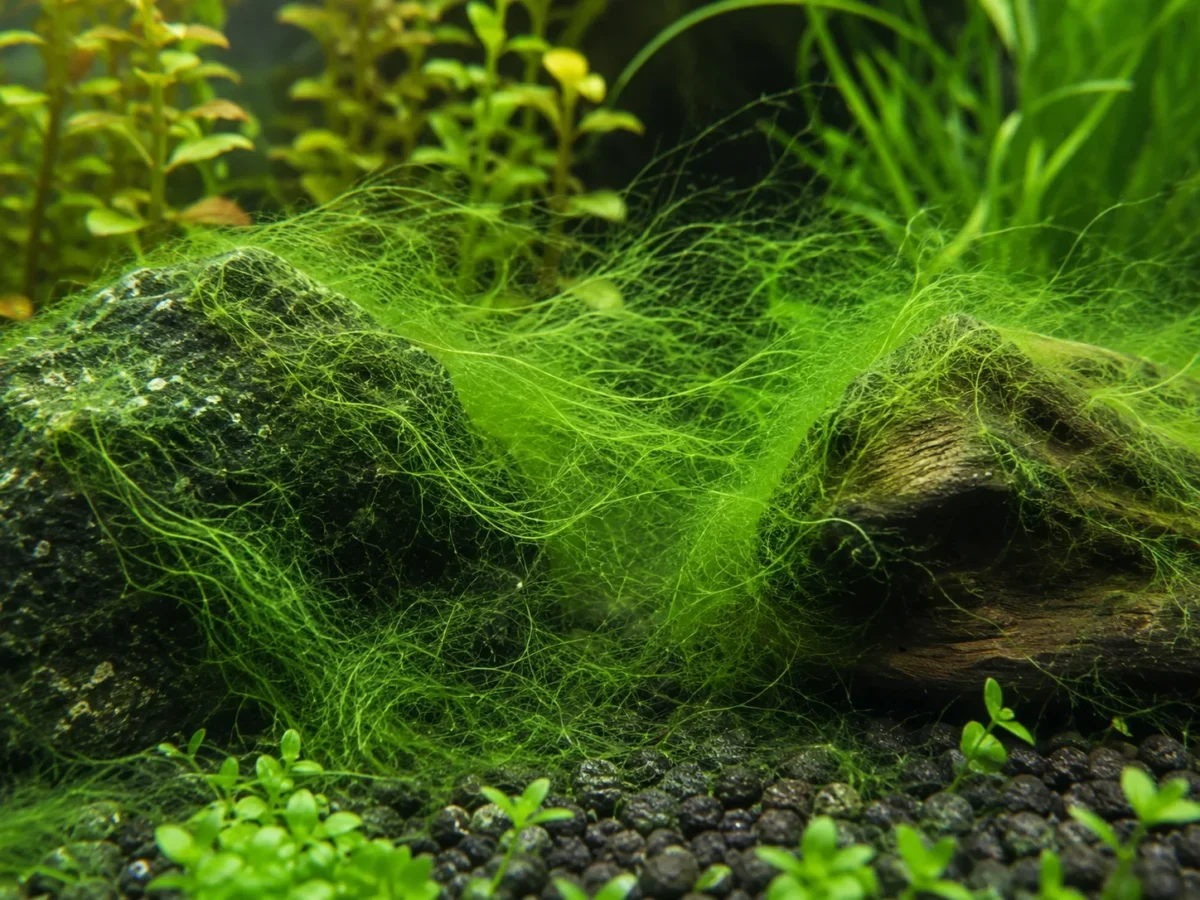
A filamentous freshwater green algae known for smooth, slippery, often bright-green strands; true genus identification is strongest when the characteristic spiral chloroplast can be seen microscopically.
Save this guide or add this issue to one of your aquariums.
Need help with Spirogyra?
Explore compatibility, care or problems using this guide and your aquarium’s conditions.
Identification
- Main color
- Bright green, light green, and green
- Growth form
- Filament
- Attachment
- Weak
- Typical surfaces
- Plant leaves, on moss, and rocks, wood, and hardscape
- Texture
- Silky and slimy
- Behavior
- Waves in current
- Diagnostic confidence
- Practical
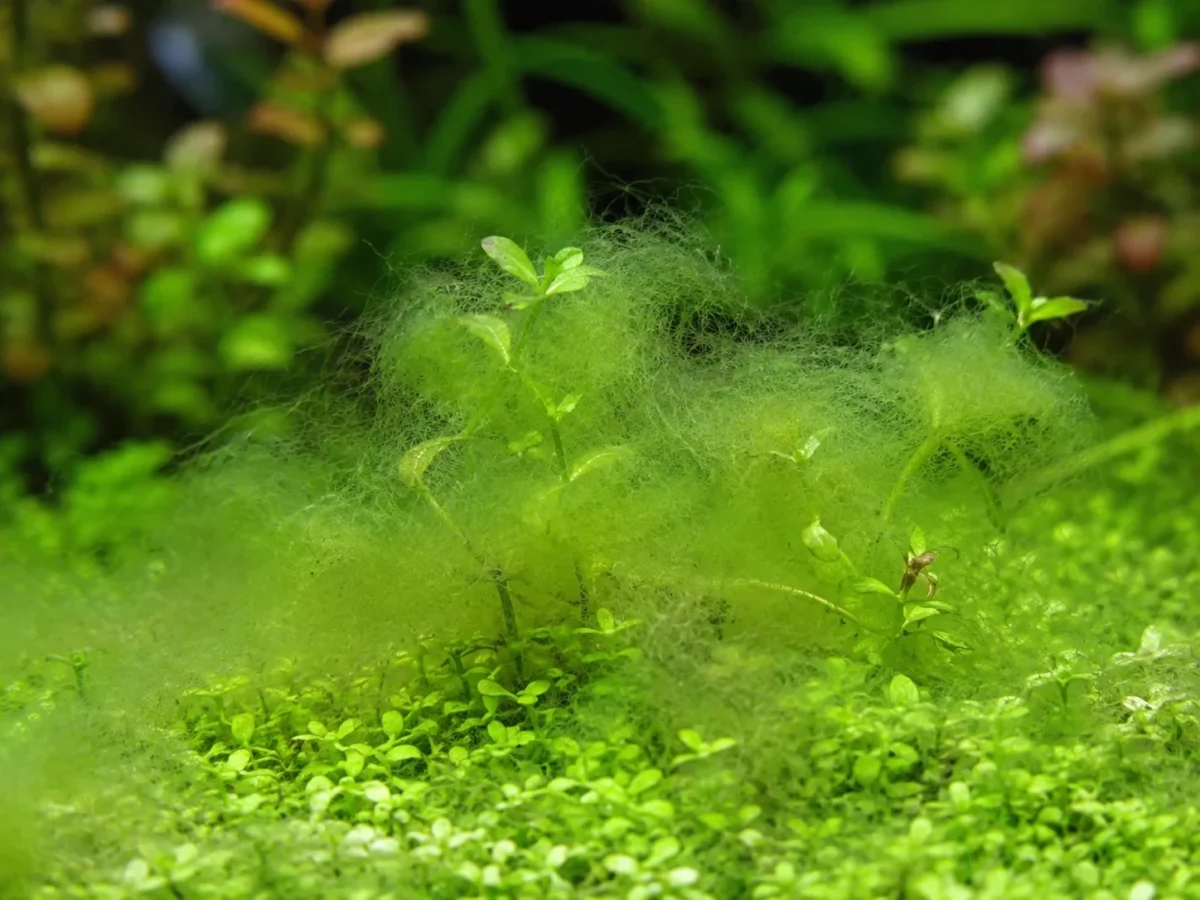
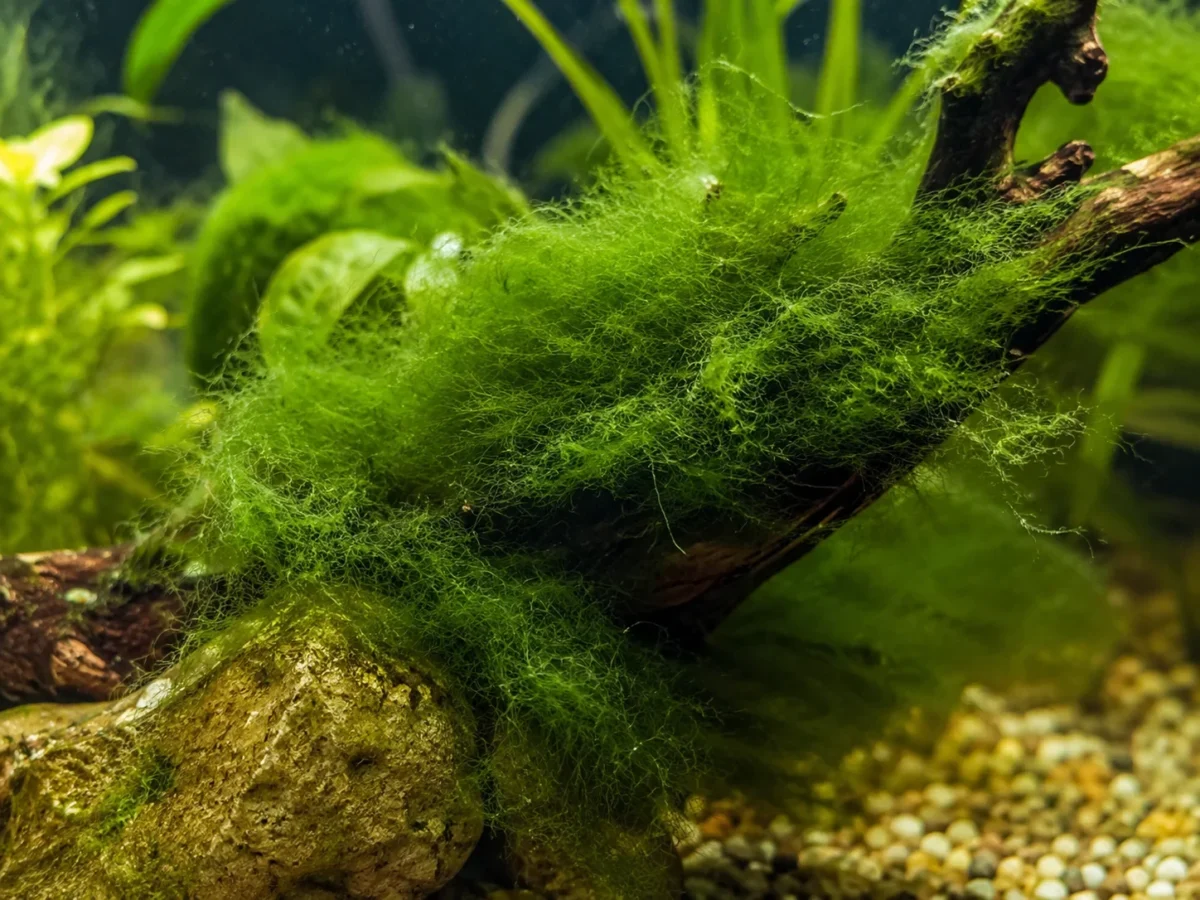
- Long bright- to light-green unbranched filaments that often feel especially smooth, slimy, silky, or soapy because of mucilage; strands may remain entangled with plants or detach into loose masses.
- Smooth slippery filamentous growth is suggestive of Spirogyra-like algae, but genus confidence is much stronger when spiral chloroplasts are observed microscopically.
Probably not this algae if…
- Hair Algae is a broader morphology category and is not necessarily as slippery or silky.
- Green Thread Algae is a generic long-filament category and can overlap Spirogyra visually.
- Rhizoclonium lacks the spiral chloroplast and is commonly represented as paler or less silky.
Your fix plan
Today
- Wind out the longest slippery strands.
- Siphon loose material.
- Check whether light, plant health, or an obvious nutrient/organic event is allowing filamentous growth to outpace plants.
This week
- Wind or lift long strands out and siphon floating fragments.
Keep it away
- Keep light appropriate.
- Avoid major organic-loading events, support consistent healthy plant growth.
- Remove early filamentous masses before heavy entanglement.
Causes
Spirogyra responds to light and nutrient availability like other freshwater macroalgae; appearance does not identify one specific nutrient or CO2 problem.
- Light availability can strongly support Spirogyra growth.
- Nitrogen and phosphorus availability influence Spirogyra physiology and biomass production.
- Aquarium outbreaks occur when filamentous algae have enough light/resources to outpace healthy plant competition.
- New or disturbed planted tanks are a common aquarium context but not a Spirogyra-specific cause.
What to check
- Check whether strands feel slippery and remain largely unbranched; visible appearance alone does not confirm the genus.
- Review recent changes in lighting, plant growth and organic loading before choosing a treatment.
Nutrient guidance
- Relevance: Medium
- Spirogyra responds to nutrient availability, but no aquarium nitrate, phosphate, or N:P threshold defines an outbreak.
- Correct documented feeding, nutrient, or plant-growth problems without starving healthy plants or chasing a genus-specific nutrient target.
Treatment options
- Fish
- Low
- Invertebrates
- Low
- Plants
- Context dependent
- Aquarium system
- Low
Spirogyra largely shares the physical-control strategy of other soft filamentous algae: remove biomass, prune heavily entangled tissue where necessary, moderate excessive light, and correct actual aquarium instability.
Manual removal
First lineWind or lift long strands out and siphon floating fragments.
Best for: Long accessible slippery strands entangled around plants or hardscape.
Details and cautions
Not for: Roughly tearing fragile plants apart while pulling mats.
Limitations: Remaining filaments can keep growing if conditions remain favorable.
Plants caution: Work gently through moss and fine plants.
Pruning
SituationalPrune the worst entangled material and retain healthy new growth.
Best for: Plant sections heavily entangled with filamentous growth.
Details and cautions
Not for: Removing large amounts of healthy plant mass when strands can be separated.
Limitations: Pruning alone does not stop recurrence.
Plants caution: Preserve adequate healthy biomass.
Lighting adjustment
SupportingBring light pressure into line with healthy plant growth.
Best for: Filamentous growth accelerating under unnecessarily strong or prolonged light.
Details and cautions
Not for: Assuming all Spirogyra is caused solely by lighting.
Limitations: Existing strands do not disappear immediately.
Plants caution: Avoid unnecessary prolonged under-lighting.
Organic-load reduction
SupportingRemove the identified excess organic source and restore normal maintenance.
Best for: An outbreak associated with overfeeding, decay, or another clear organic-loading event.
Details and cautions
Not for: Assuming Spirogyra always indicates dirty water.
Limitations: Source correction does not instantly remove established biomass.
If it returns and prevention
Aquarium-specific guidance and prevention
- New aquarium
- Treat early Spirogyra-like growth primarily as a filamentous-algae problem while the aquarium stabilizes rather than diagnosing one specific chemical imbalance.
- Planted aquarium
- Focus on physical removal and healthy plant growth; do not reduce essential nutrients solely to starve Spirogyra.
Long-term prevention
- Keep light appropriate, avoid major organic-loading events, support consistent healthy plant growth, and remove early filamentous masses before heavy entanglement.