Staghorn Algae in Aquarium
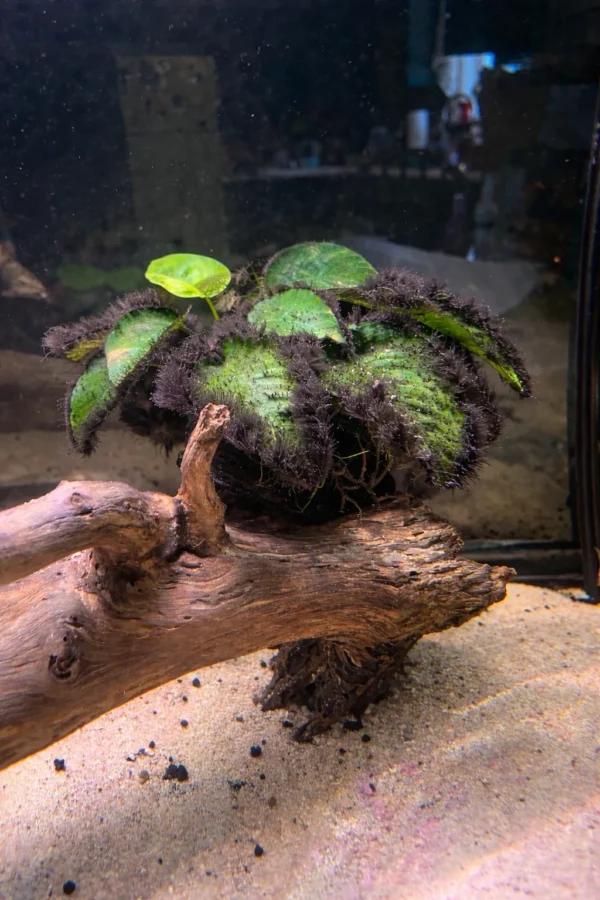
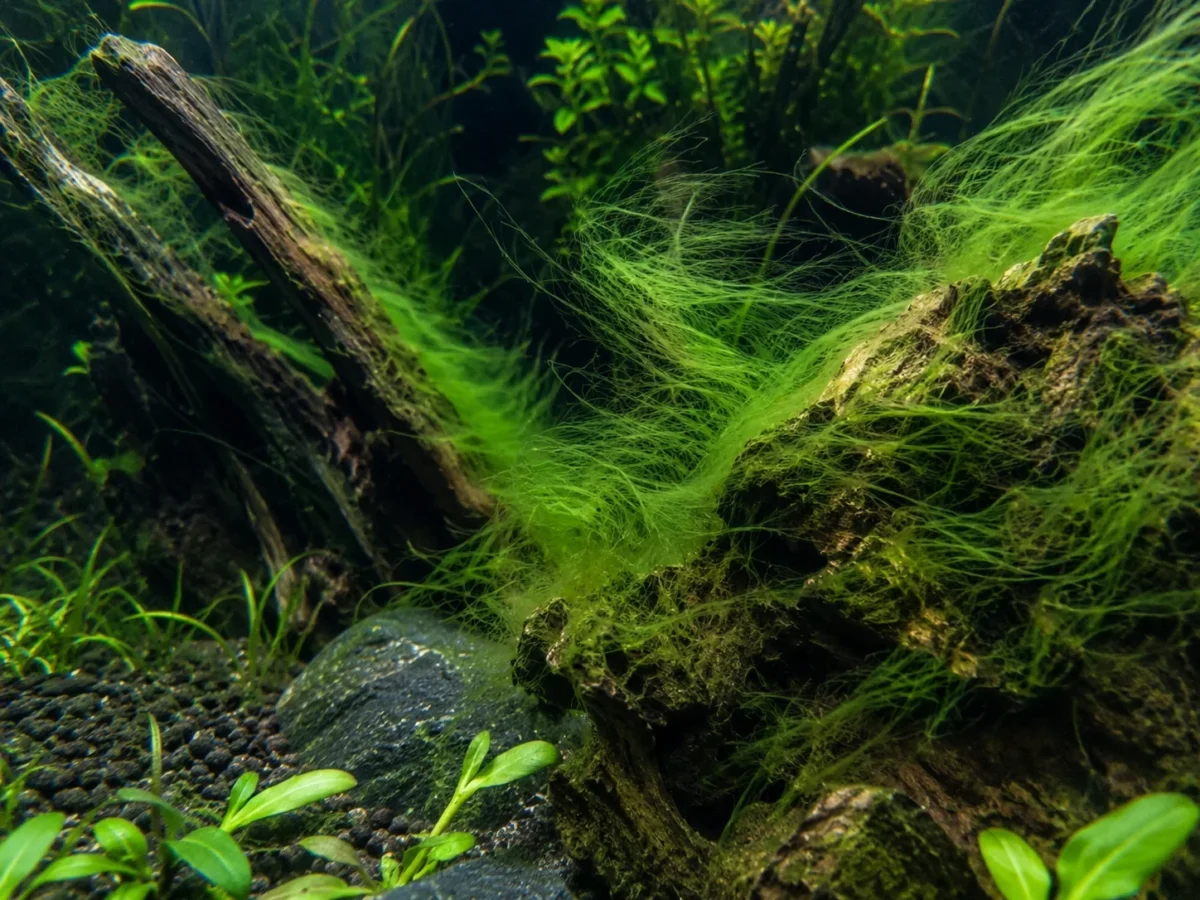
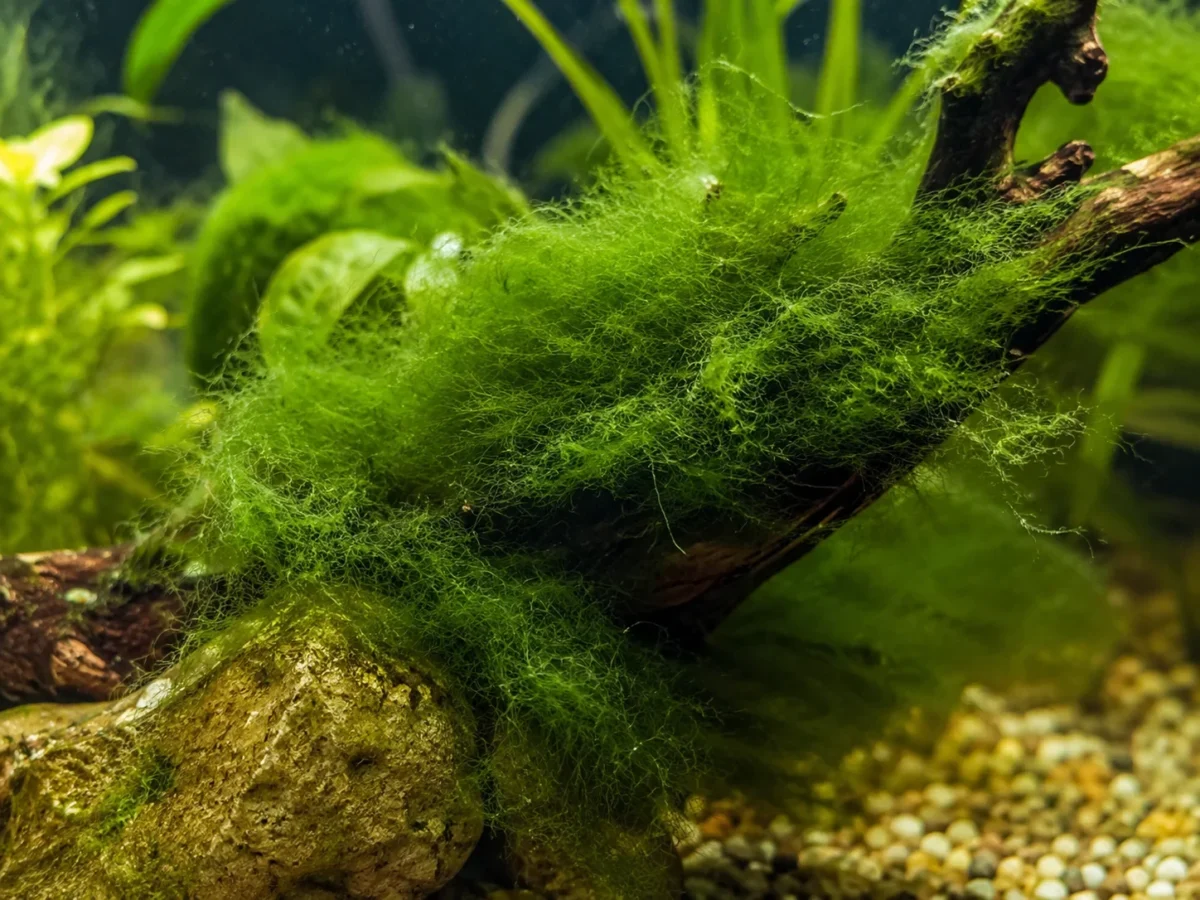
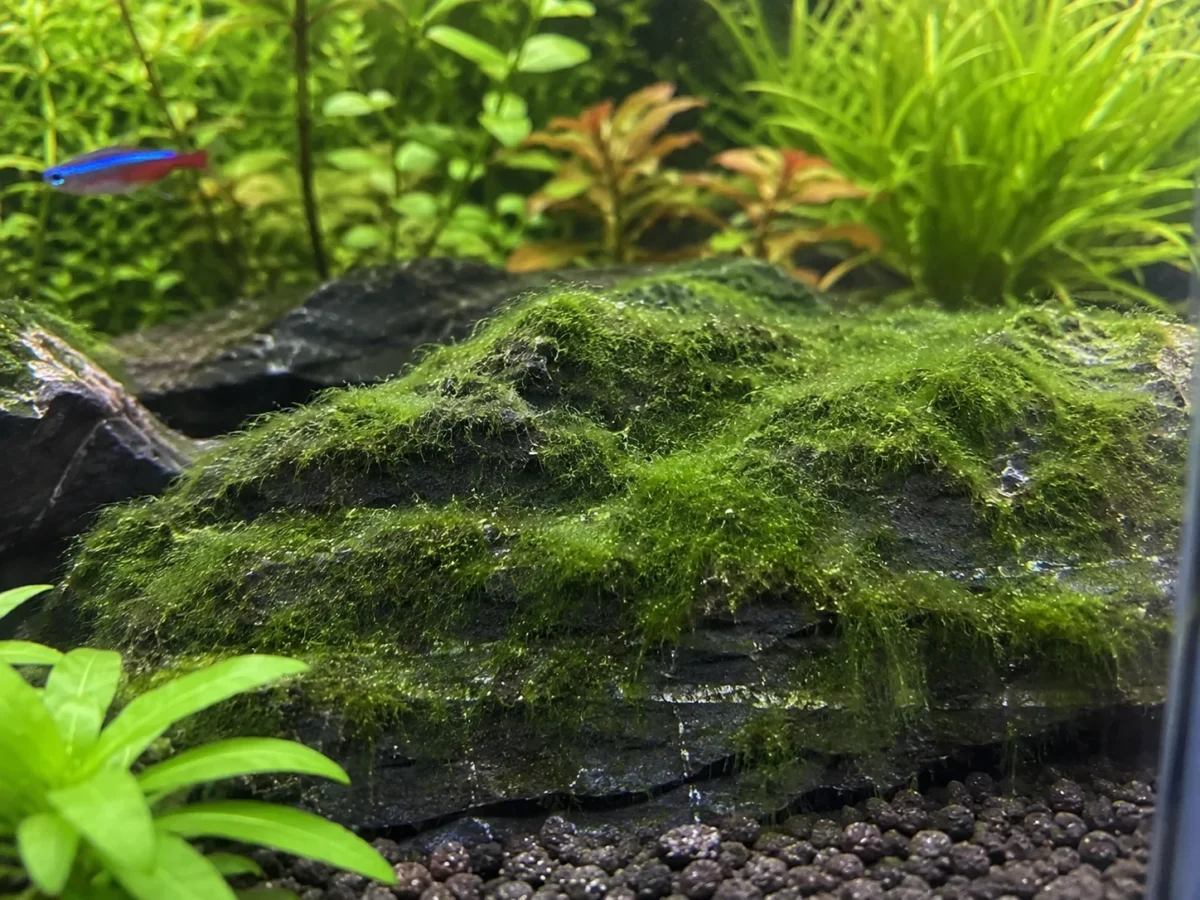
Coarse gray-green branching strands resembling small antlers, commonly found on plant margins, equipment and hardscape.
Save this guide or add this issue to one of your aquariums.
Need help with Staghorn Algae?
Explore compatibility, care or problems using this guide and your aquarium’s conditions.
Identification
- Main color
- Gray green, gray, and dark green
- Growth form
- Branching
- Attachment
- Strong
- Typical surfaces
- Plant leaves, rocks, wood, and hardscape, and equipment
- Texture
- Wiry
- Behavior
- Hard to scrape
- Diagnostic confidence
- Practical
- Gray, gray-green, whitish-green, or dark branching strands that repeatedly fork into an antler-like shape, coarser and more openly branched than compact Black Beard Algae.
- Antler-like branching helps distinguish this growth from compact BBA. The name Compsopogon caeruleus is an association, not a species confirmation from a photograph.
Probably not this algae if…
- BBA forms shorter, denser brush-like tufts rather than longer repeatedly forked branches.
- Hair Algae is usually softer, greener, and less distinctly branched.
- Cladophora is green, wiry, turf-like, and notably fragment-prone.
Your fix plan
Today
- Prune heavily affected old leaves.
- Remove accessible colonies from equipment/hardscape.
- Export organics.
This week
- Remove the worst affected old tissue and preserve clean healthy growth.
- Brush or scrape nonliving surfaces and siphon loosened material.
Keep it away
- Maintain healthy plant growth.
- Remove deteriorating foliage early.
- Avoid abrupt light/CO2 changes.
Causes
Aquarium Staghorn is most consistently associated with stressed/adapting plant surfaces and recent system instability. CO2 changes matter mainly in injected tanks; organic-loading events can coincide with outbreaks. Low flow and excess iron are not retained as universal causes.
- Staghorn commonly colonizes stressed, adapting, or aging plant tissue in planted-aquarium practice.
- In CO2-injected aquariums, recent CO2 instability or distribution changes are a common husbandry association.
- Organic-loading or ammonia events are commonly reported around outbreaks.
- Strong light can increase algae pressure when plant growth has recently been disrupted.
- No universal low-flow or iron-overdose cause is established.
What to check
- Look for repeated antler-like forks to distinguish this growth from compact BBA tufts.
- Check old foliage and collected organic debris; review recent light or CO2 changes before adjusting the setup.
Nutrient guidance
- Relevance: Low
- Claims that excess iron specifically causes Staghorn remain common in aquarium literature but lack strong causal support.
- Maintain consistent plant-appropriate fertilization and correct documented issues rather than altering iron solely because Staghorn appeared.
Treatment options
- Fish
- Low
- Invertebrates
- Low
- Plants
- Meaningful
- Aquarium system
- Low
Pruning and direct physical removal are core. Restore healthy plant growth and reduce avoidable organic loading; in CO2-injected tanks stabilize delivery/distribution. Generic iron restriction and generic chemical spot treatment are not canonical requirements.
Pruning
First lineRemove the worst affected old tissue and preserve clean healthy growth.
Best for: Older, damaged, adapting, or heavily colonized leaves.
Details and cautions
Not for: Removing large quantities of healthy new growth.
Limitations: Does not correct recurring plant stress or aquarium instability.
Plants caution: Avoid removing excessive plant biomass.
Manual removal
First lineBrush or scrape nonliving surfaces and siphon loosened material.
Best for: Accessible Staghorn on hardscape and equipment.
Details and cautions
Not for: Aggressive scraping of delicate plant tissue.
Limitations: Strong attachment can make complete removal difficult.
Plants caution: Use pruning rather than harsh scrubbing on fragile leaves.
Organic-load reduction
SupportingRemove decaying material/trapped detritus and restore routine maintenance.
Best for: Outbreaks following overfeeding, decay, filter neglect, substrate detritus, or another clear organic-loading event.
Details and cautions
Not for: Assuming every Staghorn outbreak indicates dirty water.
Limitations: Does not directly remove established Staghorn.
System caution: Avoid resetting the entire biological filter.
CO2 stabilization
SituationalRestore repeatable CO2 delivery/distribution and maintain gas exchange.
Best for: CO2-injected tanks where Staghorn followed altered injection timing, distribution, equipment, or flow.
Details and cautions
Not for: Low-tech tanks or simply increasing CO2 without regard to livestock safety.
Limitations: The CO2-Staghorn relationship is husbandry consensus rather than a universal cause.
Fish caution: Avoid excessive CO2.
Invertebrates caution: Avoid aggressive CO2 increases.
System caution: Maintain adequate oxygenation.
Lighting adjustment
SupportingTemporarily align light with current healthy plant mass.
Best for: Outbreaks after increased light or on stressed plants receiving more light than current growth can support.
Details and cautions
Not for: Treating Staghorn as a light-only problem.
Limitations: Existing colonies still require pruning/removal.
Plants caution: Do not unnecessarily under-light healthy plants.
If it returns and prevention
Why it returns and what to inspect
Why it may return
- Staghorn commonly returns when affected plant surfaces remain stressed or the same system change continues to impair healthy growth.
- Old/deteriorating leaves remain.
- A recently introduced plant is still adapting.
- CO2 remains inconsistent in an injected aquarium.
- Organic debris continues to accumulate.
- Lighting remains high relative to plant recovery.
What to inspect
- Inspect age/condition of repeatedly affected leaves.
- Review recently introduced plants.
- Review recent CO2 changes in injected tanks.
- Check decay/trapped detritus.
- Review recent lighting changes.
Aquarium-specific guidance and prevention
- Planted aquarium
- Prioritize replacement of deteriorating old leaves with clean healthy growth.
- CO2 injected
- Check recent CO2 timing, equipment, and distribution changes when Staghorn appears after previously stable growth.
- Low tech
- Do not add CO2 solely because Staghorn appeared; use conservative lighting and focus on plant health, pruning, and organic-load control.
Long-term prevention
- Maintain healthy plant growth, remove deteriorating foliage early, avoid abrupt light/CO2 changes, and export decaying organic material. Do not use a fixed iron target or low-flow theory as the primary prevention model.