Surface Biofilm in Aquarium
A thin microbial or organic film at the aquarium's air-water interface that may look clear, silvery, milky, oily, or rainbow-like and is favored by still surfaces and accumulated organic waste.
Save this guide or add this issue to one of your aquariums.
Need help with Surface Biofilm?
Explore compatibility, care or problems using this guide and your aquarium’s conditions.
Identification
- Main color
- Clear, gray, white, and rainbow sheen
- Growth form
- Film
- Typical surfaces
- Water surface
- Texture
- Oily
- Behavior
- Surface sheen
- Diagnostic confidence
- Practical
- Thin skin, haze, slick, or iridescent film across the water surface, often strongest in calm corners, sitting at the air-water boundary rather than coating submerged leaves or clouding the water column.
- A visible surface film is easy to recognize, but appearance alone does not reliably distinguish microbial biofilm, dissolved-organic/protein film, and true external oil contamination.
Probably not this algae if…
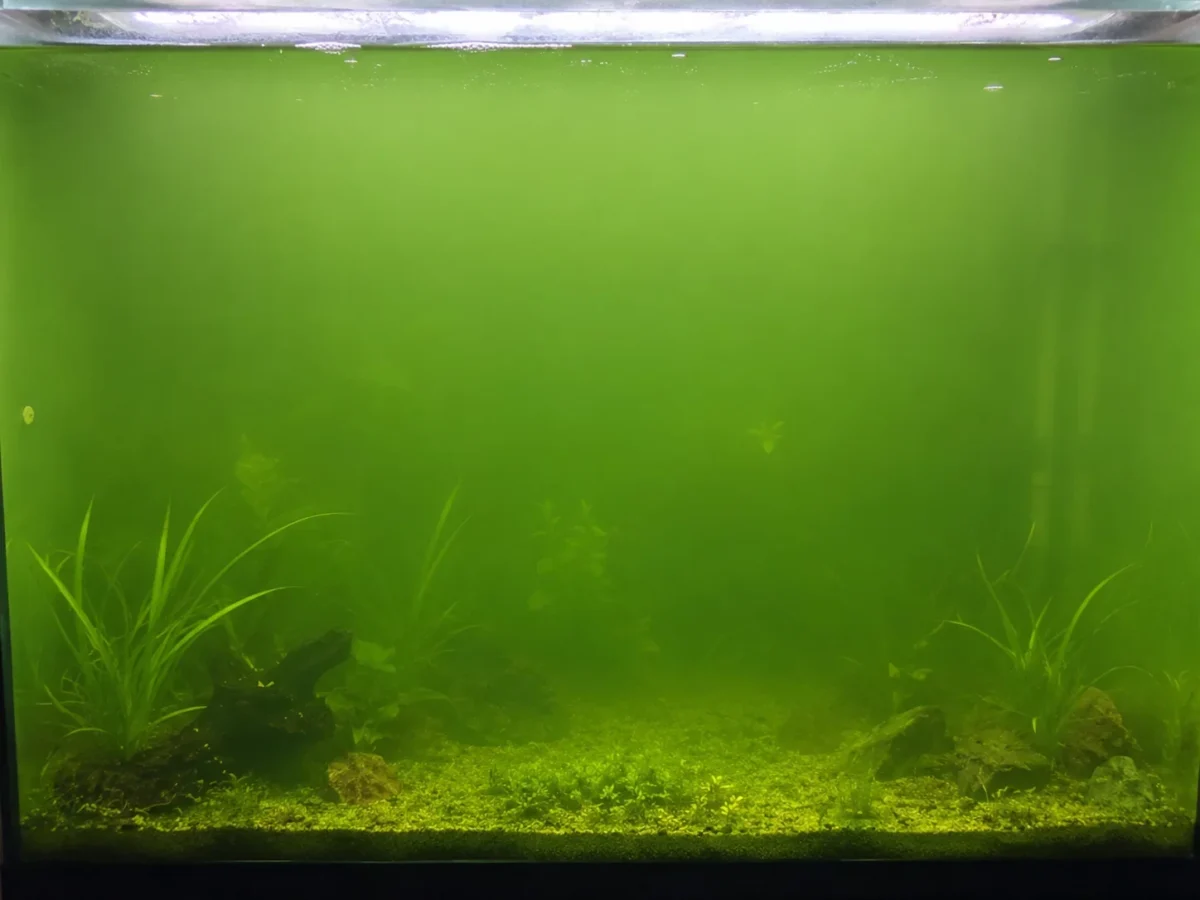
- Green Water colors the entire water column green.
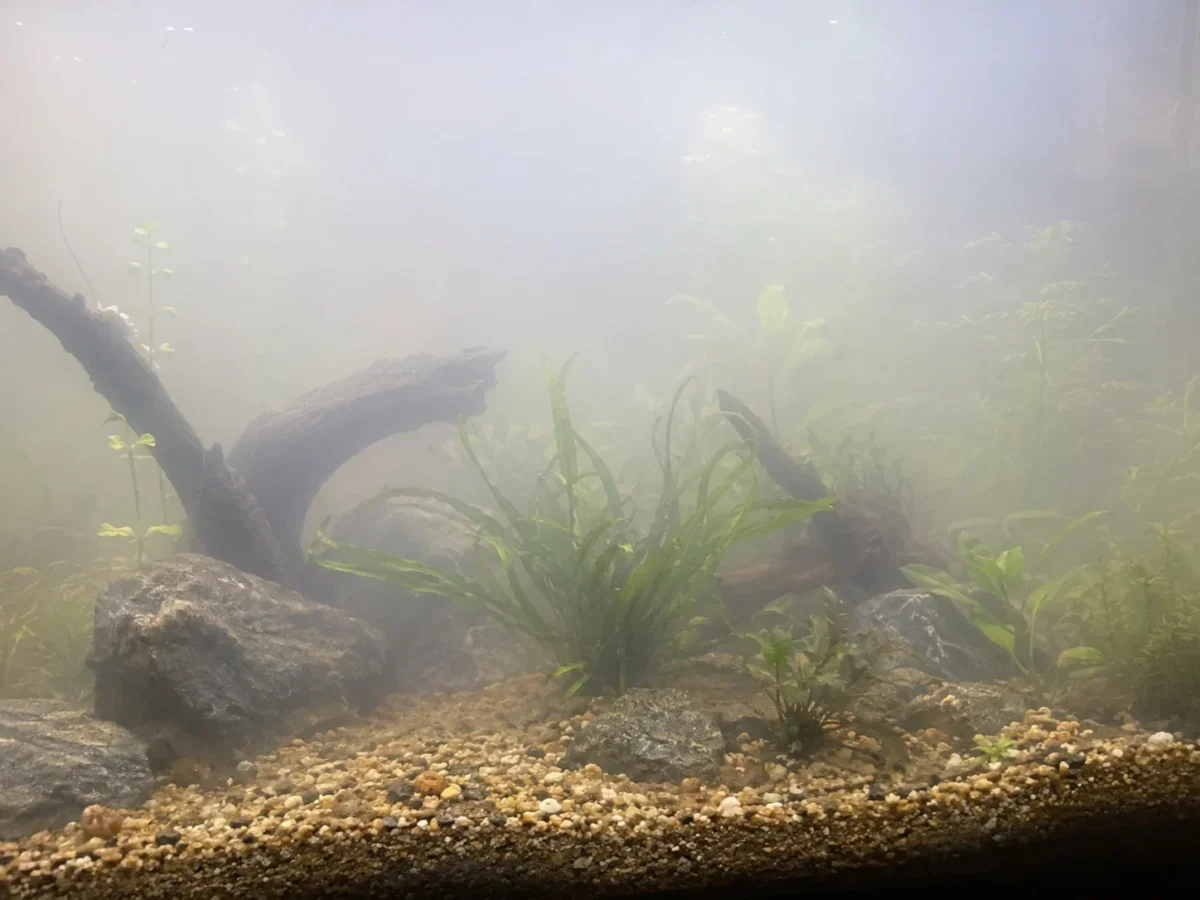
- Bacterial Bloom produces milky cloudiness throughout the water column.
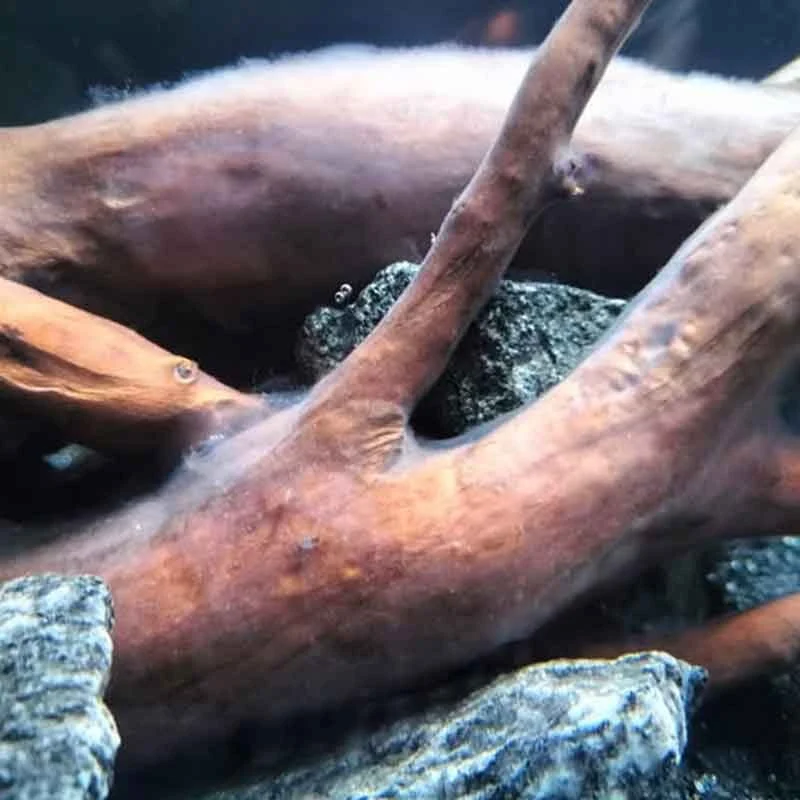
- White Driftwood Biofilm is attached to wood beneath the surface.
Your fix plan
Today
- Increase appropriate surface movement and lift the film with a clean additive-free paper towel if needed.
- Check livestock respiration and look for organics or external contamination if the film is heavy or rapidly recurring.
This week
- Lay a clean additive-free paper towel briefly across the surface and lift it away.
- Adjust the filter outlet/circulation so the surface has continuous appropriate movement and gas exchange.
Keep it away
- Maintain appropriate surface movement.
- Avoid chronic overfeeding/organic buildup.
- Remove decay.
Causes
Most aquarium surface films result from organic material and microorganisms accumulating at a relatively still air-water interface. Similar-looking external contamination must be considered when relevant.
- Weak surface agitation allows organic and microbial material to remain concentrated at the air-water interface.
- Organic material from feeding, waste, and decaying plant tissue can contribute.
- Oily or protein-rich foods can contribute to organic surface slicks.
- New or biologically changing aquariums may temporarily develop microbial surface films.
- True external oils or chemicals can create a similar film but represent a different contamination event.
What to check
- Confirm the film is at the air-water interface rather than cloudiness throughout the water.
- Check surface movement, excess food and decaying material; investigate suspected external oil or chemical contamination separately.
Treatment options
- Fish
- Context dependent
- Invertebrates
- Context dependent
- Plants
- Low
- Aquarium system
- Context dependent
Temporary manual removal clears visible film, while better surface movement or a surface skimmer prevents persistent accumulation. Long-term recurrence control depends on reducing the organic source; suspected external contamination needs separate precautionary handling.
Manual removal
First lineLay a clean additive-free paper towel briefly across the surface and lift it away.
Best for: A visible thin organic/microbial film when immediate cosmetic removal is desired.
Details and cautions
Not for: Paper products containing fragrances, lotions, cleaners, or additives.
Limitations: Removes existing film but not the source.
System caution: Use only clean material with no chemical additives.
Flow correction
First lineAdjust the filter outlet/circulation so the surface has continuous appropriate movement and gas exchange.
Best for: A persistently calm surface where film repeatedly reforms.
Details and cautions
Not for: Creating excessive whole-tank current unsuitable for livestock.
Limitations: May prevent film but does not remove an ongoing high organic load.
Fish caution: Keep overall flow appropriate for stocked species.
Filtration
SupportingUse a properly guarded and maintained surface-skimming intake or dedicated skimmer.
Best for: Aquariums that repeatedly accumulate surface film despite appropriate maintenance.
Details and cautions
Not for: Using a skimmer instead of correcting severe overfeeding or contamination.
Limitations: May hide an ongoing source of excessive organics.
Fish caution: Ensure intake safety for small/weak swimmers.
Invertebrates caution: Use shrimp/fry-safe intake protection where needed.
Organic-load reduction
SupportingReduce avoidable feeding excess, remove decay, and restore appropriate filtration/maintenance.
Best for: Films associated with overfeeding, oily food, decaying plants, or visible organics.
Details and cautions
Not for: Assuming every surface sheen is caused by dirty water rather than contamination.
Limitations: Existing film may need temporary removal while organics decline.
Oxygenation
EscalationIncrease aeration and gas exchange promptly while investigating the film and any separate water-quality problem.
Best for: Fish gasping, rapid respiration, warm water, heavy stocking, or other low-oxygen concern.
Details and cautions
Not for: Routine treatment of a tiny cosmetic film in an otherwise well-oxygenated aquarium.
Limitations: Protects livestock but does not identify film composition.
Match the response to severity
- Thin cosmetic filmA light sheen is visible but surface movement, livestock behavior, and water quality are normal. Treat primarily as a maintenance issue.
- Persistent or heavy filmFilm rapidly covers most of the surface, traps bubbles, reforms frequently, or coexists with substantial organic buildup. Address the organic source rather than repeatedly removing only the visible layer.
- Gas-exchange concernLivestock shows gasping/rapid respiration or another reason exists to suspect low dissolved oxygen. Prioritize oxygenation and water-quality assessment immediately.
If it returns and prevention
Why it returns and what to inspect
Why it may return
- Surface film returns when new organic/microbial material continues to reach a surface calm enough for it to accumulate.
- Surface agitation remains too weak.
- Overfeeding or oily food continues.
- Decaying plant/animal material remains.
- Filtration or maintenance is not exporting enough organics.
- A planted/CO2 aquarium is being run with an overly still surface.
- An external oil/chemical source has not been eliminated.
What to inspect
- Observe actual surface ripple.
- Review feeding quantity/type.
- Remove decaying tissue and organics.
- Inspect filtration and flow.
- Ask whether hands, tools, aerosols, lotions, oils, or cleaners contacted the aquarium.
Aquarium-specific guidance and prevention
- New aquarium
- A mild microbial surface film can occur during early maturation, but still exclude external contamination and confirm livestock/water quality remain normal.
- Planted aquarium
- Remove melting leaves and organic debris that can feed persistent film.
- CO2 injected
- Do not suppress surface movement so aggressively that livestock oxygenation is compromised simply to retain CO2.
Long-term prevention
- Maintain appropriate surface movement, avoid chronic overfeeding/organic buildup, remove decay, and use surface skimming when needed. Treat suspected external oil or chemical contamination as a separate problem.