Ich / White Spot Disease in Aquarium Fish: Signs, Causes & Safe Next Steps
White spots can be Ich, but appearance alone is not a diagnosis. Protect oxygen and water quality, stop equipment from moving between aquariums, and choose treatment only after considering the pattern of signs, the species in the tank and the product instructions.
Quick answer
- Salt-like white dots plus flashing, clamped fins or reduced appetite make Ich a meaningful possibility.
- Rapid breathing, surface gasping or deaths are urgent: improve aeration and test water immediately.
- Ich has stages on fish and in the aquarium, so a disappearing spot does not prove the problem has passed.
- Do not use a universal temperature, salt or medication recipe for every species and aquarium.
What you will learn in this lesson
- What freshwater Ich is and what a white spot can — and cannot — tell you.
- Which signs make the situation more urgent.
- Safe first actions that protect water quality while you investigate.
- How to prevent a repeat introduction without claiming every fish has a disease.
Introduction
Small white dots on a freshwater fish are a reason to act promptly, but they are not a laboratory diagnosis. Freshwater Ich is caused by Ichthyophthirius multifiliis, a parasite that can affect skin, fins and gills. It can spread quickly in a stocked aquarium. Similar-looking marks can also be injury, breeding tubercles, mucus changes or another parasite, so the useful question is not only “Is this Ich?” but also “What evidence do I have, what is changing, and what can I do safely today?”
This guide is for freshwater aquariums. Saltwater “white spot” is not the same disease and needs a separate, marine-specific diagnosis and plan.
Signs consistent with Ich
Ich often looks like scattered, raised grains of salt on the body or fins. Affected fish may flash or rub against objects, clamp their fins, breathe faster, become less active or stop eating. A fish can have gill involvement before obvious skin spots appear, so rapid breathing or surface gasping deserves attention even when the body looks clear.
These signs overlap with other problems. Watch the whole group, not just one fish: note when the first change appeared, whether new fish or wet equipment entered the system, whether spots are increasing, and whether breathing or behaviour is worsening.
Differential checks: do not diagnose from one white mark
- Many fine, salt-like dots plus flashing or clamped fins: Ich is a meaningful possibility.
- Fine gold or dusty coating: consider velvet; it needs its own diagnosis rather than an Ich assumption.
- One local mark after chasing, netting or a collision: injury is possible.
- White fuzz, a patch, ulcer, frayed edge or cottony growth: this is not the classic Ich pattern and may need a different response.
- Gasping, rapid losses or multiple fish affected: check water and oxygen immediately as well as looking for parasites.
A skin, fin or gill sample examined by a qualified aquatic veterinarian or experienced fish-health professional is the way to confirm a parasite. Photography over time is also more useful than a single memory of what the spots looked like.
Immediate safe actions
- Test the water first. Check ammonia and nitrite, then temperature and the conditions that changed recently. Use the Aquarium Water Parameters Guide if you need help interpreting a result.
- Support oxygen and circulation. Increase appropriate surface movement and check that the filter is working. If fish are gasping, follow the immediate checks in Aquarium Oxygen Levels.
- Stop spreading uncertainty. Do not move nets, siphons, plants or affected fish between aquariums without cleaning and drying them between systems.
- Keep changes measured. Avoid stacking several medicines, large parameter swings and untested temperature changes at the same time. That makes the fish harder to support and the cause harder to understand.
- Use a treatment only when it fits the diagnosis and livestock. Read the exact product label, check compatibility with the species, invertebrates and plants in the system, and seek qualified help when unsure.
Why one treatment is rarely enough
Ich has stages on the fish and stages in the aquarium environment. A spot disappearing does not by itself prove the system is clear. Treatment timing depends on temperature, the product and the life stage targeted. Follow the applicable label or veterinary plan for the full course, maintain good sanitation and continue observing all fish. Do not combine this with a blanket promise that a particular temperature, salt level or medicine is safe for every species.
Lifecycle, treatment and tank-wide decisions
The visible trophont feeds in the fish’s skin or gills, then leaves the fish and reproduces in the environment before free-swimming stages seek another host. This is why treatment plans must account for the full cycle rather than stopping when the last visible spot falls away. In a shared aquarium, a suspected outbreak is usually a system question as well as a single-fish question: moving one visibly affected fish may not remove all risk from the display.
Read the medicine label for the intended species, treatment duration, water-change instructions and compatibility with plants or invertebrates. Do not combine medications unless a qualified professional or the labels explicitly support it. Warmer water can alter the parasite’s timing but also changes oxygen availability and fish tolerance; it is not a stand-alone cure. If temperature is changed for a supported treatment plan, keep a close eye on aeration and the behaviour covered in Aquarium Oxygen Levels.
When to isolate or seek professional help
Escalate quickly if breathing is laboured, fish are lying over, deaths are occurring, a whole group is affected, ulcers or heavy mucus are present, or you cannot keep ammonia and nitrite at zero. A separate observation or hospital setup can be useful, but moving a severely stressed fish is itself a risk. Ask an aquatic veterinarian or a qualified fish-health service for advice that accounts for the species, water chemistry and medicines available where you live.
Prevention after the immediate problem
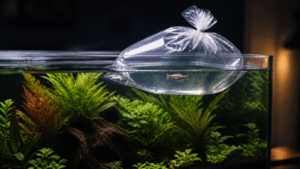
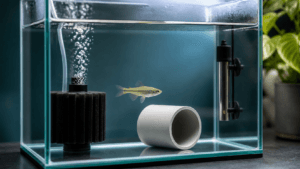
Quarantine and observation of new arrivals, separate equipment for separate systems, stable water quality and realistic stocking reduce the chance that a small problem becomes a tank-wide event. Prevention is not a claim that a new fish is infected; it is a routine that gives you time to observe it before it joins an established community. See Quarantine Aquarium Fish for the setup and equipment routine, and Acclimating New Fish for the arrival process.
Conclusion
White spots are a useful warning sign, not proof of one disease. Stabilize water and oxygen, prevent cross-contamination, observe the pattern across the group and choose treatment only after checking the likely cause and its fit for your livestock. Fast deterioration, breathing distress or uncertainty about diagnosis deserves professional support.
FAQ
Can I treat every white spot as Ich?
No. The pattern, other signs and water conditions matter. A confirmed diagnosis is stronger than appearance alone.
Should I raise the temperature immediately?
Not as a universal first step. Temperature changes affect oxygen, fish tolerance and parasite timing. Use a plan appropriate to the fish, the diagnosis and any treatment label.
Lesson completed!
You've finished this lesson. Keep building your aquarium knowledge, one lesson at a time.
Continue learning →New to AquariumLesson? Start with our complete Aquarium Lessons Hub or return to the homepage at AquariumLesson.com.