
Aquarium Micronutrients Guide: Boost Plant Health the Right Way
What you’ll learn in this lesson
- What micronutrients are and why aquarium plants rely on them
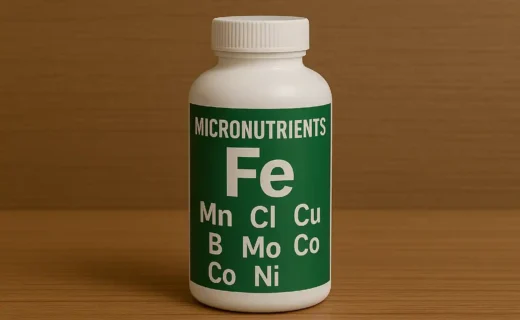
- The essential trace elements: Fe, Mn, B, Cu, Zn, Mo, Ni, Cl
- How micronutrients contribute to plant coloration and enzyme activity
- How to diagnose specific micronutrient deficiencies
- How water hardness, pH, and substrate affect micronutrient availability
- Safe dosing strategies for low-tech and high-tech aquascapes
- Iron dosing for red plants and advanced aquascaping
- How to balance micronutrients with macronutrients
- Common mistakes and troubleshooting
- FAQ for practical micronutrient issues
What Are Micronutrients?
Micronutrients (trace elements) are nutrients that aquarium plants require in very small amounts, often measured in parts per million (ppm) or even parts per billion (ppb). Despite their small quantities, they are essential for:
- Chlorophyll production
- Enzyme activation
- Red plant coloration
- Nutrient transport
- Root development
- Cell wall strengthening
Without a proper micronutrient supply, plants cannot utilize macronutrients effectively — meaning even perfect NPK dosing may fail if trace elements are missing.
Micronutrient deficiencies do not appear the same in every plant. Fast-growing stems, red plants, epiphytes, and heavy root feeders often respond differently depending on their metabolism and growth style.
To better understand how individual species behave, explore the AquariumLesson Plant Library. Many plant profiles include growth characteristics, light demand, CO₂ preference, and care difficulty — useful context when interpreting trace element deficiencies in a real aquarium.
Essential Micronutrients for Aquarium Plants
Micronutrients can be divided into two categories:
1) Major trace elements — required regularly
2) Ultra-trace elements — needed in very tiny quantities
Major Micronutrients
Below are the elements most critical for aquarium plants.
Iron (Fe)
Role:
Iron is the most important and frequently dosed micronutrient. It’s required for:
- Chlorophyll formation
- Leaf coloration (especially red plants)
- Energy transfer
- Enzyme activation
Signs of Deficiency:
- Yellowing of new leaves (iron chlorosis)
- Pale growth tips
- Weak red coloration
Ideal Range:
- 0.05–0.2 mg/l Fe for green plants
- 0.2–0.5 mg/l Fe for red plants in high-tech tanks
Special Note:
Iron availability depends on chelation.
- EDTA iron — good up to pH 6.5
- DTPA iron — stable up to pH ~7.5
- EDDHA iron — extremely strong chelate, used when pH > 7.5
Manganese (Mn)
Role:
- Essential for photosynthesis
- Enables water-splitting reaction in chloroplasts
- Works closely with iron
Signs of Deficiency:
- Yellowing between veins
- Pale new leaves similar to iron deficiency
- Young leaf deformation
Ideal Range:
0.01–0.1 mg/l Mn
Boron (B)
Role:
- Cell wall structure
- New leaf development
- Root growth and branching
Signs of Deficiency:
- Brittle growth tips
- Leaf die-off at the crown
- Thick, deformed leaves
Ideal Range:
0.005–0.02 mg/l B
Zinc (Zn)
Role:
- Enzyme activation
- Auxin production (growth hormones)
Signs of Deficiency:
- Small, distorted leaves
- Pale growing tips
Ideal Range:
0.005–0.02 mg/l Zn
Copper (Cu)
Role:
- Photosynthesis
- Enzyme function
Important:
Copper is toxic to shrimp and snails in high concentration — levels in aquarium fertilizers are safe, but overdosing is dangerous.
Signs of Deficiency:
- Pale young leaves
- Weak growth
Ideal Range:
0.001–0.01 mg/l Cu
Molybdenum (Mo)
Role:
- Nitrogen metabolism
- Converts nitrate into usable forms inside the plant
Signs of Deficiency:
- Older leaves turn yellow
- Interveinal chlorosis
- Nitrate appears “unused”
Ideal Range:
0.0005–0.005 mg/l Mo
Nickel (Ni)
Role:
- Helps plants process urea
- Required in extremely small amounts
Signs of Deficiency:
- Rare, but causes growth stagnation
Chlorine (Cl)
Role:
- Osmotic balance
- Water transport
Deficiency:
Extremely rare in aquariums.
Micronutrient Summary Table
| Nutrient | Function | Deficiency Signs | Notes |
|---|---|---|---|
| Iron (Fe) | Chlorophyll, red plants | Pale new leaves | Most commonly dosed |
| Manganese (Mn) | Photosynthesis | Interveinal chlorosis | Works with iron |
| Boron (B) | Growth tips, roots | Brittle leaves, deformed tips | Important for new growth |
| Zinc (Zn) | Hormones, enzymes | Small distorted leaves | Required in medium levels |
| Copper (Cu) | Enzymes, photosynthesis | Pale leaves | Can harm shrimp if overdosed |
| Molybdenum (Mo) | Nitrogen use | Yellow older leaves | Supports nitrate reduction |
| Nickel (Ni) | Urea metabolism | Slow growth | Ultra-trace |
| Chlorine (Cl) | Osmoregulation | Very rare | Microscopic amounts |
How Micronutrients Interact With Water Chemistry
pH
The higher the pH, the harder it becomes for plants to absorb certain trace elements — especially iron.
- pH below 6.5 → excellent micronutrient availability
- pH 6.5–7.5 → moderate (DTPA iron recommended)
- pH above 7.5 → micronutrient uptake slows dramatically
GH (Calcium + Magnesium)
High GH competes for uptake with trace elements.
- Very hard water can reduce micros availability
- Soft water improves uptake but needs GH supplementation
Substrate
Active soils bind and release micronutrients slowly over time.
Inert substrates rely entirely on liquid dosing.
How to Dose Micronutrients Correctly
Micronutrient dosing is more delicate than macronutrient dosing because trace elements are required in small quantities and can quickly become unavailable due to water chemistry, substrate interaction, or precipitation.
To dose correctly, you need to understand:
- how much your plants consume,
- how fast your system removes or binds micronutrients,
- and how chelated (stabilized) micros behave in your water.
There is no universal micronutrient dose for every tank. Instead, dosing depends on:
- lighting level
- CO₂ stability
- plant density
- substrate type
- water hardness (GH/KH)
- pH level
Below are the most reliable approaches for aquascaping.
Micronutrient Dosing Strategies
1. Daily Micro Dosing (Most Recommended)
Daily dosing provides stability and avoids large swings.
Benefits:
- constant availability
- reduced deficiency risk
- improved red coloration
- more stable growth
Best for:
High-tech tanks, stem-heavy tanks, red plant layouts.
2. Alternate-Day Dosing (Macros One Day, Micros the Next)
Avoids nutrient interaction inside the dosing bottle and in the water column.
Example Schedule:
- Monday: Macros (NPK)
- Tuesday: Micros
- Wednesday: Macros
- Thursday: Micros
- Friday: Macros
- Weekend: Water change / rest
Best for:
Medium- to high-energy tanks.
3. Weekly Dosing (One Large Micro Dose)
Common in low-tech setups.
Pros:
- simple
- minimal maintenance
Cons:
- nutrient spikes followed by depletion
- not suitable for demanding plants
- less predictable for red coloration
Iron Dosing for Red Plants (Advanced)
Iron (Fe) is the nutrient most linked with deep red coloration in plants such as:
- Rotala rotundifolia ‘Colorata’
- Rotala H’ra
- Alternanthera reineckii
- Ludwigia species
You can explore many red and fast-growing species in the AquariumLesson Plant Library to compare plant type, growth speed, and overall demand before increasing iron levels too aggressively.
How Iron Enhances Red Coloration
High Fe levels promote:
- anthocyanin production
- pigment density
- saturated reds and magentas
Recommended Ranges for Red Plants
- 0.2–0.5 mg/l Fe (high-tech CO₂ tanks)
- maintain strong CO₂ and high light
- avoid NO₃ levels above 25–30 mg/l (washes out red plants)
Iron Chelation Matters
Different chelates release iron at different speeds and pH ranges.
| Chelate | pH Stability | Release Speed | Best For |
|---|---|---|---|
| EDTA | up to 6.5 | fast | low pH tanks |
| DTPA | up to 7.5 | medium | most planted tanks |
| EDDHA | up to 9.0 | slow | hard water tanks |
Pro Tip:
If your pH is above 7.2, use DTPA or EDDHA iron to ensure uptake.
How GH (Calcium & Magnesium) Affects Micro Uptake
Hard water can block trace uptake.
- High calcium competes with iron and magnesium
- Hard water aquariums often show:
- pale leaves
- Fe/Mn deficiencies
- slower red coloration
Ideal GH Range for Micronutrient Uptake
- 4–8 dGH (soft to medium water)
Below 4 dGH → add Ca/Mg
Above 10 dGH → increase micro dosing or use stronger chelates
How pH Influences Trace Elements
Micros are most available in slightly acidic water.
- pH 5.5–6.8 → best uptake
- pH 6.8–7.5 → moderate uptake
- pH > 7.5 → Fe, Mn, Zn become increasingly unavailable
Important:
In high-pH water, plants may show iron deficiency even when iron is present, simply because it has become chemically unavailable.
Chelation Explained (Why It Matters)
Chelation prevents trace metals from precipitating or binding to substrate particles.
Without Chelation:
- iron oxidizes quickly
- manganese becomes unavailable
- plants starve within hours
With Chelation:
- trace elements stay dissolved long enough for plants to absorb them
Common Aquarium Chelates
- EDTA — fastest
- DTPA — best all-rounder
- EDDHA — strongest, deep red color but stains the water red
How Lighting Affects Micronutrient Demand
High Light
- fastest plant metabolism
- highest micro demand
- iron and manganese consumed extremely fast
Medium Light
- moderate demand
- typical for PPS-Pro and all-round micro dosing
Low Light
- slow nutrient consumption
- risk of micro overdosing if using aggressive dosing schedules
Micronutrient Deficiency Symptoms (Deep Dive)
Micronutrient deficiencies cause very specific symptoms because each element controls a distinct physiological process.
Iron (Fe)
- Pale new leaves
- Yellow upper growth
- Weak red coloration
Manganese (Mn)
- Yellowing between veins
- Young leaves affected
- Looks similar to iron deficiency but shows spotted patterns
Boron (B)
- Deformed new leaves
- Dead growth tips
- Brittle stems
Zinc (Zn)
- Weak shoot growth
- Small, narrow leaves
- Pale growing point
Copper (Cu)
- Pale leaves
- Slow growth
- Rare deficiency
Molybdenum (Mo)
- Older leaves yellow
- Nitrate not properly used
- Slow nutrient response
How to Correct Micronutrient Deficiencies
Step 1 — Confirm CO₂ Stability
95% der angeblichen „Eisenmangel-Fälle“ sind in Wahrheit CO₂-Probleme.
Step 2 — Increase Micro Dosing by 20–30%
Make incremental adjustments.
Step 3 — Use Chelated Iron (DTPA/EDDHA)
Recovery happens faster.
Step 4 — Check GH/KH
Hard water requires stronger chelates and slightly higher dosing.
Step 5 — Space Out Dosing
Example:
Micros in the morning, macros in the afternoon → higher uptake efficiency.
Micronutrient Toxicity (Important!)
Micros can be overdosed — especially copper.
Signs of Toxicity:
- twisted leaves
- root die-off
- algae blooms
- shrimp stress or death (Cu overdose)
Avoid toxicity by:
- using chelated formulas
- not doubling doses suddenly
- adjusting slowly over several weeks
Micronutrients & Algae: Myths vs Reality
Myth:
Iron causes algae.
Reality:
Unbalanced iron dosing with poor CO₂ stability leads to plant stress — which allows algae to grow.
Rule of Thumb:
Healthy plants outcompete algae. Micros do not cause algae — plant stress does.
Advanced Micronutrient Strategies
Adaptive Micro Dosing
As plant mass increases, micronutrient demand rises sharply — especially iron (Fe), manganese (Mn), and boron (B).
Increase micro dosing when you observe:
- frequent trimming
- strong new leaf formation
- intense red coloration
- fast growth under high light
Reduce micro dosing when:
- growth slows seasonally
- plants appear overly dark
- leaves show burned or twisted tips
Special Considerations for Red Plants
Red plants require:
- high light
- stable CO₂
- elevated iron
- balanced nitrogen
Best Iron Ranges for Red Plants
- 0.2–0.5 mg/l Fe (DTPA)
- 0.1–0.2 mg/l Fe (EDTA) in soft water
- 0.3–0.6 mg/l Fe (EDDHA) for hard water setups
Supporting Pigment Development
Red coloration improves when:
- nitrogen is kept moderate (10–20 mg/l)
- iron is dosed consistently
- phosphate is stable
- micros are dosed daily
Substrate and Micronutrient Interaction
Active Soil
Active soils such as ADA Amazonia or Tropica Soil release and bind micronutrients.
Effects:
- reduces micro dosing in early months
- prevents sudden micronutrient dropouts
- acts as a slow-release buffer
Inert Substrates
Sand and gravel provide no micronutrients.
Effects:
- require full liquid micro dosing
- deficiencies appear sooner
- ideal for precise dosing strategies
Mineral-Based Substrates
Manado, Stratum, or clay substrates:
- hold micros
- release them slowly
- still require supplementation
Case Studies: Real Micronutrient Situations
Case 1 — Pale New Growth in High-Tech Tank
Tank: 45P, CO₂, high light
Symptoms: yellow new leaves despite high NPK
Cause: Fe + Mn deficiency
Fix: increase micro dose by 30%, switch to DTPA iron
Result: color restored in 5–7 days
Case 2 — Twisted Tips in Cryptocoryne
Tank: 60L, medium light, no CO₂
Symptoms: twisted and deformed new leaves
Cause: boron deficiency
Fix: increase comprehensive micro dose, add GH booster
Result: new growth healthy after 2–3 weeks
Case 3 — Red Plants Not Coloring Up
Tank: 90P, strong light, CO₂
Symptoms: greenish red plants
Cause: low iron availability due to high pH (7.4)
Fix: switch to DTPA iron, increase Fe to 0.3–0.4 mg/l
Result: deep red color within 10–14 days
Full Troubleshooting Guide for Micronutrients
Iron (Fe) Deficiency
Symptoms: pale new leaves, weak red plants
Fix: increase iron dosing; use DTPA/EDDHA if pH > 7
Manganese (Mn) Deficiency
Symptoms: yellowing between veins (new leaves)
Fix: increase micros slightly; ensure EDTA or DTPA chelation
Boron (B) Deficiency
Symptoms: brittle tips, deformed new leaves
Fix: increase micro dose; avoid very high KH
Zinc (Zn) Deficiency
Symptoms: narrow, small new leaves
Fix: ensure balanced micros; avoid extreme water changes
Copper (Cu) Deficiency
Symptoms: pale young leaves
Fix: increase micros slightly (careful with shrimp)
Molybdenum (Mo) Deficiency
Symptoms: older leaves yellow, nitrate not used
Fix: increase micros; ensure water pH below 7.5
Micronutrient Toxicity
Symptoms: twisted leaves, root die-off, shrimp stress
Fix: large water change; reduce micro dosing by 50% temporarily
Key Takeaways
- Micronutrients are essential for enzyme activity, color, and plant health
- Iron is the most important micro — especially for red plants
- pH, GH, and substrate dramatically affect micronutrient availability
- Daily dosing is the most stable and effective method
- Deficiencies cause highly specific symptoms that can be corrected quickly
- CO₂ stability is the foundation for proper micronutrient uptake
- Balanced micros + macronutrients prevent algae and plant stress
Conclusion
Micronutrients may be needed in small quantities, but they shape every aspect of plant vitality — from leaf formation to pigmentation and metabolic performance. Without sufficient trace elements, plants cannot properly use macronutrients or CO₂, leading to poor growth, dull colors, or complete stagnation.
By understanding how iron, manganese, boron, zinc, copper, molybdenum, and other trace elements function — and how to dose them according to your tank’s needs — you unlock consistent, vibrant, and healthy plant growth.
Whether you run a high-energy aquascape or a calm low-tech environment, mastering micronutrients will transform how your plants respond, color up, and thrive long-term.
💬 Join the Conversation
Tag us on Instagram @AquariumLesson — we’d love to see your micro-dosing results, plant transformations, and vibrant red species!
FAQ – Most Asked Questions about Aquarium Micro Nutrients
What are micronutrients in aquarium plants?
They are essential trace elements such as iron, manganese, boron, zinc, and molybdenum that plants need in very small amounts to function and grow properly.
Why do aquarium plants need micronutrients?
Micronutrients activate enzymes, build chlorophyll, support root development, and enable plants to use macronutrients effectively.
How can I tell if my plants lack micronutrients?
Look for pale new leaves, interveinal chlorosis, twisted tips, brittle growth, or poor red coloration depending on the missing element.
How often should I dose micronutrients?
Daily dosing is most stable. Medium-energy tanks can alternate macros and micros every other day. Low-tech tanks can use weekly dosing.
Which iron type should I use?
Use DTPA iron for most tanks, EDTA for low pH, and EDDHA for hard-water or high-pH systems to ensure availability.
Can micronutrients cause algae?
No, not directly. Algae appears when plants are stressed due to CO₂ instability or nutrient imbalance, not because of excess micros.
Are micronutrients safe for shrimp?
Yes, when dosed correctly. Avoid copper overdosing and use high-quality chelated fertilizers to ensure safety.
Do red plants need more iron?
Yes. Red species often require elevated iron levels and stable CO₂ to achieve deep, vibrant coloration.
Can I overdose micronutrients?
Yes. Overdosing can lead to twisted growth, root damage, or shrimp stress. Increase doses gradually and monitor plant behavior.
How do I fix micronutrient deficiencies?
Improve CO₂ stability, increase micro dosing slightly, use chelated iron, and ensure GH and pH are within ideal ranges for uptake.
New to AquariumLesson? Start with our complete Aquarium Lessons Hub or return to the homepage at AquariumLesson.com.
Continue learning

References
- Tropica — Micronutrient & Iron Care
https://tropica.com/en/plant-care/fertilizer/ - 2Hr Aquarist — Trace Element Science
https://www.2hraquarist.com/blogs/ - ADA — Trace Supplementation & Iron Additives
https://www.adana.co.jp/ - Barr Report — Micro Dosing Theory
https://barrreport.com/ - PPS-Pro — Micro Formulas and Trace Balancing
https://www.aquariumfertilizer.com/