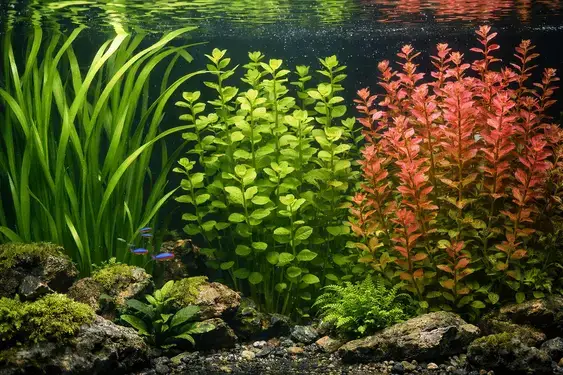
Best Aquarium Background Plants: Tall Species by Size, Light and CO₂
Quick Answer
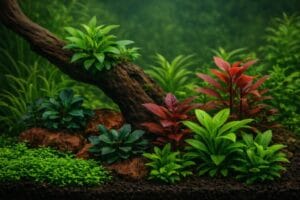
For most aquariums, Vallisneria spiralis is one of the easiest all-round background plants. Choose Limnophila sessiliflora for fast cover, Rotala rotundifolia for fine texture and color, and Hygrophila corymbosa ‘Siamensis’ for a fast-growing, beginner-friendly green background.
Choose by aquarium height, light, growth speed and how often you want to trim. Compare all 10 plants below to find the best fit for your setup.
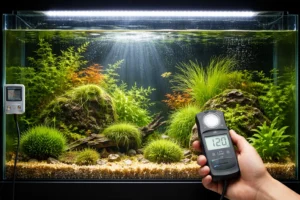
Check the available light first: Use the aquarium lighting calculator to estimate the light reaching the lower stems.
Best Aquarium Background Plants at a Glance
The height ranges below are practical submerged ranges rather than fixed limits. Light, nutrients, CO₂, aquarium height and trimming all change the final size.
| Background Plant | Typical Height | Light | Injected CO₂ | Growth | Best For |
|---|---|---|---|---|---|
| Vallisneria spiralis | 30–60+ cm | Low to medium | Not required | Fast | Easy, low-tech backgrounds |
| Limnophila sessiliflora | 20–40+ cm | Low to medium | Not required | Fast | Fine texture and quick cover |
| Hygrophila corymbosa ‘Siamensis’ | 20–40+ cm | Low to medium | Not required | Fast | Beginner-friendly green mass |
| Rotala rotundifolia | 20–50+ cm | Medium | Optional | Fast | Small leaves and shaped stem groups |
| Ludwigia repens | 20–50 cm | Medium | Optional | Medium to fast | Red-green contrast |
| Bacopa caroliniana | 20–50 cm | Low to medium | Not required | Slow to medium | Low-maintenance upright stems |
| Cryptocoryne crispatula var. balansae | 20–60 cm | Low to medium | Not required | Medium after settling | Long, narrow leaves |
| Amazon sword | 20–50+ cm | Low to medium | Not required | Medium | Broad leaves in larger aquariums |
| Crinum calamistratum | 40–120 cm | Low to medium | Not required | Slow | Large aquariums and flowing leaves |
| Vallisneria ‘Gigantea’ | 60–150+ cm | Low to medium | Not required | Fast | Very tall aquariums and surface cover |
 Beginner Friendly
Vallisneria spiralis


 18–28°C
 Medium Light
 Beginner
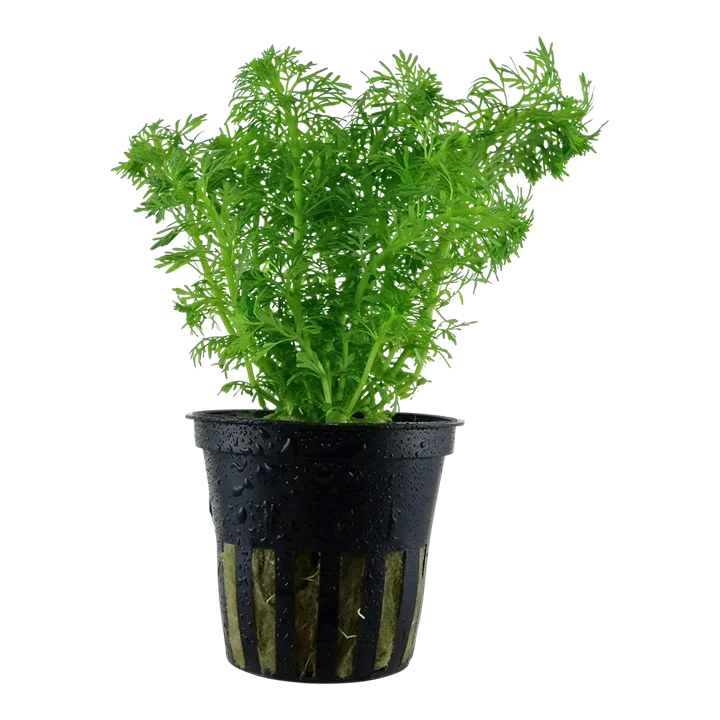
Limnophila sessiliflora
20–26°C Low Light
 Beginner Friendly
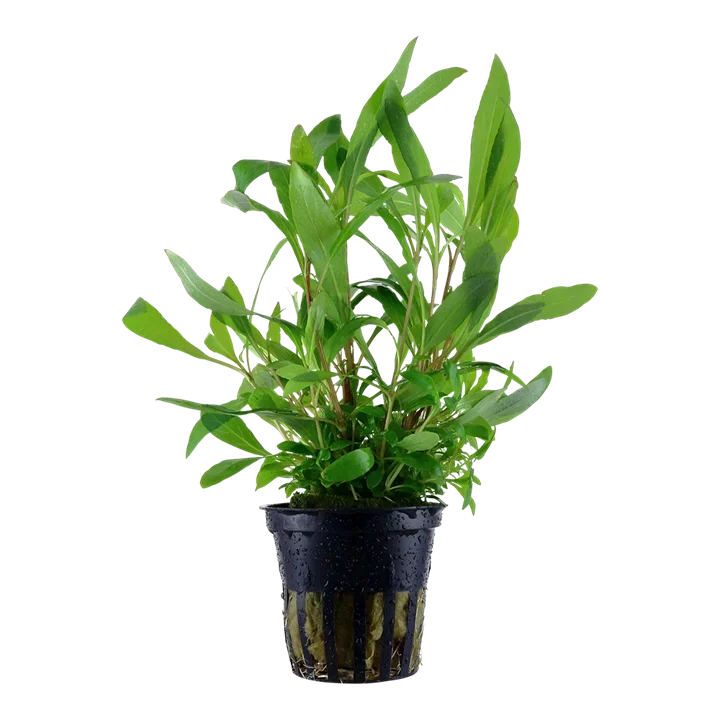
Hygrophila corymbosa 'Siamensis'
 24–28°CMedium Light
 Beginner
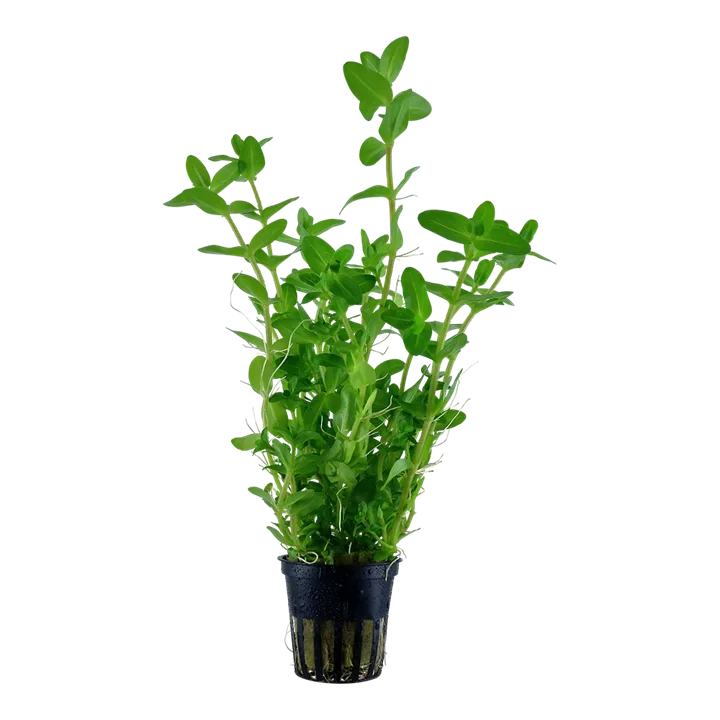
rotala rotundifolia
 4–32°CMedium Light
 Beginner
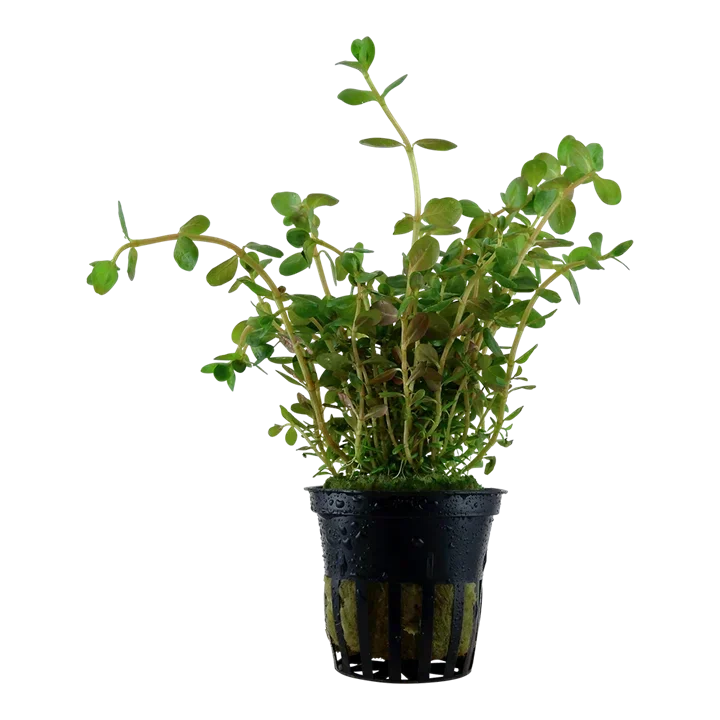
Bacopa caroliniana
 20–25°CMedium Light
Beginner
20–25°CMedium Light
Beginner
Ludwigia repens
22–26°CMedium LightHow to Choose a Background Plant
Start with aquarium height, not volume
A 60-liter aquarium can be short and wide or narrow and tall. Those shapes need different plants even though the volume is identical. Measure from the substrate surface to the waterline, then decide whether you want leaves to stop below the surface or arch across it.
For a shallow aquarium, choose small-leaved stems that tolerate frequent trimming. For a tall aquarium, Vallisneria, Cryptocoryne crispatula, Amazon sword or Crinum can use the available vertical space without looking out of scale.
Choose a trimming style you will actually maintain
- Stem plants: Cut and replant the healthiest tops when the group becomes tall or bare below.
- Runner plants: Remove unwanted daughter plants to stop them spreading across the layout.
- Rosette plants: Remove complete outer leaves at the base rather than cutting the leaf halfway.
- Bulb plants: Give them permanent room and remove damaged leaves individually.
Fast stems are not low maintenance just because they are easy to grow. A slower Bacopa or Cryptocoryne group may be more suitable when weekly trimming is unrealistic.
Match leaf size to the layout
Fine leaves make a small aquarium feel deeper because the plant appears farther away. Broad leaves create weight and work better as a single background feature in a larger aquarium. Mixing every leaf shape across the rear usually looks restless; two contrasting groups are often enough.
Leave room for light and water flow
A dense rear wall can shade its own lower leaves and block circulation behind the hardscape. Leave small gaps between plant groups, thin crowded stems and keep filter intakes accessible. The background should frame the aquarium, not seal off the back.
Easy Aquarium Background Plants for Beginners
Vallisneria spiralis
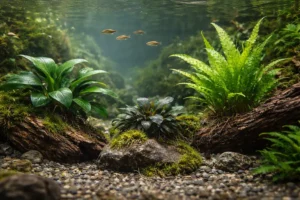
Vallisneria is one of the easiest ways to create a tall green background without injected CO₂. Its ribbon-like leaves grow upward and move gently with the current. New plants appear on runners, so a small group can spread into a continuous rear planting.
Place it where spreading is welcome. Remove runners that move into the foreground and take overly long outer leaves off at the base. Cutting every leaf across the top often leaves a blunt line and damaged tips.
Limnophila sessiliflora
Limnophila sessiliflora gives the background a soft, feathery texture and fills empty space quickly. It is useful in a new planted aquarium because healthy stems begin growing without demanding intense light or injected CO₂.
Plant several individual stems with a little space between them. When the group reaches the surface, cut the best tops and replant them. Old lower sections can become bare when light is weak or the group is allowed to grow too dense.
Hygrophila corymbosa ‘Siamensis’
This Hygrophila produces sturdy upright stems and broader leaves than Limnophila or Rotala. It is forgiving, grows quickly and creates a strong green mass behind wood or stone.
It also becomes wide. Use it in a back corner or as one substantial group rather than planting it across the entire rear. Frequent top trimming encourages side shoots and keeps the lower half fuller.
Bacopa caroliniana
Bacopa caroliniana grows more slowly than the fastest stem plants and holds a clean vertical shape. Its rounded leaves provide useful contrast beside fine-leaved species, and the slower pace means fewer emergency trims.
Plant the stems in a loose group rather than one tight bunch. Older lower leaves need light, so do not let faster neighboring plants cover them.
Best Background Plants Without Injected CO₂
Injected CO₂ is not required for every tall aquarium plant. The following species can form a useful background in a balanced low-tech aquarium:
| Plant | Why It Works Without Injected CO₂ | What to Expect |
|---|---|---|
| Vallisneria spiralis | Adaptable runner plant with low light demand | Fast spreading once established |
| Limnophila sessiliflora | Undemanding, fast-growing stem plant | Looser growth when light is weak |
| Hygrophila corymbosa ‘Siamensis’ | Robust stems and easy propagation | Frequent trimming as it reaches the surface |
| Bacopa caroliniana | Moderate pace and sturdy leaves | Slower, more open growth |
| Cryptocoryne crispatula var. balansae | Low-demand rosette after acclimation | A slow start followed by long leaves |
| Amazon sword | Hardy rosette with strong root growth | Large leaves and a need for substrate nutrition |
| Crinum calamistratum | Slow-growing bulb plant with modest demand | Patience and permanent space |
Rotala rotundifolia and Ludwigia repens can also grow without injected CO₂, but their groups may remain less compact and their color may be more subdued. Stable light and nutrients matter more than forcing a high-light schedule onto an aquarium with limited plant growth.
Best Red and Colorful Background Plants
Rotala rotundifolia
Rotala rotundifolia is useful when a background needs fine leaves without the soft, feathery look of Limnophila. It can remain green in modest conditions and develop warmer orange or red tones near the top when light and nutrition support stronger growth.
It responds well to shaping. Trim the group in a gentle slope instead of cutting every stem at one height, then replant selected tops where the rear needs more density.
Ludwigia repens
Ludwigia repens adds wider leaves and a red-green contrast that remains visible from across the room. It is easier to use as a restrained accent group than as a full background wall.
Give the stems enough space for light to reach the lower leaves. Dense planting may look finished on the first day but often leads to bare bases later.
Tall and Broad-Leaf Plants for Large Aquariums
Cryptocoryne crispatula var. balansae
This Cryptocoryne produces long, narrow, textured leaves that can rise through the background and rest along the surface. It is slower and calmer than a wall of stem plants, making it useful where the layout needs height without constant cutting.
It may pause or lose older leaves after planting. Avoid moving it repeatedly. Give the roots a stable substrate and allow new submerged growth to establish before judging the plant.
Amazon sword
An Amazon sword is not a narrow background filler. It is a large rosette that can become the dominant plant in the aquarium. Use one specimen behind the main hardscape or in a rear corner where its broad leaves will not shade an entire foreground.
It feeds heavily through the roots and benefits from a nutritious substrate or targeted root fertilization. Remove old outer leaves at the crown instead of shortening them halfway.
Crinum calamistratum
Crinum calamistratum develops long, dark, tightly waved leaves that bring movement without fast growth. It is particularly effective in a tall aquarium where the leaves can extend naturally rather than being folded into a shallow space.
Do not bury the entire bulb. Plant the roots securely while leaving part of the bulb exposed above the substrate. Once settled, leave it in place.
Vallisneria ‘Gigantea’
This is one of the tallest practical freshwater background plants. Its leaves can run across the water surface and create shade over a large area. That effect suits large, tall aquariums but can overwhelm smaller layouts and reduce light below.
Use it when surface-reaching leaves are part of the design. For a cleaner upright background, choose a shorter Vallisneria form instead.
Best Background Plants by Aquarium Size
Nano and shallow aquariums
Choose small-leaved stems that can be trimmed repeatedly without looking oversized:
- Rotala rotundifolia
- Limnophila sessiliflora
- Bacopa caroliniana
- A shorter Vallisneria form such as Vallisneria spiralis ‘Tiger’
Use one main species and keep the group narrow. A broad Amazon sword or full-size Crinum can consume most of the visible space in a small aquarium.
Medium aquariums
- Vallisneria spiralis
- Hygrophila corymbosa ‘Siamensis’
- Rotala rotundifolia
- Ludwigia repens
- Cryptocoryne crispatula var. balansae
Medium aquariums have enough width for two contrasting background groups. Keep one group dominant and use the second as an accent rather than dividing the rear into equal stripes.
Large and tall aquariums
- Amazon sword
- Crinum calamistratum
- Vallisneria ‘Gigantea’
- Cryptocoryne crispatula var. balansae
- Large groups of Hygrophila or Limnophila
A large aquarium needs plant mass, but not necessarily many species. Repeating one or two plants across several areas often looks more deliberate than filling every gap with a different variety.
How to Plant Background Plants
Stem plants
- Separate bundled stems and remove damaged lower leaves.
- Plant each stem individually rather than pushing the entire bunch into one hole.
- Leave enough distance for light and circulation between stems.
- Use a staggered group instead of a perfectly straight row.
- Replant healthy tops when the lower section becomes bare.
Rosette and runner plants
Place the roots into the substrate while keeping the crown—the point where leaves and roots meet—above it. Burying the crown can damage Vallisneria, Cryptocoryne and sword plants. Leave space around large rosettes for their mature leaf spread.
Bulb plants
Set the roots into the substrate without covering the entire bulb. A bulb that is buried too deeply may rot. Crinum should be positioned once, given time to root and then left undisturbed.
How to Trim Background Plants Without Losing the Lower Growth
The rear often looks dense at the top and empty below because the upper leaves intercept the light. Waiting until every stem reaches the surface makes the problem worse.
- Trim in sections: Cut part of a stem group at a time so the rear never becomes completely bare.
- Shape a slope: Keep stems slightly shorter near the focal point and taller toward a back corner.
- Thin from the base: Remove complete weak stems instead of only shortening the canopy.
- Replant selected tops: Use the healthiest compact growth and discard bare lower sections when needed.
- Control runners early: Remove unwanted Vallisneria plants before they establish deep roots.
For a planted layout with a clear foreground, connect the rear to shorter species from the midground aquarium plants guide.
Using Background Plants to Create Depth
Depth comes from overlap and scale, not simply from putting the tallest plant against the rear glass.
- Keep small leaves near distant-looking areas. Fine Rotala or Limnophila makes the rear appear farther away.
- Hide only part of the hardscape. Let stone or wood remain visible between plant groups.
- Use unequal masses. One large group and one smaller accent look more natural than mirrored corners.
- Leave a break in the rear planting. A narrow open area creates a path for the eye and makes the aquarium feel deeper.
- Repeat colors. A small red plant in the midground can visually connect with a larger Ludwigia or Rotala group behind it.
The Nature Aquarium guide covers asymmetrical plant groups, while the Dutch aquarium guide explains more structured rows and color contrast.
Light, Fertilizer and Substrate
Light
Background plants often reach close to the light, but their lower leaves are much farther away. Increase density gradually and watch the base of each group. Long internodes, leaning stems and leaf loss below usually point to shading or insufficient light at depth.
A longer photoperiod does not correct weak light distribution. Start with a consistent moderate schedule and change intensity, duration or plant density one step at a time.
Fertilizer
Stem plants take up nutrients through both leaves and roots, so a balanced water-column fertilizer is useful. Large rosette plants such as Amazon sword and Cryptocoryne benefit from nutrition near the roots, especially in inert sand or gravel.
Do not diagnose every yellow leaf as iron deficiency. Compare old and new growth, check the full plant and review the aquarium plant deficiency guide before adding one nutrient repeatedly.
Substrate
The substrate must hold tall stems and allow roots to spread. Very shallow sand makes fresh stems easy to uproot. Build a deeper rear section where tall plants will be placed, but keep crowns and bulbs at the correct level.
Common Background Plant Problems
The lower stems become bare
The upper canopy is usually blocking light. Thin the group, remove weak stems and replant compact tops. Do not solve the problem only by extending the lighting period.
The plants keep floating up
Separate bundled stems, remove leaves from the section being planted and insert each stem deeply enough to hold. Redirect strong flow while roots establish. For rosette plants, bury the roots but keep the crown exposed.
Growth is tall and sparse
Leggy growth often means the plant is reaching for light or competing inside an overcrowded group. Improve light distribution, create more space and trim early enough to encourage side shoots.
The rear becomes a solid wall
Remove complete stems and runners instead of repeatedly trimming only the top. Reopen gaps around hardscape, filter equipment and the route of water flow.
New leaves are smaller or pale
Review light, CO₂ stability and the overall fertilizer supply before adding a single nutrient. Also check whether a fast-growing background has simply outgrown the available resources.
FAQ
What are the best aquarium background plants?
Vallisneria spiralis, Limnophila sessiliflora, Hygrophila corymbosa ‘Siamensis’, Rotala rotundifolia, Ludwigia repens and Bacopa caroliniana cover most common layouts. The best choice depends on aquarium height, light and how often you want to trim.
What is the easiest tall aquarium plant?
Vallisneria spiralis is one of the easiest. It grows in modest light without injected CO₂ and spreads through runners. Limnophila sessiliflora is another easy option when regular stem trimming is acceptable.
Which background plants grow without CO₂ injection?
Vallisneria, Limnophila sessiliflora, Hygrophila corymbosa ‘Siamensis’, Bacopa caroliniana, Cryptocoryne crispatula, Amazon sword and Crinum calamistratum can grow without injected CO₂ in suitable light and nutrition.
What are the tallest aquarium plants?
Large Vallisneria forms and Crinum species can produce leaves well over one meter long. Their leaves often continue across the water surface, so they are best reserved for tall or large aquariums.
Which background plants are best for a nano aquarium?
Rotala rotundifolia, Limnophila sessiliflora and Bacopa caroliniana work well because their stems can be kept short through trimming. A shorter Vallisneria form can also work when its runners are controlled.
How many background plant species should I use?
One or two species are enough for most small and medium aquariums. Larger layouts can support more, but repeating a limited plant palette usually creates a stronger result than using a different species in every gap.
How often should background plants be trimmed?
Fast stem plants may need trimming every one to three weeks, while Bacopa, Cryptocoryne, Amazon sword and Crinum need much less frequent work. Trim when plants begin shading the lower growth rather than following a fixed calendar.
Why do background plants lose their lower leaves?
The usual causes are shading, overcrowding, weak light at substrate level or an old stem base. Thin the group and replant healthy tops before the entire lower section becomes bare.
Explore the Plant Database: Background Aquarium Plants
The Plant Database currently contains 353 aquarium-suitable matches for this structured classification. The editorial recommendations above are a short list; open a profile to compare complete care data.
 Intermediate
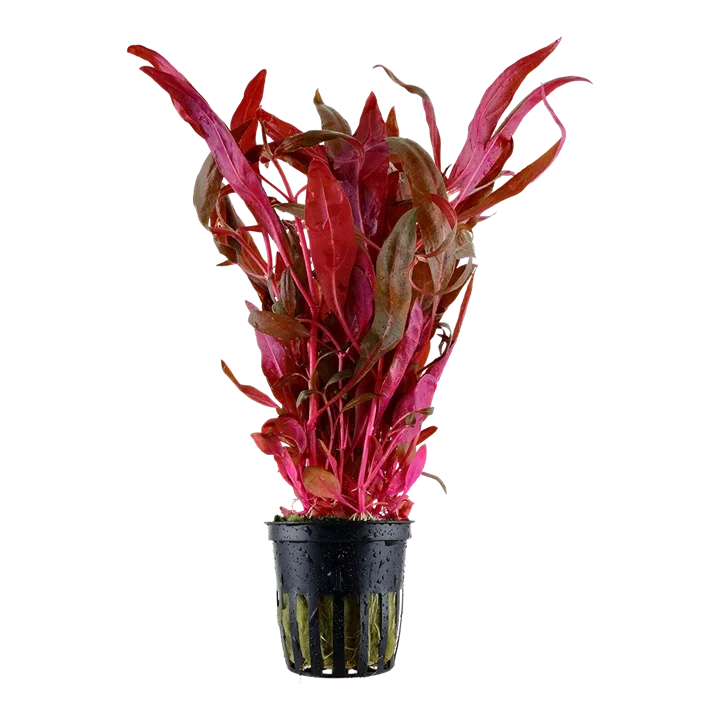
Alternanthera reineckii "Rosaefolia"
17–25°CMedium Light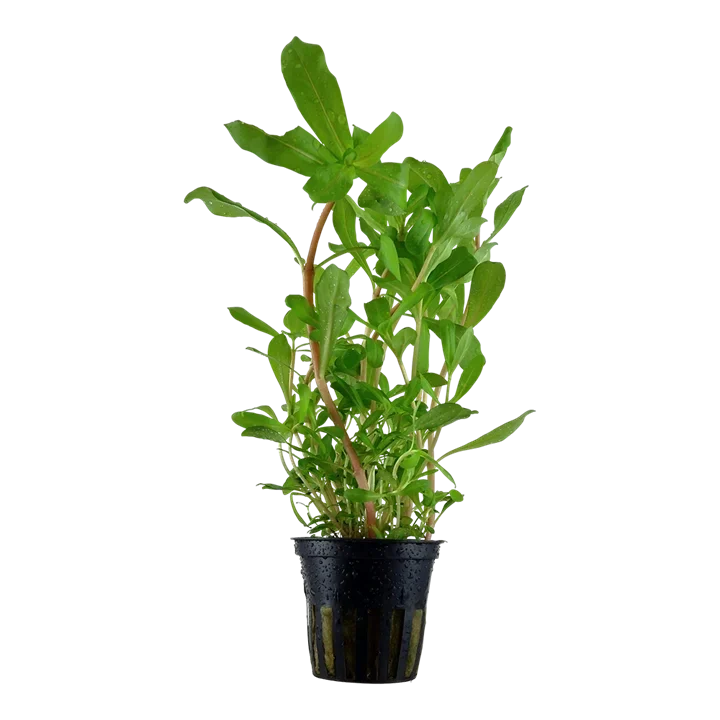 Advanced
Ammannia crassicaulis
22–28°C High Light
 Beginner
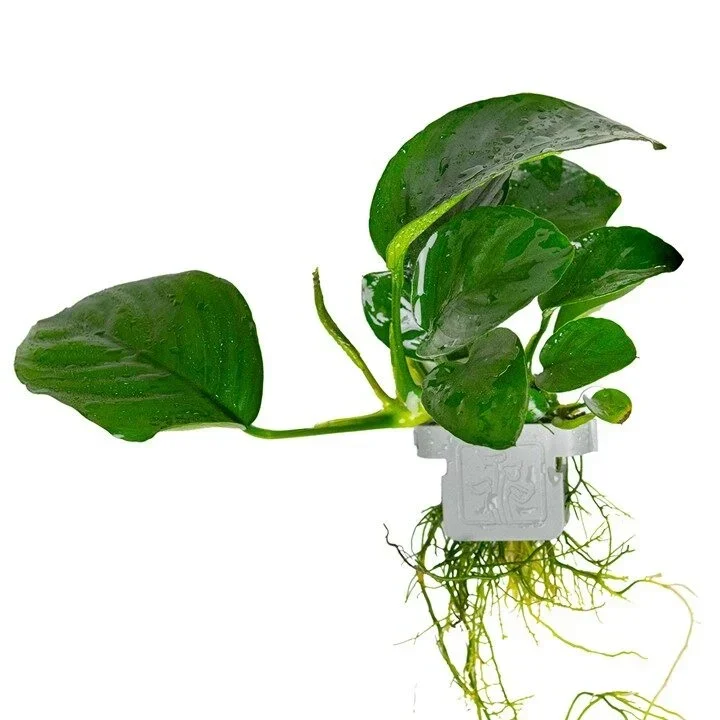
Anubias barteri var. caladiifolia
 22–26°CLow Light
 Beginner
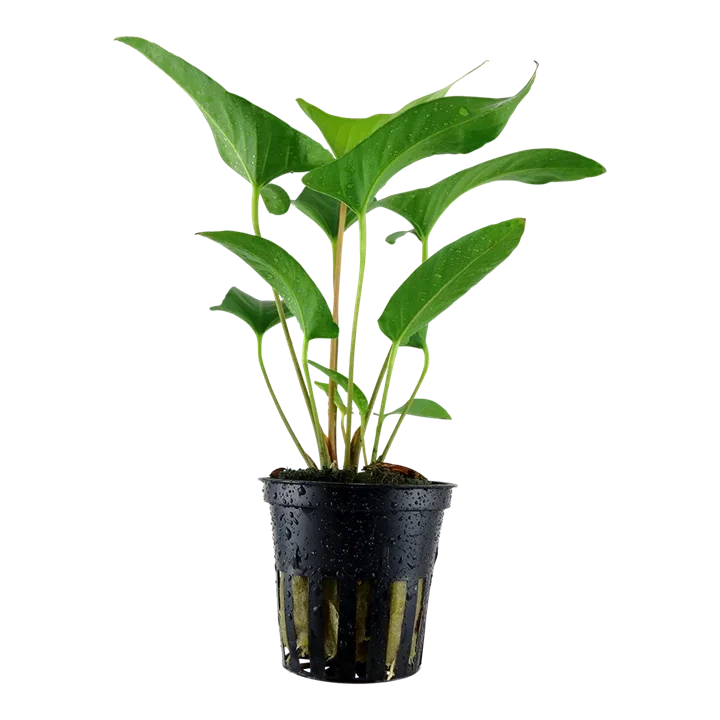
Anubias gracilis
 22–26°CLow Light
 Beginner
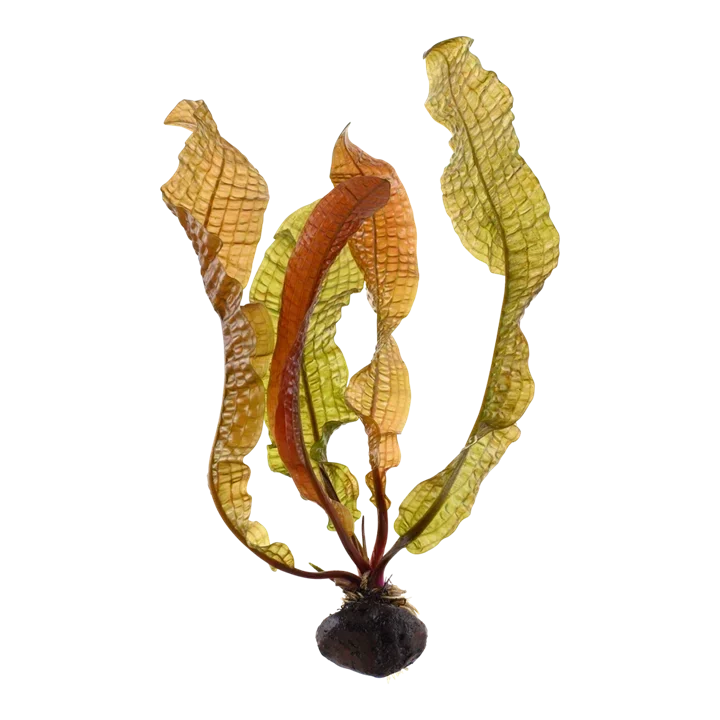
Aponogeton boivinianus
22–26°CMedium Light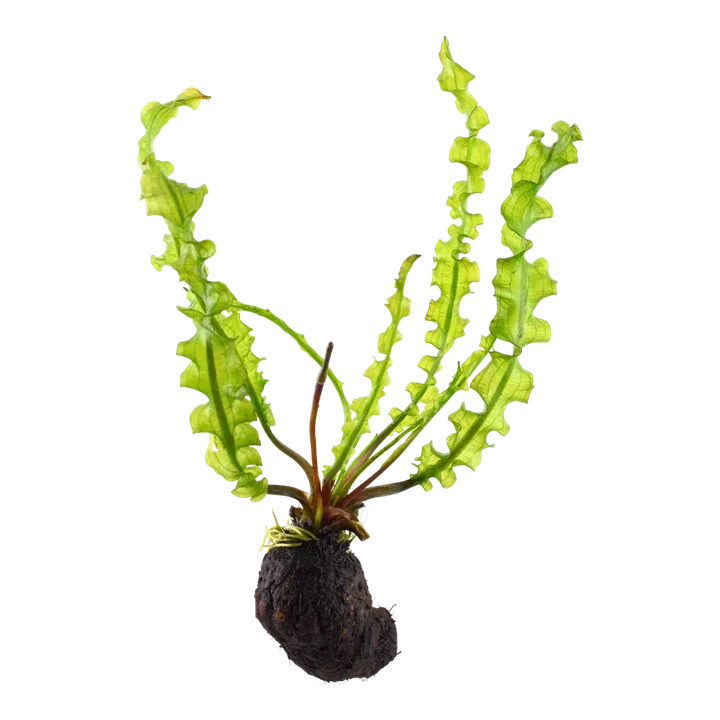 Intermediate
Aponogeton longiplumulosus
22–26°CMedium Light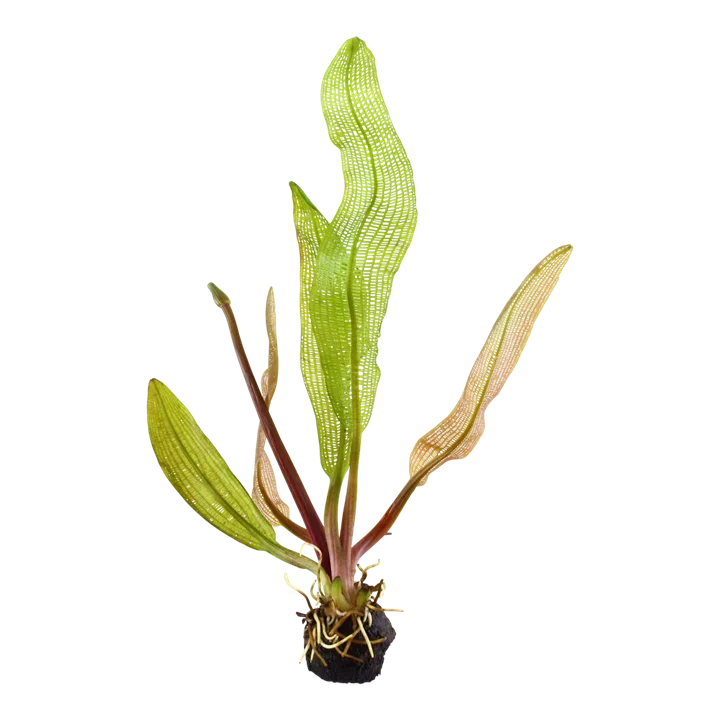 Intermediate
Aponogeton madagascariensis var. madagascariensis
17–27°CLow Light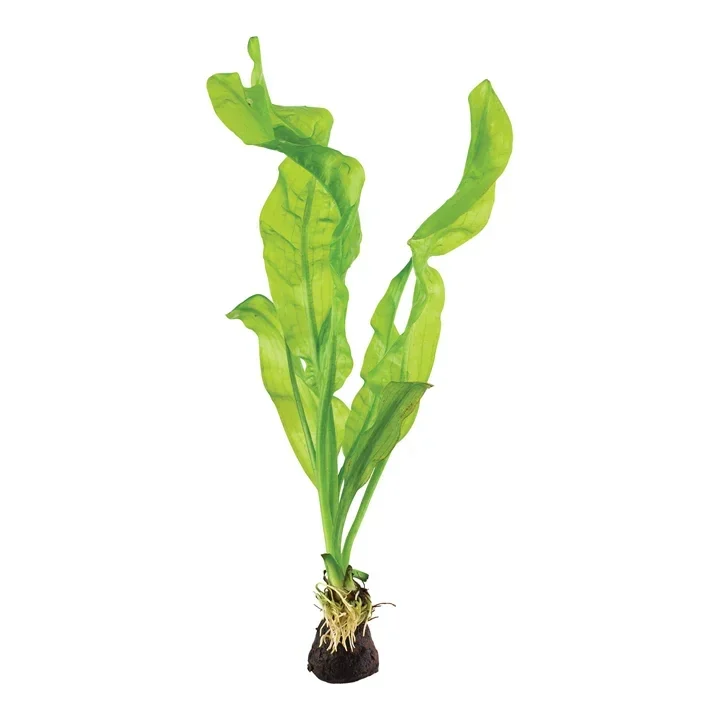 Intermediate
Aponogeton ulvaceus
24–28°CMedium LightNew to AquariumLesson? Start with our complete Aquarium Lessons Hub or return to the homepage at AquariumLesson.com.