
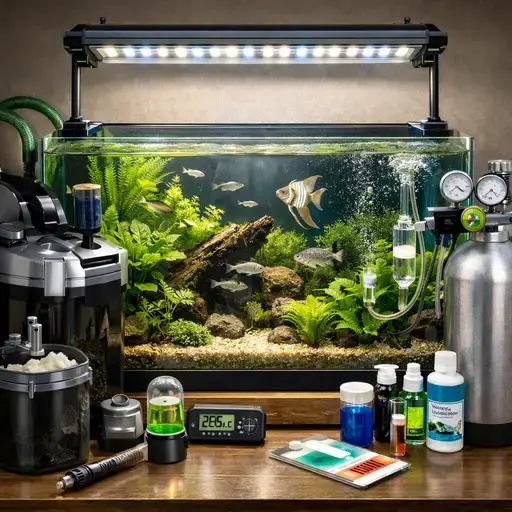
Aquarium Equipment Guide: Complete Setup for Lighting, Filtration, CO₂ & Structural Safety
Quick Answer
A basic freshwater setup needs a tank, stable stand, filter, heater when the room is cool, lighting, substrate, water conditioner, a test kit, and simple maintenance tools. CO2 is optional, not standard equipment for every aquarium. Buy for the livestock and plants you plan to keep.
Start with the equipment that keeps water stable and the tank safe. The tank, stand, filter, heater, light, substrate, conditioner, and test kit matter more than extra gadgets.
Choose gear around the aquarium you are actually building. A low-tech shrimp tank, planted community tank, and high-light aquascape do not need the same equipment list.
Plan the core system first: compare filtration in the filter guide, check support in the stand guide, and keep calculators together on the tools page.
Helpful next step: Use the aquarium volume calculator before comparing tank size, stand load, and equipment capacity.
Essential Aquarium Equipment List
If you want a stable aquarium, start with the essentials. The goal is simple: reliable filtration, consistent lighting, safe structure, and just enough automation to avoid daily instability. CO₂ is optional — but becomes a major performance lever in high-growth planted tanks.
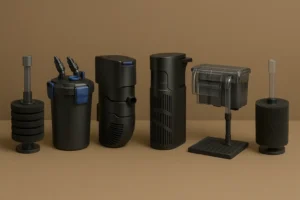
- Filter system (sponge, HOB, canister, or sump) → water quality + biological stability
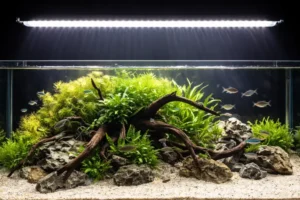
- Aquarium lighting (LED recommended) → plant growth, color, algae control
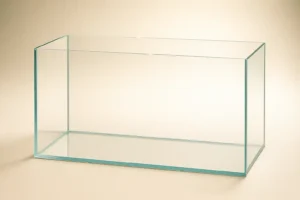
- Glass tank (float or low-iron) → clarity, safety, and long-term seam integrity
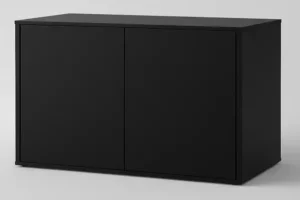
- Aquarium stand (load-rated, level, moisture-resistant) → structural safety and clean integration
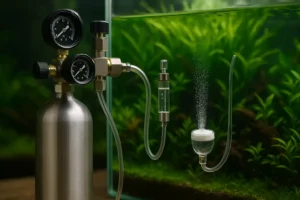
- CO₂ system (optional, pressurized for stability) → dense growth, carpets, vivid stem plants
Pick Your Equipment Focus
Not sure where to start? Choose the system you want to optimize and jump directly into the detailed guide:
- I want better plant growth and color → Aquarium Lighting
- I want clean, stable water quality → Aquarium Filter
- I want lush plant density and faster growth → Aquarium CO₂ System
- I want maximum clarity and structural safety → Aquarium Glass
- I want safe weight support and clean integration → Aquarium Stand
Common Equipment Mistakes Beginners Make
Most aquarium problems are not caused by livestock — they are caused by mismatched equipment. The wrong light, undersized filtration, unstable CO₂, or weak structural support can create long-term instability.
- Overpowering light without CO₂ → algae outbreaks
- Undersized filtration → ammonia spikes & cloudy water
- Inconsistent CO₂ injection → plant melt & instability
- Underestimated tank weight → stand or floor stress
- Ignoring glass thickness rules → bowing & seam fatigue
What Is Aquarium Equipment (And Why It Matters)
Aquarium equipment is the technical backbone of your system. It regulates light energy, nutrient flow, biological filtration, gas exchange, structural integrity, and long-term safety.
The main difference between a tank that looks good for two weeks and a tank that stays stable for years is consistency. Equipment creates consistency: stable flow prevents dead zones, stable light prevents algae spirals, stable CO₂ prevents growth stalls, and a level, load-rated stand prevents slow structural stress you won’t notice until it becomes a real problem.
In high-quality aquascapes, equipment is not an afterthought — it is integrated into the design from day one. If you want to go deeper into each module, start with the Aquarium Filter Guide and Aquarium Lighting Guide, then add precision with a CO₂ system. For structural decisions, use the Aquarium Glass Guide and the Aquarium Stand Guide.
Great aquariums are not built randomly. They are engineered.
Comparison of Core Equipment Categories
| Equipment | Main Function | Impacts | Complexity | Best For |
|---|---|---|---|---|
| Lighting | Energy for plants | Growth, color, algae control | Medium | Planted & aquascaped tanks |
| Filter | Water purification | Biological stability | Low–Medium | All aquariums |
| CO₂ System | Carbon supply | Dense growth, carpeting | Medium–High | High-tech planted tanks |
| Glass | Structural containment | Clarity & safety | Low | Display & rimless tanks |
| Stand | Load support | Long-term safety | Low | All tanks above 60L |
How to Choose the Right Aquarium Equipment
Equipment decisions should be based on tank size, plant demand, livestock, and your maintenance rhythm — not on aesthetics alone.
Based on Tank Size
- Nano tanks → Compact LED + sponge or small HOB filter
- Medium tanks → Adjustable LED + canister filter
- Large tanks → High-output LED + oversized canister or sump
Based on Plant Demand
- Low-tech → Moderate light, no CO₂ required
- Medium-tech → Stronger light + optional CO₂
- High-tech → High PAR lighting + pressurized CO₂
Based on Long-Term Stability
- Oversize filtration rather than undersize
- Choose marine plywood or metal stands for 300L+
- Use low-iron glass for high-light display tanks
- Automate lighting and CO₂ for consistency
Frequently Asked Questions
What equipment do I need for a beginner aquarium?
Start with a reliable filter, an LED light, and a safe, level stand. Keep the setup simple, prioritize stability, and only add CO₂ if you plan to run high light with demanding plants. For a full breakdown, see the Aquarium Filter Guide and Aquarium Lighting Guide.
What is the most important aquarium equipment?
Filtration is essential for all tanks. Lighting and CO₂ become critical in planted systems. Structural safety (glass and stand) is non-negotiable for larger setups.
Do I need CO₂ for a planted aquarium?
Not always. Low-demand plants grow without CO₂. However, dense carpets and vivid stem plants require consistent carbon supplementation. If you want consistent results, use a pressurized setup — explained in the Aquarium CO₂ System Guide.
How strong should my aquarium filter be?
Aim for 5–10× tank volume turnover per hour, depending on bioload and aquascape density.
What is the best equipment setup for a planted tank?
Most planted tanks perform best with adjustable LED lighting, a canister filter for stable circulation, and consistent CO₂ if you run high light. For structural clarity and long-term safety, choose the right tank material and support using the Aquarium Glass Guide and Aquarium Stand Guide.
Conclusion
Aquarium equipment is not decoration — it is infrastructure. The right combination of lighting, filtration, CO₂, structural glass, and proper support creates a stable ecosystem that performs for years.
Ready to optimize your setup?
Choose one of the five equipment modules above and build your system intentionally — not accidentally.
New to AquariumLesson? Start with our complete Aquarium Lessons Hub or return to the homepage at AquariumLesson.com.