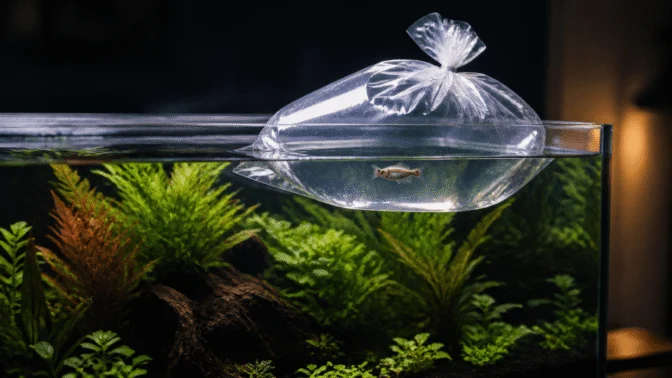
Acclimating New Fish: A Safer Arrival Routine
Acclimation is a controlled handover from transport water to aquarium water. It cannot erase shipping stress or fix unsuitable water, but it can avoid adding a rapid temperature or chemistry change at the most vulnerable moment. The aim is a calm transfer into a prepared tank, not a long ritual for its own sake.
Start only when the destination aquarium is genuinely ready: it should be cycled, within the species’ acceptable temperature range and free of measurable ammonia or nitrite. For a new purchase, a prepared quarantine aquarium is usually the safer destination before a community tank.
Quick answer
- Turn aquarium lights down and check the destination water.
- Float the closed transport bag briefly to narrow the temperature difference.
- Open it away from the aquarium and inspect the fish and water.
- Use small, measured additions of destination water when the fish needs chemistry adjustment.
- Move the fish with a net or specimen container; do not pour shop or transport water into the aquarium.
- Keep lights low, feed lightly later and watch behaviour and breathing.
What you will learn in this lesson
- What acclimation can accomplish and what it cannot.
- How transport water changes after a bag is opened.
- When gradual water mixing is useful and when a long drip is not.
- How to transfer fish and monitor the first day without creating another stressor.
Introduction
A sound arrival routine is short enough to avoid extending a stressful trip and deliberate enough to avoid a sharp avoidable change in the fish’s environment.
Before you open the bag
Confirm that the aquarium has working filtration and circulation, the right temperature and safe water results. If fish are already gasping or the filter has stopped, solve that problem first; Aquarium Oxygen Levels covers the urgent checks. A new fish should not be used to test whether a tank has finished cycling. Use Aquarium Water Parameters if you do not know the condition of the destination water.
Dim the room and aquarium lights. Avoid tapping the bag, repeated netting or a crowded introduction around active tank mates. These small choices do not replace good water, but they reduce unnecessary stimulation while the fish is already dealing with transport.
Why transport water needs care
Fish release carbon dioxide and waste during transport. In a sealed bag, carbon dioxide can lower pH; after the bag is opened, gas exchange changes the chemistry. That matters because the toxicity of ammonia is influenced by pH and temperature. This is one reason not to leave an opened bag standing for a long, improvised acclimation while deciding what to do. The safest exact routine depends on travel time, the source water and the fish, so follow reputable supplier or veterinary instructions where they are specific to the shipment.
A measured acclimation routine
- Float the sealed bag. A short float helps narrow a temperature difference. Keep the bag secured so no outside water enters it.
- Open and assess. If the water has a strong odour, the fish is distressed or the trip was long, avoid an unnecessarily prolonged process. Prepare to transfer calmly.
- Mix only as much as the situation calls for. For a meaningful difference in source and destination water, add small amounts of aquarium water to a clean container over a limited period while observing the fish. Do not chase a fixed number of minutes.
- Transfer the fish, not the bag water. Use a net or a clean specimen container and discard transport water away from the aquarium.
- Let the fish settle. Keep lights low and give it cover. Offer a small normal meal later, not a heavy feeding test.
When drip acclimation helps – and when it may not
Slow water mixing can be helpful where the source and destination have genuinely different mineral content, salinity or other chemistry and the animal tolerates the procedure. It is not automatically better for every bagged fish. A long drip exposes a stressed fish to a small, changing volume of transport water and may be a poor choice after a long journey or when the bag water looks compromised. If you cannot assess the differences safely, obtain species- and shipment-specific advice rather than relying on aquarium folklore.
After release: the first 24 hours
- Watch breathing, balance, hiding and whether established fish are chasing the new arrival.
- Check that the fish can reach an appropriate food. Persistent refusal to eat needs the sequence in Fish Not Eating, not repeated overfeeding.
- Test water if several fish change behaviour after an introduction.
- Do not treat ordinary settling as proof of disease, but do not dismiss rapid breathing, worsening spots, flashing or inability to stay upright.
Acclimation and quarantine are different jobs
Acclimation manages the move from one water environment to another. Quarantine creates a separate period for observation and biosecurity. A careful bag transfer cannot replace quarantine, and a quarantine tank still requires acclimation on arrival and again when fish eventually move to the display aquarium.
Conclusion
The best acclimation is deliberate but not theatrical: start with a ready aquarium, reduce the major differences, keep transport-water exposure sensible and give the fish a quiet first day. If the fish struggles afterward, investigate water and other signs before blaming the acclimation method alone.
FAQ
Should I pour bag water into my aquarium?
No. Transfer the fish without deliberately adding transport water to the aquarium.
Should I feed immediately?
Usually it is better to let the fish settle, then offer a small species-appropriate meal. Remove leftovers and test water if appetite loss persists.
Lesson completed!
You've finished this lesson. Keep building your aquarium knowledge, one lesson at a time.
Continue learning →New to AquariumLesson? Start with our complete Aquarium Lessons Hub or return to the homepage at AquariumLesson.com.