Fish Stress Signs: What to Check Before Assuming Disease
Fish stress signs are warnings, not diagnoses. Hiding, clamped fins, reduced colour, rapid breathing, flashing, poor appetite or sudden aggression can come from water-quality trouble, unsuitable temperature, social pressure, transport, parasites or illness. The useful first move is to stabilize urgent environmental risks and collect evidence, not to label every quiet fish as sick.
Look for a change from that species’ normal behaviour and ask whether one fish, a social group or the whole aquarium is affected. A single shy new fish needs a different investigation from a tankful of fish gasping after a filter failure.
Check these first
- Is any fish gasping, unable to stay upright or in immediate distress? Increase appropriate aeration and read Aquarium Oxygen Levels.
- Test ammonia and nitrite before changing food or adding medicine. Use Aquarium Water Parameters for the order of checks.
- Check temperature, filter flow, recent maintenance and anything newly added to the tank.
- Watch interactions during feeding and throughout the day.
- Look for specific signs that belong in a focused guide rather than guessing from stress alone.
What you will learn in this lesson
- Which common changes are nonspecific stress signals.
- How environmental, social and health causes can overlap.
- How to decide which issue deserves immediate action.
- When a symptom-specific guide or professional diagnosis is safer than broad treatment.
Introduction
Use this guide as a triage hub: it helps you turn a vague change in behaviour into a sensible sequence of environmental checks and more specific questions.
Common stress signs and what they can mean
| What you see | Possible categories | Useful next check |
|---|---|---|
| Hiding or withdrawal | New surroundings, inadequate cover, bullying, illness | Recent introduction, territory, group structure and water tests |
| Clamped fins or colour loss | Water stress, social pressure, parasites or illness | Whole-tank behaviour, water quality and visible skin/fins |
| Rapid breathing or surface gasping | Low oxygen, gill irritation, toxins, temperature stress | Immediate aeration and water-quality checks |
| Flashing or rubbing | Irritation, parasites, water problems | White spots / Ich signs and water tests |
| Reduced appetite | Transport, competition, food mismatch, illness, water stress | Fish Not Eating |
| Sudden aggression | Territory, crowding, breeding behaviour, incompatible group | Space, cover, stocking and compatibility |
No row in this table is a diagnosis. The same fish can hide because it is newly introduced, being chased or seriously unwell. Patterns and the timing of the change are more informative than any one sign.
Environmental causes to rule out early
Ammonia and nitrite in a stocked aquarium, poor oxygen exchange, a stalled filter, unsuitable temperature and sudden chemistry changes can affect multiple fish at once. A safe response is usually measured: test, increase aeration where needed, remove an obvious source of contamination and avoid making several large changes at the same time. New Tank Syndrome is particularly relevant when a young aquarium has sudden lethargy or appetite loss.
Plants, CO2 equipment, medication and warm weather can all change oxygen demand or gas exchange. If fish are near the surface or breathing hard, oxygen and water quality take priority over colour or feeding advice.
Social and environmental stress
A fish may be physically healthy but unable to rest, feed or hold a territory. Check whether a new tank mate, too little cover, an unsuitable group size, bright open space or competition at feeding time has changed the social balance. Give shy fish species-appropriate shelter and distribute food so slower fish can eat. Avoid “fixes” that simply add more fish without checking the species’ social needs and tank capacity.
When stress signs point toward a specific problem
- White salt-like spots, flashing or clamped fins: Ich / White Spot Disease explains the differential and why appearance alone is not confirmation.
- One or more fish refusing normal food: follow Fish Not Eating before trying multiple foods or medicines.
- Surface gasping: treat it as an urgent oxygen and water-quality check, not merely a stress symptom.
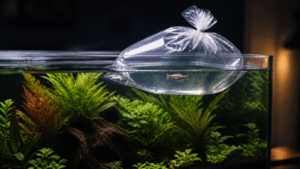
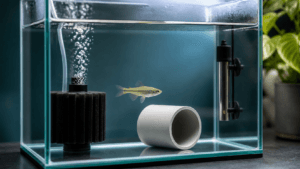
- New arrival behaving unusually: review Acclimating New Fish and keep the fish in a separate observation system when possible.
When to escalate
Seek qualified fish-health advice promptly if fish are gasping despite restored aeration, cannot remain upright, show ulcers or severe swelling, die repeatedly, or if several fish worsen after a shared change. Provide species names, tank volume, stocking, water tests, temperature, recent additions and clear photos or video. A water sample and a fresh, appropriate specimen may be important for professional diagnosis.
Conclusion
Stress signs are valuable because they often appear before a problem is obvious, but they are not a licence for diagnosis by symptom list. Check urgent water and oxygen issues, watch the pattern across the aquarium and then use a focused guide for the strongest clue.
FAQ
Is hiding always a stress sign?
No. Many species rest or seek cover naturally. It becomes more concerning when it is new, persistent, paired with poor appetite or accompanied by other changes.
Should I medicate a fish with clamped fins?
Not from that sign alone. Check water, oxygen, social conditions and specific physical signs first; treatment should fit the likely diagnosis and livestock.
Lesson completed!
You've finished this lesson. Keep building your aquarium knowledge, one lesson at a time.
Continue learning →New to AquariumLesson? Start with our complete Aquarium Lessons Hub or return to the homepage at AquariumLesson.com.