Schooling vs. Shoaling Fish: Group Size and Tank Space
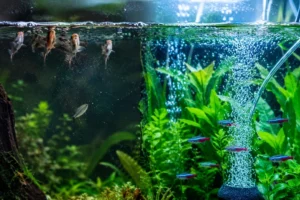
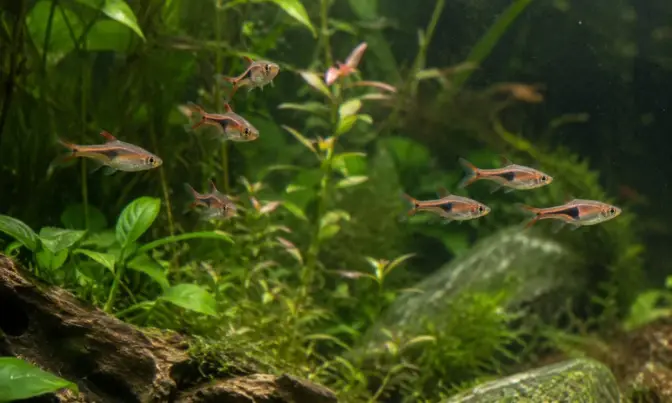
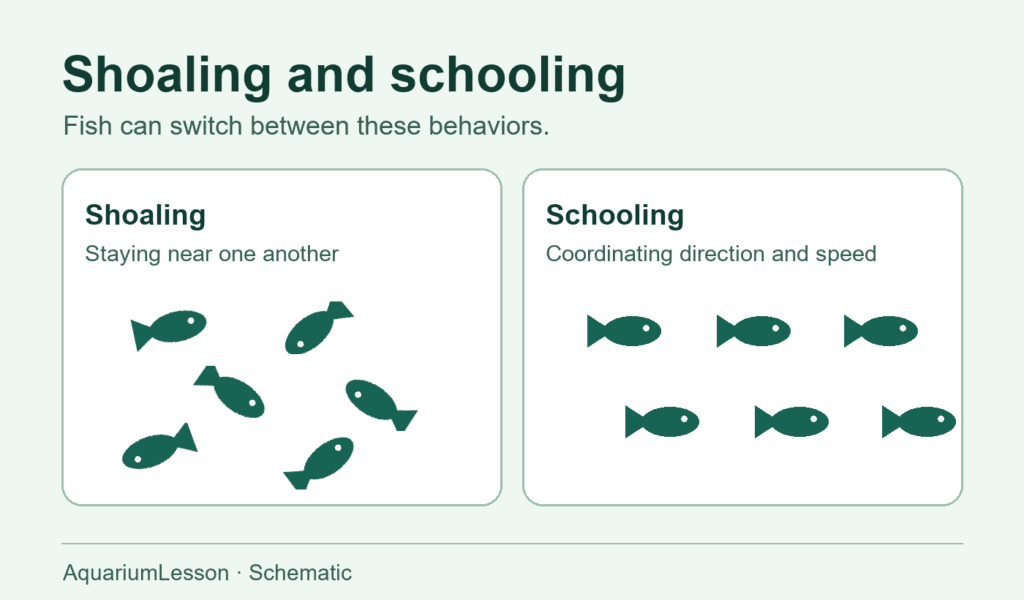
Fish that stay near one another are shoaling. When they coordinate their direction and speed, they are schooling. The same fish can do both in one afternoon. A group that spreads out to feed may gather tightly when startled.
Watch how the group uses the aquarium
A loose group can still be socially connected. See whether the fish regroup, explore and return to feeding. Tight formation can be a normal response to a disturbance. If a group stays pressed into a corner or breathes rapidly, check flow, water quality, cover and tank mates before interpreting the behavior.
Choose a group for the exact species
“Keep six” is a rough rule in some care guides. A study by Saxby and colleagues found different group-size effects across neon tetras, white cloud mountain minnows, tiger barbs and angelfish. Use the findings to understand why one number cannot apply to every social fish.
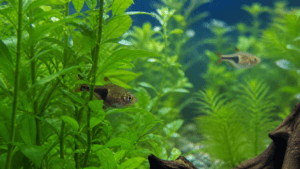
AquariumLesson lists at least eight ember tetras and ten harlequin rasboras. The harlequin also needs a longer aquarium. Mixed species may swim together temporarily, but plan each species’ social group separately.
Use what you learn in My Aquariums
Follow a new aquarium through cycling or see how water readings and care change over time in an established setup.
Leave room to swim and retreat
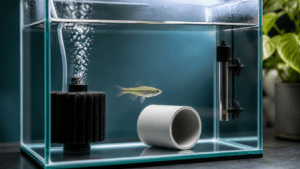
Build cover along an edge or behind the open swim lane. Fish can choose when to move out and when to rest near plants or wood. Leave enough room at feeding time for subordinate fish to reach food. Compare inside length and group size in the stocking calculator before buying.
Observe the group during a quiet period and again during feeding. A group that regroups, explores and feeds without repeated displacement tells you more than a single moment of tight formation.
Sources
Saxby et al. on group size and behavior in aquarium fish and RSPCA guidance on fish social needs.
Lesson marked as read
Your reading progress is saved.
Continue learning →