Freshwater Aquarium Fish Diseases: Symptoms & First Checks
White spots, a swollen belly, and swimming sideways all tell you something different. Start by checking how many fish are affected and what changed just before the signs appeared. If several fish start gasping after a water change, check the water and equipment first. If one fish has a torn fin and its tankmates look normal, look for chasing or sharp décor and check the water too.
Get urgent help if a fish is struggling to breathe, suddenly cannot stay upright, or several fish are worsening quickly. Contact a veterinarian who treats fish. If fish are struggling to breathe, check aeration and surface movement while you arrange help.
Freshwater fish disease symptom chart
| What you see | What to check | Read next |
|---|---|---|
| Gasping or breathing fast | Check filter flow and surface movement. See whether several fish started breathing hard at once. | Low oxygen and gasping |
| White spots or pale patches | Compare separate, salt-grain-sized dots with a flat patch or a tuft that sticks out from the skin. | Ich and similar signs |
| Swimming sideways, floating or sinking | Watch whether the fish can right itself and hold its position. Note any recent tank changes. | Trouble staying upright |
| Swollen belly or raised scales | Look from the side and above. Check whether the scales lie flat or stick out and whether swelling is spreading. | Swelling and dropsy |
| Cloudy or bulging eye | Compare both eyes. Note whether one looks cloudy, protrudes farther, or does both. | Changes to the eyes |
| Torn or fraying fins | Look for sharp décor or chasing. Compare the fin edge with an earlier photo to see whether it is receding. | Fin damage and fin rot |
| Rubbing against objects | Notice whether rubbing keeps happening and whether it comes with spots, excess mucus, or fast breathing. | Repeated rubbing |
| Hiding, clamping fins or skipping food | Compare with the fish’s usual behavior. Watch a feeding to see whether it can reach food and whether tankmates are affected. | Fish stress signs · Fish not eating |
Use what you learn in My Aquariums
Follow a new aquarium through cycling or see how water readings and care change over time in an established setup.
What to check before treating a sick fish
- See who is affected. Watch other fish for changes in breathing, swimming, or appetite. When several fish change at once, check for a shared problem such as interrupted filtration or a water-quality issue. Shared signs can also occur with infection.
- Check the water and equipment. Test ammonia and nitrite, check temperature and pH, and confirm that the heater and filter are working. If signs began after a water change, note how much water you replaced, its temperature, and how it was conditioned.
- Record what changed first. Write down when the signs started, any new fish or recent maintenance, and the test readings. A clear side photo and a short video of swimming or breathing can help a veterinarian assess the fish.
Poor water quality, an injury, and infection can look similar or occur together. Choose treatment with qualified advice if the cause is unclear or the fish is deteriorating.
How to tell similar signs apart
White spots, flat patches or fuzzy growth
Ich can leave small white spots scattered across the fins or body. A flat gray-white patch or a cotton-like tuft has other possible causes. For example, columnaris can cause pale skin lesions and may be mistaken for a fungal problem. Compare where the marks are and how they are changing. See how Ich differs from other white marks.
Swimming sideways or unable to stay upright
Watch what happens when the fish stops swimming. Some fish drift back to the surface, others sink, and others roll onto one side. These are clues about balance and buoyancy. The swim bladder is one possible cause. Also note whether the fish is swollen, has visible injuries, or began swimming differently after tank maintenance. Sudden inability to stay upright calls for urgent help.
Swollen belly, raised scales and dropsy
Look at the fish from above. Is the swelling on both sides? Do the scales lie flat or stick out like a pine cone? Dropsy describes abnormal fluid buildup. A rounded belly alone can have other explanations, including eggs. Seek prompt veterinary advice if the scales are lifting or the swelling is advancing.
Cloudy eye or popeye
Cloudiness changes how the surface of the eye looks. Popeye describes an eye that protrudes farther than usual. Either can occur alone or together. Compare both eyes, check whether other fish have similar changes, and note any chasing or recent injury.
Torn fins or fin rot
A split that appears after chasing or getting caught on something can point to an injury. A fin edge that keeps receding or becomes red needs a closer look. Take comparison photos from the same angle. Check for aggression and sharp surfaces and see whether other fish are developing damaged fins.
A fish keeps rubbing against rocks or décor
A quick scrape or flick against a surface is sometimes called flashing. Repeated rubbing can go with skin or gill irritation. Check the water and look for fast breathing, white spots, or excess mucus. Similar signs can come from several causes, so repeated rubbing alone is a poor basis for choosing a parasite treatment.
When to consider a quarantine tank
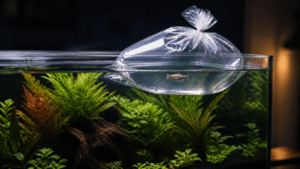
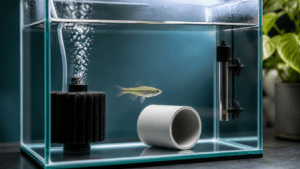
A separate, prepared aquarium can help you observe a fish or limit spread when an infection is suspected. Check that it has suitable temperature, water quality, and aeration before moving a fish. If several fish are affected, check the main aquarium as well. How to set up a quarantine tank.
Lesson marked as read
Your reading progress is saved.
Continue learning →