
Siamese Fighting Fish
Betta splendens
Siamese Fighting Fish is a top swimmer.
Quick facts
- Aquarium size
- 11 US gal (41 L) or larger and ≥ 23.6" (≥ 60 cm) minimum length
- Adult size
- ≤ 2.8" (≤ 7 cm)
- Care level
- Beginner – Intermediate
- Temperament
- Semi-Aggressive
- Temperature
- 75–79°F (24–26°C)
- pH
- 6.5–7.5
- GH
- 5–15 dGH
- Group behavior
- Best kept as a solitary specimen
- Swimming zone
- Top swimmer
- Diet
- Carnivore
- Lifespan
- up to 5 years
Before you keep this fish
- Keep a secure lid on the aquarium.
Care guide
Aquarium setup
For a pair, allow at least 11.8" (30 cm) front to back.
Keep the current gentle.
Include leaf litter in the setup.
Offer some cover at the surface, such as floating plants.
Water conditions
Keep this fish in freshwater.
Temperament and compatibility
Siamese Fighting Fish needs careful companion choice because it can be territorial or semi-aggressive.
Social behavior and swimming space
This fish uses the upper part of the aquarium, so leave enough surface space for movement and feeding.
Natural habitat and origin
Origin: Cambodia, Laos, Vietnam, Thailand.
Similar fish profiles
Compare shared traits. Check compatibility separately before keeping species together.
-
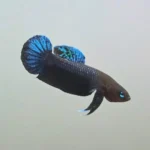
 Batman Betta
Betta persephone Same genus · Intermediate
- Bintan Licorice Gourami Parosphromenus bintan Same family · Intermediate
- Barlow’s Apistogramma Apistogramma barlowi Similar care level · ≤ 2.6" (≤ 6.5 cm)
- Agassiz’s Apistogramma Apistogramma agassizii Similar care level · ≤ 3" (≤ 7.5 cm)
- Amazon Dwarf Cichlid Apistogramma pertensis Similar care level · ≤ 1.5" (≤ 3.9 cm)
- American Flagfish Jordanella floridae Similar care level · ≤ 2.4" (≤ 6 cm)
Plan your aquarium
- Check fish compatibility
- Plan aquarium stocking
- Compare freshwater fish
- Use aquarium volume calculator
- Size aquarium heating
- Use pH and CO2 calculator
- Choose aquarium filtration
- Explore aquarium plants
FAQ
How large does Siamese Fighting Fish get?
Siamese Fighting Fish reaches ≤ 2.8" (≤ 7 cm).
What aquarium size does Siamese Fighting Fish need?
The aquarium must meet both requirements. Look for 11 US gal (41 L) or larger and ≥ 23.6" (≥ 60 cm) minimum length.
Is Siamese Fighting Fish peaceful?
Siamese Fighting Fish needs more careful companion choice because the temperament data points toward boundaries, space, or similar-sized fish.
What temperature is suitable for Siamese Fighting Fish?
A suitable water temperature is 24 to 26 °C.
Should Siamese Fighting Fish be kept alone or in a group?
Best kept as a solitary specimen.