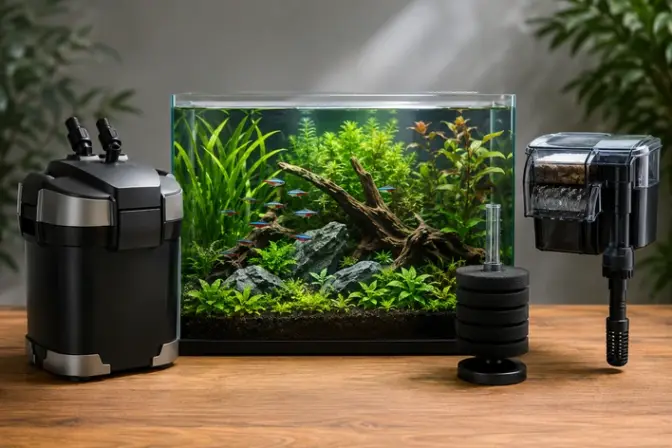
Best Aquarium Filter: How to Choose the Right Filter for Your Tank
The best aquarium filter is not simply the strongest or most expensive option. The right filtration system depends on your aquarium size, livestock, aquascaping and aquarium goals, maintenance style, and the type of ecosystem you want to build long-term.
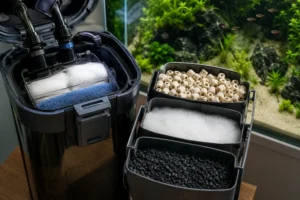
For the full filtration foundation, including mechanical, biological and chemical filtration, media setup and maintenance, read the Aquarium Filter Guide.
A shrimp breeding setup requires completely different filtration than a high-tech planted aquascape. A calm betta aquarium needs different flow behavior than a river-style tank with high oxygen demand and aggressive circulation.
This guide explains how to choose the best aquarium filter for different aquarium types, how modern filtration systems actually work, and which filter categories make the most sense for planted tanks, nano aquariums, shrimp systems, and beginner setups.
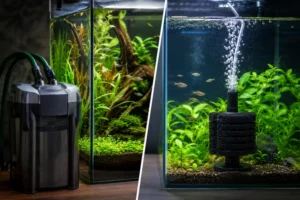
For a broader understanding of filtration principles, start with the Aquarium Filter Guide. If you want to compare specific systems directly, continue with Canister vs Sponge Filter and the Filter Flow Guide.
Quick Filter Selection Guide
- High-tech planted tank: Canister filter
- Shrimp breeding tank: Sponge filter
- Beginner aquarium: HOB or sponge filter
- Large aquascape: External canister system
- Betta aquarium: Gentle sponge filter
- Nano aquarium: Sponge or nano canister
- Heavy bioload aquarium: Oversized canister filtration
The best filter is always the one that creates the most stable ecosystem for your specific setup — not the one with the biggest marketing claims.
What you’ll learn in this lesson
- How to choose the best aquarium filter for your setup
- The strengths and weaknesses of each filter category
- Which filters are best for planted tanks
- Which systems are safest for shrimp and fry
- How flow and turnover influence stability
- Why filtration affects algae and oxygen levels
- How maintenance complexity differs between systems
- Which filters are ideal for beginners
- Common filtration mistakes that destabilize aquariums
Why Aquarium Filtration Matters
Filtration is the biological backbone of every stable aquarium.
A good filter supports:
- Biological stability
- Waste processing
- Ammonia conversion
- Debris removal
- Oxygen circulation
- Surface movement
- Nutrient transport
- Long-term ecosystem consistency
Without proper filtration, waste accumulates, oxygen becomes unstable, circulation weakens, and algae-friendly dead zones become more likely.
In planted aquariums, filtration also affects CO₂ distribution, nutrient transport, and overall plant performance. This is why experienced aquascapers view filtration as ecosystem engineering — not just “water cleaning.”
To understand the nitrogen cycle behind filtration, also review the Fishless Cycle Guide and Aquarium Water Parameters.
Main Types of Aquarium Filters
Modern aquariums usually rely on one of four main filtration categories. Each one solves circulation and biological filtration differently.
| Filter Type | Flow Strength | Biological Capacity | Best For | Difficulty |
|---|---|---|---|---|
| Canister Filter | Medium–High | Excellent | Planted tanks & aquascapes | Medium |
| Sponge Filter | Gentle | Excellent | Shrimp & breeding tanks | Low |
| HOB Filter | Medium | Good | Beginner aquariums | Low |
| Internal Filter | Low–Medium | Moderate | Small & starter tanks | Low |
Best Aquarium Filter for Planted Tanks
For most planted aquariums, especially aquascapes, canister filters remain the best overall option.
Why?
- Strong circulation
- Large biological media capacity
- Better CO₂ distribution
- Cleaner aesthetics
- Flexible outflow positioning
- Improved debris transport
- Hidden equipment outside the tank
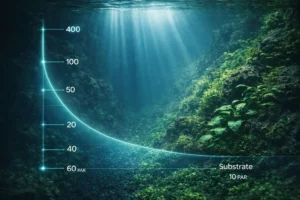
High-tech planted aquariums rely heavily on stable circulation because nutrients and dissolved CO₂ must reach all plant zones consistently.
Dense carpeting plants especially benefit from stronger flow and cleaner substrate circulation.
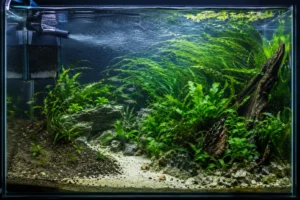
This becomes even more important in tanks with heavy hardscape or complex layouts. Large stones and driftwood structures can create invisible dead zones where circulation weakens.
For aquascaping structure and flow interaction, also see:
Best Aquarium Filter for Shrimp Tanks
Sponge filters remain the safest and simplest filtration solution for most shrimp-focused aquariums.
Their gentle intake protects baby shrimp while the sponge surface itself becomes a grazing area for microorganisms and biofilm.
Why shrimp keepers prefer sponge filters
- Very safe for shrimplets
- Gentle flow behavior
- Excellent oxygenation
- Simple maintenance
- Stable biological filtration
- Low operating cost
Canister filters can still work extremely well in shrimp systems if intake guards or prefilter sponges are installed correctly.
For dedicated shrimp ecosystems, continue with Aquarium Shrimp Care
Best Aquarium Filter for Beginners
Beginners should prioritize consistency and simplicity over raw filtration power.
For many starter aquariums, a quality HOB filter or sponge filter is easier to maintain consistently than a large external canister system.
Good beginner filtration should offer:
- Easy cleaning
- Moderate flow
- Stable biological filtration
- Simple media access
- Low maintenance complexity
- Reliable oxygenation
Many beginner problems come from unstable routines rather than weak equipment.
This is why oversizing complexity too early often creates more maintenance inconsistency instead of better results.
New aquarists should also review:
How Flow Changes Aquarium Stability
Flow behavior matters just as much as filtration capacity.
Weak circulation often causes:
- Dead spots
- Localized algae outbreaks
- Uneven CO₂ distribution
- Debris buildup
- Poor oxygenation
- Surface film accumulation
At the same time, excessive flow can stress fish, uproot plants, and destabilize calmer ecosystems.
The goal is balanced movement throughout the entire aquarium — not maximum turbulence.
This is why filtration and circulation should always be planned together.
Common Aquarium Filter Mistakes
- Choosing filters only by flow rating
- Ignoring livestock sensitivity
- Cleaning biological media too aggressively
- Running excessive flow for calm-water fish
- Undersizing filtration for planted tanks
- Neglecting maintenance consistency
- Ignoring intake protection for shrimp
- Using oversized lighting with weak circulation
Many algae issues blamed on lighting are actually circulation and filtration problems.
Stable aquariums depend on system balance — not isolated equipment upgrades.
How to Choose the Right Aquarium Filter
Before buying a filter, ask yourself:
- Will this be a planted tank?
- Do I need strong CO₂ circulation?
- Will shrimp or fry live in the aquarium?
- How important are aesthetics?
- How much maintenance complexity is realistic?
- How strong should the current be?
- How heavily stocked will the tank become?
- How important is quiet operation?
The correct answer usually becomes obvious once you think in terms of ecosystem goals instead of “best product overall.”
Best Aquarium Filter by Aquarium Type
| Aquarium Type | Recommended Filter |
|---|---|
| High-tech planted tank | Canister filter |
| Nano shrimp tank | Sponge filter |
| Betta aquarium | Gentle sponge filter |
| Large aquascape | External canister system |
| Community aquarium | HOB or canister filter |
| Hospital tank | Sponge filter |
| River-style aquarium | High-flow canister filter |
FAQ
What is the best aquarium filter for planted tanks?
Most planted aquariums perform best with canister filters because they provide strong circulation, hidden equipment, and better CO₂ distribution.
Are sponge filters enough for aquariums?
Yes. Sponge filters can provide excellent biological filtration, especially for shrimp tanks, nano aquariums, and breeding systems.
What filter is best for beginners?
Many beginners benefit most from simple HOB or sponge filters because they are easier to maintain consistently.
Do stronger filters create healthier aquariums?
Not necessarily. Balanced circulation and stable biological filtration matter more than maximum flow strength.
Can canister filters be used for shrimp tanks?
Yes, but intake protection should always be installed to protect baby shrimp and delicate livestock.
Conclusion
The best aquarium filter is the one that creates the most stable ecosystem for your specific aquarium style.
Canister systems dominate modern aquascaping because they combine strong circulation, large biological capacity, and clean aesthetics. Sponge filters remain unmatched for shrimp safety, breeding systems, and simple biological stability.
Instead of chasing maximum flow or marketing hype, focus on balance. Healthy aquariums are built through stable circulation, consistent maintenance, and filtration designed around the ecosystem itself.
Design your filtration around the ecosystem.
Strong aquariums are not built through oversized equipment alone — they are engineered through balanced flow, biological stability, and long-term consistency.
Lesson completed!
You've finished this lesson. Keep building your aquarium knowledge, one lesson at a time.
Continue learning →New to AquariumLesson? Start with our complete Aquarium Lessons Hub or return to the homepage at AquariumLesson.com.