6500K Aquarium Lighting Explained: What It Means for Plants, Fish, and Aquascaping
6500K aquarium lighting explained: this guide shows what the 6500K color temperature really means for planted tanks, fish appearance, and aquascaping results.
The problem is that many aquarists treat 6500K as if it were a complete quality rating for an aquarium light. It is not. Kelvin tells you how the light appears to the human eye, not how much usable light your plants actually receive. Two fixtures can both be labeled 6500K and still perform very differently in a planted tank.
This lesson explains what 6500K really means, why it is so popular, when it is a smart choice, and when it can be misleading. If you are trying to build a natural-looking planted aquarium without getting lost in lighting marketing, this is the practical clarity you need.
What you’ll learn in this lesson
- What 6500K actually means in aquarium lighting
- Why 6500K is often called a daylight color temperature
- Why Kelvin does not tell you plant-growing power
- How 6500K compares with 5000K, 7000K, 8000K, and reef lighting
- When 6500K is the right choice for planted tanks, fish tanks, and aquascapes
- Which common myths about 6500K lead to poor buying decisions
What Does 6500K Mean in Aquarium Lighting?
In aquarium lighting, 6500K refers to color temperature, measured in Kelvin. It describes the visual character of the light — whether it looks warm and yellow, neutral and daylight-like, or cool and bluish.
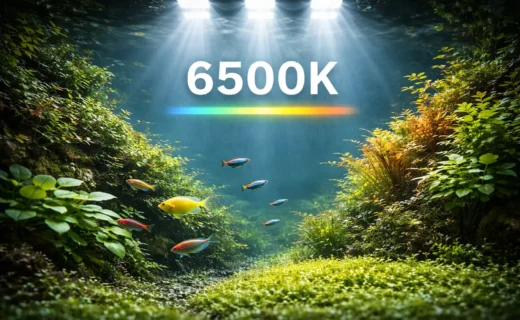
A 6500K light is generally seen as a neutral daylight white. It usually looks clean, bright, and natural, without the heavy yellow tint of warmer bulbs or the colder blue tone of higher-Kelvin lighting. That visual balance is exactly why it became so popular in freshwater aquariums and aquascaping.
It helps to think of Kelvin as a visual language, not as a plant-growth guarantee. The Kelvin number tells you what kind of white the light looks like. It does not tell you how strong the light is, how deeply it penetrates your tank, or whether it is suitable for demanding carpeting plants.
Why 6500K is called “daylight”
6500K is often associated with daylight because it resembles the neutral white appearance of daylight conditions familiar to human vision. In practical aquarium terms, that means plants, wood, rocks, and fish tend to look believable and balanced under it. Greens usually look crisp, hardscape textures remain natural, and the overall tank does not drift too far into a warm or overly blue presentation.
That natural appearance makes 6500K especially attractive for aquascapes built around realism, soft contrast, and clean color rendering.
The Kelvin Scale for Aquarium Lighting
To understand 6500K properly, it helps to place it on a broader aquarium lighting scale. Kelvin does not tell the whole lighting story, but it does give useful context for how a light will look over your tank.
| Kelvin Range | Visual Appearance | Typical Aquarium Use |
|---|---|---|
| 3000–4000K | Warm yellow to amber | Decorative accent lighting, warmer fish-focused displays |
| 5000–6500K | Neutral to daylight white | Freshwater planted tanks, natural aquascapes |
| 6500–8000K | Cool white | Modern planted tanks, brighter crisp presentation |
| 10000K+ | Blue-leaning white | Marine and reef-oriented aesthetics |
This is why 6500K sits in such a useful middle position. It is not overly warm, and it is not heavily blue. For many freshwater aquariums, it lands in a safe visual zone that pleases both beginners and experienced aquascapers.
If you want a broader overview of lighting categories, fixture types, and system planning, see the main Aquarium Lighting Guide. This lesson stays focused specifically on the 6500K question.
Why 6500K Is So Popular for Planted Aquariums
6500K became popular for good reasons. It is not just a random hobby convention. In many planted tanks, it creates a look that feels balanced, practical, and easy to live with every day.
A natural-looking aquascape
One of the biggest strengths of 6500K is that it usually makes planted tanks look natural rather than stylized. Green plants tend to appear fresh rather than yellowed. Stones keep their mineral character. Driftwood looks organic. The tank feels like a miniature landscape instead of a decorative display driven by color effects.
A balanced presentation for fish and plants
6500K is also forgiving. It tends to flatter many common freshwater fish species without overpowering the aquascape. This matters in mixed displays where the goal is not only plant health, but also an attractive overall viewing experience.
In tanks built around plant structure, hardscape composition, and calm visual balance, 6500K often feels more “correct” than heavily warm or cold lighting.
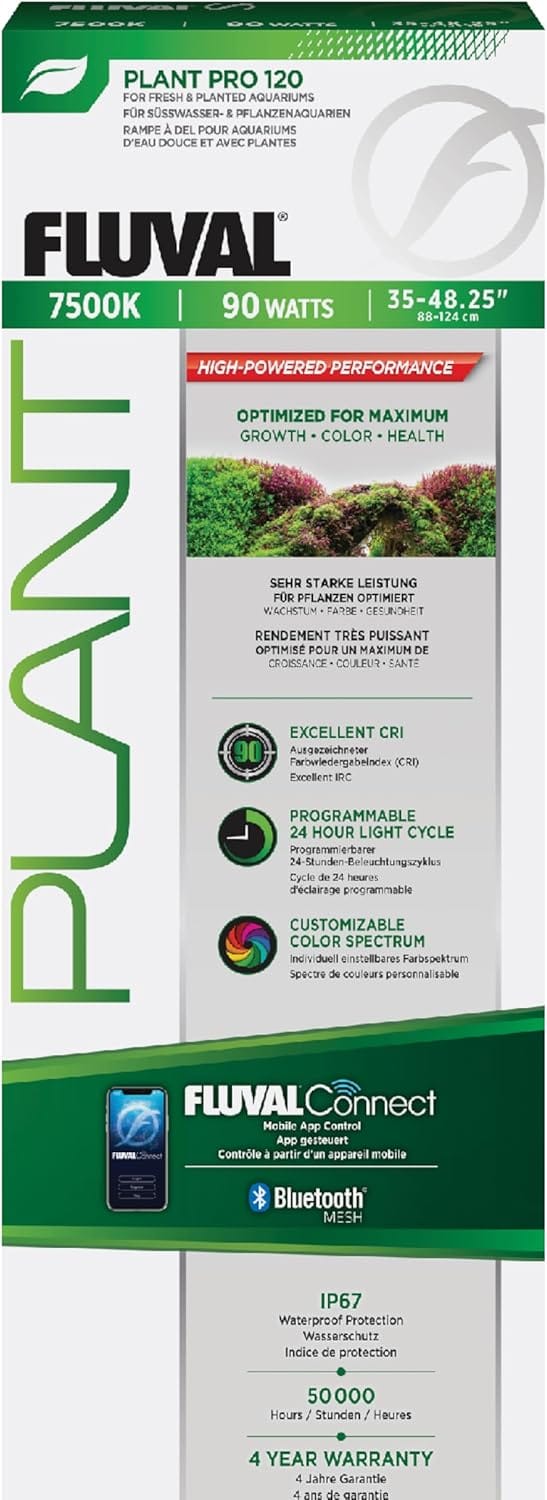
Lights in this category are often marketed to planted tank keepers because they aim to combine strong output with a daylight-style presentation. Still, the key point remains the same: the 6500K label alone is not enough. You must also look at fixture quality, intensity, and spectrum.
The Biggest Myth: 6500K Does Not Determine Plant Growth
This is the most important takeaway of the entire article: 6500K does not automatically mean “good for plants.”
Many aquarists assume that because 6500K resembles daylight, it must also be the perfect plant-growing light. That conclusion is too simplistic. Plants do not care about Kelvin in the same way people do. They respond to usable light energy, spectral composition, stability, and overall system balance.
Kelvin is a color description
Kelvin mainly tells you how the light looks to your eyes. It gives visual information, not complete horticultural information. A weak budget light and a premium planted aquarium fixture can both be labeled 6500K while delivering very different results at substrate level.
PAR matters more than the Kelvin label
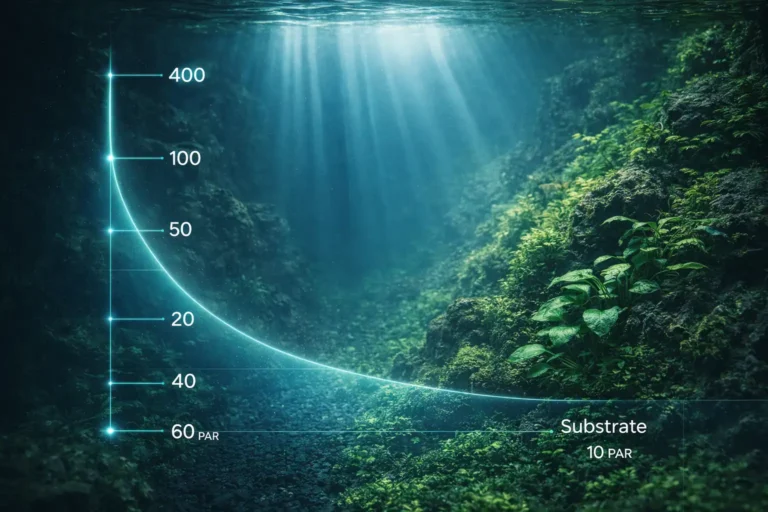
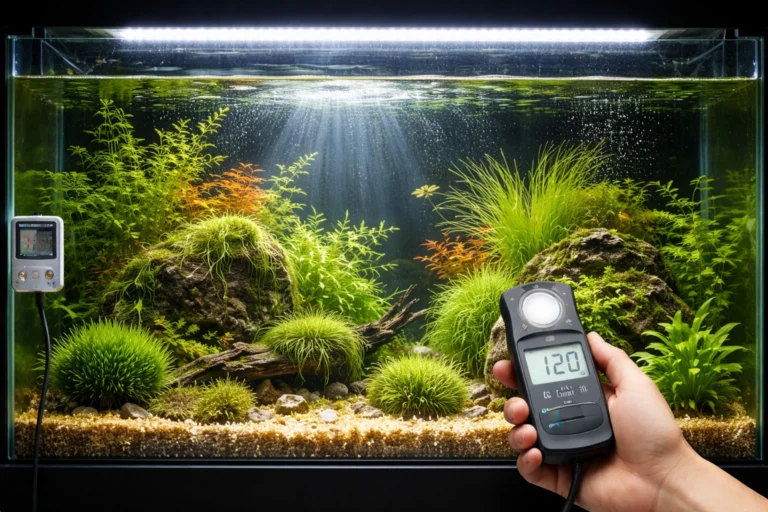
If your real concern is plant growth, your more useful question is not “Is it 6500K?” but “How much usable light reaches my plants?” That is where PAR becomes more important. If you want to go deeper into light intensity, also connect this lesson with your PAR-focused content such as Aquarium PAR Explained.
A 6500K light can be excellent for plants. It can also be too weak, too narrow, too shallow, or poorly distributed for your aquarium. The Kelvin number alone cannot answer that.
Spectrum and plant response are separate issues
Spectrum matters too, but even here the relationship is more nuanced than hobby myths suggest. Two white LEDs with the same color temperature can have different spectral power distributions. That means one fixture may render reds better, one may emphasize cooler whites, and another may simply produce a flatter, less refined spectrum.
So when someone says “6500K is best for plants,” what they often mean is that many good planted-tank lights happen to use a daylight-looking base. That is very different from saying 6500K itself creates plant growth.
What Really Matters Beyond 6500K
If you are trying to choose a light for a planted aquarium, 6500K should be treated as one filter in the decision process — not the final answer. These factors matter more in practice.
- PAR at plant level → especially important for carpets, dense stems, and deeper tanks
- Spread across the full tank → weak edge coverage leads to uneven growth
- Tank depth → deeper tanks need better penetration and stronger output
- Plant demand → low-tech epiphytes and mosses do not need the same intensity as carpeting species
- System balance → stronger light without matching CO₂ and nutrients often causes problems instead of growth
This is why a seemingly simple lighting choice is connected to the rest of the planted tank system. If you are running a higher-energy layout, your CO₂ system, plant selection, and maintenance routine must keep up. If you are building a calmer low-tech tank, a daylight-looking fixture in the 6000–7000K range may already be enough.
For plant-specific planning, the broader Aquarium Plants Guide can help you match lighting expectations to the type of layout you want to build.
6500K vs Other Aquarium Lighting Temperatures
Comparisons are often more useful than isolated numbers. Here is how 6500K behaves relative to other common lighting temperatures in aquarium use.
5000K vs 6500K
5000K usually looks warmer and slightly softer. Some aquarists like it for fish-focused displays or for a more sunlit, earthy look. Compared with 5000K, 6500K usually appears cleaner and more neutral. Plants often look fresher and more “daylight correct” under 6500K, especially in aquascapes centered on greens, stone, and wood.
6500K vs 7000K
This difference is usually subtle. A 7000K light often feels just a little cooler and crisper. For many hobbyists, both ranges work well in planted tanks. If you want the most natural daylight presentation, 6500K often feels slightly more grounded. If you want a cleaner modern edge, 7000K may appeal more.
6500K vs 8000K
8000K tends to look noticeably cooler. In some planted tanks this can create a striking, high-clarity effect, but it may also make the tank feel less natural and more stylized. Greens can look sharper, but warm hardscape tones may lose some softness. This is a visual preference issue more than a universal quality difference.
6500K vs reef lighting
Reef lighting often uses much higher Kelvin values and stronger blue emphasis because marine corals and reef aesthetics operate in a completely different visual and biological context. That is why a planted freshwater aquascape and a reef tank can look dramatically different even when both use high-end lighting. A daylight-oriented 6500K presentation usually makes much more sense for freshwater planted systems.
| Aquarium Type | Typical Kelvin Direction | Why It Works |
|---|---|---|
| Low-tech planted tank | 6000–7000K | Natural look, forgiving visual balance |
| High-tech aquascape | 6500–8000K | Clean presentation, often paired with stronger output |
| Fish-focused freshwater tank | 5000–6500K | Softer appearance, good color balance |
| Reef tank | 10000–20000K | Blue-heavy visual and reef-specific use case |
How 6500K Affects the Look of an Aquarium
One reason 6500K remains such a strong choice is that it shapes the tank visually in a very reliable way.
Plant colors
Under 6500K, green plants usually look clean, healthy, and natural. This is ideal for classic planted aquariums and many Nature-style layouts, where realism matters more than exaggerated color contrast. If your layout depends on subtle leaf texture and layered green tones, 6500K is often an excellent match.
Fish colors
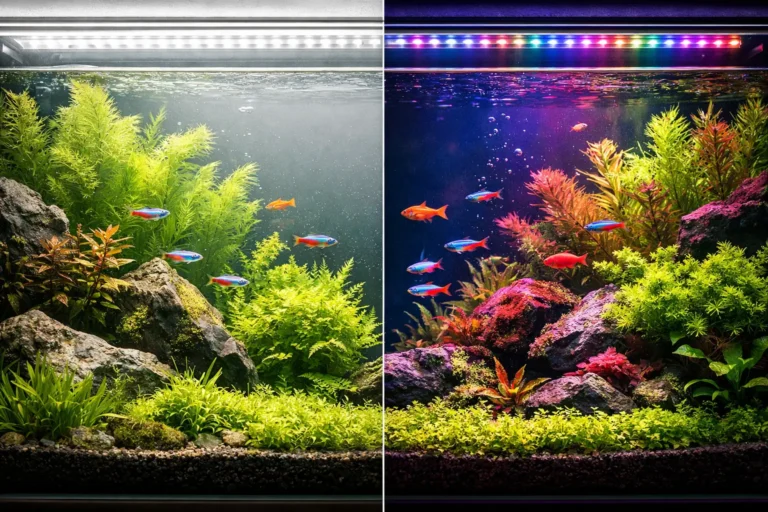
Fish generally appear balanced under 6500K, especially species that benefit from neutral daylight rendering. It may not create the dramatic pop of dedicated color-enhancement modes, but it often delivers a more honest and elegant overall presentation.
Water clarity and mood
Because 6500K sits in a neutral zone, it often makes water look crisp without pushing the tank into an icy or blue-heavy mood. That makes it well suited to aquascapes built around natural stone and wood. If you are also designing the hardscape structure of the tank, the Aquarium Hardscape Guide pairs naturally with this topic.
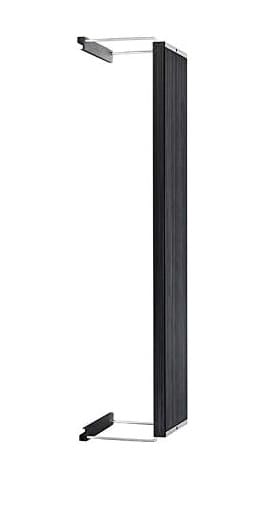
Modern premium fixtures often move beyond a simple Kelvin label by mixing white, red, and blue channels. Even when the final impression looks close to daylight, the underlying spectral design can be much more advanced than a basic “6500K” sticker suggests.
When 6500K Is the Best Choice
6500K is often the right choice when your goal is not gimmick lighting, but a planted aquarium that looks natural, balanced, and easy to manage visually.
- Nature-style aquascapes where realism and soft visual balance matter
- Beginner planted tanks where a neutral, proven look reduces complexity
- Mixed fish-and-plant displays where both plants and livestock should look natural
- Low-tech planted aquariums where extreme stylization is not the goal
In many cases, 6500K is not the “perfect” number in a scientific sense. It is simply the most practical middle ground. That alone makes it one of the smartest defaults in freshwater aquariums.
When 6500K Is Not the Ideal Answer
There are also situations where 6500K is not the best answer, or at least not the only one.
- Reef tanks usually need a very different spectral and aesthetic approach
- Highly stylized display tanks may intentionally aim for warmer or cooler moods
- Color-enhancement goals may benefit from fixtures with adjustable channels rather than a fixed daylight presentation
- Demanding planted systems still require proper intensity, coverage, and system balance regardless of Kelvin
That last point matters most. 6500K can be visually ideal and still fail if the fixture is underpowered, mounted too high, or paired with plant demands the system cannot support.
Common Beginner Mistakes With 6500K Lighting
- Confusing Kelvin with brightness → a higher or lower Kelvin value does not automatically mean stronger light
- Assuming 6500K guarantees plant growth → plant response depends on usable intensity and system balance
- Buying by label only → cheap “6500K” floodlights and generic LEDs may not deliver the spread or quality needed for aquariums
- Ignoring tank depth → deeper aquariums need more than a daylight-looking surface glow
- Using stronger light without stronger maintenance → more light often increases demand for CO₂, nutrients, trimming, and water changes
This is also why lighting mistakes often show up as algae problems. The Kelvin number itself does not cause algae, but poor system matching does. If that is part of your reader journey, it fits naturally with cluster topics such as Aquarium Lighting and Algae and your Aquarium Water Change Guide.
How to Choose the Right Light If You Like the 6500K Look
If you prefer the natural daylight style of 6500K, that is a perfectly solid starting point. Then evaluate the fixture using more practical filters:
- Check the tank size range so the light physically matches the aquarium
- Look for real planted-tank intent instead of generic household LEDs
- Estimate PAR and coverage for your depth and plant goals
- Think about your layout style — natural, Dutch, fish-focused, or minimalist
- Match the light to maintenance reality instead of buying for fantasy plants you will not support properly
If you are comparing fixtures inside a broader buyer journey, your supporting cluster page Best LED Light for Planted Aquarium is the natural next step from this lesson.
Frequently Asked Questions
Is 6500K good for aquarium plants?
Yes, 6500K is a very common and practical visual range for planted aquariums. But it is not automatically good just because of the Kelvin label. Plant success still depends on PAR, coverage, depth, and system stability.
Is 6500K better than 7000K for a planted tank?
Not universally. 6500K usually looks slightly more neutral and natural, while 7000K often feels a little cooler and crisper. In practice, fixture quality matters more than the small difference between those numbers.
Does 6500K cause algae?
No. Algae problems are usually caused by imbalance in light intensity, CO₂, nutrients, maintenance, and system stability. The Kelvin label alone does not create algae.
Is 6500K too bright for fish?
Kelvin does not tell you brightness. A 6500K light can be dim or extremely strong. Fish comfort depends more on intensity, cover, layout, and photoperiod than on the color temperature number itself.
Can two 6500K aquarium lights perform differently?
Absolutely. They can differ in output, spread, spectral design, build quality, and control options. That is why buying on Kelvin alone is a common mistake.
Is 6500K good for low-tech aquariums?
Yes, it is often an excellent visual fit for low-tech tanks because it looks natural and balanced. The only caution is not to overestimate what the fixture can support in terms of demanding plants.
What is the best Kelvin for a freshwater aquarium?
There is no single best Kelvin for every freshwater tank, but 6500K is one of the safest and most widely liked choices because it produces a natural daylight appearance that works well in many planted and mixed displays.
Conclusion
6500K aquarium lighting is popular for a reason: it gives planted freshwater tanks a clean, natural daylight look that suits both aquascapes and community aquariums. It is one of the most reliable visual starting points in the hobby.
But the number should never be misunderstood. 6500K does not automatically mean strong light, plant-ready performance, or algae prevention. It describes appearance, not complete plant-growing power. The better way to think about it is simple: 6500K is often a great visual choice, but the right fixture still has to match your tank, your plants, and your system.
If you want a daylight-style planted aquarium that actually performs well, use 6500K as a visual preference — then verify the real-world factors that matter. That is how you avoid marketing confusion and build a planted tank that looks right and grows right.
Want to check whether your light is actually suitable?
Use the Aquarium Lighting Calculator to estimate PAR, Lux, and photoperiod more realistically for your tank.
New to AquariumLesson? Start with our complete Aquarium Lessons Hub or return to the homepage at AquariumLesson.com.