Aquarium Snails Guide: Build a Balanced Tank
Aquarium snails are some of the most misunderstood animals in the hobby. Often treated as pests or afterthoughts, they actually play an important role in nutrient recycling, surface grazing, and ecosystem feedback. In the right setup, aquarium snails help stabilize the tank by consuming leftovers, processing organic buildup, and revealing imbalance before it becomes a bigger problem.
This Aquarium Snails Guide brings together the core snail categories — Nerite Snails, Mystery Snails, Ramshorn Snails, and Malaysian Trumpet Snails — and explains how each type influences algae control, substrate activity, population behavior, and long-term tank balance.
Whether you are trying to understand which snails are useful, prevent population explosions, or choose the right species for a planted tank, this foundation guide helps you build a smarter, more intentional snail strategy.
Essential Aquarium Snail Types
If you want success with aquarium snails, start with the right type. Not all snails behave the same, and not all contribute to the aquarium in the same way. Some species are excellent algae grazers, some are useful scavengers, and some become highly visible only when the tank is already out of balance.
The biggest mistake many aquarists make is grouping all snails together. In reality, different snail types have very different effects on the tank. Choosing the right snail is less about “getting a snail” and more about understanding what role you actually want it to play in the ecosystem.
- Nerite snails → strong algae grazers, excellent for display tanks
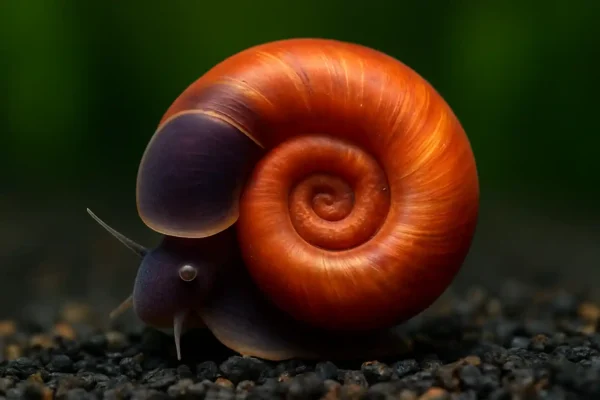
- Mystery snails → large, visible scavengers with strong personality
- Ramshorn snails → efficient recyclers, often multiply in excess-food systems
- Malaysian trumpet snails → substrate workers, useful for stirring the lower layers
At foundation level, the key decision is not whether snails are “good” or “bad.” It is which species fits your tank goals, plant density, feeding style, and maintenance rhythm. A well-matched snail can support the system. A misunderstood one can become the visible sign of an existing imbalance.
Pick Your Snail Strategy
Not sure where to start? Choose your snail goal and move into the detailed guide:
- I want algae control in a planted aquarium → Nerite Snail Guide
- I want a visible, decorative snail species → Mystery Snail Guide
- I want to understand “pest snails” and population growth → Ramshorn Snail Guide
- I want substrate activity and detritus support → Malaysian Trumpet Snail Guide
- I want to control snail numbers naturally → Snail Population Control Guide
Ready to set up your own tank?
Create a free account to save lessons, plan your setup, and use the Tank Hub to turn ideas into a real aquarium.
Why Aquarium Snails Multiply (And Why They Are Usually Not the Problem)
One of the most common frustrations in the hobby is this: snails suddenly appear everywhere, and the first reaction is usually to blame the snails themselves. But in most aquariums, snail population growth is not the root problem. It is a visible response to excess opportunity.
Snails reproduce when the system offers enough food to support expansion. That usually means uneaten food, decaying plant matter, excess waste, or a maintenance rhythm that allows organic buildup to accumulate faster than the tank can process it.
This is why snail blooms are so important diagnostically. They are often telling you something true about the system: too much food is entering the aquarium, too much waste is staying in it, or the balance between bioload and cleanup capacity is off.
- Excess feeding → faster snail reproduction
- High organic waste → larger visible populations
- Dead plant material → extra food source
- Weak maintenance habits → long-term snail growth pressure
The key lesson is simple: when snails multiply, remove the cause first. Population control works best when the ecosystem becomes less favorable for excess reproduction, not when the snails are treated as the original problem.
What Aquarium Snails Actually Do in the Ecosystem
Aquarium snails are not just “cleanup crew.” They contribute to the system in several ways at once. They graze films and soft algae, consume leftovers, break down decaying material, and in some species even disturb the substrate surface. That combination makes them useful not because they solve every problem, but because they improve how efficiently the system processes waste.
Snails also add a slower, more continuous form of maintenance support. Fish feed in bursts. Shrimp graze in detail. Snails often work steadily across glass, hardscape, leaves, and substrate. That makes them especially useful in planted aquariums, where fine buildup can accumulate gradually over time.
At the same time, snails should never be misunderstood as a replacement for proper husbandry. They support maintenance — they do not eliminate the need for it.
Common Aquarium Snail Mistakes Beginners Make
Most snail problems are not really snail problems. They are management problems that become visible through snails. That is why snail mistakes usually begin with misunderstanding their role or reacting too late to the signals they provide.
- Overfeeding the tank → fuels population growth
- Calling every snail a pest → ignoring species-specific roles
- Adding snails to “solve algae” alone → unrealistic expectations
- Ignoring decaying leaves and leftovers → constant food supply
- Removing snails without addressing the cause → repeated outbreaks
A strong snail strategy is not about zero snails. It is about understanding which snails belong, which signals matter, and what their presence reveals about the health of the aquarium.
What Makes Snails Different from Shrimp and Fish
Snails occupy a very different role from fish and shrimp. Fish dominate movement and bioload. Shrimp specialize in fine grazing and act as sensitive indicators. Snails are slower, more mechanical recyclers. They process leftovers, graze surfaces, and convert hidden buildup into visible ecosystem feedback.
That difference matters because snails are often judged unfairly. A shrimp death feels tragic. A fish conflict feels obvious. A growing snail population feels annoying. But in many cases, the snail response is simply more visible than the underlying issue that created it.
This is why snails should be viewed less as decoration and more as part of the functional cleanup and feedback layer of the aquarium.
The Real Meaning of “Pest Snails”
The term “pest snail” is widely used, but it is often misleading. In practice, so-called pest snails are usually species that reproduce easily under favorable conditions. What makes them feel like pests is not their existence — it is their visibility when the tank provides excess food and weak control.
Ramshorn snails, bladder snails, and similar species are not dangerous by default. In many tanks, they help recycle leftovers and process soft waste. The issue begins when their population expands beyond what the aquarist wants to see.
That means the “pest” label often says more about the system than about the snail. A balanced aquarium usually limits visible population pressure naturally. An overfed or neglected aquarium amplifies it.
At foundation level, this is the essential shift in thinking: snails are often a consequence, not a cause.
Comparison of Aquarium Snail Types
| Snail Type | Main Role | Difficulty | Best For |
|---|---|---|---|
| Nerite Snails | Algae grazing | Low | Display and planted tanks |
| Mystery Snails | Visible scavenging | Low–Medium | Community aquariums |
| Ramshorn Snails | Waste recycling | Low | Balanced planted systems |
| Malaysian Trumpet Snails | Substrate activity | Low–Medium | Soil-based and planted tanks |
How to Choose the Right Aquarium Snails
Snail selection should be based on role, not accident. Many snails enter aquariums passively on plants, but intentional snail keeping works much better when you decide what function the animal should serve in the tank.
Based on Aquarium Goals
- Algae support → Nerite snails
- Visible personality and scavenging → Mystery snails
- Organic recycling → Ramshorn snails
- Substrate support → Malaysian trumpet snails
Based on Tank Conditions
Some snails do best in planted aquariums with lots of surfaces and micro-food. Others are more generalist scavengers. Your substrate, plant mass, feeding style, and water chemistry all influence whether a given snail species will be helpful, neutral, or excessive.
- Heavily planted tank → strong grazing and recycling support
- Open community tank → visible scavenger species work well
- Overfed or neglected tank → fast-reproducing snails expand quickly
Based on Population Behavior
Some snails stay relatively controlled and predictable. Others respond quickly to opportunity and can become highly visible. If your goal is low visual population pressure, choose accordingly.
- Low reproduction pressure → Nerite and Mystery snails
- More responsive reproduction → Ramshorn and Malaysian trumpet snails
- Best visual control → species chosen intentionally, with feeding kept in check
The right snail is therefore not simply “the best snail.” It is the one that matches your ecosystem, your expectations, and the role you want filled in the tank.
What Aquarium Snails Actually Eat
One of the most common assumptions is that snails “eat algae” and therefore take care of themselves. While some snail species do graze algae effectively, most aquarium snails are broader opportunists. They feed on soft algae, biofilm, leftovers, decaying plant matter, and other organic material available in the tank.
This is important because it explains why snail numbers often correlate with feeding habits. A tank that consistently leaves excess food available is not just feeding fish — it is feeding the snail population too.
- Available algae and film → supports grazing snails
- Uneaten food → drives population growth
- Decaying plant matter → extra nutrition source
- Organic buildup → long-term reproduction support
The goal is not to feed snails directly in most aquariums. The goal is to understand what the system is already providing — and whether that amount is reasonable or excessive.
Snails as Ecosystem Indicators
One of the most useful things about aquarium snails is how clearly they reflect system conditions. Their numbers, activity level, and visibility often reveal feeding pressure, maintenance habits, and hidden organic accumulation.
- Population spike → usually excess food or waste
- Steady moderate presence → balanced support role
- Heavy visible grazing → active surface food source available
- Sudden die-off → environmental stress or chemistry problem
Snails make invisible excess visible. In that sense, they are less like pests and more like feedback tools built into the ecosystem.
That is one of the strongest reasons to understand them properly. Once you know what their presence means, snails become one of the easiest ways to “read” the aquarium.
Frequently Asked Questions
Are aquarium snails good or bad?
They are usually beneficial when understood properly. Most problems associated with snails are really signs of excess food, waste, or poor tank balance rather than a problem with the snails themselves.
Why do aquarium snails multiply so fast?
Usually because the tank provides enough food to support rapid reproduction. Uneaten food, decaying material, and weak maintenance habits are the most common drivers.
What are the best snails for planted aquariums?
Nerite snails and Malaysian trumpet snails are often useful in planted systems, depending on whether you want stronger surface grazing or more substrate activity.
Do aquarium snails eat algae?
Many do, especially soft algae and surface films. But most snails are broader scavengers and recyclers rather than dedicated algae-only eaters.
Can aquarium snails live with shrimp and fish?
Yes, in many cases they coexist well. The main issue is not compatibility but whether the overall system supports the balance you want.
Should I remove all “pest snails” from my aquarium?
Not necessarily. Removing the cause of population growth is usually more effective than trying to eliminate every snail individually.
Do snails replace aquarium maintenance?
No. They support cleanup and recycling, but they are not a substitute for balanced feeding, plant care, filtration, and regular maintenance.
Conclusion
Aquarium snails are not just accidental passengers or visual annoyances. In the right context, they are useful recyclers, steady grazers, and highly visible indicators of how balanced your aquarium really is.
Start by understanding the role different snails play, choose species intentionally, and read population changes as ecosystem feedback rather than random nuisance. Then use the deeper guides above to refine the exact snail strategy that fits your aquarium best.
Ready to use aquarium snails more intentionally?
Choose the right snail role for your tank and build your system around balance, not reaction.
Start building your aquarium with the Tank Hub
Save your favorite lessons, organize your setup, and track your aquarium step by step in your personal Tank Hub.
New to AquariumLesson? Start with our complete Aquarium Lessons Hub or return to the homepage at AquariumLesson.com.