
Easy Fish for Beginners
Introduction
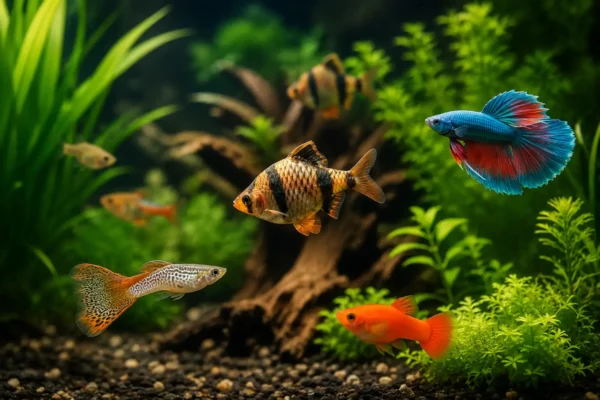
Easy fish for beginners should be peaceful, hardy, appropriately sized and realistic for your first aquarium. The best beginner fish are not simply the cheapest fish in the store or the fish that “survive anything.” They are fish that match your tank size, water parameters, group needs, behavior and maintenance routine.
Choosing the right first fish can make aquarium keeping feel calm and rewarding. Choosing the wrong fish can create stress, aggression, overstocking, water-quality problems and disappointment. A fish may look small in a shop but grow too large. A single schooling fish may feel stressed. A bottom fish may still need dedicated food. An algae eater may produce more waste than it removes.
This guide focuses on practical beginner fish choices and the logic behind them. You will learn which fish traits matter, which beginner-friendly fish groups are easiest, how tank size affects your options, and how to avoid common stocking mistakes.
For the complete fish foundation, read Beginner Aquarium Fish. Before buying fish, also check How Long Before Adding Fish and the First Aquarium Checklist.
Quick Answer
- The easiest fish for beginners are hardy, peaceful and suitable for your tank size.
- Good beginner fish often include small peaceful community fish, some livebearers, suitable nano fish and carefully chosen bottom dwellers.
- Do not add fish before the aquarium is cycled. Ammonia and nitrite should be 0 ppm before normal stocking.
- Schooling fish need proper groups, not one or two individuals.
- A 20-gallon or larger aquarium gives beginners more fish options than very small tanks.
- Avoid fish that grow large, become aggressive, need special diets or require advanced water conditions.
- Bottom dwellers and algae eaters are not cleaning machines. They still need proper care and food.
- The easiest first aquarium is lightly stocked, compatible and stable.
What you’ll learn in this lesson
- What makes a fish easy for beginners
- Which fish groups are beginner-friendly
- Which popular fish beginners should be careful with
- How tank size affects beginner fish choice
- How to choose peaceful community fish
- How livebearers, schooling fish, nano fish and bottom dwellers differ
- How to add beginner fish safely
- How to avoid overstocking and compatibility mistakes
What Makes a Fish Easy for Beginners?
An easy beginner fish should be forgiving, but not because it can survive neglect. A good beginner fish is easy because its needs are clear, its adult size is manageable, its behavior is peaceful and its care fits a normal freshwater aquarium routine.
The easiest fish are usually not extreme specialists. They do not need unusual water chemistry, aggressive territorial management, complex feeding or very large aquariums. They should also be commonly available, easy to research and compatible with other peaceful beginner species.
| Easy Fish Trait | Why It Matters |
|---|---|
| Peaceful behavior | Reduces aggression and stress in community tanks |
| Manageable adult size | Prevents outgrowing beginner aquariums |
| Hardy nature | Handles normal beginner learning better |
| Clear diet | Makes feeding simple and predictable |
| Compatible water needs | Reduces pH, KH, GH and temperature conflicts |
| Common availability | Easier to find healthy fish and reliable care information |
The easiest fish is not the same fish for every aquarium. A fish can be easy in a 30-gallon planted tank and difficult in a 5-gallon tank. Always match the fish to the setup.
Ready to set up your own tank?
Create a free account to save lessons, plan your setup, and use the Tank Hub to turn ideas into a real aquarium.
Before Choosing Fish: Is Your Aquarium Ready?
Even easy fish should not be added to an unready aquarium. Before adding beginner fish, the aquarium should be cycled, filtered, heated if needed, and tested. Ammonia and nitrite should be 0 ppm before normal stocking.
Clear water does not prove the tank is safe. Ammonia and nitrite are invisible. Many beginner fish deaths happen because fish are added too early, not because the fish species was impossible to keep.
- The filter is running continuously.
- The aquarium has completed cycling.
- Ammonia is 0 ppm.
- Nitrite is 0 ppm.
- Nitrate is controlled.
- Temperature matches the fish.
- pH, KH and GH are suitable enough for the species.
- The first stocking is light and compatible.
For the full process, read Aquarium Cycling Guide, Fishless Cycle Guide and How Long Before Adding Fish.
Easy Fish for Beginners Overview
Beginner fish are easiest to understand by group. Instead of buying random species, think about their role in the aquarium.
| Fish Group | Beginner Value | Main Caution |
|---|---|---|
| Peaceful schooling fish | Active, social and good for community tanks | Need proper groups and swimming space |
| Small livebearers | Hardy, colorful and active | Can reproduce quickly |
| Nano fish | Useful for smaller planted tanks | Need stable water and proper groups |
| Bottom dwellers | Add activity near substrate | Need proper food and floor space |
| Centerpiece fish | Create visual focus | Must be peaceful and tank-size appropriate |
| Algae grazers | Can help with some algae and biofilm | Not a replacement for maintenance |
A good beginner stocking plan often starts with one peaceful group instead of many different species. Simpler communities are easier to stabilize.
Best Tank Size for Easy Beginner Fish
Tank size decides which fish are truly easy. Very small aquariums limit fish choice and make water parameters change faster. Larger beginner tanks provide more stability, more swimming space and better stocking flexibility.
A 5-gallon aquarium is too limited for most beginner fish. A 10-gallon tank can work for careful nano stocking. A 20-gallon aquarium opens more realistic options. A 29–40 gallon aquarium is excellent for peaceful beginner communities.
| Tank Size | Beginner Fish Options | Main Warning |
|---|---|---|
| 5 gallons / 19 liters | Very limited; often better for shrimp or specific nano setups | Most fish need more space |
| 10 gallons / 38 liters | Careful nano fish or small species planning | Stock lightly and maintain carefully |
| 20 gallons / 76 liters | Good for many small peaceful beginner fish | Still avoid overstocking |
| 29–40 gallons / 110–150 liters | Excellent for beginner community fish | Plan compatibility, not just volume |
| 55 gallons / 208 liters | Stable and flexible for larger communities | Higher cost, weight and water-change volume |
For the full size breakdown, read Best Beginner Aquarium Size.
Easy Schooling Fish for Beginners
Peaceful schooling fish are often excellent for beginners because they create movement and work well in community aquariums. They are usually best kept in groups of their own species. A single schooling fish is often stressed and does not show natural behavior.
Beginner-friendly schooling fish may include small peaceful tetras, rasboras, danios or similar community species, depending on your tank size and water conditions. The exact species matters. Some are better for larger aquariums, while others fit smaller planted setups.
Schooling fish checklist
- Choose a peaceful species.
- Keep a proper group.
- Provide enough swimming space.
- Use plants or hardscape for security.
- Avoid mixing too many small schools in one tank.
- Check whether the species nips fins.
- Match temperature and water parameters.
Schooling fish are easiest when they are kept in a stable, cycled tank with enough space and a proper group.
Easy Livebearers for Beginners
Livebearers are often recommended for beginners because many are hardy, active and colorful. Popular examples include guppies, platies and similar small livebearing fish. They can be excellent beginner fish in the right setup.
The main caution is breeding. Livebearers can reproduce quickly, and an easy beginner tank can become crowded if males and females are kept together without a plan. More fish means more waste, more stocking pressure and more maintenance.
Livebearers also often prefer harder, more mineral-rich water than many soft-water fish. If your tap water is naturally harder, they may fit well. If your water is very soft, research carefully before choosing them.
Livebearer checklist
- Check adult size and activity level.
- Expect possible breeding.
- Plan what happens to fry.
- Do not overcrowd the aquarium.
- Check GH, KH and pH suitability.
- Keep water changes consistent.
- Do not mix randomly with soft-water specialists.
Livebearers can be very beginner-friendly, but only when their breeding and water needs are understood.
Easy Nano Fish for Beginners
Nano fish can be good for smaller aquariums, but “small” does not automatically mean easy. Nano fish still need stable water, proper groups, suitable feeding and a tank that gives them enough space.
Many nano fish are best in planted aquariums with calm tankmates and stable parameters. A 10-gallon tank can work for some nano species, but a 20-gallon tank often gives beginners more stability and better group options.
Be careful with tiny fish in immature tanks. Small fish can still be sensitive to ammonia, nitrite, temperature swings and poor acclimation.
- Choose true nano-appropriate fish.
- Keep proper groups when required.
- Use gentle filtration for tiny species.
- Provide plants and cover.
- Feed small foods appropriately.
- Stock lightly.
- Test water regularly in new setups.
For the dedicated nano article, continue with Best Nano Fish.
Easy Bottom-Dwelling Fish for Beginners
Bottom-dwelling fish can be beginner-friendly, but they are often misunderstood. They are not automatic cleaners. They need proper food, suitable substrate, clean water and enough floor space.
Some bottom fish are social and need groups. Some grow too large for beginner tanks. Some need smooth sand or fine substrate to protect delicate barbels. Before buying bottom fish, check the adult size, group requirement and substrate needs.
- Check adult size.
- Check group needs.
- Provide enough floor space.
- Use suitable substrate.
- Feed sinking foods directly.
- Do not rely on leftovers.
- Keep nitrate and debris under control.
Bottom dwellers can make a beginner aquarium more interesting, but they should be chosen as real livestock, not as cleaning equipment.
Easy Centerpiece Fish for Beginners
A centerpiece fish is a visual focus fish in the aquarium. For beginners, a centerpiece fish should be peaceful, manageable in size and compatible with the rest of the community.
Some attractive fish become territorial or aggressive, especially in small tanks. Others may eat tiny tankmates or shrimp. A good centerpiece fish should not turn the aquarium into a conflict zone.
- Check adult size.
- Check temperament.
- Check whether shrimp may be eaten.
- Check compatibility with schooling fish.
- Provide visual cover with plants or hardscape.
- Avoid territorial fish in very small tanks.
- Do not choose a centerpiece before planning the rest of the community.
In beginner community tanks, the centerpiece should support the layout, not dominate the tank.
Popular Fish That Are Not Always Easy
Some fish are popular with beginners but are not always easy. They may be sold commonly, but that does not mean they fit every first aquarium.
Goldfish, for example, are often seen as beginner fish, but they need much more space and filtration than many small starter tanks provide. Common plecos are often sold small but can grow very large. Some colorful or aggressive species may look appealing but require more planning than a beginner community tank offers.
- Goldfish in small tanks: often need larger, cooler, heavily filtered setups.
- Common plecos: can grow far too large for typical beginner aquariums.
- Aggressive cichlids: may need specific tank size, territory and compatibility planning.
- Fin-nipping species: can stress slower or long-finned fish.
- Very delicate fish: may not tolerate beginner instability well.
- Specialist feeders: can be hard to feed properly in a first tank.
- Fish bought only for algae control: they still need proper care and create waste.
Common does not always mean easy. Research each fish before buying.
Easy Fish for a 10-Gallon Aquarium
A 10-gallon aquarium can work for beginners, but fish options are limited. This size is better for careful nano stocking than for a mixed community. Water parameters can change quickly, so stocking should be light and maintenance should be consistent.
For a 10-gallon tank, focus on small peaceful species, shrimp-compatible plans, or a single-species layout. Avoid fish that need long swimming space, large groups that overcrowd the tank, or bottom fish that need more floor area.
- Choose very small, peaceful species only.
- Keep stocking light.
- Use easy plants for cover and stability.
- Test water regularly in the beginning.
- Avoid adding several species.
- Feed carefully.
- Do not treat 10 gallons as a full community aquarium.
A 10-gallon tank can be beautiful, but it is not unlimited. Beginners often find 20 gallons easier.
Easy Fish for a 20-Gallon Aquarium
A 20-gallon aquarium is one of the best beginner sizes because it gives more stability and more fish options than tiny tanks. It can support a simple peaceful community when stocked carefully.
A beginner 20-gallon plan might include one peaceful schooling group, easy live plants and possibly a compatible accent or bottom group if the tank shape and stocking level allow it. A 20-gallon long tank can be especially useful because it offers more swimming length.
- Choose one main peaceful group first.
- Add fish gradually.
- Use plants and hardscape for cover.
- Keep enough open swimming space.
- Test after stocking.
- Avoid overfilling the tank with too many species.
A 20-gallon tank is a strong first step for beginners who want real fish options without going too large.
Easy Fish for a 29–40 Gallon Aquarium
A 29–40 gallon aquarium is excellent for beginner community fish. This size range gives better water stability, more swimming room and more flexibility for peaceful stocking plans.
This does not mean you should add many species at once. A larger tank can still be overstocked. The best beginner approach is to create a simple structure: one main school, one compatible focus species if desired, and perhaps a suitable bottom group if the tank footprint supports it.
- Use the extra space for stability, not overstocking.
- Build the community slowly.
- Choose fish with similar temperature and water needs.
- Use plants for cover and visual boundaries.
- Keep feeding controlled.
- Maintain a consistent water change routine.
This is one of the easiest size ranges for a peaceful beginner community aquarium.
How to Add Easy Beginner Fish Safely
After choosing easy fish, add them safely. Even hardy fish can be stressed by poor transport, temperature shock, uncycled water or sudden stocking changes.
Add fish gradually instead of adding the entire stocking list at once. Feed lightly during the first days and test ammonia and nitrite after the new fish are introduced. This confirms whether the biological filter can handle the new waste load.
- Buy healthy fish from a reliable source.
- Transport fish calmly and quickly.
- Dim aquarium lights during introduction.
- Acclimate carefully.
- Release fish gently.
- Feed lightly at first.
- Test ammonia and nitrite after stocking.
- Wait before adding the next group.
The first week after stocking is important. Watch breathing, swimming, appetite and aggression.
Easy Beginner Fish and Live Plants
Live plants make many beginner fish tanks easier and more natural. Plants provide cover, reduce stress, break up lines of sight and help use nutrients. They are especially useful for shy schooling fish, shrimp-safe setups and peaceful community aquariums.
Easy plants such as Anubias, Java fern, Cryptocoryne, mosses, floating plants and hardy stems are good companions for beginner fish. They do not require high-tech equipment and can make the aquarium feel safer for livestock.
- Use plants to create hiding places.
- Leave open swimming space.
- Use floating plants carefully for shade.
- Avoid sharp hardscape with delicate fish.
- Remove dying leaves before they decay.
- Choose low-light plants for simple setups.
For plant support, read Beginner Aquarium Plants, Easy Aquarium Plants and Low Light Aquarium Plants.
Easy Fish for Beginners Troubleshooting Table
Use this table if beginner fish show stress after being added.
| Problem | Likely Cause | First Action |
|---|---|---|
| Fish gasp at surface | Low oxygen, ammonia, nitrite or temperature issue | Increase aeration and test water |
| Fish hide constantly | Stress, lack of cover, aggression or water issue | Check water and tankmates |
| Fish chase aggressively | Territory, poor compatibility or wrong group balance | Review species behavior |
| Fish die soon after setup | Uncycled tank, ammonia, nitrite or shock | Test ammonia and nitrite immediately |
| Fish stop eating | Stress, disease, poor water or wrong food | Check water and observe symptoms |
| Nitrate rises quickly | Overfeeding, overstocking or weak routine | Reduce feeding and adjust water changes |
| Schooling fish look nervous | Group too small or tank too exposed | Review group size and add cover if appropriate |
| Bottom fish look thin | Not getting proper food | Use suitable sinking food |
Test water first before adding treatments. Many beginner fish problems begin with water quality or compatibility.
Easy Fish for Beginners Checklist
Use this checklist before buying your first fish.
- The aquarium is cycled.
- Ammonia is 0 ppm.
- Nitrite is 0 ppm.
- Nitrate is controlled.
- Temperature matches the fish.
- The fish fits the tank as an adult.
- The fish has suitable group size.
- The fish is peaceful enough for your community.
- The fish matches your pH, KH and GH closely enough.
- The fish will not outgrow the aquarium.
- The fish will not eat planned shrimp or tiny tankmates.
- You have proper food for the species.
- The first stocking is light.
- You are ready to test after adding fish.
Common Mistakes With Easy Beginner Fish
Even easy fish can become difficult if beginners make the wrong setup or stocking decisions.
- Adding fish before cycling: ammonia and nitrite can harm fish quickly.
- Buying by color only: behavior, size and compatibility matter more.
- Ignoring adult size: store size is not final size.
- Keeping schooling fish alone: group fish need groups.
- Overstocking small tanks: waste and stress build quickly.
- Buying algae eaters as cleaners: they still need care and produce waste.
- Mixing incompatible fish: peaceful and aggressive species do not always work together.
- Feeding too much: overfeeding causes many beginner water problems.
- Adding all fish at once: stocking should be gradual.
- Not testing after stocking: easy fish still need safe water.
For the broader beginner problem guide, read Beginner Aquarium Mistakes.
Quick Takeaways
- Easy fish for beginners should be peaceful, hardy and tank-size appropriate.
- The aquarium should be cycled before fish are added.
- Ammonia and nitrite should be 0 ppm before normal stocking.
- Tank size decides which fish are truly easy.
- Schooling fish need proper groups.
- Livebearers can be easy but may reproduce quickly.
- Nano fish still need stable water.
- Bottom dwellers are not automatic cleaners.
- Live plants can reduce stress and improve the aquarium environment.
- The best beginner stocking plan is simple, gradual and compatible.
Conclusion
The easiest fish for beginners are not the fish that survive the worst conditions. They are the fish that fit your aquarium properly. A good beginner fish matches your tank size, water parameters, group needs, behavior and maintenance routine.
Start with a cycled aquarium, stable water and a light first stocking. Choose peaceful species, research adult size, respect schooling needs and avoid impulse purchases. Add fish slowly and test ammonia and nitrite after stocking.
If you build the aquarium around compatibility instead of random choices, your first fish tank will be calmer, healthier and much easier to enjoy.
From here, continue with Beginner Aquarium Fish, Best Nano Fish, Beginner Community Fish, How Long Before Adding Fish and Best Beginner Aquarium Size.
Next step:
Write down your tank size, cycling status and water parameters before choosing fish. Easy fish become easy only when they match the aquarium they live in.
💬 Join the Conversation
Tag us on Instagram @AquariumLesson — we’d love to see your first fish plan, beginner community tank or planted aquarium setup.
👉 Which easy fish are you considering first: schooling fish, livebearers, nano fish, bottom dwellers or a peaceful community setup?
FAQ
What are the easiest fish for beginners?
The easiest fish for beginners are peaceful, hardy and suitable for the aquarium size. Good beginner options often include small peaceful community fish, some livebearers, suitable nano fish and carefully chosen bottom dwellers.
Can beginners add fish on the first day?
No. Beginners should wait until the aquarium is cycled and ammonia and nitrite are 0 ppm. Clear water on day one does not mean the tank is biologically ready.
What fish are easiest for a 10-gallon tank?
A 10-gallon tank needs careful nano stocking. Choose very small peaceful species, stock lightly and maintain stable water. A 20-gallon tank is usually more forgiving for beginners.
Are guppies easy fish for beginners?
Guppies can be beginner-friendly in suitable water, but they may reproduce quickly. Beginners should understand stocking, water hardness and fry management before choosing mixed groups.
Are tetras easy fish for beginners?
Some small peaceful tetras can be good beginner fish in properly sized, cycled aquariums. They usually need groups and should be matched to suitable water parameters and tankmates.
Are bottom feeders easy for beginners?
Some bottom dwellers can work well, but they are not cleaners. They need proper food, suitable substrate, enough floor space and good water quality.
Are goldfish easy beginner fish?
Goldfish are often sold as beginner fish, but they usually need more space and filtration than small starter tanks provide. They are not ideal for most small beginner aquariums.
How many beginner fish should I add first?
Add a light first stocking. The exact number depends on tank size, species and filter maturity. Do not add every planned fish at once.
Do easy fish still need water testing?
Yes. Easy fish still need safe water. Test ammonia and nitrite after stocking, especially in new aquariums, and monitor nitrate as part of routine maintenance.
Can plants help beginner fish?
Yes. Live plants provide cover, reduce stress, use nutrients and make the aquarium feel more natural. Easy plants are a strong addition to many beginner fish tanks.
Start building your aquarium with the Tank Hub
Save your favorite lessons, organize your setup, and track your aquarium step by step in your personal Tank Hub.
New to AquariumLesson? Start with our complete Aquarium Lessons Hub or return to the homepage at AquariumLesson.com.
Continue learning
References
- AquariumLesson. Beginner Aquarium Fish.
- AquariumLesson. How Long Before Adding Fish.
- AquariumLesson. Best Beginner Aquarium Size.
- AquariumLesson. Aquarium Water Parameters Guide.
- AquariumLesson. Beginner Aquarium Plants.