

Best Nano Fish: Small Fish for Beginner Aquariums
Introduction
The best nano fish are small freshwater species that stay tiny as adults, behave peacefully, produce a relatively low bioload, and can thrive in carefully maintained small aquariums. They are not simply “small fish.” They are fish whose adult size, activity level, group behavior, feeding needs, and water requirements make them suitable for compact tanks.
Nano aquariums are popular because they fit into smaller homes, look elegant, and can become beautiful planted displays. But they are not automatically easier than larger tanks. In a small aquarium, water quality can change quickly. A little overfeeding, a missed water change, or too many fish can create problems faster than in a larger system.
This guide explains the best nano fish for beginner aquariums, how to choose them safely, which species need groups, which fish are often misunderstood, and why tank size, filtration, cycling, and maintenance matter more than any simple “small fish” list.
If you are still choosing your first fish, also read the Easy Fish for Beginners guide and the broader Aquarium Fish Guide.
Quick answer: The best nano fish for beginners are peaceful, small, group-friendly species that match your tank size and water parameters. Good options include chili rasboras, ember tetras, celestial pearl danios, green neon rasboras, pygmy corydoras, Endler’s livebearers, white cloud mountain minnows, and carefully planned betta setups.
What You’ll Learn in This Lesson
- What makes a fish suitable for nano aquariums
- Why small tanks are less forgiving than many beginners expect
- Which nano fish are best for beginner freshwater setups
- Which nano fish need groups and planted cover
- How to choose fish based on adult size, behavior, and tank volume
- Which “small fish” are not always good nano fish
- How to avoid overstocking a small aquarium
- How to build a stable nano fish tank around cycling, filtration, and water changes

What Counts as a Nano Fish?
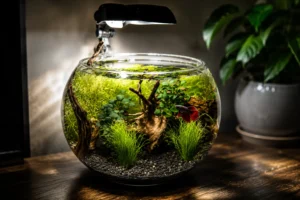
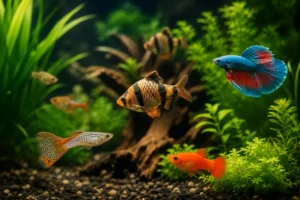
A nano fish is usually a small freshwater fish that stays compact as an adult and can live comfortably in a smaller aquarium when its social and environmental needs are met. Many nano fish stay under 2 inches, but size alone is not enough.
A fish can be small and still unsuitable for a nano tank if it is too active, too aggressive, too sensitive, too messy, or needs a large group that the aquarium cannot support. A good nano fish should fit the whole system, not just the ruler.
When judging nano fish, consider these factors:
- Adult size: Judge the fish at full size, not store size.
- Activity level: Fast swimmers need more horizontal space.
- Group size: Many tiny fish need a group to feel secure.
- Temperament: Peaceful species are safer in small aquariums.
- Bioload: Small tanks cannot handle heavy waste production.
- Feeding: Tiny fish may need small foods.
- Water parameters: The fish must match your temperature, pH, hardness, and stability.
This is why nano fish should be selected carefully. A small aquarium leaves less room for stocking mistakes.
Are Nano Fish Good for Beginners?
Nano fish can be good for beginners, but nano aquariums are not always beginner-proof. The fish may be small, but the aquarium system is still sensitive. Less water volume means waste, temperature, oxygen, and chemistry can change faster.
A beginner-friendly nano setup should be stable, lightly stocked, fully cycled, filtered, planted if possible, and maintained consistently. The goal is not to fit as many tiny fish as possible into the smallest tank. The goal is to create enough space and stability for small fish to behave naturally.
For many beginners, a small-to-medium aquarium is safer than an extreme nano tank. If you want nano fish, choose the largest small aquarium you can realistically maintain. A 40–60 liter tank is much more forgiving than a tiny desktop container, and a 60–100 liter tank gives even more flexibility.
| Tank Type | Beginner Suitability | Nano Fish Note |
|---|---|---|
| Tiny bowl or unfiltered container | Poor | Not suitable for proper beginner fishkeeping |
| Very small nano tank | Difficult | Only for very light stocking and careful maintenance |
| 40–60 liter planted tank | Good with planning | Suitable for one carefully chosen nano direction |
| 60–100 liter tank | Excellent | More stable and flexible for beginner nano communities |
Before stocking, use the Aquarium Volume Calculator and make sure your aquarium is fully cycled with help from the Aquarium Cycling Guide.
Best Nano Fish for Small Freshwater Aquariums
The best nano fish are peaceful, small, and suitable for stable planted aquariums. Most should be kept in groups, not as single fish. A group of one suitable species usually works better than a random mix of many tiny species.
Use this list as a planning guide, not as a shopping cart. The right choice depends on tank size, water parameters, temperature, filter flow, plants, and tankmates.
| Nano Fish | Best For | Beginner Note |
|---|---|---|
| Chili Rasbora | Heavily planted nano tanks | Tiny, peaceful, best in larger groups |
| Ember Tetra | Warm planted community tanks | Small, colorful, peaceful shoaling fish |
| Celestial Pearl Danio | Cooler planted nano aquariums | Beautiful but can be shy; provide cover |
| Green Neon Rasbora | Single-species nano schools | Looks best in a group with dark background and plants |
| Pygmy Corydoras | Peaceful mature nano tanks | Needs a group, clean water, and suitable food |
| Endler’s Livebearer | Harder water nano setups | Active and colorful; breeding control matters |
| White Cloud Mountain Minnow | Cooler freshwater tanks | Hardy, active, and best with swimming space |
| Betta Fish | Solo planted centerpiece setups | Not a schooling nano fish; needs warm filtered water |
| Least Killifish | Calm species setups | Tiny livebearer; needs careful stocking and cover |
| Clown Killifish | Surface-level planted tanks | Small, beautiful, prefers calm planted conditions |
The safest beginner approach is to choose one main nano fish group and design the aquarium around it. This gives the fish enough space, reduces compatibility issues, and makes feeding and observation easier.
Chili Rasboras
Chili rasboras are among the most iconic nano fish because they stay extremely small and show intense red coloration when healthy and mature. They work best in planted aquariums with gentle flow, stable water, and a dark or natural background that helps them feel secure.
They are not ideal as single fish or tiny groups. A larger group helps them feel safer and makes their schooling behavior more visible. Because they are so small, they need tiny foods such as crushed flakes, micro pellets, baby brine shrimp, or other appropriately sized foods.
- Best setup: heavily planted nano tank with gentle flow.
- Group need: best kept in a proper group.
- Watch out for: large tankmates, strong current, and food that is too big.
Chili rasboras are best for aquarists who want a small, peaceful schooling species rather than a mixed tank full of larger fish.
Ember Tetras
Ember tetras are small, peaceful, warm-colored fish that suit planted nano and small community aquariums. They are often easier to see than very tiny rasboras and can create a calm orange movement through the midwater.
They should be kept in a group. In a planted tank, they become more confident and show better behavior. They are usually not aggressive, but they should not be mixed with large or boisterous fish that may outcompete or intimidate them.
- Best setup: peaceful warm planted aquarium.
- Group need: keep as a shoal, not alone.
- Watch out for: large tankmates and unstable new tanks.
Ember tetras are a strong beginner nano choice when the aquarium is cycled, planted, and not overstocked.
Celestial Pearl Danios
Celestial pearl danios, also called galaxy rasboras, are small, colorful fish with spotted bodies and bright fins. They are beautiful nano fish, but beginners should understand their behavior before buying them.
They can be shy, especially in small groups or bare aquariums. A planted tank with mosses, fine-leaved plants, and visual cover helps them feel secure. They also tend to prefer cooler conditions than many warm tropical community fish, so tankmate choice matters.
- Best setup: planted nano tank with cover and calm tankmates.
- Group need: better in groups with plenty of hiding structure.
- Watch out for: bare tanks, aggressive tankmates, and overly warm setups.
They can be excellent nano fish, but they are not the best choice for a chaotic mixed beginner community.
Green Neon Rasboras
Green neon rasboras are tiny, bright, and peaceful. Their glowing green coloration can look impressive in planted aquariums, especially with a dark substrate, shaded background, and a healthy group.
They are best used as a group-focused nano fish. Because they are small, they should not be kept with large or aggressive fish. They need stable water, tiny foods, and enough open midwater space to move as a group.
- Best setup: planted single-species or peaceful nano community tank.
- Group need: looks best in a larger group.
- Watch out for: being outcompeted by larger fish.
They are a good choice when you want a visually striking school rather than many different fish species.
Pygmy Corydoras
Pygmy corydoras are tiny catfish that behave differently from larger bottom-dwelling corydoras. They often hover and swim in the midwater as well as explore the bottom, making them active and charming nano fish.
They need a group, clean water, and suitable small foods. They should not be bought as “cleaner fish.” Pygmy corydoras still need direct feeding and good water quality. A mature planted tank with smooth substrate is usually better than a brand-new bare setup.
- Best setup: mature peaceful planted tank with smooth substrate.
- Group need: must be kept in a group.
- Watch out for: poor water quality, rough substrate, and food competition.
Pygmy corydoras are excellent nano fish when the tank is stable and the aquarist understands that bottom dwellers still need proper care.
Endler’s Livebearers
Endler’s livebearers are colorful, active, and small. They can be excellent nano fish in the right water, especially for beginners with harder tap water. They are energetic and easy to feed, which makes them appealing for first small aquariums.
The main issue is breeding. Like guppies and platies, Endler’s livebearers can reproduce quickly. A mixed-sex group may turn a lightly stocked nano tank into an overcrowded system if there is no plan.
- Best setup: harder water planted nano tank with active movement.
- Group need: can be kept in groups, but sex ratio matters.
- Watch out for: uncontrolled breeding and overstocking.
If you want the color and energy of livebearers without constant fry management, consider a males-only setup where appropriate and available.
White Cloud Mountain Minnows
White cloud mountain minnows are hardy, peaceful fish that can work well in smaller aquariums with enough swimming room. They are especially useful for aquarists who want a cooler freshwater setup rather than a warm tropical tank.
They are active group fish, so they should not be kept alone or in cramped tanks. A longer aquarium is better than a tiny cube because it gives them more horizontal swimming space.
- Best setup: cooler planted tank with open swimming space.
- Group need: keep as a proper group.
- Watch out for: warm tropical tankmates and tanks that are too short.
They are hardy, but that does not mean they belong in unstable or undersized aquariums. They still need space, filtration, and clean water.
Betta Fish in Nano Aquariums
A betta can be a good fish for a small planted aquarium, but it should not be treated like a schooling nano fish. A betta is usually best planned as a solo centerpiece fish with warm, stable water, gentle filtration, plant cover, and resting places.
The biggest mistake is keeping bettas in tiny, unfiltered bowls or adding them randomly to a small community tank. Some bettas tolerate carefully selected tankmates, while others are best kept alone. Their long fins can also make them vulnerable to strong flow and fin-nipping fish.
- Best setup: heated, filtered, planted single-fish aquarium.
- Group need: not a schooling fish; usually planned as a solo centerpiece.
- Watch out for: bowls, strong flow, cold water, and unsuitable tankmates.
For a welfare-focused discussion, read the Betta Bowl Aquarium guide before choosing a very small setup.
Best Nano Fish by Tank Size
Tank size should decide the fish list, not the other way around. A nano species can be tiny and still need a group that requires more space than beginners expect.
In very small aquariums, choose one clear direction. In larger nano or small community tanks, you may combine one midwater group with a suitable bottom group, but only if filtration, maintenance, and space support it.
| Tank Size Direction | Safer Nano Fish Direction | Important Note |
|---|---|---|
| Very small tanks | Shrimp, snails, plants, or specialist fish-only planning | Not ideal for most beginner fish communities |
| 40–60 liters | One nano group or one betta-centered setup | Stock lightly and maintain carefully |
| 60–100 liters | One strong nano school plus possible compatible support species | Much better beginner stability |
| Over 100 liters | Nano community with multiple zones | More flexibility, but compatibility still matters |
Do not use tank volume alone as permission to overstock. Adult size, group size, behavior, and water quality matter together.
Nano Fish That Are Often Misunderstood
Some fish are small, popular, or sold frequently, but they are not always the best nano fish for beginners. They may need more space, more stability, a larger group, cooler water, softer water, or more experience than expected.
| Fish | Why Beginners Misjudge It | Better Approach |
|---|---|---|
| Neon Tetra | Small and popular, but often does better in mature stable tanks | Consider after the aquarium is established |
| Zebra Danio | Small but extremely active | Use longer tanks with swimming space |
| Dwarf Gourami | Beautiful but not always the easiest health-wise | Choose carefully and avoid stressful communities |
| Common Pleco | Sold small but grows far too large | Avoid for nano aquariums |
| Goldfish | Often sold as beginner fish but produce heavy waste | Not a nano fish and not suitable for tiny tanks |
| Large “algae eaters” | Bought as cleaners but may outgrow the tank or become problematic | Research adult size and behavior first |
The safest rule is simple: if you do not know the adult size and social needs of the fish, do not buy it yet.
Nano Fish Stocking Rules for Beginners
Nano stocking is about restraint. A small aquarium looks empty at first, so beginners often add too many fish too quickly. That is exactly how nano tanks become unstable.
Instead of asking how many fish you can fit, ask how few fish you can keep while still allowing natural behavior. A proper group of one species is usually better than a tiny mix of many species.
- Choose one main nano fish group first.
- Prioritize group size over species variety.
- Leave open swimming space.
- Use plants and hardscape for cover.
- Avoid large or aggressive tankmates.
- Feed tiny portions.
- Test water regularly in new setups.
- Do not add all fish at once.
If your aquarium is new, stock gradually after cycling. The Fishless Cycle Guide explains how to prepare the biological filter before fish are added.
Water Quality for Nano Fish
Nano fish are small, but they still need excellent water quality. In fact, small aquariums make water quality even more important because waste and parameter swings can show up quickly.
At minimum, beginners should understand ammonia, nitrite, nitrate, pH, temperature, and hardness. Ammonia and nitrite should be treated as warning signs in a stocked aquarium. Nitrate helps guide water change rhythm, but it is not the only measure of aquarium health.
Small fish also use oxygen, and small tanks can become crowded quickly. Surface movement, filtration, plant balance, and light stocking all help keep the system safer.
| Water Factor | Why It Matters in Nano Tanks |
|---|---|
| Ammonia | Can harm fish quickly in immature or overloaded tanks |
| Nitrite | Signals incomplete biological filtration |
| Nitrate | Shows accumulated waste and maintenance pressure |
| Temperature | Small tanks can shift faster than larger tanks |
| pH and hardness | Must match the chosen species reasonably well |
| Oxygen | Important in small, warm, or crowded aquariums |
For beginner-friendly water chemistry, read the Aquarium Water Parameters guide.
Best Setup for Nano Fish
The best nano fish setup is usually a planted, filtered aquarium with stable temperature, gentle to moderate flow, and enough cover. Plants are especially useful because many nano fish feel safer when they can retreat into shaded or structured areas.
A good nano fish tank should not be bare. Tiny fish are often prey species in nature, so open empty tanks can make them nervous. A planted layout with background cover, floating plants, mosses, driftwood, or fine-leaved plants can improve confidence and natural behavior.
- Filter: reliable biological filtration with suitable flow.
- Plants: cover, shade, grazing surfaces, and visual security.
- Heater: only if the species needs stable tropical warmth.
- Light: enough for plants but not so strong that algae dominates.
- Substrate: smooth and suitable for bottom species if included.
- Maintenance tools: small siphon, test kit, conditioner, and food sized for tiny mouths.
For equipment planning, read the Aquarium Filter Guide. For care rhythm, use the Aquarium Water Change Guide.
Feeding Nano Fish
Nano fish often need smaller foods than standard community fish. Even when they accept flakes, the flakes should be crushed small enough to eat easily. Many nano species also benefit from micro pellets, baby brine shrimp, daphnia, frozen cyclops, or other tiny foods.
Overfeeding is a major risk in nano tanks. Because the water volume is small, uneaten food can affect water quality quickly. Feed small portions and watch whether the food is actually eaten.
- Use food small enough for tiny mouths.
- Feed lightly.
- Remove obvious uneaten food if possible.
- Do not let bottom fish rely only on leftovers.
- Vary the diet where appropriate.
- Reduce feeding if water quality becomes unstable.
A healthy nano fish tank is usually lightly fed, not constantly fed. Fish behavior and water test results should guide adjustments.
Common Nano Fish Mistakes
Most nano fish problems come from treating a small aquarium as if it were easier than a larger one. The opposite is often true. Nano tanks reward patience and punish overstocking.
| Mistake | Why It Causes Problems | Better Approach |
|---|---|---|
| Choosing the smallest possible tank | Water changes quickly and stocking options shrink | Choose the largest small tank you can maintain |
| Mixing too many species | Small tanks do not give enough space for everyone | Use one main group or one clear setup direction |
| Keeping schooling fish alone | Causes stress and unnatural behavior | Keep proper groups where tank size allows |
| Adding fish before cycling | Ammonia and nitrite can harm fish | Cycle first and test water |
| Overfeeding tiny fish | Pollutes small water volume quickly | Feed tiny portions |
| Buying “cleaner fish” | No fish replaces maintenance | Choose fish for compatibility, not cleaning promises |
| Ignoring adult behavior | Active fish may need more length than expected | Research activity level, not just size |
| Skipping plants and cover | Tiny fish may feel exposed | Use plants, wood, moss, or background cover |
If your nano tank is already unstable, do not add more fish. Test the water, reduce feeding, check filtration, and stabilize the system first. If fish were added before the cycle was ready, read the New Tank Syndrome guide.
Beginner Nano Fish Stocking Examples
These examples are not universal formulas. They are stocking directions to help you think clearly. Final stocking depends on tank dimensions, filtration, water parameters, plant density, and species availability.
Planted Chili Rasbora Tank
A planted tank built around chili rasboras can be beautiful and calm. Use a group of chili rasboras, dense plants, dark background elements, gentle flow, and small foods. Avoid larger fish that may intimidate them.
Ember Tetra Nano Community
An ember tetra group in a planted aquarium creates warm color and peaceful movement. In a larger nano or small community tank, they can work with compatible bottom species if the system is mature and not crowded.
Pygmy Corydoras Group Tank
A pygmy corydoras setup should focus on clean water, group behavior, smooth substrate, and direct feeding. They can combine well with peaceful midwater nano fish in the right tank, but they should not be treated as cleaners.
Betta Planted Nano Setup
A betta tank should be designed around one fish, not a crowded nano community. Use warm water, gentle filtration, plants, cover, and resting spots. Tankmates should be chosen very carefully or avoided entirely.
Endler’s Livebearer Setup
Endler’s livebearers work well in suitable water, but breeding must be considered. A males-only group may be easier for beginners who want color and activity without population growth.
Final Checklist Before Buying Nano Fish
Before buying nano fish, use this checklist. It will prevent most beginner stocking mistakes.
- The aquarium is cycled.
- Ammonia and nitrite are safe.
- The tank size fits the species and group size.
- The fish’s adult size is known.
- The fish’s activity level fits the tank length.
- The species matches your temperature and water parameters.
- The group size is realistic for the aquarium.
- The filter flow is suitable for tiny fish.
- Food is small enough for the fish to eat.
- Plants or cover are available.
- Stocking is gradual, not all at once.
- The maintenance routine is ready before fish arrive.
If you cannot answer these points yet, pause before buying fish. Nano tanks are much easier when the plan is clear from the start.
Conclusion
The best nano fish are small, peaceful, appropriately grouped species that fit the tank’s real size, water conditions, and maintenance routine. Chili rasboras, ember tetras, celestial pearl danios, green neon rasboras, pygmy corydoras, Endler’s livebearers, white cloud mountain minnows, and carefully planned bettas can all work well when the aquarium is designed around their needs.
The most important lesson is that nano fish do not make nano aquariums automatically easy. Small tanks require careful stocking, stable filtration, patient cycling, controlled feeding, and regular water changes.
Choose one clear nano fish direction, plant the aquarium well, stock gradually, and test your water. A simple, stable nano tank with one healthy group of fish is far better than a crowded miniature community full of stress.
💬 Join the Conversation
Which nano fish are you considering for your small aquarium — chili rasboras, ember tetras, pygmy corydoras, celestial pearl danios, Endler’s livebearers, or a betta setup?
Tag us on Instagram @AquariumLesson — we’d love to see your nano tank plan, fish list, and planted layout.
FAQ
What are the best nano fish for beginners?
Good beginner nano fish include chili rasboras, ember tetras, celestial pearl danios, green neon rasboras, pygmy corydoras, Endler’s livebearers, white cloud mountain minnows, and bettas in carefully planned solo setups. The best choice depends on tank size, water parameters, and group needs.
Are nano fish easy to keep?
Nano fish can be easy when the aquarium is stable, cycled, lightly stocked, and maintained consistently. The challenge is that small tanks are less forgiving, so water quality and feeding control are very important.
Can nano fish live in a 20-liter tank?
Some tiny species may be possible in very small tanks for experienced keepers, but 20 liters is limiting and less forgiving. Beginners are usually better with a larger planted tank, especially if they want a group of fish rather than shrimp or snails.
How many nano fish should I keep together?
Many nano fish are schooling or shoaling species and should be kept in groups. The correct number depends on the species and tank size. A proper group of one species is usually better than several tiny groups of different fish.
What nano fish can live with shrimp?
Some tiny peaceful fish may live with adult shrimp, but baby shrimp can still be eaten. If shrimp breeding is the priority, a shrimp-only tank is safer. If fish are included, choose small peaceful species and provide dense plant cover.
Are bettas nano fish?
Bettas are often kept in small planted aquariums, but they are not schooling nano fish. A betta should usually be planned as a solo centerpiece fish with warm, filtered water, gentle flow, plants, and suitable cover.
What nano fish should beginners avoid?
Beginners should avoid fish that grow too large, need strong swimming space, produce heavy waste, require very specific conditions, or are sold as “cleaner fish” without proper research. Common plecos, goldfish, and large algae eaters are not suitable nano fish.
New to AquariumLesson? Start with our complete Aquarium Lessons Hub or return to the homepage at AquariumLesson.com.
References
- RSPCA — Choosing an Aquarium for Pet Fish
- RSPCA — Keeping Freshwater Fish as Pets
- Aquarium Co-Op — Top 10 Stunning Nano Fish for Your Next Small Fish Tank
- Aquarium Store Depot — Nano Fish Species for Small Aquariums
- Shrimpy Business — Nano Fish Types for Small Aquariums
- Animal Welfare Victoria — Caring for Your Pet Fish
Start building your aquarium in My Aquariums
Save this lesson and keep it connected to your aquarium planning and care routine.


