Liquid Carbon Aquarium Guide: Is It a CO₂ Alternative?
Introduction
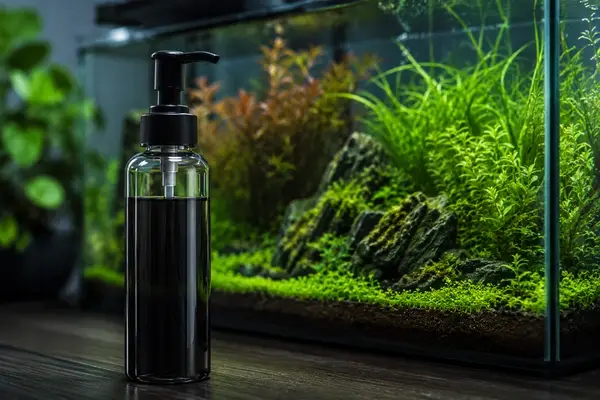
Liquid carbon aquarium products are often marketed as an easy way to support planted tanks without a full pressurized CO₂ system. They are usually sold as “liquid CO₂,” “liquid carbon,” “carbon supplement,” or “CO₂ booster” products for aquarium plants.
The idea sounds attractive: no cylinder, no regulator, no bubble counter, no diffuser, no drop checker, and no complicated CO₂ tuning. Just dose a liquid and help plants grow. For beginners, that promise is tempting.
But liquid carbon is not the same as pressurized CO₂ injection. It does not create the same dissolved CO₂ stability, it does not replace a proper CO₂ system in high-light aquascapes, and it should not be used as an excuse to run demanding carpets or red stem plants under strong light without real carbon planning.
Liquid carbon can still have a place. It may help some low-tech aquariums, support very modest plant growth, and act as a tool against certain algae types when used carefully. However, it can also damage sensitive plants, stress livestock if overdosed, and create false expectations if treated as a true CO₂ replacement.
This guide explains what liquid carbon really is, how it differs from pressurized CO₂, when it may help, when it is risky, which plants are sensitive, how to dose it safely, and when you should skip it completely. For the full high-tech alternative, read the Aquarium CO2 System Guide. If your goal is a simple planted setup without injection, start with No CO₂ Planted Tank.
Quick answer: Liquid carbon is not a true replacement for pressurized CO₂ injection. It may support some low-tech tanks and help control certain algae, but demanding plants, carpets and high-light aquascapes still need stable injected CO₂ for reliable results.
What You’ll Learn in This Lesson
- What liquid carbon aquarium products are
- Why “liquid CO₂” is not the same as pressurized CO₂
- When liquid carbon may help planted tanks
- When liquid carbon is a poor choice
- Which plants and livestock need extra caution
- How liquid carbon relates to algae control
- How to dose liquid carbon more safely
- When a real CO₂ system is the better long-term solution
What Is Liquid Carbon in an Aquarium?
Liquid carbon is a liquid additive sold for planted aquariums. Depending on the brand and formulation, it is usually designed to provide an organic carbon source or carbon-related supplement that aquarium plants may use in limited ways.
Many hobby discussions describe liquid carbon products as glutaraldehyde-based or related to glutaraldehyde-type compounds. Exact formulations vary by manufacturer, and some brands use proprietary wording. The practical point is simple: these products are not bottles of dissolved CO₂ gas in the same sense as pressurized injection.
Liquid carbon is added directly to the aquarium water. It does not require a cylinder, regulator, solenoid, diffuser or reactor. That makes it convenient, but also limited. It cannot create the same stable dissolved CO₂ concentration that a tuned pressurized setup can provide during the photoperiod.
Liquid carbon is usually used for three reasons:
- To support low-tech aquarium plant growth modestly
- To reduce some algae pressure, especially spot treatment in certain cases
- To avoid the cost and complexity of pressurized CO₂ equipment
It should be seen as a limited tool, not as a magic replacement for a complete CO₂ system.
Is Liquid Carbon the Same as Liquid CO₂?
In everyday aquarium language, many people call these products “liquid CO₂.” That name is convenient, but it is also misleading. Liquid carbon products are not the same as injecting CO₂ gas into the water through a diffuser or reactor.
Pressurized CO₂ injection directly raises dissolved CO₂ during the light period. Plants can then use that carbon for photosynthesis. A liquid carbon product works differently and cannot usually create the same carbon availability in a high-demand planted tank.
That difference matters because high-light planted aquariums are driven by system balance. If light is strong, plants need stable CO₂, macronutrients, micronutrients, flow and maintenance. A daily liquid additive cannot compensate for unstable or insufficient dissolved CO₂ in the same way a properly tuned pressurized system can.
| Feature | Liquid Carbon | Pressurized CO₂ |
|---|---|---|
| Delivery method | Dosed as a liquid additive | Injected as gas through diffuser, atomizer or reactor |
| Equipment needed | None beyond measuring dose | Cylinder, regulator, solenoid, tubing and diffuser/reactor |
| Carbon availability | Limited and product-dependent | Strong and tunable when set up correctly |
| Best use | Low-tech support and careful algae use | High-tech growth, carpets and demanding plants |
| Risk | Plant sensitivity and overdose risk | Livestock stress if CO₂ is too high |
| Maintenance | Daily or regular dosing | Gas refill, tuning and equipment maintenance |
If your goal is lush high-tech growth, liquid carbon is not the same category as pressurized CO₂.
How Liquid Carbon Differs From Pressurized CO₂
The biggest difference is stability. Pressurized CO₂ can be timed to turn on before the lights and maintain a useful dissolved CO₂ level during the photoperiod. A drop checker, pH trend, bubble counter and plant response can help tune that system.
Liquid carbon is dosed into the water. It does not build and maintain a measurable dissolved CO₂ curve in the same way. It may provide limited carbon-related support, but it does not replace the role of injected CO₂ in high-light tanks.
That is why many aquarists are disappointed when they add liquid carbon to a high-demand tank and expect carpeting plants to suddenly spread or red plants to explode with growth. The limiting factor may still be real CO₂ availability, light balance, nutrients or flow.
Pressurized CO₂ helps most when:
- The aquarium has medium to high PAR lighting
- Demanding carpets need compact growth
- Fast stem plants are heavily trimmed
- Red plants need strong growth support
- Dense aquascapes need stable carbon delivery
- Plant mass is high and nutrient demand is strong
- The aquarist wants predictable high-tech results
Liquid carbon helps most when the tank is lower-energy and expectations are realistic.
When Liquid Carbon May Help
Liquid carbon can be useful in some planted aquariums, especially when the tank is low-tech, lightly to moderately planted, and not running strong light. It may provide modest support for plant growth and help reduce certain algae issues when used carefully.
It can also be convenient for aquarists who do not want to install pressurized equipment but still want a small performance boost beyond light and fertilizer alone.
| Tank Situation | Liquid Carbon Usefulness | Important Caution |
|---|---|---|
| Low-tech planted tank | Can be useful | Still needs balanced light and fertilizer |
| Tank with slow plants | Possible but not always necessary | Some slow plants may be sensitive |
| Mild algae issue | Can help in some cases | Do not ignore root causes |
| Beginner tank without CO₂ | Possible optional tool | Start conservatively and follow label dosing |
| High-light carpet tank | Usually not enough | Real CO₂ is usually needed |
| Shrimp tank | Use with caution | Overdosing and sensitivity risks matter |
Liquid carbon is most reasonable when it supports a low-energy system. It becomes less convincing when used to avoid proper CO₂ in a high-energy aquascape.
When Liquid Carbon Is Not Enough
Liquid carbon is not enough when the aquarium is designed around high CO₂ demand. Strong light, dense stems, carpeting plants, red plants and fast trimming cycles all increase carbon demand. In those systems, stable injected CO₂ is usually the better tool.
If the tank is already showing classic CO₂ limitation under strong light, liquid carbon may not solve the problem. It may reduce some algae temporarily, but the underlying imbalance remains.
Liquid carbon is usually not enough for:
- High-light aquascapes
- Demanding carpeting plants
- Dense Dutch-style stem layouts
- Fast red stem plant systems
- Layouts with frequent trimming and regrowth
- Tanks where algae is driven by unstable carbon
- Aquariums where plants already need pressurized CO₂
- Situations where the real problem is too much light
If your aquarium falls into those categories, compare the CO₂ Diffuser Guide, CO₂ Reactor Guide and CO₂ Bubble Rate Guide. A proper CO₂ system is more work, but it gives real control.
Liquid Carbon and Algae Control
Liquid carbon is often used for algae control, especially against certain algae types such as black beard algae. Many aquarists use it either as a normal daily dose or as a careful spot treatment. This is one reason liquid carbon remains popular even among aquarists who do not view it as a true CO₂ replacement.
However, algae control is not the same as solving the system. If algae appears because light is too strong, CO₂ is unstable, plants are deficient, flow is weak or organic waste is high, liquid carbon may only suppress symptoms temporarily.
Liquid carbon may help with algae when:
- The algae issue is mild or localized
- The tank is otherwise stable
- Light is not excessive
- Plants are not nutrient-starved
- The product is dosed carefully
- Sensitive livestock and plants are monitored
- Root causes are corrected at the same time
Do not use liquid carbon as a way to avoid fixing light, CO₂, flow and maintenance. For system diagnosis, read Aquarium Lighting and Algae.
Liquid Carbon vs Real CO₂ for Algae
Real CO₂ and liquid carbon affect algae problems differently. Pressurized CO₂ improves plant growth when tuned correctly, which helps plants compete and stabilizes high-light systems. Liquid carbon may directly suppress certain algae, but it does not create the same stable carbon environment for plants.
If algae is caused by unstable CO₂ in a high-light tank, liquid carbon may not be the best long-term solution. A stable CO₂ system, correct lighting and complete fertilization are more important.
| Algae Situation | Better Long-Term Fix | Liquid Carbon Role |
|---|---|---|
| Black beard algae on hardscape | Improve CO₂ stability, flow and maintenance | May help as careful spot treatment |
| Hair algae after light increase | Reduce light or improve CO₂ and nutrients | May not solve root cause |
| Green spot algae | Review phosphate, light and plant growth | Usually not the main fix |
| Algae on slow Anubias leaves | Reduce excess light and improve flow | Use with caution because Anubias may be sensitive |
| Algae in a low-tech tank | Balance light, fertilization and organic waste | Can be a supporting tool |
| Algae in high-tech aquascape | Stabilize injected CO₂ and maintenance | Not a replacement for CO₂ tuning |
If algae keeps returning, the aquarium is telling you that the underlying balance is still off.
Which Plants Are Sensitive to Liquid Carbon?
Some aquarium plants are more sensitive to liquid carbon than others. Sensitivity can vary by dose, product, plant condition, water chemistry and overall tank stress. Overdosing increases the risk significantly.
Plants often reported as more sensitive include delicate mosses, liverworts, Vallisneria, some stem plants and certain slow epiphytes. Even plants that tolerate normal dosing may react poorly if liquid carbon is spot-treated directly on them or overdosed repeatedly.
| Plant Group | Liquid Carbon Caution | Practical Advice |
|---|---|---|
| Mosses | Can be sensitive | Start low and avoid direct overdose |
| Liverworts | Often sensitive | Use extra caution around Riccia and similar plants |
| Vallisneria | Frequently reported as sensitive | Avoid aggressive dosing or direct exposure |
| Anubias | Usually hardy but slow leaves can be damaged | Use caution with spot treatment on leaves |
| Java Fern | Moderate caution | Watch rhizome and leaf response |
| Cryptocoryne | Can react to sudden changes | Avoid stacking stress factors |
| Fast stems | Often tolerate normal dosing | Still need real nutrients and CO₂ if demand is high |
If a plant is rare, already melting, newly planted or expensive, do not use liquid carbon aggressively around it.
Is Liquid Carbon Safe for Fish and Shrimp?
Liquid carbon products can be used in aquariums when dosed according to product instructions, but safety depends on correct dosing, livestock sensitivity, oxygen levels and tank stability. Overdosing is the main risk.
Shrimp, snails and sensitive fish deserve extra caution. These animals can react badly to sudden chemical stress, poor oxygenation or excessive dosing. A tank that is already unstable should not be pushed harder with aggressive liquid carbon use.
Use extra caution if your aquarium has:
- Shrimp or delicate invertebrates
- Snails you want to protect
- Very small water volume
- Low oxygen or weak surface movement
- High temperature
- Already stressed fish
- Newly cycled biological filtration
- Recent medication or chemical treatment
- Large plant melt or organic waste buildup
If livestock show gasping, lethargy, unusual climbing, loss of balance or sudden stress after dosing, perform a water change, improve aeration and stop adding the product until the system is stable.
How to Dose Liquid Carbon More Safely
The safest way to use liquid carbon is to follow the product label, start conservatively and avoid treating it as harmless. Do not combine multiple carbon products. Do not overdose because plants are struggling. Do not use it to force a high-light tank to behave like a CO₂-injected aquascape.
Good dosing habits include:
- Follow the product’s instructions exactly
- Measure the aquarium volume realistically
- Start with a conservative dose in sensitive tanks
- Do not overdose to compensate for missing CO₂
- Avoid direct contact with sensitive plants when spot treating
- Keep surface movement and oxygen exchange adequate
- Do not dose during livestock stress events
- Do not mix with unknown medications or chemicals
- Watch plants and livestock after every change
- Stop use if melting or stress appears
Liquid carbon should be treated like a chemical tool, not like a basic nutrient such as potassium or nitrate.
Liquid Carbon Spot Treatment
Some aquarists use liquid carbon as a spot treatment against algae on hardscape or specific leaves. This means applying a small controlled amount directly to an algae patch, often with filter flow reduced temporarily.
Spot treatment can be effective, but it also increases risk because concentration is higher in the treated area. Sensitive plants can be damaged. Shrimp and fish should not be exposed to strong local concentrations. The total daily dose should still stay within safe product limits.
Spot treatment is safest when:
- The algae is localized
- The target is hardscape rather than delicate plants
- The total dose remains within label limits
- Livestock are not directly exposed
- Flow is restored after a short treatment period
- The aquarium is monitored afterward
- The root cause of algae is also corrected
Spot treatment should never become your main aquarium management strategy. If algae keeps returning, fix light, CO₂, nutrients, flow and maintenance.
Liquid Carbon in Low-Tech Aquariums
Low-tech aquariums are the most reasonable place for liquid carbon. These tanks usually have lower light, slower plant growth and no pressurized CO₂ injection. A careful liquid carbon routine may provide modest support and help control certain algae pressures.
However, low-tech success does not depend on liquid carbon alone. Most stable low-tech tanks are built around moderate light, easy plants, complete fertilization, good water changes, enough plant mass and patience.
In a low-tech tank, liquid carbon may be useful if:
- Lighting is moderate, not excessive
- Plants are mostly easy or medium difficulty
- Fertilizer is already balanced
- Algae pressure is mild or localized
- Sensitive plants are not dominant
- Shrimp and livestock tolerate the routine
- The aquarist wants a small boost, not high-tech growth
If the tank is low-tech, avoid strong light. A low-tech aquarium with too much light will usually grow algae faster than plants, whether or not liquid carbon is added.
Liquid Carbon in High-Tech Aquascapes
In high-tech aquascapes, liquid carbon should not be treated as the main carbon source. These aquariums usually need pressurized CO₂ because plant demand is high. Strong PAR, fast stems, carpets, dense plant mass and frequent trimming all require stable carbon availability.
Liquid carbon may still be used by some aquarists as an algae-control tool or supplemental product, but it should not replace CO₂ injection. If your CO₂ system is unstable, fix the system rather than masking the issue with liquid carbon.
High-tech tanks should prioritize:
- Stable pressurized CO₂ delivery
- Correct diffuser, atomizer or reactor setup
- Consistent CO₂ timing before lights on
- Good circulation and surface gas exchange
- Balanced macros and micros
- Light intensity matched to CO₂ availability
- Regular trimming to prevent dead zones
- Livestock safety during CO₂ tuning
Use liquid carbon carefully if you choose to use it at all. It is not the foundation of a high-tech CO₂ strategy.
Liquid Carbon vs No CO₂ Tank
A no-CO₂ tank does not automatically need liquid carbon. Many planted aquariums grow well without pressurized CO₂ and without liquid carbon when the setup is designed correctly.
The key is matching plant demand to the system. Low-light plants, moderate fertilization, stable water changes and realistic growth expectations are more important than adding a carbon bottle to an overlit tank.
| Approach | Best For | Main Risk |
|---|---|---|
| No CO₂, no liquid carbon | Simple low-light tanks with easy plants | Growth is slower and plant choice is limited |
| No CO₂ with liquid carbon | Low-tech tanks needing modest support | Sensitive plants or overdose problems |
| Pressurized CO₂ | High-tech aquascapes and demanding plants | Requires tuning and livestock safety monitoring |
| High light without real CO₂ | Usually risky | Algae and carbon limitation |
For many beginners, the best choice is not liquid carbon. It is lower light, easier plants and a stable fertilizer routine.
Liquid Carbon and Fertilizer
Liquid carbon is not a fertilizer replacement. Aquarium plants still need nitrogen, phosphorus, potassium, magnesium, iron and trace elements. A tank can receive liquid carbon every day and still show nutrient deficiencies if the fertilizer routine is incomplete.
This is especially important in low-tech tanks where aquarists often add carbon but forget potassium, iron or complete macros. If plants have pale new leaves, yellow old leaves, pinholes or stalled growth, the issue may be nutrients rather than carbon.
Use liquid carbon only after the basics are covered:
- Appropriate light intensity
- Enough plant mass
- Complete liquid fertilizer if needed
- Root tabs for heavy root feeders
- Stable water changes
- Clean flow and low organic waste
- No major livestock stress
For nutrient planning, read the Aquarium Fertilizer Guide.
Liquid Carbon and Light Intensity
Light intensity decides how much carbon plants need. The stronger the light, the more carbon and nutrients plants require. This is where many liquid carbon setups fail.
If light is low to moderate, liquid carbon may offer small support. If light is strong, plant demand may exceed what liquid carbon can provide. The result is often algae, weak growth or plants that look stressed despite regular dosing.
| Light Level | Liquid Carbon Fit | Better Strategy |
|---|---|---|
| Low light | Optional | Easy plants and complete fertilizer may be enough |
| Moderate light | Possible | Use carefully and watch plant response |
| High light | Usually limited | Use pressurized CO₂ or reduce light |
| Very high light | Poor replacement | Pressurized CO₂ and strong system control required |
| Uneven light with shaded zones | Does not fix distribution | Improve aquascape layout and lighting spread |
If algae appears after increasing light, do not solve it with more liquid carbon first. Rebalance the light system using Aquarium PAR Explained and Aquarium Lighting and Algae.
Common Liquid Carbon Mistakes
Most liquid carbon mistakes come from unrealistic expectations. The product is treated as if it can replace CO₂ equipment, fertilizer, algae diagnosis and proper lighting. It cannot.
| Mistake | Why It Causes Problems | Better Approach |
|---|---|---|
| Calling it true liquid CO₂ | Creates false expectations | Understand it as a limited additive |
| Using it instead of CO₂ in high light | Plants remain carbon-limited | Use pressurized CO₂ or reduce light |
| Overdosing for faster growth | Can damage plants or stress livestock | Follow label dosing and start conservatively |
| Spot treating sensitive plants | Can cause melting or leaf damage | Target hardscape carefully if needed |
| Stopping fertilizer | Plants still need macros and micros | Use complete plant nutrition |
| Ignoring algae root causes | Algae returns repeatedly | Fix light, CO₂, nutrients, flow and maintenance |
| Using it in stressed livestock tanks | Chemical stress can worsen problems | Stabilize animals first |
The safest way to use liquid carbon is to treat it as optional, controlled and secondary to system balance.
Liquid Carbon Troubleshooting
If liquid carbon is not giving the result you expected, the problem may be the expectation itself. It cannot fix every planted tank issue. Use symptoms to identify whether the real problem is light, nutrients, CO₂, plant choice or livestock sensitivity.
| Problem | Likely Cause | What to Check First |
|---|---|---|
| Plants still grow slowly | Low light, missing nutrients or unrealistic expectations | Plant type, fertilizer and PAR |
| Carpet still fails | Needs real CO₂ or stronger system balance | CO₂ injection, substrate PAR and nutrients |
| Algae returns after treatment | Root cause remains | Light, flow, organics and CO₂ stability |
| Moss melts after dosing | Sensitivity or overdose | Stop use and perform water change if needed |
| Vallisneria declines | Plant sensitivity | Discontinue or reduce carefully |
| Shrimp act stressed | Overdose or chemical sensitivity | Water change, aeration and stop dosing |
| Plants show yellow leaves | Nutrient deficiency, not carbon alone | Nitrate, potassium, iron and micros |
If a problem appears immediately after dosing, stop the product first and stabilize the aquarium before changing anything else.
Should Beginners Use Liquid Carbon?
Beginners can use liquid carbon, but they do not need to start with it. In many cases, beginners get better results by focusing on easier plants, moderate lighting, complete fertilizer and stable maintenance.
Liquid carbon adds another variable. If plants improve, decline or algae changes, the beginner must understand whether the product helped, harmed or simply masked another issue. That can make diagnosis harder.
A better beginner order is:
- Choose easy low-light plants
- Use moderate lighting
- Keep photoperiod controlled
- Use complete fertilizer if plants need it
- Add root tabs for root feeders
- Maintain stable water changes
- Control feeding and organic waste
- Only consider liquid carbon if there is a clear reason
If the goal is serious aquascaping with carpets and demanding plants, skip the shortcut and plan a pressurized CO₂ system properly.
Liquid Carbon vs Pressurized CO₂: Decision Guide
Use this guide to choose the better carbon strategy for your tank:
| Your Aquarium Goal | Better Choice | Reason |
|---|---|---|
| Easy low-light planted tank | No CO₂ or optional liquid carbon | Low demand does not require injected CO₂ |
| Beginner tank with Anubias and Java Fern | Usually no CO₂, complete fertilizer | Light and nutrient balance matter more |
| Small algae spot on hardscape | Careful liquid carbon use may help | Can be a targeted tool |
| Carpeting plant aquascape | Pressurized CO₂ | Stable carbon is usually needed |
| High-light red plant layout | Pressurized CO₂ | Liquid carbon is not enough for high demand |
| Shrimp tank with easy plants | No CO₂ or very cautious liquid carbon | Livestock stability comes first |
| Large high-tech planted tank | Pressurized CO₂ with diffuser or reactor | Needs reliable controllable carbon delivery |
If your aquarium needs real CO₂, liquid carbon will usually delay the correct solution rather than replace it.
Liquid Carbon Safety Checklist
Use this checklist before adding liquid carbon:
- Do you know the real water volume after substrate and hardscape?
- Have you read the product label carefully?
- Are shrimp, snails or sensitive fish present?
- Do you keep sensitive plants such as mosses or Vallisneria?
- Is the aquarium already stressed or unstable?
- Is oxygen exchange adequate?
- Are you using it for a clear reason?
- Are you avoiding overdose and chemical stacking?
- Are light and fertilizer already balanced?
- Are you prepared to stop if plants or livestock react badly?
If several answers create doubt, skip liquid carbon and stabilize the aquarium first.
Final Recommendation
Use liquid carbon only when it fits the system: low-tech planted tanks, modest plant demand, careful algae control or small supplemental support. Keep expectations realistic and follow dosing instructions carefully.
Do not use liquid carbon as a substitute for pressurized CO₂ in high-light aquascapes, demanding carpet layouts or dense stem plant tanks. These systems need stable dissolved CO₂, good flow, complete fertilization and controlled light.
The best carbon choice depends on your goal. For simple planted tanks, liquid carbon may be optional. For serious high-tech aquascaping, pressurized CO₂ is the correct tool. For many beginners, the smartest path is even simpler: lower light, easier plants, complete fertilizer and patience.
Conclusion
Liquid carbon aquarium products can be useful, but they are often misunderstood. They are not the same as pressurized CO₂ injection, and they should not be treated as a universal shortcut for plant growth.
In low-tech aquariums, liquid carbon may offer modest support and help with certain algae situations. In high-tech tanks, it cannot replace stable injected CO₂. In sensitive shrimp tanks or tanks with delicate plants, it should be used cautiously or avoided if there is no clear need.
The safest approach is to design the aquarium around realistic plant demand. If the tank is low-light and beginner-friendly, you may not need liquid carbon at all. If the tank is high-light and demanding, use a real CO₂ system. If you choose liquid carbon, dose carefully, watch livestock, protect sensitive plants and never use it as a replacement for balance.
💬 Join the Conversation
Have you used liquid carbon, pressurized CO₂, or a no-CO₂ setup in your planted aquarium?
Tag us on Instagram @AquariumLesson — we’d love to see your planted tank setup, carbon strategy and plant growth results.
FAQ
Is liquid carbon the same as CO₂?
No. Liquid carbon is not the same as pressurized CO₂ injection. It is a liquid additive that may provide limited carbon-related support, but it does not create the same stable dissolved CO₂ level as a proper CO₂ system.
Can liquid carbon replace CO₂ injection?
Liquid carbon can help some low-tech aquariums, but it does not replace pressurized CO₂ in high-light tanks, carpeting plant layouts, dense aquascapes or demanding red plant systems.
Does liquid carbon help aquarium plants grow?
It may support modest growth in some low-tech tanks, but results are limited compared with real CO₂ injection. Plant growth still depends on light, nutrients, flow, substrate and plant choice.
Does liquid carbon kill algae?
Liquid carbon may help suppress certain algae, especially when used carefully as a targeted tool. However, it does not fix the root causes of algae such as excessive light, unstable CO₂, weak plant growth or organic waste.
Is liquid carbon safe for shrimp?
Use liquid carbon cautiously in shrimp tanks. Follow product instructions, avoid overdosing, maintain oxygen exchange and stop use if shrimp show stress. Many shrimp keepers prefer simpler low-tech stability instead.
Which plants are sensitive to liquid carbon?
Mosses, liverworts, Vallisneria and some slow or delicate plants may be sensitive, especially with overdose or direct spot treatment. Always start conservatively and watch plant response.
Can I use liquid carbon with pressurized CO₂?
Some aquarists use liquid carbon alongside pressurized CO₂ for algae control, but it should not be necessary as the main carbon source. Use caution, avoid overdosing and focus first on stable CO₂ tuning.
Should beginners use liquid carbon?
Beginners do not need liquid carbon by default. Many beginner planted tanks do better with easy plants, moderate lighting, complete fertilizer, root tabs where needed and consistent maintenance.
New to AquariumLesson? Start with our complete Aquarium Lessons Hub or return to the homepage at AquariumLesson.com.
References
- Practical Fishkeeping — Carbon in the Planted Aquarium: Gas vs Liquid
- Aquarium Gardens — Liquid Carbon Guide
- UKAPS — Is Liquid Carbon a Good Enough Substitute for a CO₂ Set Up?
- UKAPS — Liquid Carbon vs No CO₂
- Aquascape Guide — Should I Use Liquid Carbon in My Aquarium?
- Aquariumbreeder — Misconception of Liquid Carbon in Aquarium Products
- NT Labs — CO₂ in Planted Aquariums