
Beginner Aquarium Mistakes: Avoid First Tank Problems
Introduction
Beginner aquarium mistakes usually do not happen because someone does not care about their fish. They happen because a first aquarium looks simple from the outside, while the real system depends on water chemistry, biological filtration, stocking balance, feeding habits, temperature stability, and routine maintenance.
A new tank can look clean and still be unsafe. A filter can be running and still not be biologically mature. Fish can look hungry and still be overfed. A small aquarium can look beginner-friendly and still be harder to keep stable than a larger tank.
This guide explains the most common first aquarium mistakes, why they happen, how to avoid them, and what to do instead. The goal is not to make aquarium keeping feel complicated. The goal is to help you build a stable, calm, beginner-friendly system from the start.
If you are still planning your setup, also read the Aquarium Equipment Guide. If your tank is already filled and you are wondering whether it is safe for fish, the most important next step is the Aquarium Cycling Guide.
Quick answer: The biggest beginner aquarium mistakes are adding fish too early, skipping the nitrogen cycle, choosing a tank that is too small, overstocking, overfeeding, not testing water, cleaning filter media incorrectly, using unsuitable fish combinations, and changing too many things at once.
What You’ll Learn in This Lesson
- Why many beginner fish tanks fail in the early weeks
- Which mistakes cause ammonia, nitrite, algae, stress, and fish loss
- How to avoid adding fish before the aquarium is ready
- Why tank size matters more than many beginners expect
- How overfeeding and overstocking destabilize water quality
- How to clean a filter without destroying beneficial bacteria
- How to build a safer first stocking plan
- What to do if you already made one of these mistakes
Why Beginner Aquarium Mistakes Happen
Aquariums are often sold as simple home decorations: glass box, water, filter, light, fish. But a healthy aquarium is not just a container. It is a biological system.
The most important part of that system is invisible. Beneficial bacteria grow mainly inside the filter and on surfaces throughout the aquarium. These bacteria help process fish waste. Without them, ammonia and nitrite can rise to dangerous levels even when the water looks clear.
This is why beginners often feel confused. They may buy equipment, condition water, wait a short time, add fish, and still run into problems. The missing piece is usually system maturity, not effort.
Beginner mistakes also happen because many first setups are planned around appearance instead of stability. A tiny tank, bright light, many fish, decorative substrate, and no testing routine can look appealing on day one but become difficult to manage after feeding, waste buildup, and algae begin.
Mistake: Adding Fish Too Early
Adding fish too early is the classic first aquarium mistake. A new aquarium may look finished once the water is clear and the equipment is running, but that does not mean the biological filter is ready.
Fish produce waste. Uneaten food also breaks down. In an immature aquarium, that waste can create ammonia and nitrite problems before the filter bacteria are strong enough to process it.
This can lead to stressed fish, gasping, clamped fins, loss of appetite, disease vulnerability, or sudden losses. The frustrating part is that the aquarium may still look visually clean.
What to Do Instead
- Set up the tank fully before buying fish.
- Run the filter continuously.
- Use a proper cycling method.
- Test ammonia, nitrite, and nitrate.
- Add fish only when the aquarium is biologically ready.
The safest beginner method is a fishless cycle because it prepares the filter before livestock is exposed to waste spikes. Follow the Fishless Cycle Guide for the full process.
If you already added fish and your tank is not cycled, read the New Tank Syndrome Guide immediately. You may need frequent testing, careful feeding, water changes, and a slower stocking plan.
Mistake: Choosing a Tank That Is Too Small
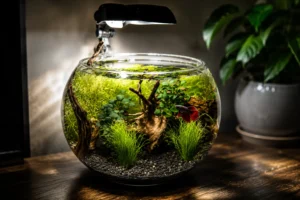
Many beginners choose a small aquarium because it seems cheaper, easier, and less intimidating. In reality, very small tanks are often harder because water conditions change quickly.
A small volume gives you less margin for error. A little extra food, a dead plant leaf, a missed water change, or a temperature swing can have a stronger effect than it would in a larger aquarium.
This does not mean nano aquariums are impossible. It means they are less forgiving. Small tanks work best when the keeper understands stocking limits, feeding control, water testing, plant mass, and maintenance consistency.
| Tank Choice | Beginner Risk | Better Approach |
|---|---|---|
| Very small bowl or tiny tank | Unstable water, poor stocking options, fast waste buildup | Avoid for fish-based beginner setups |
| Small nano tank | Possible but sensitive to mistakes | Keep stocking very light and test often |
| Medium beginner aquarium | More stable and flexible | Best starting point for many beginners |
| Larger community tank | More stable but heavier and more expensive | Good if the stand and maintenance plan are realistic |
Before buying, use the Aquarium Volume Calculator to estimate the real water volume. Remember that substrate, rocks, driftwood, and equipment reduce the amount of actual water inside the tank.
Mistake: Overstocking the Aquarium
Overstocking means keeping more fish than the aquarium can support safely. It is one of the fastest ways to turn a new tank into an unstable system.
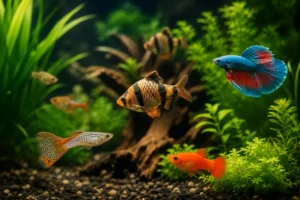
More fish means more waste, more oxygen demand, more competition, more feeding, more territorial pressure, and less room for natural behavior. Even if the fish are small, the total biological load can become too much for the filter and maintenance routine.
Beginners often overstock because juvenile fish look tiny in the store. But many fish grow larger, become more active, develop territorial behavior, or need groups. A peaceful-looking young fish may not stay suitable for a small tank.
Safer Stocking Questions
- How large does the species become as an adult?
- Does it need to live in a group?
- Does it need open swimming space?
- Is it peaceful, territorial, shy, or aggressive?
- Does it match your water temperature and parameters?
- Will your filter and maintenance routine handle the waste?
Use the Aquarium Fish Guide to plan livestock based on adult size, behavior, water needs, and compatibility rather than impulse purchases.
Mistake: Adding Too Many Fish at Once
Even if your final stocking plan is reasonable, adding too many fish at once can overload a young biological filter. Beneficial bacteria populations adjust to available waste. A sudden increase in fish can create a sudden increase in ammonia pressure.
This is especially risky in new aquariums. The filter may be cycled enough for a small initial bioload but not ready for a full community overnight.
A safer approach is gradual stocking. Add a small number of suitable fish, observe them, test water, and allow the system to adjust before adding the next group.
| Risky Approach | Safer Beginner Approach |
|---|---|
| Buying all fish in one trip | Add livestock gradually |
| Mixing many species immediately | Start with one compatible group |
| Trusting the tank because water is clear | Confirm with ammonia and nitrite tests |
| Reacting only when fish look sick | Monitor before visible stress appears |
Mistake: Overfeeding Fish
Overfeeding is one of the easiest beginner aquarium mistakes to make because fish often behave as if they are always hungry. They rush to the front, follow movement, and compete for food. That does not mean they need large meals.
Uneaten food breaks down in the aquarium and adds waste. Too much food can increase ammonia pressure, nitrate buildup, cloudy water, algae, and filter debris. It can also harm fish directly if their diet becomes excessive or unsuitable.
Better Feeding Habits
- Feed small amounts.
- Watch whether food is actually eaten.
- Remove obvious uneaten food when possible.
- Use food that matches the species.
- Feed less during cycling or water quality problems.
- Do not use feeding as entertainment every time you pass the tank.
A simple rule for beginners: it is safer to slightly underfeed for a short period than to constantly overfeed and destabilize the water. Fish health depends on water quality as much as nutrition.
Mistake: Not Testing the Water
Many first aquarium owners wait until fish look stressed before testing water. That is backwards. Water testing is how you detect hidden problems before they become visible.
The core beginner tests are ammonia, nitrite, nitrate, and pH. Depending on your water source and fish choice, GH and KH can also be useful. During the early life of a tank, ammonia and nitrite are especially important because they reveal whether the biological filter is handling waste safely.
Water can be crystal clear and still unsafe. Cloudiness can also appear in a new aquarium without meaning everything is doomed. Testing helps you react based on evidence instead of panic.
| Parameter | Why Beginners Should Care |
|---|---|
| Ammonia | Can rise in new or overloaded tanks |
| Nitrite | Signals incomplete biological processing |
| Nitrate | Shows accumulated waste and maintenance demand |
| pH | Helps match fish to water and avoid sudden swings |
| KH | Helps understand pH stability |
| GH | Helps match fish, shrimp, and plants to mineral levels |
For a deeper explanation of these values, read the Aquarium Water Parameters Guide.
Mistake: Cleaning the Filter the Wrong Way
A filter is not just a dirt trap. It is also a home for beneficial bacteria. This is why aggressive filter cleaning can cause problems in a beginner aquarium.
Replacing all filter media at once, washing biological media too harshly, or scrubbing everything until it looks factory-new can remove much of the bacterial colony your aquarium depends on.
Filter maintenance should keep water moving without destroying the biological base of the system.
Safer Filter Maintenance
- Clean mechanical sponges only when flow is reduced or debris buildup is obvious.
- Rinse filter media gently in removed aquarium water when possible.
- Do not replace all media at the same time.
- Keep biological media wet during maintenance.
- Do not turn off the filter for long periods.
- Choose a filter that suits the tank size and bioload.
If you are unsure whether your filter is suitable, compare options in the Aquarium Filter Guide.
Mistake: Ignoring Aquarium Placement
Placement feels like a design decision, but it affects stability and safety. A poor location can create temperature swings, algae problems, stress, access issues, and even structural risk.
A beginner aquarium should not sit in direct sun, beside a radiator, below an air-conditioning vent, on weak furniture, in a high-vibration area, or where maintenance access is difficult.
Once filled, even a modest aquarium becomes heavy. Moving it afterward is stressful and risky. Plan the location before setup.
- Avoid direct sunlight: It can increase algae and heat swings.
- Use a level stand: Uneven support can stress the aquarium.
- Keep power safe: Use drip loops and avoid water near sockets.
- Leave working space: You need room for filter access and water changes.
- Think about noise and movement: Constant disturbance can stress fish.
For tank support and weight planning, see the Aquarium Stand Guide.
Mistake: Using Too Much Light Too Soon
Bright light makes an aquarium look impressive, but strong lighting can create problems when the rest of the system is not balanced. In a new tank with low plant mass, unstable nutrients, and immature filtration, excessive lighting can encourage algae.
Beginners often assume algae means they need to clean more. Sometimes that is true. But algae is often a sign that light, nutrients, plant growth, CO₂, and maintenance are not balanced yet.
For a first planted tank, use a consistent moderate light schedule. Avoid running lights all day. If your light is adjustable, start lower and increase only if plants need it.
- Use a timer for consistency.
- Start with a moderate photoperiod.
- Avoid intense light on a newly planted low-biomass tank.
- Add more easy plants before increasing light.
- Do not treat light as separate from nutrients and CO₂.
To understand light strength and plant demand, read the Aquarium Lighting Guide.
Mistake: Buying Incompatible Fish
Fish compatibility is not only about whether one fish attacks another. A fish can be “peaceful” and still be wrong for your aquarium.
Compatibility includes adult size, temperature, water hardness, pH preference, swimming space, group size, feeding behavior, activity level, and temperament. A fish that works in one aquarium may be unsuitable in another.
Beginners also often mix fish from different environments just because they are sold in the same store section. Store availability does not automatically mean compatibility.
| Impulse Choice | Problem | Better Choice |
|---|---|---|
| One schooling fish | Stress from lack of group | Choose a proper group if tank size allows |
| Fish that outgrow the tank | Long-term welfare and water quality problems | Check adult size before buying |
| Aggressive or territorial fish | Stress, injuries, hiding, failed community tank | Choose peaceful species for a first setup |
| Mixed water needs | Constant compromise and instability | Choose fish that suit your tap water when possible |
Mistake: Skipping Regular Water Changes
A filter does not replace water changes. Filtration helps process and trap waste, but dissolved substances still accumulate over time. Water changes help dilute nitrate, replenish stability, remove dissolved waste, and keep the aquarium more predictable.
Beginners sometimes avoid water changes because they worry about disturbing the aquarium. The real problem is usually not water changes themselves but sudden, careless, oversized, or chemically different water changes.
A steady routine is safer than neglect followed by a dramatic rescue cleaning session.
- Use conditioned replacement water.
- Match temperature reasonably.
- Do not clean everything at once.
- Use water tests to guide frequency.
- Remove debris without destroying the entire layout.
- Keep maintenance consistent and calm.
For practical guidance, use the Aquarium Water Change Guide.
Mistake: Changing Too Many Things at Once
When something goes wrong, beginners often change everything at once: more light, less light, new filter media, extra chemicals, new fish food, larger water changes, more plants, different temperature, and a new additive.
This makes the aquarium harder to understand. If the problem improves or gets worse, you no longer know which change caused it.
A better troubleshooting habit is to test, identify the most likely cause, make one controlled change, and observe. Stable aquariums are built by consistent patterns, not constant reaction.
Beginner troubleshooting rule: Test first, change one thing, observe the result, and avoid stacking multiple fixes unless there is an immediate fish safety emergency.
Mistake: Ignoring Live Plants as Stability Helpers
Live plants are not mandatory for every aquarium, but they can make many beginner tanks easier to stabilize. Plants provide shelter, reduce stress, create natural surfaces, use nutrients, and help the aquarium feel more balanced.
The mistake is not choosing artificial decor. The mistake is assuming live plants are always advanced or impossible. Many hardy plants are beginner-friendly and do not need pressurized CO₂ or intense lighting.
For a first planted aquarium, focus on easy species and enough plant mass. Avoid building your first tank around demanding carpets, high light, and unstable CO₂ unless you are ready for a more technical setup.
- Choose low-demand plants.
- Use moderate lighting.
- Avoid burying epiphyte rhizomes.
- Remove melting leaves before they decay heavily.
- Give plants time to adapt after planting.
Start with the Aquarium Plants Guide if you want a beginner-friendly planted setup.
Beginner Aquarium Mistakes Checklist
Use this checklist before adding fish, after adding fish, and whenever the aquarium feels unstable.
| Mistake | Warning Sign | Better Habit |
|---|---|---|
| Adding fish too early | Ammonia or nitrite appears after stocking | Cycle first and test before adding fish |
| Tank too small | Fast changes, limited stocking, frequent problems | Choose a more stable beginner volume |
| Overstocking | High nitrate, stress, aggression, cloudy water | Stock slowly and research adult size |
| Overfeeding | Uneaten food, waste buildup, algae | Feed small amounts and observe |
| No water testing | Problems appear suddenly | Test ammonia, nitrite, nitrate, and pH |
| Wrong filter cleaning | Cycle crash or cloudy water after cleaning | Preserve biological media |
| Too much light | Algae increases quickly | Use moderate light and a timer |
| Incompatible fish | Hiding, aggression, stress, poor feeding | Match species by adult size, behavior, and water needs |
| No water change routine | Nitrate and waste buildup | Perform consistent partial water changes |
| Changing everything at once | Unclear cause and more instability | Make controlled changes based on tests |
What to Do If You Already Made a Mistake
If you already made one of these beginner aquarium mistakes, do not panic. Most early problems can be improved if you slow down, test the water, and protect the fish from the most immediate risks.
If Fish Were Added Too Early
- Test ammonia and nitrite immediately.
- Reduce feeding.
- Use conditioned water for careful partial water changes.
- Do not add more fish.
- Keep the filter running continuously.
- Monitor fish behavior closely.
If the Tank Is Overstocked
- Stop adding livestock.
- Identify species that will outgrow the aquarium.
- Increase testing and maintenance temporarily.
- Consider rehoming unsuitable fish.
- Upgrade filtration only as support, not as an excuse to overload the tank.
If Water Quality Is Unstable
- Test before making changes.
- Check feeding amount.
- Check whether the filter flow is reduced.
- Remove decaying organic matter.
- Perform controlled water changes.
- Avoid replacing all filter media.
The key is to stabilize the aquarium rather than constantly restarting it. A full restart is rarely the best beginner solution unless there is a serious contamination, structural, or safety issue.
A Safer Beginner Aquarium Plan
The safest first aquarium is not necessarily the most impressive one. It is the one that stays stable while you learn.
A strong beginner setup usually has a moderate tank size, reliable filtration, stable heating if needed, a controlled light schedule, easy plants, simple hardscape, patient cycling, light initial stocking, and regular testing.
| Setup Choice | Beginner-Friendly Direction |
|---|---|
| Tank | Choose enough water volume for stability |
| Filter | Reliable, appropriately sized, easy to maintain |
| Lighting | Moderate LED with timer |
| Plants | Hardy low-demand species |
| Substrate | Simple and suitable for your plant/fish plan |
| Water | Conditioned, tested, and stable |
| Cycling | Completed before normal stocking |
| Fish | Peaceful, compatible, and not overstocked |
| Maintenance | Consistent water changes and filter care |
This kind of setup gives you room to learn. Once you understand the basics, you can move into more demanding aquascapes, stronger lighting, CO₂ systems, sensitive livestock, or more specialized layouts.
Conclusion
The most common beginner aquarium mistakes all connect to one theme: rushing a living system before it is stable. Adding fish too early, stocking too heavily, feeding too much, skipping tests, cleaning filters too aggressively, and changing too many things at once all make the aquarium harder to control.
A successful first aquarium is built slowly. Choose a stable tank size, use reliable equipment, cycle the filter, test the water, stock gradually, feed lightly, and maintain the system consistently.
If you want to prevent the biggest early failure, start with the Aquarium Cycling Guide. If your tank is already running and you are seeing problems, check the Aquarium Water Parameters Guide and use your test results before making changes.
💬 Join the Conversation
What was the biggest mistake you made with your first aquarium — or the one you are trying hardest to avoid?
Tag us on Instagram @AquariumLesson — we’d love to see your setup, your beginner checklist, and the lessons you learned along the way.
FAQ
What is the biggest beginner aquarium mistake?
The biggest beginner aquarium mistake is adding fish before the aquarium is cycled and biologically ready. Clear water does not prove that ammonia and nitrite are safe. Testing is essential.
Why do beginner fish tanks fail?
Beginner fish tanks often fail because the tank is stocked too early, stocked too heavily, overfed, poorly tested, or maintained inconsistently. Small tanks, unsuitable fish, and incorrect filter cleaning can make the problem worse.
Can I put fish in a new tank right away?
It is not recommended. A new tank needs time to establish biological filtration. Fish should only be added when the aquarium can safely process waste and water tests confirm stable conditions.
Is overfeeding really dangerous in an aquarium?
Yes. Overfeeding adds waste, pollutes the water, increases filter load, and can contribute to ammonia, nitrate, cloudy water, and algae problems. Feed small amounts and remove obvious uneaten food.
Should beginners start with a small aquarium?
Not usually. Very small tanks are less forgiving because water conditions change quickly. A moderate aquarium is often easier for beginners because it provides more stability and more realistic stocking options.
How do I know if my beginner aquarium is safe?
Your aquarium is safer when the tank is cycled, ammonia and nitrite are consistently safe, temperature is stable, fish are compatible, stocking is light, and you have a regular testing and water change routine.
New to AquariumLesson? Start with our complete Aquarium Lessons Hub or return to the homepage at AquariumLesson.com.
References
- RSPCA — Choosing an Aquarium for Pet Fish
- Ornamental Aquatic Trade Association — How to Set Up and Look After a Freshwater Tank
- American Veterinary Medical Association — Selecting a Pet Fish
- PetMD — Setting Up a Freshwater Aquarium
- MSD Veterinary Manual — Providing a Home for Fish
- Merck Veterinary Manual — Normal Reference Ranges for Routine Water Quality Analysis
Start building your aquarium in My Aquariums
Save this guide so you can return to the diagnosis and treatment steps during maintenance.