Aquarium Too Hot? How to Cool a Fish Tank Safely
Confirm the water temperature with a second thermometer if you can, then check it against the range for the animals you keep. In warm water, oxygen is less available and fish can need more of it. Rapid breathing or gasping calls for more aeration while you work out how to lower the temperature.
Stop the heat gain
Shade the tank from direct sun and reduce heat in the room where possible. Check that a heater has not stayed on above its set point. Isolate a malfunctioning unit safely according to its instructions. Keep the filter and aeration working. If the lighting adds heat, turn it down or off temporarily and check temperature again.
Cool gradually while watching the fish
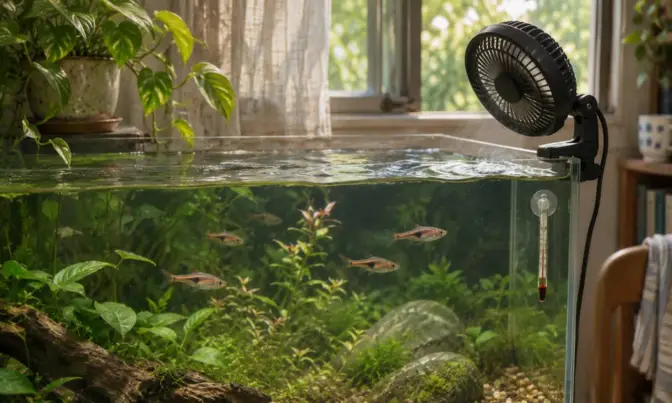
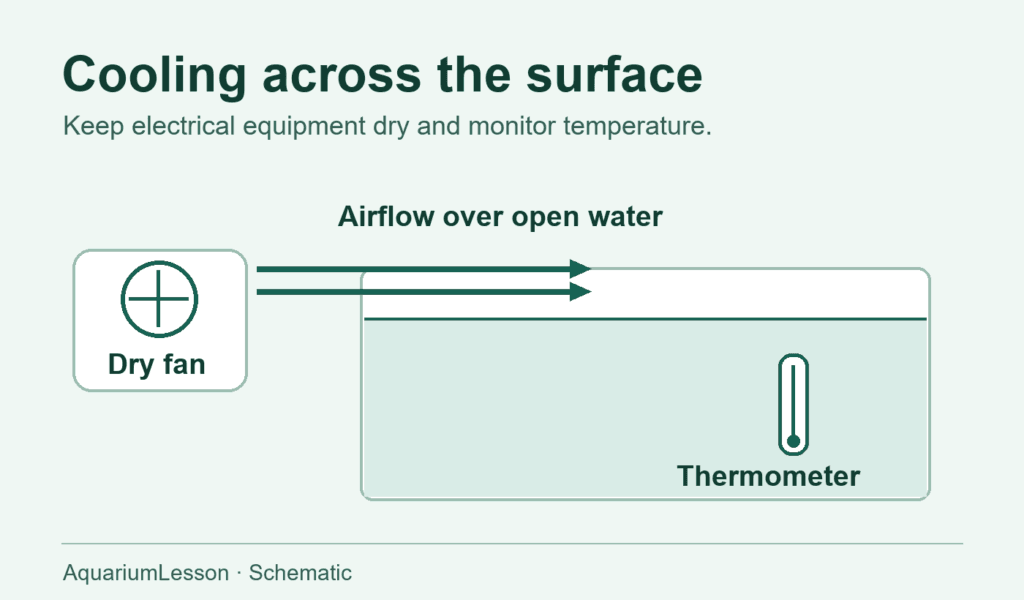
A securely positioned fan across the water surface can cool through evaporation. Use it only when electrical equipment can stay dry and the aquarium still has a secure barrier for jumping fish. Check the thermometer and water level more often. A humid room or prolonged heat may call for room cooling or a suitable chiller.
Avoid tipping ice or a large volume of cold water into the tank. This can expose fish to localized cold and a rapid overall change. If a water change is needed for water quality, use properly conditioned water matched to the animals and adjust slowly. If fish keep gasping despite aeration and cooling, check ammonia, nitrite and other causes of distress and seek aquatic veterinary help as needed.
Use what you learn in My Aquariums
Follow a new aquarium through cycling or see how water readings and care change over time in an established setup.
After the temperature comes down
Check the aquarium through the warmest part of the next day. Record the temperature and note where the fish spend time. Keep any evaporative top-off separate from water changes. Evaporation removes water and leaves dissolved minerals behind. Use the correct top-off water for the system and avoid changing hardness accidentally. See aquarium oxygen levels for symptoms that can overlap with heat stress.
Sources
UF/IFAS’s dissolved oxygen guide explains the effect of temperature. Aqueon’s summer cooling guide covers aquarium cooling options. Merck’s fish housing guidance explains the need to monitor species-appropriate temperature.
Lesson marked as read
Your reading progress is saved.
Continue learning →