Java Fern Aquarium Plant Guide: Care, Planting & Propagation
Introduction
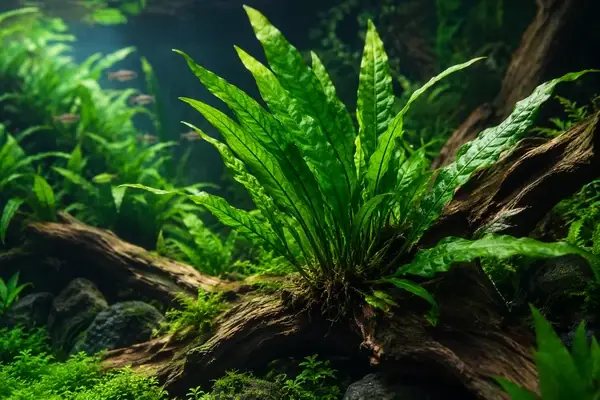
The Java Fern aquarium plant is one of the most trusted plants in freshwater aquariums. It is hardy, beginner-friendly, slow-growing, low-light tolerant, and perfect for attaching to driftwood, rocks, roots, caves, and shaded hardscape.
Java Fern is especially useful because it does not need to be planted like a normal rooted plant. It grows from a horizontal rhizome, similar to Anubias and Bucephalandra. That rhizome should stay exposed. If it is buried under sand, gravel, or soil, it can rot and the plant may decline.
This guide explains Java Fern care in detail: lighting, CO₂, fertilizer, water conditions, rhizome planting, attachment methods, propagation, black spots, melting, algae, popular varieties, and the best aquarium placements. For the broader plant group, read the Epiphyte Aquarium Plants guide. If you are still learning plant categories, start with the Aquarium Plants Guide.
Quick answer: Java Fern is an easy, slow-growing rhizome plant that does best attached to wood, rocks, or aquarium decor. Keep the rhizome exposed, use low to moderate light, avoid intense direct lighting, and propagate it by dividing the rhizome or using plantlets from mature leaves.
What You’ll Learn in This Lesson
- What Java Fern is and why it is so beginner-friendly
- Why the rhizome should never be buried in substrate
- How to attach Java Fern to rocks, driftwood, and hardscape
- How much light Java Fern needs
- Whether Java Fern needs CO₂ or fertilizer
- Which Java Fern varieties are best for different tanks
- How to propagate Java Fern from rhizomes and plantlets
- How to troubleshoot melting, black spots, algae, and weak growth
What Is Java Fern?
Java Fern is the common aquarium name for Microsorum pteropus, a hardy aquatic fern from tropical Asia. In aquariums, it is widely used because it tolerates low light, grows slowly, attaches well to hardscape, and usually survives conditions that would frustrate more demanding plants.
Unlike stem plants, Java Fern does not grow from cut stems that are pushed deep into the substrate. Unlike rosette plants, it does not grow from a central crown buried in the soil. Java Fern grows from a thick horizontal rhizome. Leaves and roots grow from this rhizome.
This growth habit makes Java Fern ideal for aquariums with rocks, driftwood, roots, caves, and shaded hardscape. It can be attached to surfaces and allowed to anchor naturally over time.
- Scientific name: Microsorum pteropus
- Plant type: Rhizome fern / epiphyte-style aquarium plant
- Difficulty: Easy
- Growth rate: Slow to moderate
- Best placement: Midground, background, hardscape, shaded zones
- CO₂ need: Not required
- Light need: Low to moderate
Java Fern is not a fast nutrient sponge. It is best used as a structural hardscape plant rather than the only plant in a new aquarium that needs fast biomass.
Java Fern Care Overview
Java Fern is easy because it has low demands, but it still has clear rules. The most important care rule is correct placement. If the rhizome is buried, the plant can rot. If it is placed under too much direct light, slow leaves can collect algae.
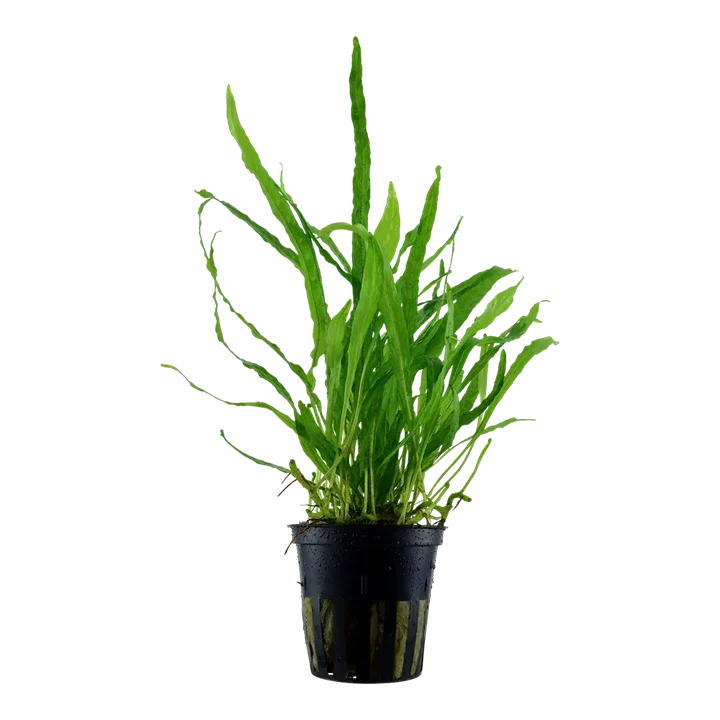 Beginner Friendly
Microsorum pteropus 'Narrow'


 20–28°C
 Low Light
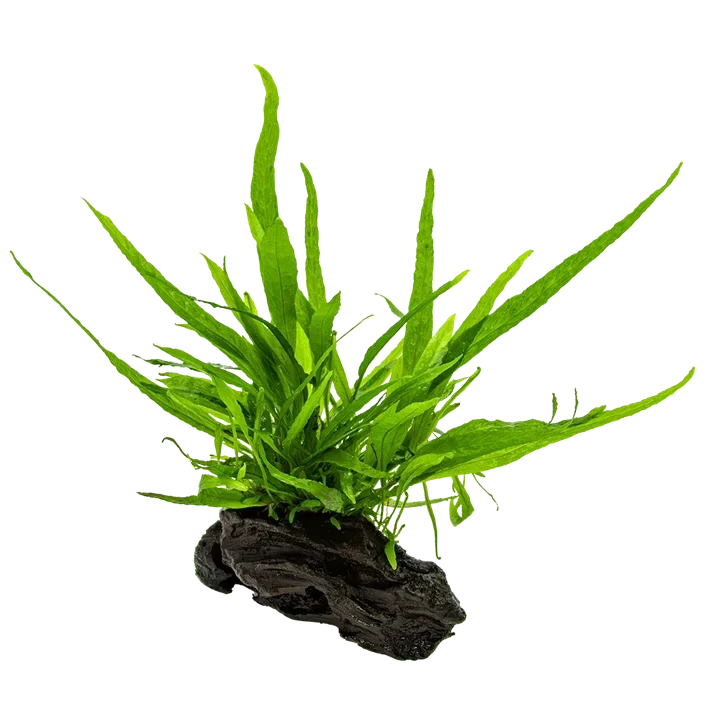 Beginner Friendly
Microsorum pteropus
20–28°CLow Light Beginner Friendly
Microsorum pteropus "Needle Leaf"
 20–28°CLow Light
Microsorum pteropus 'Philippine Mini'
20–27.8°CLow Light
Beginner Friendly
Microsorum pteropus 'Orange Narrow'

 4–30°CLow Light
Beginner
4–30°CLow Light
Beginner
Microsorum pteropus 'Prothallium'
 20–28°CLow Light
| Care Factor | Java Fern Preference | Beginner Note |
|---|---|---|
| Difficulty | Easy | Excellent for beginners and low-tech aquariums |
| Placement | Attached to wood, rocks, or decor | Do not bury the rhizome |
| Light | Low to moderate | Strong light can cause algae on slow leaves |
| CO₂ | Not required | Optional in high-tech tanks, but not necessary |
| Fertilizer | Light water-column nutrients | It mainly feeds from the water column |
| Substrate | Not required | Can be near substrate if rhizome stays exposed |
| Growth rate | Slow to moderate | Do not expect fast stem-plant growth |
| Maintenance | Low | Remove old leaves and prevent algae buildup |
If you already understand Anubias care, Java Fern will feel familiar. Both are rhizome plants commonly attached to hardscape. You can compare the two in the Anubias Aquarium Plant Guide.
The Most Important Rule: Do Not Bury the Rhizome
The most common Java Fern mistake is burying the rhizome in sand, gravel, or aquarium soil. The rhizome is the thick horizontal stem where leaves and roots grow. If it is covered by substrate, it can rot.
The roots can touch the substrate. They can even grow into gravel or sand over time. But the rhizome itself should remain visible and exposed to water flow.
Simple rule: Java Fern roots may go down, but the rhizome stays out. If the thick horizontal stem is buried, the plant is at risk.
If the rhizome becomes soft, dark, mushy, or breaks apart easily, rot may have started. Remove rotten sections with clean scissors and keep only firm, healthy rhizome pieces.
How to Attach Java Fern to Rocks and Driftwood
The best way to use Java Fern is to attach it to hardscape. Rocks, driftwood, roots, caves, and aquarium-safe decor all work. Over time, the roots can grip the surface and hold the plant naturally.
There are several safe attachment methods. The best one depends on the hardscape shape and how natural you want the result to look.
| Attachment Method | Best For | Beginner Note |
|---|---|---|
| Cotton thread | Wood and roots | Can break down after the plant attaches |
| Fishing line | Secure attachment to rocks or wood | Strong, but should not cut into the rhizome |
| Super glue gel | Fast attachment to rocks and wood | Use small amounts and avoid smothering the rhizome |
| Wedging into cracks | Rock gaps, wood crevices, natural scapes | Looks natural if the plant is secure but not crushed |
| Plant weights or loose placement | Temporary positioning | Useful short-term, but permanent attachment is cleaner |
When using glue, use aquarium-safe cyanoacrylate gel in small points. Glue the roots or a small contact area, not the whole rhizome. Java Fern should still have exposed rhizome tissue and water movement around it.
Can Java Fern Be Planted in Substrate?
Java Fern can be placed near substrate, but it should not be planted like a rooted stem plant. The roots may lightly enter sand or gravel, but the rhizome should stay above the substrate.
If you want Java Fern at substrate level, attach it to a small stone and place the stone on the sand. This gives the plant a natural grounded look without burying the rhizome.
- Do not push the full plant deep into substrate.
- Do not cover the rhizome with sand, gravel, or soil.
- Do not plant it like a stem plant.
- Use a small rock anchor if you want it low in the layout.
- Let the roots attach naturally over time.
If your aquascape uses sand or soil, read the Aquarium Soil Guide and Aquarium Sand Guide. Java Fern does not need rich substrate, but the rest of your layout might.
Java Fern Lighting Requirements
Java Fern is a low to moderate light aquarium plant. It does not need strong lighting to survive, and it often performs best in slightly shaded areas where algae pressure is lower.
Because Java Fern grows slowly, intense direct light can cause algae on older leaves. This is one of the main reasons beginners think their Java Fern is failing. The plant may be healthy, but its slow leaves are sitting under too much light for too long.
| Lighting Situation | Java Fern Response | Recommendation |
|---|---|---|
| Low light | Slow but stable growth | Good for simple low-tech aquariums |
| Moderate light | Healthy growth if algae is controlled | Best general range |
| Strong direct light | Algae risk on older leaves | Use shade or reduce intensity/photoperiod |
| Deep shade | Very slow or stalled growth | Move slightly brighter if no new leaves appear |
| Unstable schedule | Inconsistent growth and algae risk | Use a timer |
For deeper lighting strategy, read the Aquarium Plant Light Requirements, and Aquarium Lighting Guide.
Does Java Fern Need CO₂?
Java Fern does not need pressurized CO₂. It is one of the best aquarium plants for low-tech tanks because it can grow under normal aquarium conditions without carbon injection.
CO₂ can support overall plant growth in a planted aquarium, but Java Fern remains a slower plant even in high-tech setups. Adding CO₂ only for Java Fern is usually unnecessary.
CO₂ becomes relevant if your aquarium also contains demanding carpets, strong lighting, red stem plants, or high-energy aquascaping plants. In that kind of tank, Java Fern should still be placed carefully so it does not sit directly under excessive light.
- Java Fern can grow without CO₂.
- CO₂ is optional, not required.
- Strong light without balance can cause algae on Java Fern.
- High-tech aquariums should still use shaded or semi-shaded placement.
- Do not increase light aggressively just to speed up Java Fern.
For a full low-tech approach, read the No CO₂ Planted Tank guide.
Does Java Fern Need Fertilizer?
Java Fern is not a heavy feeder, but it still needs basic nutrients. Because it is usually attached to hardscape, it mainly uses nutrients from the water column rather than from the substrate.
In a lightly stocked aquarium, weak new growth may suggest that water-column nutrients are too low. In a fish-heavy aquarium, feeding and fish waste may already supply some nutrients, but this is not always balanced for plants.
- Use light liquid fertilizer if new growth is weak.
- Do not rely on root tabs alone for hardscape-attached Java Fern.
- Keep fertilization modest in low-light tanks.
- Watch new leaves more than old leaves.
- Avoid overcorrecting every old leaf spot as a deficiency.
For plant nutrition basics, read Macronutrients for Aquarium Plants and Micronutrients for Aquarium Plants.
Best Java Fern Varieties for Aquariums
Java Fern has several popular aquarium forms. They share similar care requirements, but they create different textures and fit different tank sizes.
| Java Fern Variety | Best Use | Beginner Note |
|---|---|---|
| Standard Java Fern | Midground and background hardscape | Classic, hardy, widely available |
| Narrow Leaf Java Fern | More elegant vertical texture | Good for smaller layouts and refined scapes |
| Needle Leaf Java Fern | Fine texture and aquascaping detail | Usually better for aquascapers who want finer scale |
| Windeløv Java Fern | Decorative branched leaf tips | Distinctive and beginner-friendly |
| Trident Java Fern | Branching leaf shape and natural detail | Great for wood and stone layouts |
| Java Fern “Mini” forms | Nano tanks and small hardscape | Better scale for small aquariums |
If this is your first Java Fern, start with standard Java Fern, Windeløv, or Narrow Leaf. They are easy to find and forgiving. For nano aquascapes, choose smaller forms so the leaves do not overwhelm the tank.
Java Fern Placement in the Aquarium
Java Fern can be used in the midground, background, side zones, shaded hardscape, or around driftwood bases. Standard Java Fern can become fairly large, so placement should match the tank size.
It is especially useful where rooted plants are awkward: on vertical wood, between rocks, around caves, on root structures, and in shaded zones where fast stems or carpets might struggle.
| Tank Area | Good Java Fern Use | Design Tip |
|---|---|---|
| Midground | Attached to driftwood or stones | Use around hardscape bases for natural depth |
| Background | Larger clumps behind wood or rocks | Good for hiding equipment and back corners |
| Side zones | Shaded plant mass without strong trimming | Great for low-maintenance layouts |
| Nano tanks | Mini, narrow, or small forms | Protect scale by avoiding oversized leaves |
| Shrimp zones | Roots and leaf surfaces for grazing | Combine with moss and Bucephalandra |
| Betta tanks | Broad leaves and shaded resting structure | Keep surface access open |
For broader placement strategy, read the Aquarium Midground Plants Guide.
Java Fern in Low-Tech Aquariums
Java Fern is one of the best plants for low-tech aquariums. It does not need CO₂, does not need nutrient-rich soil, tolerates lower light, and grows slowly enough to stay manageable.
The main limitation is that slow growth means limited nutrient uptake. A tank filled only with Java Fern may look stable, but it will not absorb nutrients as quickly as a tank with fast stems or floating plants. In new aquariums, this can matter for algae prevention.
- Use Java Fern for structure and hardscape detail.
- Combine it with faster plants if the tank is new or algae-prone.
- Keep light moderate and consistent.
- Avoid placing it directly under intense LEDs.
- Use gentle liquid fertilizer if new growth is weak.
- Remove old leaves that collect algae.
For low-tech planning, read the No CO₂ Planted Tank
Java Fern for Betta, Shrimp, and Community Tanks
Java Fern works well in many livestock setups because it is sturdy, attached to hardscape, and not easily uprooted once established. It provides shelter, visual cover, resting surfaces, and grazing areas without needing advanced plant care.
| Tank Type | Why Java Fern Works | Placement Tip |
|---|---|---|
| Betta aquarium | Creates shaded cover and broad resting leaves | Place near calm areas, not directly in strong flow |
| Shrimp tank | Roots and leaves provide grazing surfaces | Combine with moss and Bucephalandra |
| Community tank | Durable cover and hardscape structure | Use around driftwood and side zones |
| Cichlid tank | Hardier than many soft plants | Attach securely to rocks or wood |
| Low-tech planted tank | No CO₂ required and low light tolerant | Use with controlled lighting to avoid algae |
Java Fern is not indestructible, but it is one of the most forgiving plants for tanks where delicate rooted plants are often disturbed.
How to Trim Java Fern
Java Fern does not need frequent trimming. Most maintenance involves removing old, damaged, melting, or algae-covered leaves. Use clean scissors and cut the leaf stem close to the rhizome without cutting into healthy rhizome tissue.
Do not remove too many healthy leaves at once. Java Fern grows slowly, so heavy trimming can set the plant back. Gradual cleanup is safer.
- Remove yellowing or heavily damaged leaves.
- Cut algae-covered leaves if they cannot recover.
- Leave healthy new leaves in place.
- Do not cut into the rhizome unless removing rot.
- Use clean scissors to avoid crushing the plant.
- Trim gradually instead of stripping the plant bare.
If old leaves look rough but new leaves are healthy, the plant is usually adapting. Judge Java Fern mainly by new growth and rhizome firmness.
How to Propagate Java Fern
Java Fern can propagate in two main ways: by rhizome division and by plantlets that form on mature leaves. Both methods are beginner-friendly.
Propagation by Rhizome Division
Once a Java Fern has a healthy, firm rhizome with several leaves and roots, you can divide it into smaller sections. Each section should have enough leaves and rhizome tissue to continue growing.
- Choose a healthy plant with a firm rhizome.
- Use clean sharp scissors or a blade.
- Cut the rhizome into sections with leaves and roots.
- Remove any soft or rotten tissue.
- Attach each section to wood, rock, or decor.
- Keep each rhizome exposed.
Propagation by Plantlets
Java Fern may produce small plantlets on older leaves. These plantlets develop tiny leaves and roots. Once they are large enough, they can detach naturally or be gently removed and attached elsewhere.
Do not rush tiny plantlets. Let them develop visible roots and leaves before moving them. Small plantlets are slower to establish than mature rhizome pieces.
Black Spots on Java Fern Leaves
Black spots on Java Fern can worry beginners, but not all black spots are a problem. Mature Java Fern leaves can develop dark reproductive spots called sporangia on the underside of leaves. These are part of the fern’s natural reproductive structure and are not automatically a disease.
However, dark patches can also be caused by algae, old leaf aging, poor conditions, or damage. The difference is context. Natural sporangia are usually organized on mature leaves. Algae or decay may look fuzzy, spreading, uneven, or associated with damaged tissue.
| Black Mark Type | Likely Meaning | What to Do |
|---|---|---|
| Small organized spots on mature leaves | Natural sporangia | No action needed if plant is otherwise healthy |
| Fuzzy dark coating | Possible algae | Review lighting, flow, and maintenance |
| Soft decaying patches | Old or damaged tissue | Trim affected leaves if needed |
| Darkening with rhizome rot | Plant health issue | Check rhizome and remove rotten sections |
Do not remove every mature leaf just because it has dark spots. First check whether new growth is healthy and the rhizome is firm.
Algae on Java Fern Leaves
Algae on Java Fern is common because the plant grows slowly and its leaves last a long time. Slow leaves give algae more time to settle, especially under strong light or unstable conditions.
The best solution is not constant scrubbing. Better placement and system balance usually matter more. Java Fern often does best in partial shade, moderate light, and stable aquariums with regular maintenance.
- Move Java Fern out of harsh direct light.
- Use a stable lighting schedule with a timer.
- Avoid long photoperiods.
- Do not overfeed fish.
- Remove old leaves that are heavily covered in algae.
- Keep water movement gentle but not stagnant.
- Add faster plants if the aquarium lacks plant mass.
- Perform regular water changes.
If algae keeps returning, read the Aquarium Lighting and Algae guide. Algae on Java Fern is often a sign of imbalance rather than a Java Fern-specific problem.
Common Java Fern Problems
Java Fern problems are usually caused by buried rhizomes, excessive light, sudden condition changes, poor attachment, algae pressure, or misunderstanding normal fern growth.
| Problem | Likely Cause | What to Check |
|---|---|---|
| Rhizome turns soft | Buried rhizome or rot | Expose rhizome and remove soft sections |
| Leaves melt after purchase | Transition stress or damaged old leaves | Remove decaying leaves and watch new growth |
| Algae covers leaves | Too much light for slow growth | Use shade, shorter photoperiod, and better balance |
| No new leaves | Very low light, low nutrients, or adaptation | Wait, then adjust light or liquid fertilizer gently |
| Black spots under leaves | Often natural sporangia | Check if the plant is otherwise healthy |
| Leaves turn transparent | Old leaf decline, stress, or nutrient issue | Trim old leaves and monitor new growth |
| Plant floats away | Weak attachment | Reattach to rock or wood more securely |
Java Fern recovers slowly. Do not keep moving it every few days. Stable placement and patience are often more important than constant correction.
Java Fern vs Anubias vs Bucephalandra
Java Fern, Anubias, and Bucephalandra are all excellent hardscape plants, but they create different effects. Understanding the difference helps you choose the right plant for the layout.
| Plant | Main Strength | Best Use |
|---|---|---|
| Java Fern | Vertical fern texture and hardy growth | Midground, background, driftwood, shaded structure |
| Anubias | Broad tough leaves and extreme beginner friendliness | Foreground, midground, shaded hardscape, betta tanks |
| Bucephalandra | Small detailed leaves and subtle colors | Nano aquascapes, rock detail, refined hardscape |
Choose Java Fern when you want height and fern texture. Choose Anubias when you want broad leaves and maximum durability. Choose Bucephalandra when you want small-scale detail and subtle color.
Best Tank Setups for Java Fern
Java Fern works in many aquarium styles, but it is especially strong in tanks where hardscape structure matters. It can make wood and rocks look more natural without requiring demanding plant care.
| Setup Type | Best Java Fern Use | Tip |
|---|---|---|
| Beginner planted tank | Attach to driftwood or stones | Combine with faster plants for nutrient uptake |
| Low-tech aquarium | Use in shaded hardscape zones | Keep lighting moderate and consistent |
| Nano aquascape | Use mini or narrow forms | Avoid oversized standard clumps |
| Betta tank | Broad leaves and calm shaded areas | Keep open surface access |
| Shrimp tank | Hardscape roots and leaves for grazing | Combine with mosses and small epiphytes |
| Biotope-inspired layout | Asian stream or shaded hardscape look | Use with wood, roots, and Cryptocoryne |
Java Fern is strongest when it is treated as a long-term structural plant, not as a fast filler.
Common Mistakes With Java Fern
Java Fern is easy, but beginners can still damage it by ignoring its growth habit. Most problems come from planting, lighting, or expectations.
| Mistake | Why It Causes Problems | Better Approach |
|---|---|---|
| Burying the rhizome | Can cause rot | Attach to hardscape or keep rhizome exposed |
| Using intense direct light | Slow leaves collect algae | Use low to moderate light or partial shade |
| Expecting fast growth | Java Fern is naturally slow | Judge by healthy new leaves over time |
| Removing leaves with natural sporangia | Black reproductive spots are often normal | Check plant health before trimming |
| Using oversized clumps in nano tanks | Breaks layout scale | Use mini, narrow, or smaller forms |
| Using only slow plants in new tanks | Low nutrient uptake can allow algae | Combine with faster plants if needed |
| Constantly moving the plant | Prevents stable attachment and adaptation | Place it once and let it settle |
If you avoid these mistakes, Java Fern is one of the most dependable aquarium plants you can keep.
Final Java Fern Care Checklist
Use this checklist when adding Java Fern to your aquarium:
- Choose a variety that fits your tank size.
- Keep the rhizome exposed.
- Attach the plant to driftwood, rocks, or decor.
- Use low to moderate light.
- Avoid strong direct light if algae appears.
- Do not expect fast growth.
- Use light liquid fertilizer if new growth is weak.
- Remove old or algae-covered leaves gradually.
- Check whether black spots are natural sporangia before panicking.
- Propagate by rhizome division or mature plantlets.
Java Fern rewards stability. Give it the right placement, and it can remain part of the aquascape for years.
Conclusion
Java Fern is one of the best aquarium plants for beginners because it is hardy, low-light tolerant, slow-growing, and easy to attach to hardscape. It fits low-tech aquariums, shrimp tanks, betta setups, community tanks, and natural aquascapes.
The most important rule is to keep the rhizome exposed. Do not bury Java Fern in substrate. Attach it to wood, rocks, or decor, keep lighting low to moderate, avoid excessive direct light, and support it with gentle water-column nutrients if needed.
Java Fern will not grow like a fast stem plant, but that is part of its value. It adds structure, texture, and long-term stability with very little maintenance. If you want a reliable hardscape plant for a freshwater aquarium, Java Fern is one of the safest choices.
💬 Join the Conversation
Where are you using Java Fern in your aquarium — attached to driftwood, tucked between rocks, placed in a betta tank, or used as a low-tech midground plant?
Tag us on Instagram @AquariumLesson — we’d love to see your Java Fern placement, hardscape design, and planted tank progress.
FAQ
Is Java Fern a good aquarium plant for beginners?
Yes. Java Fern is one of the best beginner aquarium plants because it is hardy, tolerant of low light, does not require CO₂, and can be attached to rocks or driftwood instead of planted deeply in substrate.
Can Java Fern grow without CO₂?
Yes. Java Fern grows well without pressurized CO₂ and is ideal for low-tech aquariums. CO₂ may support overall planted tank growth, but it is not necessary for Java Fern care.
Can Java Fern be planted in sand or gravel?
Java Fern can be placed near sand or gravel, but the rhizome must remain exposed. Roots may touch or enter the substrate, but burying the rhizome can cause rot.
How much light does Java Fern need?
Java Fern does best in low to moderate light. Strong direct light can cause algae on its slow-growing leaves, while very deep shade can slow growth too much.
Why are there black spots on my Java Fern?
Black spots on mature Java Fern leaves are often natural sporangia, which are reproductive structures. They are not automatically a disease. Check whether the rhizome is firm and new growth is healthy before trimming leaves.
Why is my Java Fern melting?
Java Fern can melt after transport, sudden condition changes, rhizome burial, or poor adaptation. Remove decaying leaves, keep the rhizome exposed, stabilize conditions, and watch for healthy new growth.
How do you propagate Java Fern?
Java Fern can be propagated by dividing the rhizome into healthy sections or by removing mature plantlets that form on older leaves. Each new section should be attached to hardscape with the rhizome exposed.
Lesson completed!
You've finished this lesson. Keep building your aquarium knowledge, one lesson at a time.
Continue learning →New to AquariumLesson? Start with our complete Aquarium Lessons Hub or return to the homepage at AquariumLesson.com.
References
- Tropica — Microsorum pteropus Plant Details
- Tropica — Microsorum pteropus XL Plant Details
- Aquarium Co-Op — Java Fern: Microsorum pteropus
- Aquarium Co-Op — How to Plant Anubias and Java Fern
- Aquarium Co-Op — How to Plant Anubias or Java Fern on Rocks and Driftwood
- Buce Plant — Microsorum Java Fern Care Guide
- Aquaflora Aquafauna — How to Plant and Propagate Java Fern