

Low Maintenance Aquarium: Easy Beginner Setup Guide
Introduction
A low maintenance aquarium is not a tank you can ignore. It is an aquarium designed so routine care becomes predictable, simple, and hard to mess up. The goal is not “no maintenance.” The goal is less stress, fewer emergencies, slower algae pressure, stable water quality, and a setup that fits real life.
Many beginners accidentally build high-maintenance aquariums without realizing it. They choose a tank that is too small, add too many fish, use strong lighting, skip cycling, overfeed, or buy species that need special conditions. Then the aquarium needs constant cleaning, testing, fixing, and rescue work.
A good low maintenance fish tank works differently. It starts with enough water volume, reliable filtration, light stocking, easy plants, moderate lighting, simple hardscape, and a repeatable care routine. Once the tank is stable, maintenance becomes a calm weekly habit instead of a crisis.
If you are still choosing equipment, use this guide together with the Aquarium Equipment Guide, the Aquarium Filter Guide, and the Aquarium Volume Calculator.
Quick answer: The easiest low maintenance aquarium for most beginners is a moderately sized freshwater tank with light stocking, reliable biological filtration, hardy live plants, moderate LED lighting on a timer, simple feeding, and regular partial water changes.
What You’ll Learn in This Lesson
- What “low maintenance aquarium” really means
- Why maintenance-free fish tanks are a myth
- Which tank size is easiest to keep stable
- How to choose simple equipment for beginners
- Why light stocking makes maintenance easier
- Which plants help create a stable low maintenance setup
- How to avoid algae-heavy, high-maintenance mistakes
- What weekly routine keeps a simple aquarium healthy

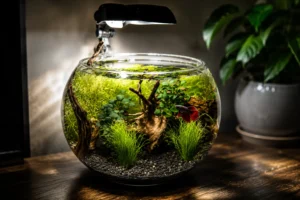
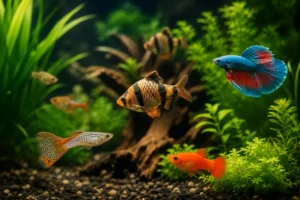
What Is a Low Maintenance Aquarium?
A low maintenance aquarium is a tank designed around stability. It does not rely on constant intervention, daily cleaning, complicated dosing, aggressive trimming, heavy stocking, or fragile fish. Instead, it uses simple design decisions that reduce the chance of problems.
The key idea is balance. A low maintenance aquarium has fewer fish than the maximum possible, enough filtration for the real bioload, plants that can grow without demanding conditions, and a lighting schedule that supports the tank without pushing it into algae problems.
Low maintenance does not mean dirty, neglected, or unfiltered. It means the aquarium is built so routine care is manageable. You still need to feed fish, check equipment, observe behavior, change water, clean glass, and test when needed.
| Low Maintenance Means | Low Maintenance Does Not Mean |
|---|---|
| Stable water quality | No water changes ever |
| Light stocking | Keeping too many fish with a stronger filter |
| Simple equipment | No filtration or heating when fish need it |
| Hardy plants | Ignoring plant care completely |
| Predictable weekly routine | Waiting until something goes wrong |
| Moderate lighting | Leaving lights on all day |
The best low maintenance fish tank is usually the one that avoids extreme choices. Not too small, not overstocked, not overlit, not overcomplicated, and not built around sensitive species.
The Best Low Maintenance Aquarium Size
Tank size is one of the biggest factors in maintenance. Very small tanks look simple, but they often require more attention because water conditions can change quickly. A larger aquarium gives waste, temperature, oxygen, and chemistry more room to stabilize.
For most beginners, a low maintenance aquarium starts around 60–100 liters. This range is large enough to provide stability but still realistic for home placement, equipment cost, water changes, and beginner care.
A tiny aquarium can still work for shrimp, snails, plants, or a very carefully planned nano setup, but it is not the easiest path for most new fishkeepers. If you want a relaxed beginner fish tank, choose stability over minimal glass size.
| Tank Size | Maintenance Level | Best Use |
|---|---|---|
| Under 20 liters | High risk for beginners | Plant-only, specialist nano, very limited livestock |
| 20–40 liters | Moderate to high | Shrimp, snails, very light stocking |
| 45–75 liters | Manageable | Small beginner tanks with careful fish choice |
| 60–100 liters | Best beginner balance | Low maintenance community or planted setup |
| 100–150 liters | Very stable but larger | Excellent if space and stand support allow |
| Over 150 liters | Stable but physically bigger | Low maintenance only if water changes are practical |
If you are still deciding, read the Best Beginner Aquarium Size Guide. Before buying equipment, calculate real volume with the Aquarium Volume Calculator.
Low Maintenance Aquarium Equipment Checklist
A low maintenance aquarium does not need every gadget available. It needs reliable basics that reduce instability. The most important equipment choices are the tank, stand, filter, heater if needed, thermometer, light, timer, water conditioner, and maintenance tools.
The goal is consistency. Equipment should support the aquarium quietly in the background, not create extra work.
| Equipment | Low Maintenance Role | Beginner Tip |
|---|---|---|
| Filter | Supports biological stability and water movement | Choose reliable filtration with enough media capacity |
| Heater | Keeps tropical tanks stable | Use only if your livestock needs warm water |
| Thermometer | Confirms real temperature | Check regularly, especially after water changes |
| LED light | Supports viewing and plants | Choose moderate light, not maximum intensity |
| Timer | Prevents inconsistent lighting | One of the easiest algae-prevention tools |
| Water conditioner | Makes tap water safe | Use for every tap-water change |
| Test kit | Reveals hidden water issues | Essential during cycling and early stocking |
| Siphon/gravel cleaner | Simplifies water changes | Choose a size that fits your tank |
For filtration choices, start with the Aquarium Filter Guide. If you want a more detailed buying comparison, use the Best Aquarium Filter Guide.
Choose a Filter That Reduces Work
The filter is the heart of a low maintenance aquarium. It helps trap particles, move water, oxygenate the system, and provide surface area for beneficial bacteria. Those bacteria are essential for processing fish waste.
For low maintenance setups, filter media capacity often matters more than fancy features. You want a filter that is easy to access, easy to clean gently, and strong enough for the actual fish load without creating stressful flow.
A sponge filter can be excellent for shrimp tanks, breeding tanks, and gentle setups. A hang-on-back filter can be convenient for many small and medium beginner tanks. A canister filter can be strong and clean-looking for larger aquariums, but it adds more setup and maintenance complexity.
- Do not undersize filtration: Weak filtration makes the tank less forgiving.
- Do not overclean biological media: Beneficial bacteria live on filter surfaces.
- Do not replace all media at once: This can destabilize the biological filter.
- Keep flow suitable: Fish should not be blasted around the tank.
- Keep the filter running: Biological filtration depends on oxygen-rich water flow.
A low maintenance filter is not the one you never touch. It is the one that stays reliable, is easy to service, and protects biological stability.
Use Moderate Lighting, Not Maximum Lighting
Lighting can make or break a low maintenance aquarium. Strong light grows plants faster, but it also increases demand for nutrients, CO₂, trimming, and stability. If the rest of the system cannot keep up, algae often becomes the main thing growing.
For beginners, moderate LED lighting with a timer is usually better than intense lighting left on too long. Consistency matters more than raw power.
A low maintenance planted aquarium should avoid the high-energy trap: strong light, low plant mass, inconsistent nutrients, no CO₂, and heavy feeding. That combination often leads to algae and frustration.
- Use a timer every day.
- Start with a moderate photoperiod.
- Avoid direct sunlight on the tank.
- Use easy plants that match your light level.
- Reduce light before reaching for random algae fixes.
- Increase intensity only when plant growth clearly needs it.
For more detail, read the Aquarium Lighting Guide. If algae appears after increasing light, the Aquarium Lighting and Algae Guide explains why light often exposes imbalance.
Pick Hardy, Slow-Growing Aquarium Plants
Live plants can make a low maintenance aquarium easier, especially when you choose species that do not need intense light, pressurized CO₂, or constant trimming. Plants provide cover, use nutrients, soften the layout, and help the tank feel more stable.
The best low maintenance aquarium plants are usually hardy, adaptable, and not too fast-growing. Slow plants need less trimming. Floating plants can help shade the tank and absorb nutrients, but they also need occasional thinning so they do not block too much light or reduce gas exchange.
- Epiphytes: Great for attaching to wood or rocks and keeping substrate simple.
- Low-light plants: Reduce the need for intense lighting.
- Floating plants: Useful for nutrient uptake and shade control.
- Hardy background plants: Add cover and structure without complex care.
- Mosses: Useful in shrimp tanks but may need occasional trimming.
For plant planning, use the Aquarium Plants Guide. If you want surface cover, see the Floating Aquarium Plants Guide.
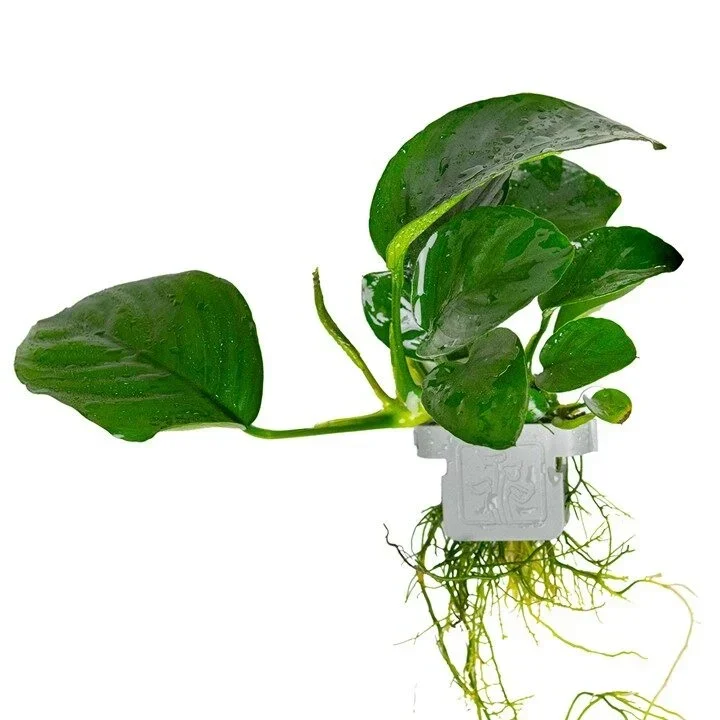 Beginner
Anubias barteri var. caladiifolia


 22–26°C
 Low Light
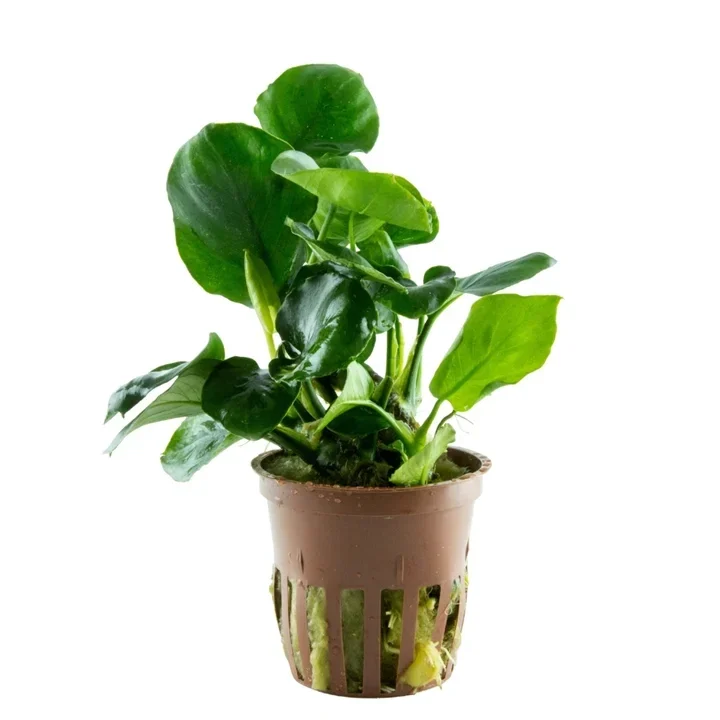 Beginner Friendly
Anubias barteri 'Coin Leaf'
 Low Light
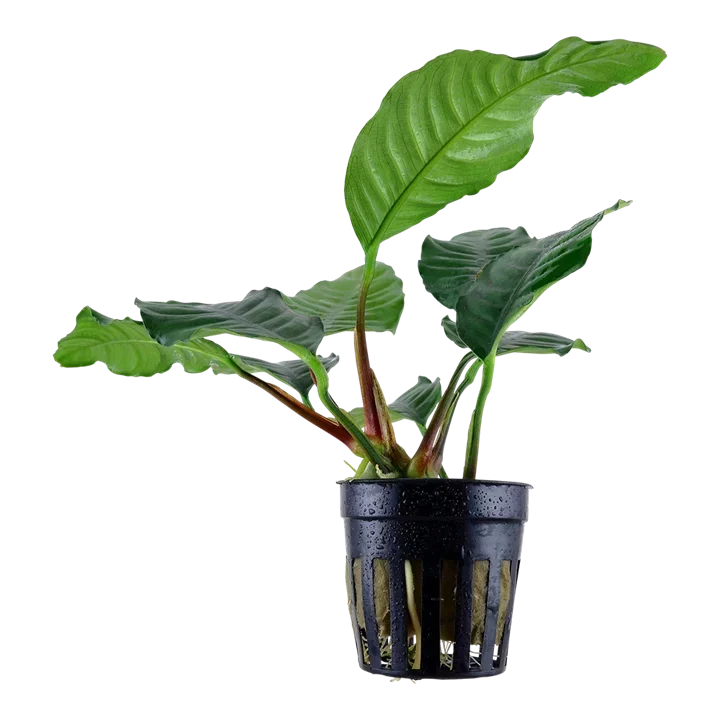 Beginner Friendly
Anubias barteri var. coffeifolia
 22–26°CLow Light
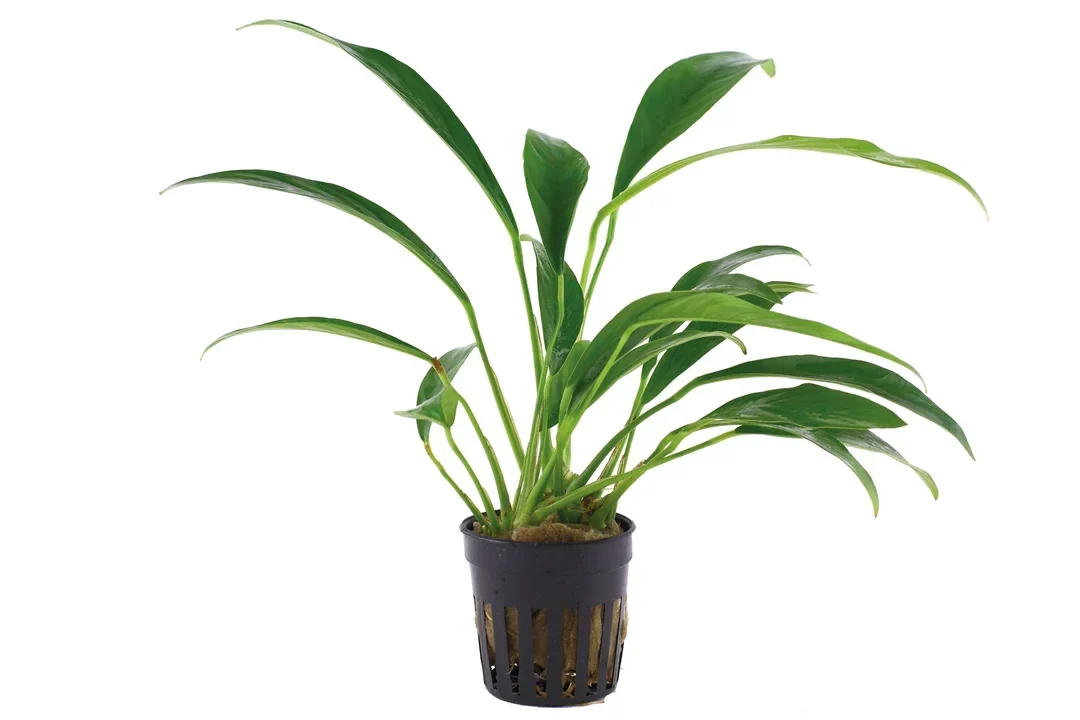 Beginner Friendly
Anubias barteri var. glabra
22–26°CLow Light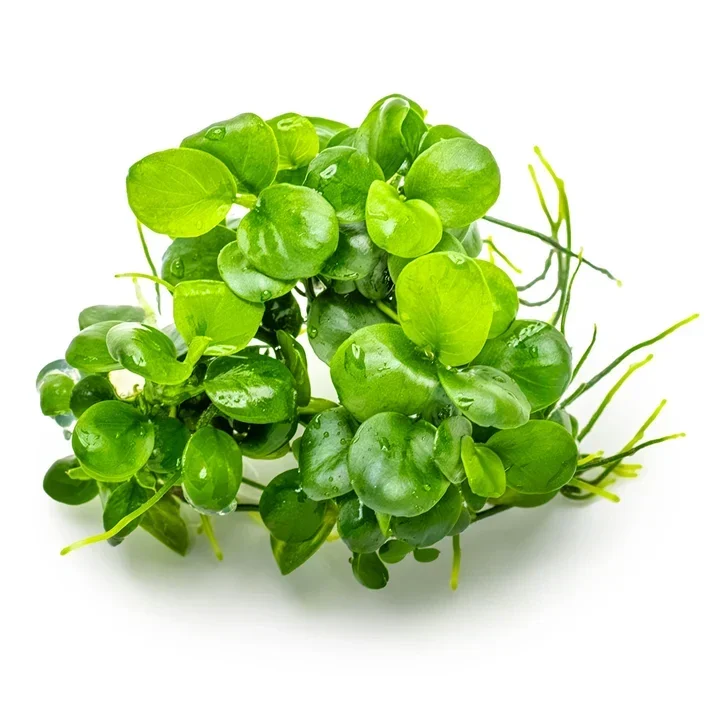 Beginner Friendly
Anubias barteri 'Mini Coin'
Low Light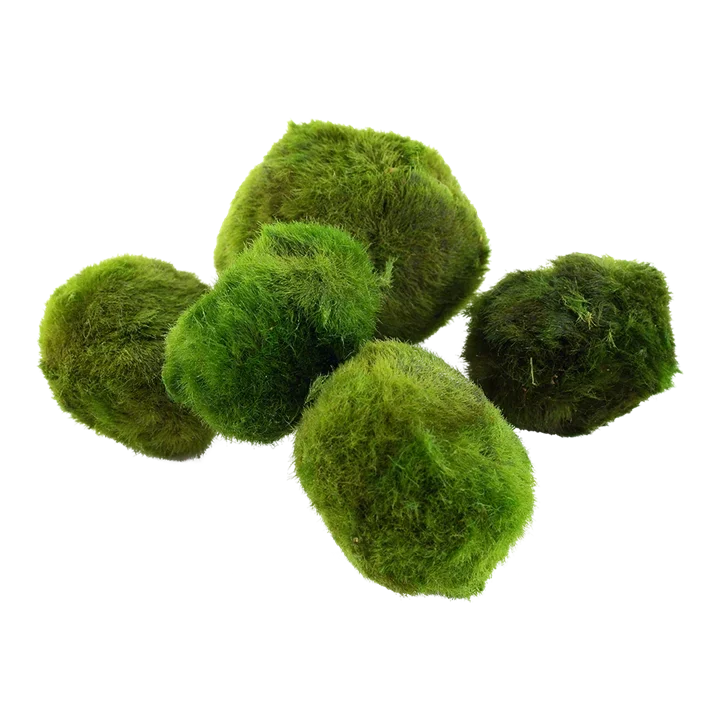 Beginner
Aegagropila linnaei
 15–24°CLow Light
Low maintenance plant rule: Choose plants that match your aquarium instead of forcing the aquarium to match difficult plants. Easy plants plus moderate light are usually more stable than demanding plants plus constant correction.
Stock Lightly for Easier Maintenance
Stocking has a massive impact on maintenance. More fish means more waste, more feeding, more oxygen demand, more territorial pressure, and more risk when something goes wrong.
A low maintenance aquarium should be intentionally understocked compared with the maximum possible. This does not make the tank boring. It makes the fish healthier, the water more stable, and the aquarium easier to care for.
Light stocking is especially important for beginners because it gives the biological filter more time to adapt and makes water quality easier to manage.
| Stocking Choice | Maintenance Impact |
|---|---|
| Few peaceful fish | Lower waste, less stress, simpler feeding |
| Large messy fish | More waste and stronger filtration needs |
| Many species mixed together | More compatibility and feeding complexity |
| One simple community plan | Easier observation and routine care |
| Fish that match tap water | Less need for constant water adjustment |
Before buying fish, use the Aquarium Fish Guide. Choose species based on adult size, group needs, temperament, water parameters, and swimming space — not only color.
Cycle the Aquarium Before Stocking
A low maintenance aquarium starts before fish are added. The tank needs biological filtration, and that means cycling. Cycling allows beneficial bacteria to establish so the aquarium can process fish waste more safely.
Skipping this step is one of the fastest ways to turn a “simple” tank into an emergency. Fish can be harmed by ammonia and nitrite even when the water looks clean. A cycled aquarium is much easier to maintain because the biological system is doing its job.
- Set up the tank fully before buying fish.
- Run the filter continuously.
- Use a controlled cycling method.
- Test ammonia, nitrite, and nitrate.
- Add fish only when the tank is biologically ready.
- Stock gradually after the cycle is complete.
For the full process, read the Aquarium Cycling Guide and the Fishless Cycle Guide. A patient cycle is one of the best low maintenance decisions you can make.
Keep the Aquascape Simple
A low maintenance aquarium should be easy to clean and observe. Overly complex layouts can trap debris, block flow, create dead zones, make fish difficult to monitor, and turn routine care into a chore.
Simple does not mean ugly. A clean layout with a few strong hardscape pieces, hardy plants, open swimming space, and accessible corners can look elegant and stay easier to manage.
- Leave space around hardscape for cleaning.
- Avoid unstable rock piles that are hard to maintain.
- Do not overfill the tank with decor.
- Create hiding places without blocking all flow.
- Keep the foreground easy to siphon if needed.
- Use plants to soften the layout naturally.
If you want the tank to stay easy, design for maintenance access from day one. The best aquascape is not only beautiful; it is also practical to care for.
Low Maintenance Feeding Strategy
Feeding is one of the most common ways beginners accidentally increase maintenance. Extra food does not disappear. Uneaten food breaks down, adds waste, clouds the water, fuels algae, and increases filter load.
A low maintenance aquarium uses controlled feeding. Feed small portions, choose food that matches the fish, and observe whether everything is eaten. If food lands in the substrate and remains there, you are feeding too much or using the wrong food type.
- Feed small amounts.
- Watch fish eat instead of guessing.
- Remove obvious uneaten food when possible.
- Do not feed every time fish beg at the glass.
- Use sinking food only when bottom dwellers actually need it.
- Reduce feeding during water quality problems.
Fish health depends on clean water as much as nutrition. Controlled feeding is one of the simplest ways to reduce maintenance.
Simple Weekly Maintenance Routine
A low maintenance aquarium still needs a routine. The difference is that the routine is short, predictable, and consistent. Small regular actions are easier than dramatic rescue cleanings.
Your exact routine depends on stocking, tank size, plant growth, filter type, feeding, and water test results. But most beginner freshwater tanks benefit from a simple weekly rhythm.
| Task | Typical Frequency | Purpose |
|---|---|---|
| Observe fish behavior | Daily | Catch stress, disease, or equipment problems early |
| Check temperature | Daily or several times weekly | Confirm heater and room stability |
| Feed lightly | According to species needs | Avoid waste buildup |
| Clean front glass | Weekly or as needed | Prevent visible algae buildup |
| Partial water change | Weekly or based on tests | Dilute waste and refresh water |
| Remove dead leaves | Weekly | Reduce decaying organic matter |
| Test water | Often in new tanks, then as needed | Track ammonia, nitrite, nitrate, pH, and stability |
| Filter maintenance | When flow drops or debris builds | Restore flow without destroying bacteria |
For practical water change technique, read the Aquarium Water Change Guide. For tools that make cleaning easier, see the Aquarium Cleaning Tools Guide.
Water Testing for a Low Maintenance Tank
Water testing may feel like extra work, but it often prevents bigger work later. A low maintenance aquarium should not rely on guessing. Clear water can still contain ammonia or nitrite, especially in new tanks.
During setup and early stocking, test frequently. Once the aquarium is mature and predictable, testing can become less frequent, but it remains useful after new fish, unexplained algae, illness, cloudy water, or maintenance changes.
| Parameter | Why It Matters |
|---|---|
| Ammonia | Shows whether fish waste is becoming dangerous |
| Nitrite | Signals incomplete biological processing |
| Nitrate | Helps guide water change rhythm |
| pH | Helps match fish and detect instability |
| KH | Helps understand pH stability |
| GH | Helps match fish, shrimp, and plants to mineral levels |
For a beginner-friendly explanation, read the Aquarium Water Parameters Guide.
Low Maintenance Aquarium Setups That Work
There are several ways to build a low maintenance aquarium. The best option depends on whether you want fish, shrimp, plants, or a simple community tank.
Simple Planted Community Tank
This is one of the best beginner directions. Use a moderate tank size, reliable filter, heater if needed, easy plants, peaceful fish, and a timer-controlled light. Stock lightly and keep the feeding routine simple.
Shrimp and Plant Tank
A shrimp-focused aquarium can be low maintenance when water parameters are stable and the tank is mature. It should not be rushed. Shrimp are sensitive to instability, so this setup works best with patience, plants, and careful water changes.
Low-Tech Planted Tank
A low-tech planted tank avoids pressurized CO₂ and extreme lighting. It uses hardy plants, moderate light, stable nutrients, and slower growth. This can be a very good low maintenance direction when you choose plants that match the setup.
Lightly Stocked Centerpiece Fish Tank
A tank built around one main fish or one small peaceful group can be easier than a mixed community. The key is choosing livestock that truly fits the tank size, temperature, and water parameters.
Common Low Maintenance Aquarium Mistakes
Many aquariums become high maintenance because of avoidable choices made during setup. These mistakes make algae, waste, stress, and instability more likely.
| Mistake | Why It Creates More Work | Better Choice |
|---|---|---|
| Choosing a tiny tank | Water changes quickly and stocking is limited | Choose a moderate beginner tank |
| Overstocking | More waste, stress, and water changes | Keep stocking intentionally light |
| Overfeeding | Fuel for waste, algae, and cloudy water | Feed small controlled portions |
| Too much light | Increases algae pressure and plant demand | Use moderate light on a timer |
| Difficult plants | Require stronger light, CO₂, and trimming | Choose hardy low-demand plants |
| Skipping cycling | Creates water quality emergencies | Cycle before stocking |
| Overcleaning the filter | Can damage biological stability | Clean gently and preserve media |
| Random chemical fixes | Adds instability and confusion | Test water and fix the root cause |
If you want a full beginner error checklist, read the Beginner Aquarium Mistakes Guide.
What a Low Maintenance Aquarium Should Avoid
Some aquarium styles can be beautiful but are not ideal for a low maintenance beginner setup. Avoid advanced systems until you understand the basics of cycling, feeding, testing, and water changes.
- Very small fish bowls: Poor stability and limited equipment options.
- Overstocked community tanks: Too much waste and compatibility pressure.
- High-light aquascapes: Higher plant, nutrient, CO₂, and trimming demand.
- Sensitive fish species: Less forgiving when water changes.
- Messy fish in small tanks: Heavy waste creates constant maintenance.
- Random species mixes: Different needs make care more complicated.
- Uncycled tanks: Create emergencies instead of low maintenance.
A low maintenance aquarium succeeds because the setup is intentionally simple. Do less, but do the right things consistently.
Example Low Maintenance Aquarium Plan
Here is a practical beginner plan for a low maintenance freshwater aquarium. Adjust the exact stocking and equipment to your region, water parameters, and available products.
| Setup Element | Beginner-Friendly Choice | Why It Helps |
|---|---|---|
| Tank | 60–100 liters, rectangular | Stable but manageable |
| Filter | Reliable filter with good biological media | Supports water quality |
| Lighting | Moderate LED with timer | Reduces algae risk and keeps routine consistent |
| Plants | Hardy low-light species | Adds cover and nutrient uptake |
| Substrate | Simple sand, gravel, or easy plant substrate | Easy to clean and understand |
| Fish | Light stocking with peaceful species | Less waste and lower stress |
| Maintenance | Weekly observation, partial water changes, light cleaning | Prevents problems before they grow |
This kind of aquarium is not the most extreme or technical setup, but it is exactly what many beginners need: stable, attractive, forgiving, and easy to maintain long-term.
Conclusion
A low maintenance aquarium is built through smart decisions, not shortcuts. Choose a stable tank size, keep stocking light, use reliable filtration, add hardy plants, control lighting, cycle the tank before fish, and follow a simple care routine.
The easiest aquarium is rarely the smallest one. It is the aquarium with enough water volume, enough biological stability, and few enough demands that normal weekly care keeps everything healthy.
Start simple. Let the aquarium mature. Avoid overfeeding, overstocking, and overlighting. Once the system is balanced, your tank becomes easier to enjoy — and much less likely to become an endless maintenance project.
💬 Join the Conversation
Are you planning a low maintenance aquarium with fish, shrimp, plants, or a simple planted community setup?
Tag us on Instagram @AquariumLesson — we’d love to see your simple setup, plant choices, and maintenance routine.
FAQ
What is the easiest low maintenance aquarium?
For most beginners, the easiest low maintenance aquarium is a moderately sized freshwater tank with reliable filtration, light stocking, hardy live plants, moderate lighting on a timer, and regular partial water changes.
Is there such a thing as a no maintenance fish tank?
No. Every fish tank needs observation, feeding, equipment checks, water changes, and occasional cleaning. A low maintenance aquarium reduces work, but it does not remove responsibility.
Are small aquariums low maintenance?
Not always. Very small aquariums can be harder because water conditions change quickly. A moderate tank is often easier for beginners because it provides more stability and more realistic stocking options.
Do live plants make an aquarium easier?
Hardy live plants can make many aquariums easier by providing cover, using nutrients, and improving the natural balance of the tank. The key is choosing low-demand plants that match your light and setup.
How often should I clean a low maintenance aquarium?
Most low maintenance aquariums still need weekly observation, partial water changes as needed, glass cleaning, dead leaf removal, and occasional filter maintenance. The exact routine depends on stocking, feeding, plants, and test results.
What fish are best for a low maintenance aquarium?
The best fish are peaceful, hardy, appropriately sized, and suited to your aquarium volume and water parameters. Avoid fish that grow too large, produce heavy waste, need special conditions, or require aggressive tankmates.
Can a planted tank be low maintenance?
Yes. A low-tech planted aquarium with hardy plants, moderate light, no extreme stocking, and simple maintenance can be very beginner-friendly. Avoid demanding carpets, intense lighting, and unstable CO₂ if low maintenance is the priority.
New to AquariumLesson? Start with our complete Aquarium Lessons Hub or return to the homepage at AquariumLesson.com.
References
- RSPCA — Choosing an Aquarium for Pet Fish
- RSPCA Knowledgebase — Why Water Quality Is Important When Setting Up a Fish Aquarium
- Ornamental Aquatic Trade Association — How to Set Up and Look After a Freshwater Tank
- American Veterinary Medical Association — Selecting a Pet Fish
- MSD Veterinary Manual — Providing a Home for Fish
- PetMD — Setting Up a Freshwater Aquarium


