

No CO₂ Planted Tank: Beginner Low-Tech Guide
Introduction
A no CO₂ planted tank is one of the best ways for beginners to enjoy live aquarium plants without buying a pressurized CO₂ system. It is simple, calm, affordable, and much easier to manage than a high-energy aquascape when you choose the right plants, lighting, substrate, and maintenance routine.
But “no CO₂” does not mean plants need nothing. Plants still need light, nutrients, stable water, and enough naturally available carbon to grow. The difference is that growth is slower, plant choices are more selective, and balance becomes more important than intensity.
Many beginners fail with planted tanks because they copy high-tech aquascapes without the matching CO₂ system. They use strong light, demanding carpet plants, heavy fertilization, and low plant mass — then algae appears faster than healthy growth. A successful no CO₂ planted aquarium works the opposite way: moderate light, hardy plants, patience, and stability.
This guide explains how to set up a beginner-friendly no CO₂ planted tank, which plants work best, how much light to use, what substrate to choose, how to fertilize safely, and how to avoid the most common algae problems.
If you want to compare low-tech and high-tech systems, also read the Aquarium CO₂ System Guide. For lighting decisions, start with the Low-Tech Aquarium Lighting Guide.
Quick answer: A no CO₂ planted tank works best with low to moderate lighting, easy plants, enough plant mass from day one, stable nutrients, light fish stocking, and patient maintenance. Growth will be slower than in a CO₂-injected tank, but the setup can be very stable and beginner-friendly.
What You’ll Learn in This Lesson
- What a no CO₂ planted tank actually is
- Why low-tech planted aquariums grow differently
- Which plants work best without CO₂ injection
- How much light a no CO₂ aquarium should use
- Which substrate options are beginner-friendly
- How to fertilize without triggering algae
- How to stock fish without destabilizing plant growth
- How to avoid the most common no CO₂ planted tank mistakes

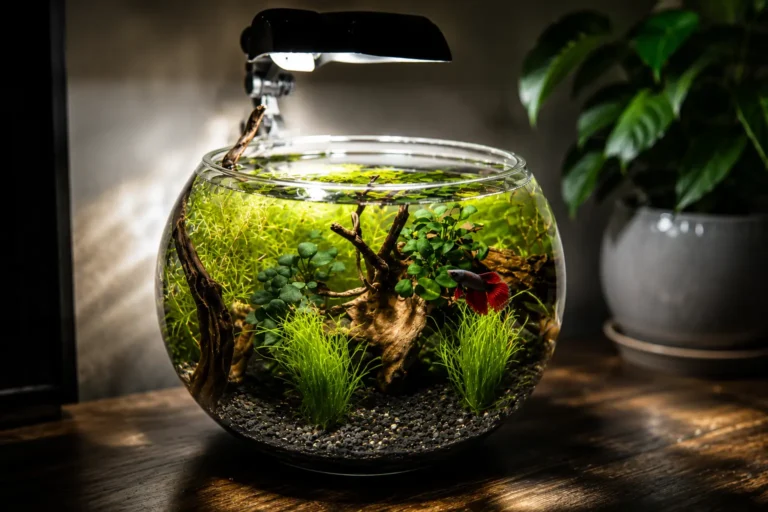
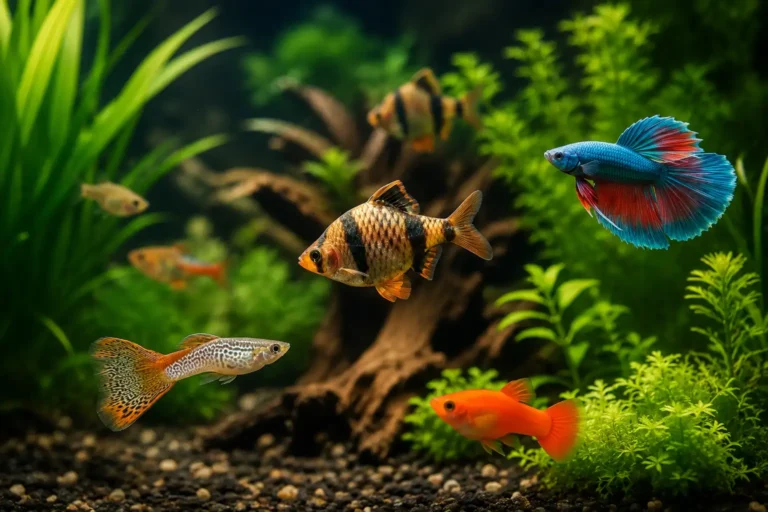
What Is a No CO₂ Planted Tank?
A no CO₂ planted tank is a planted freshwater aquarium that does not use pressurized carbon dioxide injection. Instead, plants rely on naturally available carbon from fish respiration, organic processes, gas exchange, and the small amount of dissolved CO₂ already present in the water.
This type of setup is often called a low-tech planted aquarium. It usually uses moderate lighting, hardy plants, simple equipment, and slower growth. It can still look lush and natural, but it should not be designed like a high-tech aquascape with intense lighting, demanding carpets, and fast stem plant growth.
The main difference is growth speed. In a CO₂-injected tank, plants can use stronger light and grow faster because carbon is supplied more consistently. In a no CO₂ planted aquarium, light must be controlled because plants cannot use unlimited energy without enough available carbon.
| Feature | No CO₂ Planted Tank | CO₂-Injected Planted Tank |
|---|---|---|
| Growth speed | Slow to moderate | Moderate to fast |
| Lighting | Low to moderate | Moderate to high |
| Plant choice | Hardy, undemanding species | Wider plant range |
| Maintenance | Usually simpler | More trimming and balancing |
| Algae risk | Low if light is controlled | Higher if CO₂ is unstable |
| Beginner suitability | Excellent | Better after basics are understood |
The goal is not to avoid CO₂ because it is bad. CO₂ injection is powerful and useful in the right system. The goal of a no CO₂ tank is to create a slower, more forgiving aquarium where plants grow steadily without expensive equipment or constant adjustment.
Ready to set up your own tank?
Create a free account to save lessons, plan your setup, and use the Tank Hub to turn ideas into a real aquarium.
Can Aquarium Plants Grow Without CO₂?
Yes, many aquarium plants can grow without injected CO₂. However, they do not all grow at the same speed, and not every plant is suitable for this style.
Plants need carbon for growth. In a no CO₂ aquarium, carbon availability is lower than in a pressurized CO₂ system. That means plants with low carbon demand are much easier to grow. Slow-growing epiphytes, hardy rosette plants, floating plants, mosses, and some adaptable stem plants are usually better choices than demanding carpeting plants or delicate red stems.
The most important mindset shift is this: in a no CO₂ planted tank, slower growth is normal. You are not trying to force rapid aquascape results. You are building a stable planted aquarium that matures gradually.
- Easy plants can grow without CO₂: especially low-light and slow-growing species.
- Growth is usually slower: this is normal and often useful for low maintenance.
- Strong light can backfire: plants may not be able to use it without enough carbon.
- Plant choice matters: demanding species may survive poorly or grow weakly.
- Patience matters: no CO₂ tanks often improve gradually over months.
For a broader plant overview, start with the Aquarium Plants Guide.
Best Plants for a No CO₂ Planted Tank
The best plants for a no CO₂ planted tank are hardy, adaptable, and not dependent on intense light or fast carbon supply. Choose plants that match the system instead of forcing difficult plants into a low-energy aquarium.
Beginner-friendly choices usually include epiphytes, Cryptocoryne, Java fern, Anubias, mosses, floating plants, Vallisneria, Hygrophila, and other adaptable species. These plants are not all identical, but they share one useful trait: they can perform under modest conditions when the aquarium is stable.
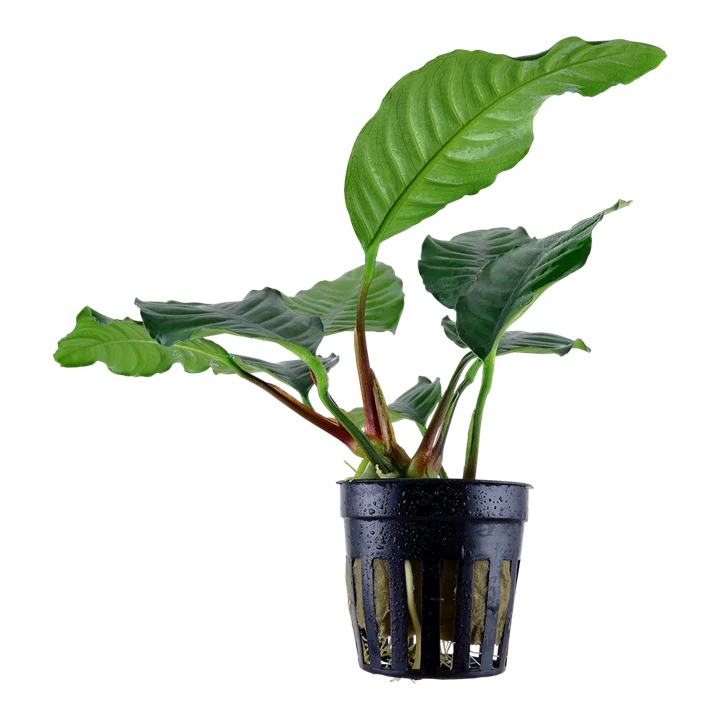 Beginner Friendly
Anubias barteri var. coffeifolia
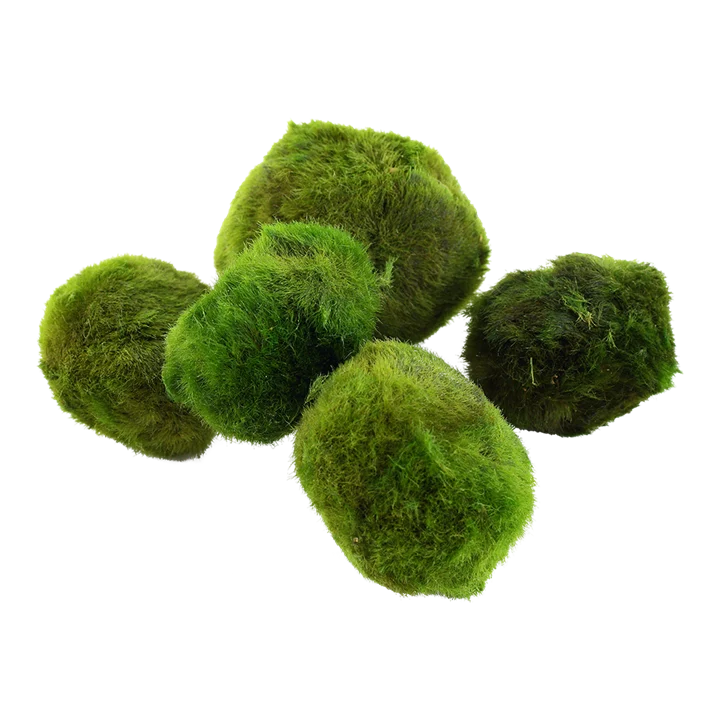 Beginner
Aegagropila linnaei
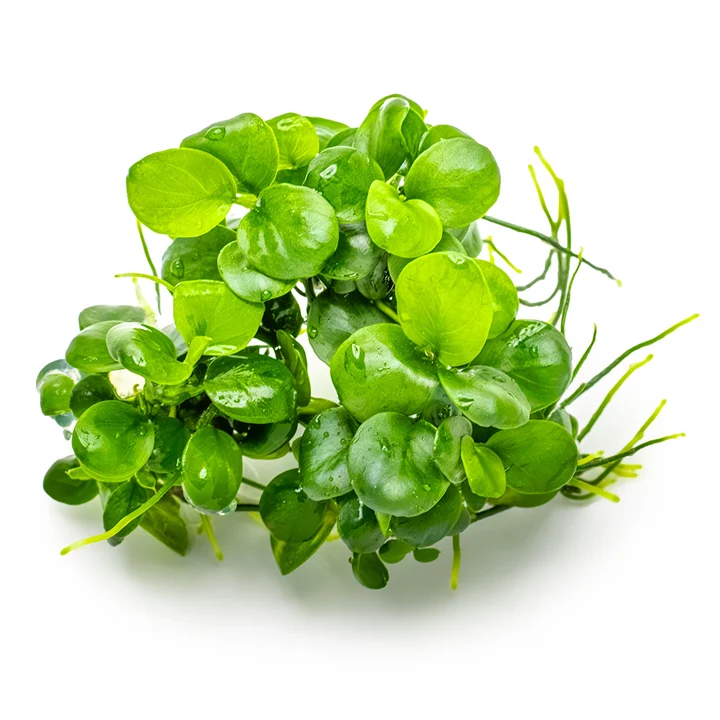 Beginner Friendly
Anubias barteri 'Mini Coin'
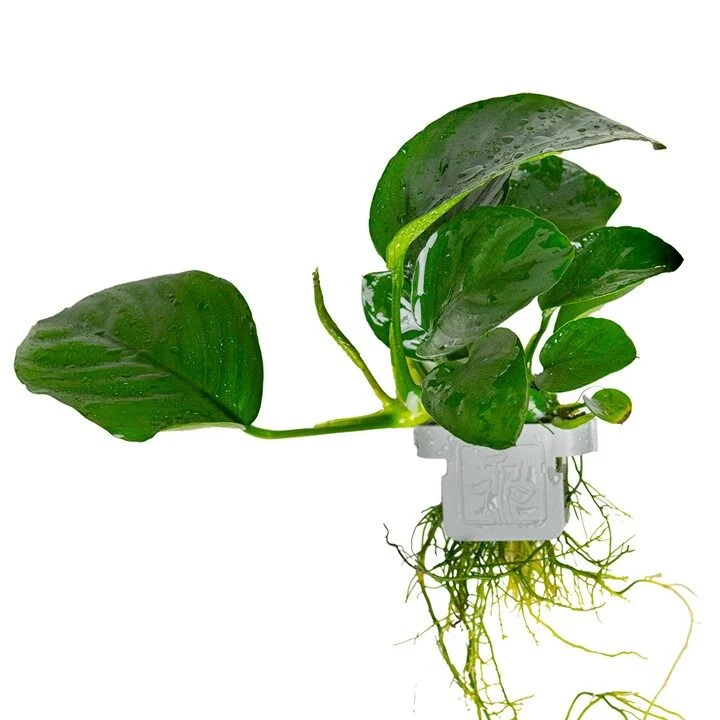 Beginner
Anubias barteri var. caladiifolia
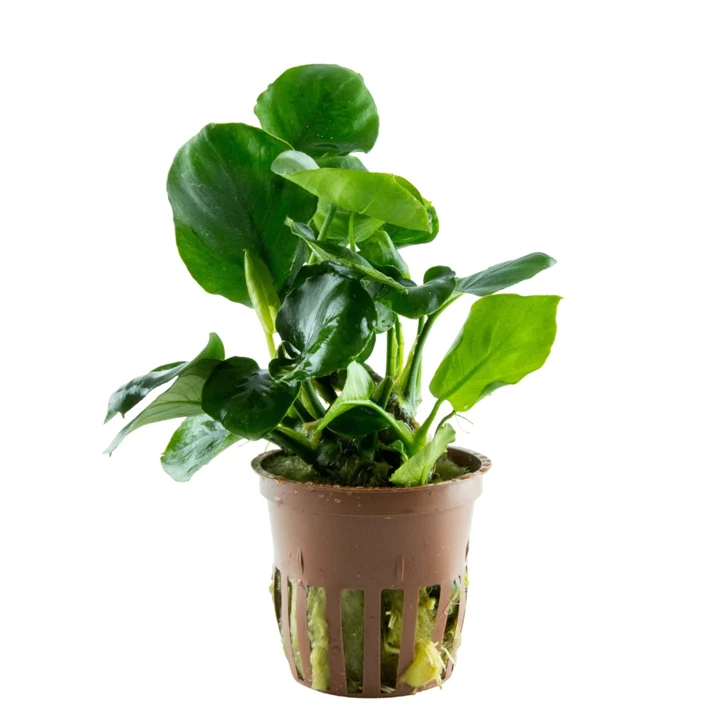 Beginner Friendly
Anubias barteri 'Coin Leaf'
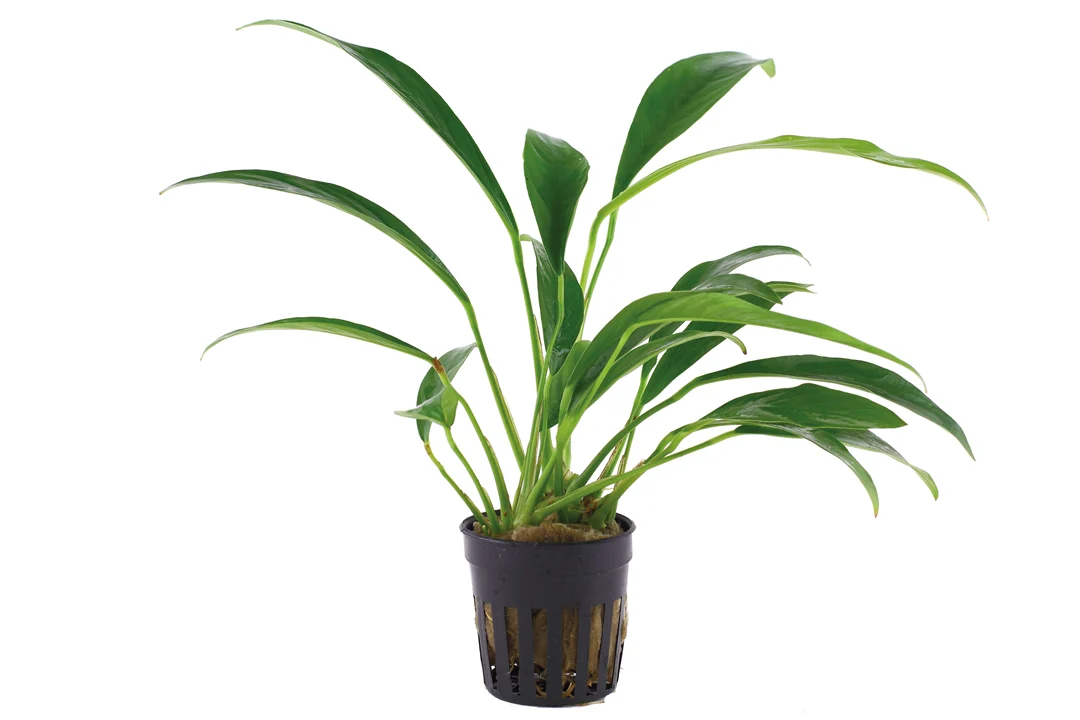 Beginner Friendly
Anubias barteri var. glabra
| Plant Type | Why It Works Without CO₂ | Beginner Note |
|---|---|---|
| Epiphytes | Slow growth and low demand | Attach to wood or rock; do not bury rhizomes |
| Cryptocoryne | Adapts well once established | May melt after planting but often regrows |
| Java fern | Hardy and shade tolerant | Best attached to hardscape |
| Anubias | Very slow and durable | Prone to algae if light is too strong |
| Mosses | Can grow in low-tech setups | Need occasional trimming and clean flow |
| Floating plants | Access atmospheric CO₂ and absorb nutrients | Thin regularly so they do not block all light |
| Vallisneria | Often adapts well in simple tanks | Needs root space and stable conditions |
| Hardy stem plants | Useful for nutrient uptake | Choose adaptable green stems over demanding red plants |
For more plant groups, read the Epiphyte Aquarium Plants Guide and the Floating Aquarium Plants Guide.
Plants to Avoid in a Beginner No CO₂ Tank
Some plants can technically survive without injected CO₂, but they are not ideal for a beginner no CO₂ setup. The issue is not only survival. The issue is whether they will grow attractively, stay compact, avoid algae, and remain easy to manage.
Many demanding carpets, fine-leaved stems, and intense red plants perform best with stronger light, stable CO₂, and consistent fertilization. Without CO₂, they may grow slowly, stretch upward, melt, lose color, or become algae-covered.
- Difficult carpeting plants: They often need strong light and stable CO₂ to stay compact.
- Demanding red stems: Color and density may be weak without higher energy conditions.
- Delicate tissue-culture-only layouts: They can struggle if planted sparsely in a new tank.
- High-light plant collections: Strong lighting without CO₂ often creates algae pressure.
- Plants chosen only by appearance: Always check difficulty and light demand first.
This does not mean you can never experiment. It means the first version of a no CO₂ planted aquarium should be built with reliable plants. Once the tank is mature, you can test more challenging species in small amounts.
Lighting for a No CO₂ Planted Aquarium
Lighting is the most important control point in a no CO₂ planted tank. Without injected CO₂, plants cannot use unlimited light. If light is too strong or runs too long, algae often takes advantage before plants can respond.
For beginners, low to moderate lighting is usually best. Use a timer and keep the schedule consistent. Avoid direct sunlight, avoid sudden increases, and do not assume brighter always means better.
A practical starting point is a moderate photoperiod, often around 6–8 hours per day depending on your light strength, plant mass, and algae response. If algae appears quickly, reduce intensity or duration before adding random products.
| Lighting Choice | No CO₂ Result | Beginner Recommendation |
|---|---|---|
| Weak light | Very slow growth, low algae pressure | Good for shade plants and simple tanks |
| Moderate light | Best balance for many no CO₂ setups | Recommended starting point |
| Strong light | Higher algae risk without CO₂ | Use only with experience and plant mass |
| Long photoperiod | Can fuel algae | Avoid leaving lights on all day |
| Timer-controlled light | Stable and predictable | Strongly recommended |
For deeper lighting planning, see the Aquarium Lighting Guide, Aquarium Plant Light Requirements, and Aquarium Lighting Calculator.
Substrate Options for No CO₂ Planted Tanks
Substrate choice matters because many no CO₂ planted tanks rely on slow, steady root growth. You can use aquarium soil, inert sand, gravel, or a mixed approach, but each option changes the maintenance style.
Aquarium soil can support root-feeding plants and improve early growth, but it may release nutrients and affect water chemistry. Inert sand or gravel is simpler and more predictable, but root-feeding plants may need root tabs or nutrient support.
| Substrate | Pros | Cons | Best For |
|---|---|---|---|
| Aquarium soil | Nutrient-rich and plant-friendly | Can be messy or active in new tanks | Crypts, rooted plants, planted layouts |
| Sand | Natural look and easy for many fish | Low nutrients unless supplemented | Simple layouts and root tabs |
| Gravel | Easy to use and widely available | Can trap debris if coarse | Beginner community tanks |
| Soil capped with sand | Can support strong root growth | Less beginner-proof if disturbed | Experienced low-tech setups |
| Hardscape-only epiphyte layout | Very simple substrate needs | Limited rooted plant options | Anubias, Java fern, Buce, mosses |
If you are unsure, keep the first setup simple. Use an easy substrate and choose plants that match it. For more detail, read the Aquarium Soil Guide and the Aquarium Sand Guide.
Fertilization Without CO₂ Injection
No CO₂ planted tanks still need nutrients. Fish waste provides some nitrogen and phosphorus, tap water may provide minerals, and substrate may supply nutrients to roots. But this is not always enough, especially as plant mass increases.
The key is moderation. In a low-energy setup, plants use nutrients more slowly than in a high-tech tank. Heavy fertilization combined with too much light and slow plant uptake can contribute to algae problems.
Fertilization should match plant demand, not a random schedule. Root-feeding plants may benefit from root tabs. Epiphytes and floating plants mainly use nutrients from the water column. Stem plants may need more consistent water-column nutrition.
- Use root tabs for heavy root feeders in inert substrate.
- Dose liquid fertilizer lightly when water-column plants show need.
- Do not overdose because growth is slow.
- Watch new leaves for deficiency clues.
- Keep water changes consistent to prevent accumulation.
- Adjust based on plant response, not guesswork.
For nutrients, read Macronutrients for Aquarium Plants and Micronutrients for Aquarium Plants. If you want to calculate dosing, use the Fertilizer Dosing Calculator.
Water Changes in a No CO₂ Planted Tank
Water changes help maintain stability, but no CO₂ planted tanks do not always need the same aggressive maintenance rhythm as high-tech aquascapes. The right routine depends on fish load, plant mass, fertilization, substrate, algae pressure, and water test results.
In a new tank, water changes are often more important because the system is still stabilizing. Active soil, melting plants, early algae, and immature filtration can all affect water quality. Once the tank matures, the routine can become more predictable.
- Use conditioned water for every tap-water change.
- Avoid large sudden parameter swings.
- Remove decaying leaves before they break down heavily.
- Clean debris without disturbing the whole substrate.
- Use test results and plant condition to guide frequency.
- Keep the routine consistent rather than chaotic.
For practical technique, see the Aquarium Water Change Guide. For water chemistry basics, read the Aquarium Water Parameters Guide.
Fish Stocking for No CO₂ Planted Aquariums
Fish can support a planted tank by adding nutrients through waste, but too many fish make the aquarium harder to balance. A no CO₂ planted tank works best with light to moderate stocking, peaceful species, and stable feeding.
Heavy stocking increases waste, oxygen demand, algae risk, filter load, and maintenance pressure. This is especially important in slow-growth planted tanks because plants may not use excess nutrients quickly.
Choose fish that match the tank size, water parameters, plant layout, and flow. Avoid fish that dig up plants, eat delicate leaves, or produce heavy waste in a small aquarium.
| Stocking Choice | Effect on No CO₂ Tank | Better Approach |
|---|---|---|
| Light stocking | Lower waste and easier stability | Best for beginners |
| Moderate stocking | Can work with good filtration | Monitor nitrate and algae |
| Heavy stocking | More waste and maintenance | Avoid in low-tech beginner tanks |
| Plant-safe fish | Protects layout and leaves | Choose peaceful species |
| Digging or plant-eating fish | Damages planting and substrate | Avoid unless planned carefully |
If livestock is part of your plan, use the Aquarium Fish Guide before buying fish.
Algae Prevention Without CO₂
Algae prevention in a no CO₂ planted tank is mostly about balance. Algae usually appears when light, nutrients, plant mass, waste, and maintenance are out of sync.
The most common beginner mistake is using too much light before the plants are ready. Without injected CO₂, plants cannot always respond to strong light fast enough. Algae can.
The best prevention strategy is simple: plant heavily from the start, keep lighting moderate, avoid overfeeding, stock lightly, remove melting leaves, and keep water changes consistent.
- Use a timer instead of manual lighting.
- Avoid direct sunlight.
- Do not start with a sparse plant layout.
- Remove dying plant material early.
- Keep feeding controlled.
- Do not overstock fish.
- Use floating plants carefully if nutrients are high.
- Adjust light before adding random algae treatments.
For deeper troubleshooting, read the Aquarium Lighting and Algae Guide.
No CO₂ Planted Tank Setup Plan
Use this step-by-step plan to build a beginner-friendly no CO₂ planted aquarium without overcomplicating the system.
Choose a Practical Tank Size
A moderate tank size is easier than a tiny tank for most beginners. More water volume gives more stability, while a reasonable footprint gives plants and fish enough room. If this is your first planted tank, avoid extreme nano setups unless you are prepared for careful monitoring.
Install Simple, Reliable Equipment
Use a suitable filter, heater if your livestock needs tropical temperatures, thermometer, LED light, and timer. Keep equipment reliable rather than complicated.
Pick Easy Plants First
Start with hardy plants that are known to grow in low-tech aquariums. Use a mix of slow epiphytes, rooted plants, and some faster nutrient users if your layout allows.
Plant Enough From Day One
Sparse tanks often struggle because algae has open space and available nutrients. A planted tank does not need to be overcrowded, but it should not start almost empty either.
Start With Moderate Light
Use a timer and avoid long lighting periods. Increase light only when plant growth shows that the system can use it.
Cycle the Aquarium
Even planted tanks need biological stability. Before fish are added, understand cycling and water testing. A planted aquarium can help stability, but plants do not replace a mature biological filter.
If you are still setting up the tank, read the Aquarium Cycling Guide and the Fishless Cycle Guide.
Stock Slowly and Feed Lightly
Add fish gradually after the tank is ready. Feed small amounts and observe the system. In a no CO₂ planted tank, excess waste can easily push the aquarium out of balance.
Common No CO₂ Planted Tank Mistakes
Most no CO₂ planted tank problems come from designing the aquarium like a high-tech tank while removing the CO₂ system. Avoid these mistakes and the setup becomes much easier.
| Mistake | Why It Fails | Better Choice |
|---|---|---|
| Using too much light | Plants cannot use it without enough carbon | Start with low to moderate light |
| Choosing demanding carpet plants | They often need strong light and stable CO₂ | Use easy foreground or low plants instead |
| Planting too sparsely | Algae gets an early advantage | Add enough plant mass from the start |
| Overstocking fish | Waste increases faster than plants can use nutrients | Stock lightly and gradually |
| Overfertilizing | Slow plants may not use nutrients quickly | Dose lightly and watch plant response |
| Ignoring substrate needs | Root feeders may starve in inert substrate | Use root tabs or nutrient-rich substrate |
| Changing everything at once | Makes problems harder to diagnose | Adjust one factor at a time |
| Expecting instant growth | No CO₂ tanks mature slowly | Be patient and track steady improvement |
No CO₂ vs Low-Tech vs Walstad
These terms are often used together, but they are not exactly the same.
A no CO₂ planted tank simply means there is no injected carbon dioxide system. A low-tech aquarium usually means simple equipment, moderate light, no pressurized CO₂, and easy plants. A Walstad-style tank is a more specific natural planted approach often involving soil, heavy planting, and a strong focus on biological balance.
| Style | Main Idea | Beginner Difficulty |
|---|---|---|
| No CO₂ planted tank | Plants grow without injected CO₂ | Beginner-friendly with easy plants |
| Low-tech planted tank | Simple equipment, moderate light, no CO₂ | Excellent beginner option |
| Walstad-style tank | Soil-based natural planted system | Can work well but needs research |
| High-tech planted tank | Strong light, CO₂ injection, active dosing | More advanced |
For most beginners, a simple low-tech no CO₂ planted aquarium is easier than jumping directly into a soil-heavy natural method or a high-tech CO₂ aquascape.
Example Beginner No CO₂ Planted Tank
Here is a practical beginner setup that keeps the system simple and stable:
| Setup Area | Beginner-Friendly Choice | Why It Works |
|---|---|---|
| Tank | 60–100 liter rectangular aquarium | Stable and manageable |
| Filter | Reliable filter with biological media | Supports water quality |
| Light | Moderate LED on timer | Enough for easy plants without high algae pressure |
| Substrate | Simple plant substrate, sand with root tabs, or gravel with root tabs | Supports plant roots without overcomplication |
| Plants | Anubias, Java fern, Cryptocoryne, mosses, floating plants, Vallisneria | Hardy and suitable for low-tech growth |
| Fertilizer | Light liquid dosing and/or root tabs as needed | Supports slow steady growth |
| Fish | Light stocking with peaceful species | Reduces waste and stress |
| Maintenance | Regular observation, water changes, trimming, and testing | Keeps the tank predictable |
This setup will not grow as fast as a CO₂-injected aquascape, but it can become lush, stable, and beautiful over time. The main advantage is that mistakes are easier to correct when the system is not being pushed too hard.
When Should You Add CO₂ Later?
You do not need CO₂ injection to start a planted tank, but there are situations where adding CO₂ later makes sense. If you want dense carpeting plants, faster growth, intense red stems, high-light aquascaping, or more demanding plant species, CO₂ can become a major upgrade.
However, CO₂ should not be used as a quick fix for poor balance. If the tank has unstable lighting, poor maintenance, overfeeding, or weak plant health, adding CO₂ may add complexity rather than solve the root problem.
- Add CO₂ if your plant goals genuinely require it.
- Do not add CO₂ just because algae appears.
- Stabilize light and nutrients first.
- Use reliable equipment if you upgrade.
- Monitor fish behavior carefully when using CO₂.
If you are considering the upgrade, read the Aquarium CO₂ System Guide and use the Aquarium pH CO₂ Calculator as a supporting tool.
Conclusion
A no CO₂ planted tank is one of the most beginner-friendly ways to build a natural, stable, planted freshwater aquarium. The key is to design the tank around lower energy: moderate light, hardy plants, enough plant mass, simple substrate, careful fertilization, light stocking, and patient maintenance.
The biggest mistake is trying to run a high-tech aquascape without the CO₂ system. Without injected CO₂, strong lighting and demanding plants can quickly lead to algae and frustration. Keep the setup balanced instead.
Start with easy plants, use a timer, avoid overstocking, fertilize moderately, and let the tank mature. A no CO₂ planted aquarium may grow slowly, but that slower rhythm is exactly what makes it stable, affordable, and enjoyable for beginners.
💬 Join the Conversation
Are you planning a no CO₂ planted tank with epiphytes, floating plants, easy stems, or a simple low-tech aquascape?
Tag us on Instagram @AquariumLesson — we’d love to see your plant choices, layout idea, and progress as your low-tech tank matures.
FAQ
Can aquarium plants grow without CO₂?
Yes. Many aquarium plants can grow without injected CO₂, especially hardy low-light species such as Anubias, Java fern, Cryptocoryne, mosses, floating plants, and some adaptable stem plants. Growth is usually slower than in a CO₂-injected tank.
What is the best no CO₂ planted tank for beginners?
The best beginner no CO₂ planted tank is a moderate-sized freshwater aquarium with low to moderate lighting, easy plants, reliable filtration, light stocking, and a simple fertilization and water change routine.
Do no CO₂ planted tanks need fertilizer?
Often, yes. Fish waste and tap water may provide some nutrients, but many plants still benefit from root tabs or light liquid fertilizer. The key is matching fertilization to plant demand and avoiding heavy dosing in a low-growth system.
How much light does a no CO₂ planted tank need?
Most no CO₂ planted tanks do best with low to moderate light on a timer. Avoid strong lighting and very long photoperiods unless the tank has enough plant mass and stability to use that energy without algae problems.
Can I grow carpeting plants without CO₂?
Some carpeting plants may grow without CO₂ under the right conditions, but many are difficult for beginners in low-tech tanks. They often grow slowly, stretch upward, or struggle without strong light and stable carbon. Beginners should start with easier foreground or low plants.
Why do I get algae in a no CO₂ planted aquarium?
Algae often appears when light is too strong, the photoperiod is too long, plant mass is too low, nutrients are unbalanced, fish are overfed, or the tank is not mature. Reduce light pressure and improve stability before using algae treatments.
Is a no CO₂ planted tank low maintenance?
It can be low maintenance when designed correctly. Slower plant growth means less trimming, and moderate lighting reduces algae pressure. However, the tank still needs water changes, feeding control, plant care, and occasional testing.
Start building your aquarium with the Tank Hub
Save your favorite lessons, organize your setup, and track your aquarium step by step in your personal Tank Hub.
New to AquariumLesson? Start with our complete Aquarium Lessons Hub or return to the homepage at AquariumLesson.com.
Continue learning


References
- Practical Fishkeeping — How to Set Up a Low-Maintenance Aquascape at Home
- Swell UK — How to Set Up a Planted Aquarium Without CO₂
- Aquarium Co-Op — Top Easy Aquarium Plants for Beginners
- Tropica — Aquarium Plant Light Guidance
- RSPCA — Choosing an Aquarium for Pet Fish
- RSPCA Knowledgebase — Why Water Quality Is Important When Setting Up a Fish Aquarium