

Best Beginner Aquarium Size: First Tank Guide
Introduction
Choosing the best beginner aquarium size is one of the most important decisions you make before setting up your first fish tank. Tank size affects almost everything: water stability, fish choice, maintenance effort, equipment cost, stocking limits, algae risk, and how forgiving the aquarium will be when you make beginner mistakes.
Many beginners assume the smallest aquarium is the easiest. In reality, very small tanks are often harder because temperature, waste, oxygen, and water chemistry can change quickly. A larger aquarium usually gives you more stability, more room for fish to behave naturally, and more time to correct problems before they become serious.
This guide explains what size aquarium is best for beginners, why tiny tanks are risky, which tank sizes work for different goals, and how to choose a first tank that matches your space, budget, fish plans, and maintenance routine.
If you are planning your full setup, pair this guide with the Aquarium Equipment Guide, the Aquarium Filter Guide, and the Aquarium Volume Calculator.
Quick answer: For most beginners, a freshwater aquarium around 60–100 liters is a strong starting point. It is usually more stable than a nano tank, still manageable for home use, and flexible enough for simple community fish, easy plants, and beginner-friendly equipment.
What You’ll Learn in This Lesson
- Why aquarium size matters so much for beginners
- Why small fish tanks are not always easier
- Which tank size range is best for a first aquarium
- How tank volume affects water quality and maintenance
- How to match aquarium size to fish, plants, and equipment
- Which tank sizes are risky for beginner fishkeeping
- How to choose between nano, medium, and larger aquariums
- Which beginner mistakes happen when the tank is too small

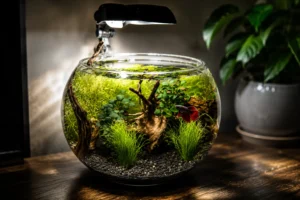
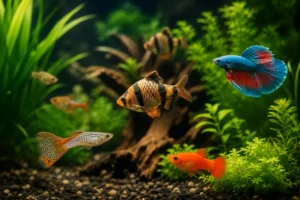
Best Beginner Aquarium Size: The Practical Recommendation
The best beginner aquarium size is usually not the smallest tank you can buy. For most first-time freshwater aquarists, the sweet spot is around 60–100 liters. This range is large enough to stay more stable than a tiny aquarium but still small enough to fit into many homes, remain affordable, and be manageable during water changes.
A tank in this range gives you more flexibility with peaceful beginner fish, simple planted layouts, moderate filtration, and regular maintenance. It also gives the aquarium more water volume, which helps buffer small mistakes such as slight overfeeding, minor temperature changes, or early stocking adjustments.
A 40-liter aquarium can work for careful beginners, but it is already more limiting. A tank below that range becomes more specialized and should be stocked very lightly. Once you move into very small bowls or tiny tanks, the setup becomes less forgiving and often unsuitable for normal beginner fish communities.
| Aquarium Size | Beginner Suitability | Best Use |
|---|---|---|
| Under 20 liters | Poor for most fish beginners | Specialist shrimp/snail setups or plant-only displays |
| 20–40 liters | Possible but limited | Very light nano stocking, shrimp, small species with careful planning |
| 45–60 liters | Good lower beginner range | Small planted tanks and carefully chosen fish |
| 60–100 liters | Best general beginner range | Stable first freshwater aquariums and simple communities |
| 100–150 liters | Excellent if space allows | More flexible stocking and stronger stability |
| Over 150 liters | Stable but heavier and costlier | Beginners with space, budget, and proper support |
The right size is not only about liters. The shape, footprint, equipment, stocking plan, and support furniture matter too. A long rectangular aquarium is usually more useful than a tall narrow tank because it gives fish more horizontal swimming room and provides better surface area for gas exchange.
Ready to set up your own aquarium?
Save this lesson and keep it connected to your aquarium planning and care routine.
Why Small Aquariums Are Harder Than They Look
Small aquariums are often marketed as easy starter tanks, but they can be difficult because they give you less margin for error. In a tiny volume of water, every change has a bigger impact.
If you overfeed slightly in a larger aquarium, the effect is diluted across more water. In a tiny tank, the same amount of uneaten food can affect water quality much faster. The same principle applies to fish waste, decaying leaves, temperature shifts, evaporation, and missed maintenance.
That does not mean nano aquariums are bad. They can be beautiful, efficient, and rewarding. But they are not automatically easier. They need discipline: light stocking, careful feeding, regular testing, stable temperature, and realistic fish choices.
- Less water volume: Waste becomes concentrated faster.
- Less swimming space: Fish choices become very limited.
- Faster temperature changes: Small tanks react quickly to room conditions.
- Less oxygen reserve: Overcrowding and warm water can become risky.
- Less stocking flexibility: Many common fish need more space than beginners expect.
If your main goal is a stable first aquarium with fish, avoid choosing the smallest possible tank. Choose the most stable aquarium you can place, support, and maintain properly.
How Aquarium Size Affects Water Stability
Aquarium size directly affects stability. More water volume does not solve every problem, but it slows down many changes and gives you more time to react.
In beginner aquariums, the biggest hidden danger is often water quality. Fish produce ammonia through waste and respiration. Uneaten food and decaying plant matter also add waste. A cycled aquarium relies on beneficial bacteria to process that waste, but the system still has limits.
A larger aquarium can dilute waste more effectively and gives the biological filter more time to respond. A smaller aquarium can become unstable quickly if feeding, stocking, filtration, or maintenance is not controlled.
| Stability Factor | Small Aquarium | Medium Beginner Aquarium |
|---|---|---|
| Ammonia risk | Can rise quickly | More diluted and easier to monitor |
| Temperature | Changes faster | More stable over the day |
| Oxygen | Less reserve | More forgiving with proper surface movement |
| Stocking options | Very limited | More realistic for peaceful beginner fish |
| Maintenance tolerance | Less forgiving | More forgiving if routine is consistent |
This is why water testing is essential in every first aquarium, no matter how clear the water looks. Learn the basics with the Aquarium Water Parameters Guide before stocking your tank heavily.
Beginner Aquarium Size by Goal
The best beginner aquarium size depends on what you want to keep. A planted shrimp tank, a betta-focused setup, and a peaceful community aquarium do not need the same space.
Start with the goal, then choose the tank. Do not buy a tank first and try to force incompatible fish into it later.
| Beginner Goal | Recommended Size Range | Why |
|---|---|---|
| Plant-only practice tank | 20–60 liters | No fish bioload, good for learning plants and layout |
| Shrimp/snail setup | 30–60 liters | Stable enough for small invertebrate systems |
| Single centerpiece fish setup | 40–75 liters | Allows filtration, heating, cover, and stable water |
| Small peaceful community | 60–100 liters | Better swimming space and stocking flexibility |
| Planted beginner community | 80–120 liters | More room for plants, fish zones, and stability |
| Large beginner display | 120 liters and above | Very stable, but needs stronger support and more planning |
If you want fish, think in terms of adult size, group behavior, and swimming space. Some small fish still need groups. Some active fish need length. Some bottom dwellers need floor area, not just water height. Use the Aquarium Fish Guide to match livestock to tank size before buying.
Tank Length Matters More Than Beginners Think
Aquarium volume matters, but the footprint matters too. A tall narrow aquarium may hold a decent amount of water while still offering poor swimming space. Many freshwater fish use horizontal space more than vertical height.
For beginner community tanks, a longer rectangular aquarium is usually easier to design and stock than a tall column-style tank. It offers more surface area, better gas exchange, more usable aquascaping space, and more natural movement for schooling or active fish.
- Long tanks: Better for active fish, schooling fish, aquascaping depth, and surface area.
- Tall tanks: Can look elegant but may reduce usable swimming length.
- Cube tanks: Good for shrimp, plants, and compact aquascapes, but stocking must be careful.
- Bow-front tanks: Decorative, but layout and cleaning can be less straightforward.
For a first aquarium, choose practical shape over novelty. A standard rectangular tank is often the easiest to light, filter, plant, clean, and stock correctly.
Best Beginner Aquarium Size for Fish
If your first tank will include fish, the best size depends on fish behavior. The old idea of choosing fish only by body length is too simple. You also need to consider group size, activity level, territorial behavior, oxygen demand, and adult size.
A small fish is not automatically suitable for a small tank. Some tiny species are sensitive, fast-moving, or need larger groups. Some common fish are sold young and later outgrow beginner aquariums.
For many beginners, a 60–100 liter aquarium gives a better foundation for peaceful small fish than a tiny tank. It allows a more stable cycle, a proper filter, plants or decor for cover, and a gradual stocking plan.
| Fishkeeping Plan | Beginner Tank Size Direction | Important Note |
|---|---|---|
| One small centerpiece fish | At least a properly filtered, heated small-to-medium tank | Still needs space, cover, stable temperature, and water quality |
| Schooling nano fish | Medium tank preferred | Group size and swimming length matter |
| Peaceful community fish | 60–100 liters or more | Better for stable stocking and behavior zones |
| Goldfish | Usually not ideal for small beginner tanks | Produce heavy waste and need far more space than many expect |
| Large or fast-growing fish | Avoid as a beginner choice | Adult size and long-term welfare matter more than store size |
Do not buy fish first and then ask whether the tank is big enough. Build the aquarium around the fish’s adult needs.
Best Beginner Aquarium Size for Plants
Planted aquariums can work in many sizes, but tank size changes how easy the system feels. Small planted tanks can be beautiful, but they require careful trimming, stable nutrients, controlled light, and good plant choice.
For beginners, a 60–100 liter planted tank is often easier than a very small aquascape because it gives plants more room to establish and gives you more control over layout zones. You can use foreground plants, midground plants, background plants, epiphytes, and floating plants without everything becoming overcrowded immediately.
If you want a very simple first planted aquarium, choose low-demand plants and moderate lighting. You do not need intense light or pressurized CO₂ to start. For plant planning, use the Aquarium Plants Guide and the Aquarium Lighting Guide.
- Small planted tanks: Good for compact layouts but sensitive to imbalance.
- Medium planted tanks: Best balance of stability, layout space, and manageable maintenance.
- Large planted tanks: Very stable but need stronger lighting, more substrate, and more trimming.
A beginner planted tank should be built around stability first. Once plants grow well and algae stays controlled, you can move toward more demanding aquascaping styles.
Equipment Changes with Aquarium Size
Aquarium size affects the equipment you need. A larger tank is usually more stable, but it also requires stronger support, a suitable filter, enough light spread, and more water during maintenance.
This is why the best beginner aquarium size is not simply “as large as possible.” It should be large enough to stay stable, but still realistic for your space, budget, floor, stand, and maintenance routine.
| Equipment Area | What Changes as Tank Size Increases |
|---|---|
| Stand | Weight support becomes more important |
| Filter | Flow rate and media capacity must match volume and bioload |
| Lighting | Spread and depth penetration become more important |
| Heater | Wattage must match water volume and room temperature |
| Water changes | More water needs to be handled each maintenance session |
| Substrate | Cost and depth planning increase with footprint |
Before buying equipment, check the Aquarium Equipment Guide. For support and safety, read the Aquarium Stand Guide. For filtration, start with the Aquarium Filter Guide.
Aquarium Weight and Placement
Water is heavy, and the filled weight of an aquarium is much higher than the empty tank weight. Substrate, rocks, driftwood, glass, equipment, and cabinet weight all add to the final load.
This matters because beginners sometimes place aquariums on normal furniture that was never designed for constant water weight. A small tank may be fine on a strong surface, but medium and larger aquariums should be placed on proper aquarium furniture or a support structure that can handle the load.
- Place the aquarium on a level surface.
- Do not allow the tank to overhang the stand.
- Avoid weak shelves, flexible tabletops, or unstable cabinets.
- Keep the aquarium away from direct sun and heat sources.
- Leave enough space for filter access and water changes.
- Plan safe cable routing with drip loops.
Once filled, do not move the aquarium. Choose the correct location before adding substrate, hardscape, and water.
Why “One Inch Per Gallon” Is Too Simple
Many beginners encounter simple stocking rules based on fish length and water volume. These rules can be tempting because they seem easy, but they are too limited for real aquarium planning.
Fish are not equal just because they are the same length. A slim peaceful fish, a messy goldfish, an active schooling fish, a territorial cichlid, and a bottom-dwelling species all use the aquarium differently.
Instead of relying on a single formula, plan stocking through several factors:
- Adult size
- Group size
- Swimming activity
- Territorial behavior
- Waste production
- Temperature needs
- Water hardness and pH preference
- Surface, midwater, or bottom-dwelling behavior
- Filter capacity and maintenance routine
This is why tank size should be chosen with a real stocking plan, not a vague hope that “a few fish” will fit.
Beginner Aquarium Size Mistakes to Avoid
Most tank-size mistakes happen before the aquarium is even filled. Avoiding them early saves money, stress, and fish health problems later.
Choosing a Bowl for Fish
Bowls and very tiny containers usually provide poor stability, limited oxygen exchange, little swimming space, and weak equipment options. They are not a good foundation for most beginner fishkeeping.
Buying the Tank Before Choosing the Fish
This often leads to stocking compromises. Choose your livestock direction first, then buy a tank that supports those animals properly.
Ignoring Adult Fish Size
Many fish are sold as juveniles. The fish in the store may be small, but the adult fish may need much more space than your first tank can provide.
Choosing Height Instead of Footprint
A tall tank can hold water but still provide poor horizontal swimming room. For many beginner fish, tank length and surface area matter more than dramatic height.
Forgetting Maintenance Practicality
A tank that is too large for your routine can also become a problem. If water changes become exhausting, maintenance may be skipped. Choose a size you can care for consistently.
Practical Decision Guide: Which Size Should You Buy?
Use this decision guide to choose a first aquarium size based on your real goal.
| Your Situation | Recommended Direction |
|---|---|
| You want the easiest stable first fish tank | Choose around 60–100 liters with simple stocking |
| You have very limited space | Choose a small tank but keep stocking extremely light |
| You want a planted beginner community | Choose around 80–120 liters if possible |
| You mainly want shrimp and plants | A 30–60 liter tank can work well with careful stability |
| You want goldfish | Do not choose a small beginner tank; research large-space needs first |
| You want many fish species | Choose a larger tank or simplify the plan |
| You want low maintenance | Choose moderate volume, light stocking, easy plants, and reliable filtration |
If you are still unsure, choose a standard rectangular freshwater aquarium in the 60–100 liter range. It is usually the best compromise between stability, cost, flexibility, and beginner manageability.
Setup Order After Choosing the Tank Size
Once you choose the tank size, do not add fish immediately. Build the system in the correct order so the aquarium can become biologically ready.
- Confirm the tank location and stand safety.
- Install substrate, hardscape, filter, heater if needed, and light.
- Fill with conditioned water.
- Run the filter continuously.
- Begin the cycling process before fish are added.
- Test ammonia, nitrite, and nitrate.
- Add fish gradually only when the aquarium is ready.
- Maintain the aquarium with regular water changes.
For this phase, read the Aquarium Cycling Guide and the Fishless Cycle Guide. If fish are added before the biological filter is ready, the aquarium can develop New Tank Syndrome.
Maintenance by Tank Size
Maintenance does not disappear in a larger aquarium, but the rhythm usually feels more predictable. Smaller aquariums may require more careful monitoring because problems can appear faster.
| Tank Size | Maintenance Character | Beginner Note |
|---|---|---|
| Under 40 liters | Small water changes, but sensitive to mistakes | Test often and stock lightly |
| 45–75 liters | Manageable water changes with decent stability | Good if fish choice is careful |
| 80–120 liters | More water per change, but more stable | Excellent beginner balance |
| Over 120 liters | Stable but physically more demanding | Plan buckets, hose systems, or maintenance tools |
Whatever size you choose, water changes must be part of the routine. A filter does not replace maintenance. Use the Aquarium Water Change Guide to build a stable routine from the beginning.
Final Recommendation for Most Beginners
For most beginners, the best aquarium size is a standard rectangular tank around 60–100 liters. It is large enough to support more stable water conditions, gives you realistic fish and plant options, and remains manageable for equipment, cost, and maintenance.
If space and budget allow, an 80–120 liter aquarium can be even better because it gives you more aquascaping room and stocking flexibility. If you must go smaller, keep the stocking plan very light and avoid fish that need groups, length, or heavy filtration.
The best beginner aquarium size is not the tank that looks easiest in the store. It is the tank that lets you create a stable, humane, maintainable aquatic system at home.
Conclusion
The best beginner aquarium size is usually larger than many first-time aquarists expect. Tiny tanks look simple, but they can be unstable, limiting, and unforgiving. A moderate freshwater aquarium gives you more water volume, better fish options, easier plant planning, and more time to correct beginner mistakes.
For most first aquariums, aim for a practical rectangular tank around 60–100 liters. Choose the size based on your livestock plan, available space, stand safety, maintenance routine, and long-term goals.
After choosing the tank, focus on the system: filtration, cycling, water testing, plants, stocking, and maintenance. A well-sized aquarium is only the beginning, but it gives you the stable foundation every successful first tank needs.
💬 Join the Conversation
What size aquarium are you planning for your first setup — a small nano tank, a medium beginner aquarium, or a larger planted community tank?
Tag us on Instagram @AquariumLesson — we’d love to see your first tank plan, layout idea, and stocking direction.
FAQ
What is the best beginner aquarium size?
For most beginners, a freshwater aquarium around 60–100 liters is a strong starting point. It offers better stability than a tiny tank while remaining manageable for equipment, water changes, and beginner stocking plans.
Is a small aquarium easier for beginners?
Usually not. Small aquariums can change quickly and leave less room for error. Waste, temperature, oxygen, and water chemistry can become unstable faster than in a larger aquarium.
Is a 40-liter aquarium good for beginners?
A 40-liter aquarium can work for careful beginners, but stocking options are limited. It is better for very light stocking, shrimp, snails, plants, or carefully chosen small fish than for a mixed community tank.
Is a 60-liter aquarium good for beginners?
Yes, a 60-liter aquarium can be a good beginner size if it is stocked carefully and maintained consistently. It offers more stability than very small tanks while remaining practical for many homes.
Is a 100-liter aquarium too big for a beginner?
No. A 100-liter aquarium can be excellent for beginners if the stand is safe and maintenance is realistic. It provides good stability, more aquascaping room, and better flexibility for peaceful community fish.
Should I choose a long or tall aquarium?
For most beginner freshwater fish, a longer rectangular aquarium is better than a tall narrow tank. It provides more swimming length, surface area, layout space, and easier equipment coverage.
Can I keep fish in a very small tank?
Some very small setups can work for specific livestock, but they are not ideal for most beginner fishkeeping. Tiny tanks require careful stocking, frequent monitoring, stable temperature, and disciplined feeding.
New to AquariumLesson? Start with our complete Aquarium Lessons Hub or return to the homepage at AquariumLesson.com.
References
- RSPCA — Choosing an Aquarium for Pet Fish
- RSPCA Knowledgebase — How Should I Care for My Tropical Fish?
- Ornamental Aquatic Trade Association — How to Set Up and Look After a Freshwater Tank
- American Veterinary Medical Association — Selecting a Pet Fish
- MSD Veterinary Manual — Providing a Home for Fish
- PetMD — Setting Up a Freshwater Aquarium
Start building your aquarium in My Aquariums
Save this lesson and keep it connected to your aquarium planning and care routine.


