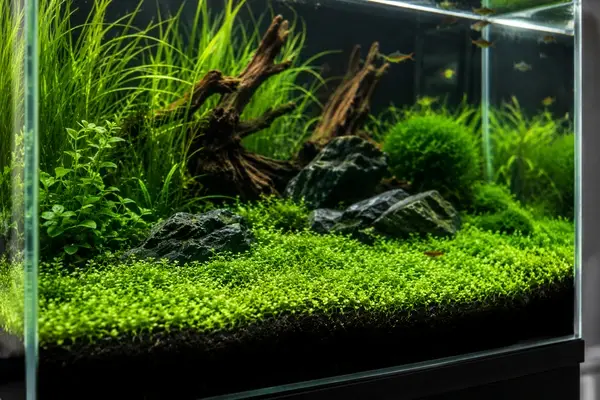
Carpet Plants Without CO₂: Best Low-Tech Aquarium Carpets
Introduction
Carpet plants without CO2 are possible, but they need realistic expectations. A low-tech aquarium can grow a foreground carpet, but it usually grows slower, less dense, and less perfectly compact than a high-tech aquascape with pressurized CO₂.
This is where many beginners get frustrated. They see a dense, bright green carpet in an aquascaping photo and assume the plant alone created the result. In reality, most perfect carpets depend on a complete system: strong enough substrate-level light, stable nutrients, good planting technique, regular trimming, and often CO₂ injection.
That does not mean low-tech carpets are a bad idea. It means you need to choose the right plant and the right layout. Some carpeting plants can spread without CO₂ if the light is good enough and the tank is stable. Others are better described as “foreground cover” rather than true dense carpet plants.
This guide focuses specifically on low-tech aquarium carpets. It does not replace the broader Aquarium Carpeting Plants Guide. Instead, it explains which carpet plants work without CO₂, which ones are difficult, how to set up the substrate and lighting, and how to avoid the mistakes that make low-tech carpets melt, grow upward, or get covered in algae.
Quick answer: The best carpet plants without CO₂ are Marsilea species, Monte Carlo, dwarf hairgrass, Lilaeopsis, Helanthium tenellum, Cryptocoryne parva, Staurogyne repens, and pearl weed used as a trimmed foreground. They can work in low-tech tanks, but they need enough substrate-level light, nutrients, patience, and regular trimming.
What You’ll Learn in This Lesson
- Which aquarium carpet plants can grow without CO₂
- Why low-tech carpets grow slower than high-tech carpets
- Which plants are best for beginners
- How Monte Carlo, Marsilea, dwarf hairgrass and Lilaeopsis compare
- How lighting and substrate affect low-tech carpets
- How to plant carpet plants so they spread instead of floating away
- How to troubleshoot melting, algae, upward growth and patchy carpets
- When CO₂ becomes worth adding
Can Carpet Plants Grow Without CO₂?
Yes, some carpet plants can grow without CO₂ injection. But “can grow” and “will form a dense show-tank carpet quickly” are not the same thing.
In a no-CO₂ aquarium, plant growth is naturally slower because available carbon is limited. Carpeting plants grow at the substrate, where light is weaker than at the surface. That makes them more demanding than many epiphytes, floating plants, or background stems.
A low-tech carpet usually needs:
- Enough light reaching the substrate
- A nutrient-rich substrate or consistent root support
- Stable water-column nutrients
- Small planting portions spread across the foreground
- Patience during the slow spreading phase
- Regular trimming once growth begins
- Algae control through balanced light and maintenance
The main limitation is not only the plant species. It is the whole system. A good low-tech setup can grow a modest carpet. A poorly balanced setup can fail even with an “easy” carpet plant.
Best Carpet Plants Without CO₂ Compared
The safest low-tech carpet plants are not always the most famous ones. Some plants spread slowly but reliably. Others look amazing in high-tech aquascapes but become frustrating without CO₂.
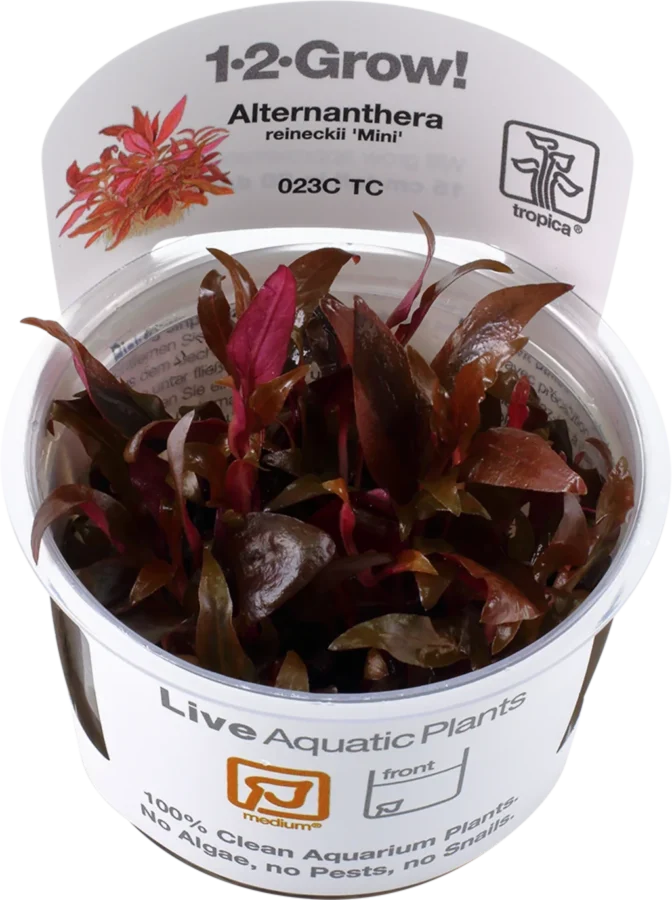 Intermediate
Alternanthera reineckii 'Mini'


 17–25°C
 Medium Light
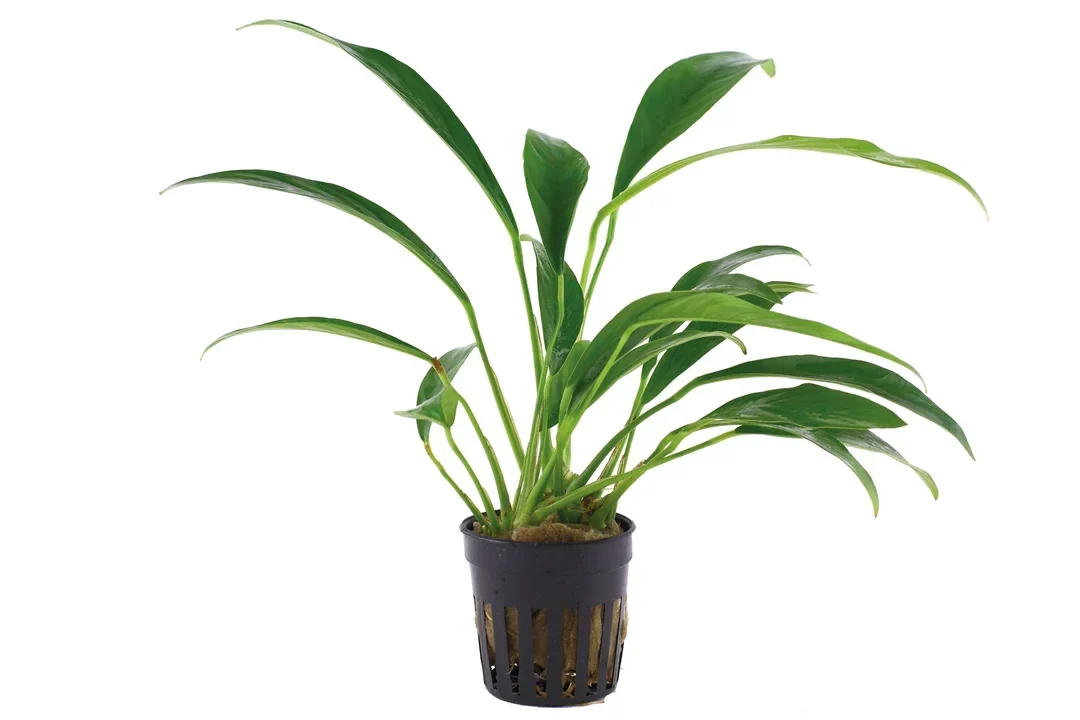 Beginner Friendly
Anubias barteri var. glabra
 22–26°C
 Low Light
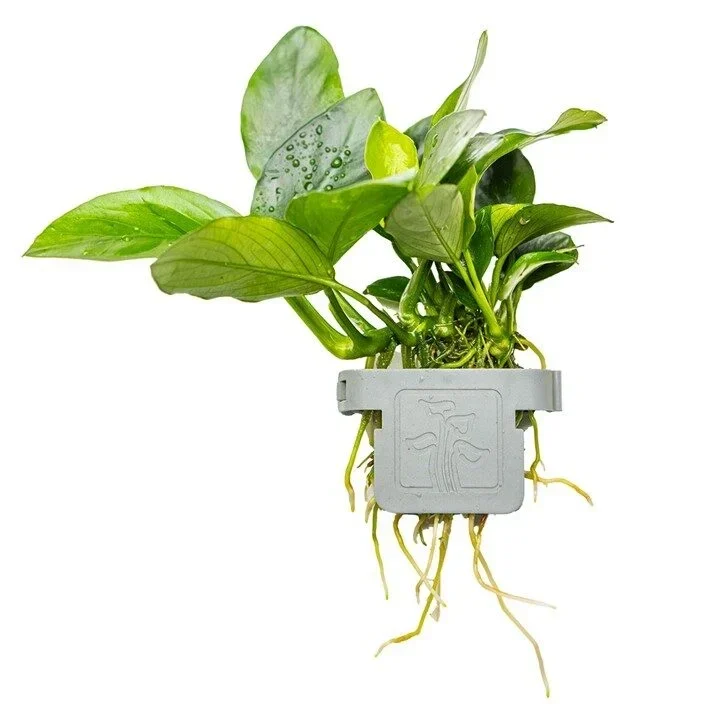 Beginner Friendly
Anubias barteri var. nana
 22–26°CLow Light
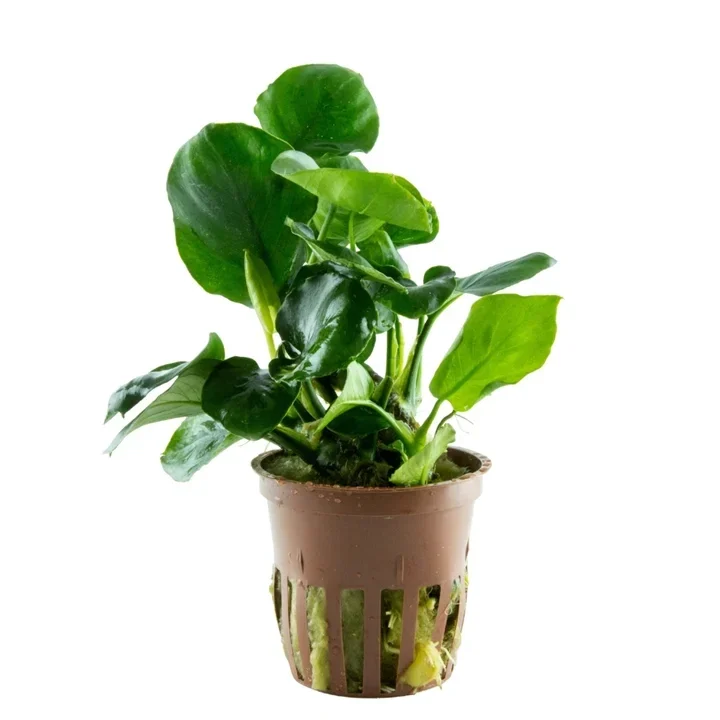 Beginner Friendly
Anubias barteri 'Coin Leaf'
Low Light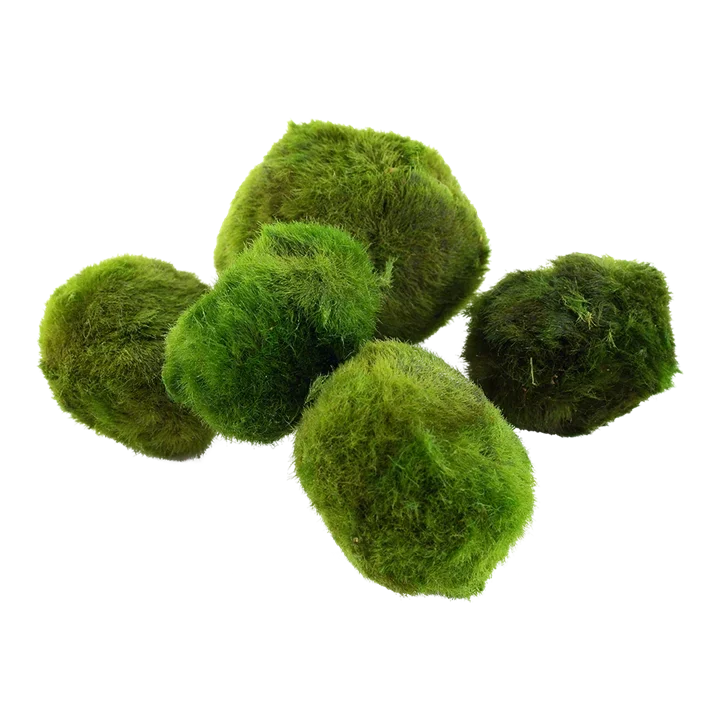 Beginner
Aegagropila linnaei
 15–24°CLow Light
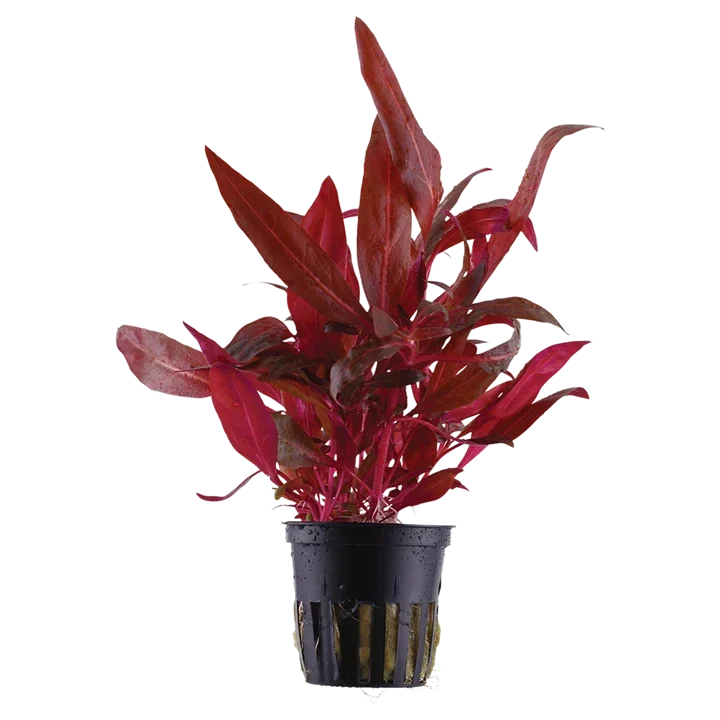 Intermediate
Alternanthera reineckii 'Rosanervig'
17–25°CMedium Light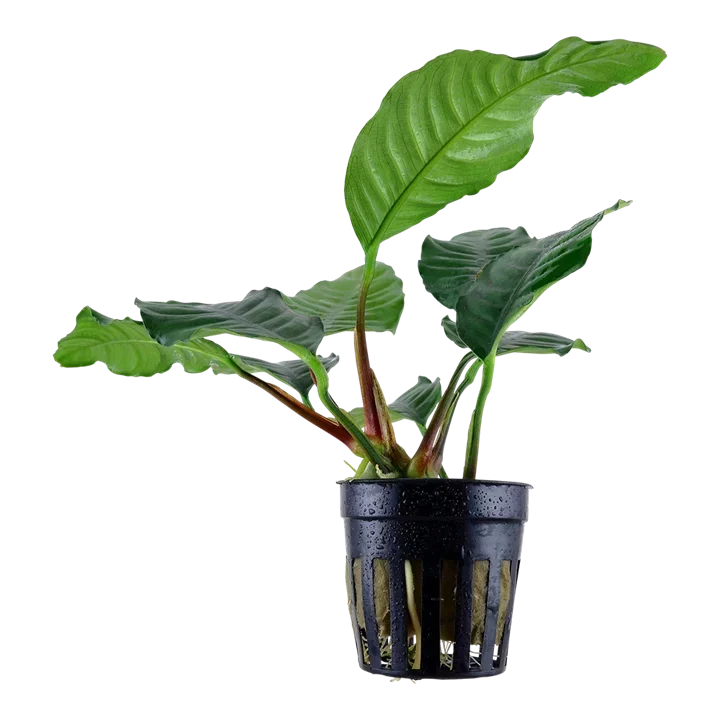 Beginner Friendly
Anubias barteri var. coffeifolia
22–26°CLow Light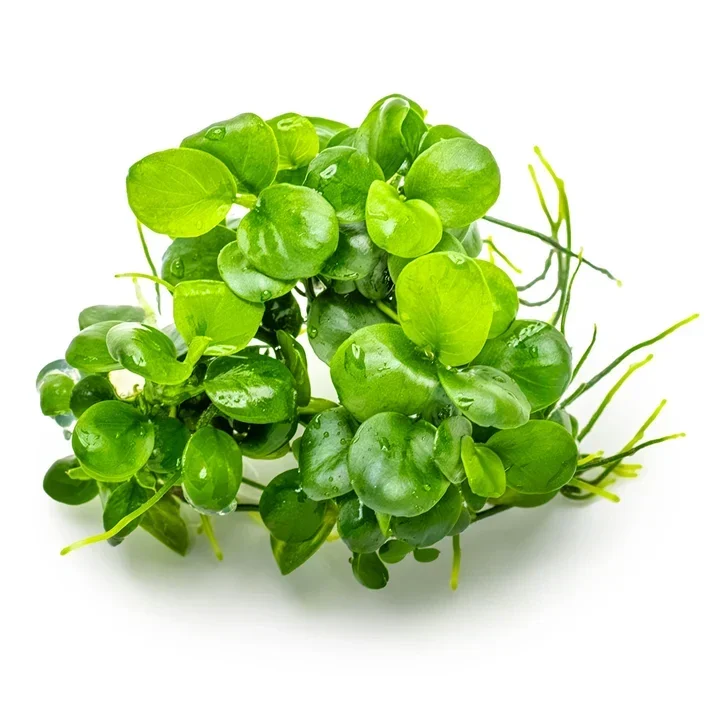 Beginner Friendly
Anubias barteri 'Mini Coin'
Low Light| Plant | No-CO₂ Difficulty | Carpet Style | Best Use |
|---|---|---|---|
| Marsilea species | Easy to medium | Clover-like, slow carpet | Best beginner low-tech carpet |
| Monte Carlo | Medium | Dense small-leaf carpet | Best classic carpet if light is good |
| Dwarf Hairgrass | Medium | Grass-like carpet | Natural meadow effect |
| Lilaeopsis brasiliensis | Medium | Fine grassy foreground | Slow natural carpet |
| Helanthium tenellum | Easy to medium | Runner-based grassy cover | Low-tech foreground and transition zones |
| Cryptocoryne parva | Easy but slow | Low compact foreground patches | Stable low-tech tanks with patience |
| Staurogyne repens | Easy to medium | Low bushy foreground cover | Carpet alternative, not true fine carpet |
| Pearl Weed | Medium | Trimmed low mat or bush | Flexible foreground if trimmed often |
| HC Cuba | Difficult | Very fine dense carpet | Usually better with CO₂ and strong light |
If you want the highest chance of success without CO₂, start with Marsilea, Helanthium tenellum, Cryptocoryne parva, or a low trimmed Staurogyne repens layout. If you want the classic aquascape carpet look, Monte Carlo is possible but less forgiving.
Marsilea: The Safest Low-Tech Carpet Plant
Marsilea species are among the best carpet plants without CO₂ because they tolerate lower-energy setups better than many classic aquascaping carpets. They spread more slowly, but that slower growth often makes them more stable in low-tech aquariums.
Marsilea creates a clover-like foreground. Depending on species, light and conditions, the leaves may appear as small single leaflets, two-part leaves or small clover shapes. It does not create the same tiny-leaf carpet as Monte Carlo or HC Cuba, but it creates a natural, calm, low-maintenance foreground.
- Best for: beginner low-tech carpets, natural foregrounds, slow stable layouts.
- Light: low to moderate, better spread with moderate light.
- CO₂: not required, but growth improves with it.
- Substrate: nutrient-rich substrate or root support helps.
- Growth speed: slow to moderate.
- Main mistake: expecting a dense carpet in a few weeks.
Marsilea is the plant to choose when stability matters more than speed. It is one of the best options for beginners who want a low-tech foreground that slowly fills in over time.
Monte Carlo Without CO₂
Monte Carlo is one of the most popular carpeting plants in aquascaping. It has small round leaves and can form a bright green carpet. Compared with HC Cuba, it is generally more forgiving and more robust, which is why many aquarists try it in low-tech setups.
Monte Carlo can grow without CO₂, but it needs enough substrate-level light and stable nutrients. Without CO₂, it usually spreads more slowly and may grow upward if light is weak. In lower-energy tanks, it may form a looser carpet rather than a tight, compact mat.
- Best for: classic green carpet look in medium-light low-tech tanks.
- Light: moderate to strong at substrate level.
- CO₂: not mandatory, but strongly improves density and speed.
- Substrate: aquarium soil helps root establishment.
- Growth speed: moderate without CO₂, faster with CO₂.
- Main mistake: using weak light and expecting a compact carpet.
Monte Carlo is a good low-tech challenge plant. It is not the easiest no-CO₂ carpet, but it is one of the best options if you want the classic aquascape carpet look and are willing to be patient.
Dwarf Hairgrass Without CO₂
Dwarf hairgrass can create a beautiful grass-like carpet. It spreads by runners and can produce a natural meadow effect in the foreground. In no-CO₂ aquariums, it can work, but it usually needs good light and patience.
The main challenge is density. Without CO₂, dwarf hairgrass may spread slowly and stay patchy for a long time. If light at the substrate is weak, it may grow tall and thin rather than forming a compact carpet.
- Best for: grass-like carpets, natural aquascapes, meadow-style layouts.
- Light: moderate to strong at the substrate.
- CO₂: optional but very helpful for faster, denser runners.
- Substrate: fine nutrient-rich substrate helps planting and spreading.
- Growth speed: slow to moderate without CO₂.
- Main mistake: planting large clumps instead of small separated plugs.
Dwarf hairgrass is possible without CO₂, but it is not the most forgiving choice. Choose it if you want a grassy look and can provide decent light at the foreground.
Lilaeopsis for Low-Tech Foregrounds
Lilaeopsis is a fine grassy foreground plant that can work in low-tech aquariums, although it often grows slowly. It creates a natural, slightly wild foreground rather than a perfectly manicured carpet.
Compared with dwarf hairgrass, Lilaeopsis can feel more creeping and subtle. It is a good option when you want a restrained foreground that slowly spreads through the substrate.
- Best for: natural low-tech foregrounds, subtle grassy cover, slow aquascapes.
- Light: moderate for better spreading.
- CO₂: not required, but helpful.
- Substrate: fine substrate helps runners spread.
- Growth speed: slow without CO₂.
- Main mistake: judging it too early before it establishes.
Lilaeopsis is best for patient aquarists who prefer a natural foreground over a fast, dense carpet.
Helanthium Tenellum as a Low-Tech Carpet Alternative
Helanthium tenellum, sometimes still known by older hobby names, is a strong low-tech foreground option. It spreads by runners and can create a grassy foreground or transition zone. It may not stay as low and fine as a classic carpet, but it is often more forgiving.
This plant works especially well when you do not need a perfectly flat carpet. It can create movement, natural texture and a softer foreground. Under stronger light, it usually stays more compact. Under weaker light, it may grow taller.
- Best for: beginner foreground cover, low-tech grassy transitions, natural planted tanks.
- Light: low to moderate, stronger for compact growth.
- CO₂: not required.
- Substrate: root nutrition helps runner development.
- Growth speed: moderate once established.
- Main mistake: expecting it to behave like Monte Carlo or HC Cuba.
Helanthium is a good choice when your priority is easy foreground coverage rather than a competition-style aquascape carpet.
Cryptocoryne Parva: Slow but Stable
Cryptocoryne parva is one of the smallest Cryptocoryne plants and can be used as a low foreground plant in low-tech aquariums. It is not a fast carpet plant, but it can create a stable, compact foreground over time.
The main advantage is durability. Once established, Cryptocoryne parva can be very stable. The main disadvantage is speed. If you want a full carpet quickly, this is not the plant. If you want a low-maintenance foreground that slowly fills in, it can be excellent.
- Best for: stable low-tech foregrounds, shaded layouts, patient aquarists.
- Light: low to moderate.
- CO₂: not required.
- Substrate: nutrient-rich substrate or root tabs help.
- Growth speed: very slow.
- Main mistake: expecting fast carpeting behavior.
Cryptocoryne parva is not the fastest no-CO₂ carpet, but it may be one of the most realistic for low-maintenance planted tanks.
Staurogyne Repens and Pearl Weed as Carpet Alternatives
Not every foreground has to be a true carpet. In many low-tech aquariums, a carpet alternative is more realistic and easier to maintain. Staurogyne repens and pearl weed can both be trimmed low to create a dense foreground or midground transition.
Staurogyne repens creates a low bushy foreground. It has larger leaves than classic carpeting plants, so it does not create the same fine carpet effect. But it is forgiving and attractive. Pearl weed can be trimmed into a low mat, but it grows quickly and needs regular pruning to stay low.
| Plant | Carpet Style | Best Use | Care Note |
|---|---|---|---|
| Staurogyne repens | Low bushy foreground | Natural foreground and hardscape base | Trim to keep compact |
| Pearl weed | Trimmed low mat | Flexible foreground or midground | Needs frequent trimming |
| Helanthium tenellum | Runner-based grassy cover | Beginner foreground transitions | May grow taller in low light |
| Cryptocoryne parva | Slow compact patches | Low-maintenance foreground | Very slow but stable |
These plants are excellent if you want a planted foreground but do not want the difficulty of a true carpeting plant.
Carpet Plants to Avoid Without CO₂
Some carpeting plants are possible without CO₂ only in theory. In practice, they often need stronger light, better carbon availability and very stable nutrients to form the dense carpet most aquarists expect.
HC Cuba is the classic example. It can look incredible in high-tech aquascapes, but it is usually much harder without CO₂. It has tiny leaves, needs strong substrate-level light, and is less forgiving when growth stalls.
Demanding carpets can fail in low-tech tanks because they:
- Grow upward instead of spreading
- Melt after planting
- Detach and float away
- Become covered in algae before rooting
- Stay patchy for months
- Require higher substrate PAR than the tank provides
- Need more consistent carbon than a no-CO₂ setup offers
If you want a low-tech aquarium, do not choose the most demanding carpet and then fight the system. Choose a plant that matches the energy level of the tank.
Lighting for Carpet Plants Without CO₂
Lighting is critical for no-CO₂ carpet plants because carpeting plants grow at the lowest part of the aquarium. A light that looks bright to your eyes may still deliver weak usable light at the substrate.
In low-tech tanks, you need enough light for horizontal spreading, but not so much light that the plants cannot keep up without CO₂. This balance is difficult. Too little light creates tall, weak, upward growth. Too much light creates algae pressure.
| Lighting Situation | Carpet Response | What to Do |
|---|---|---|
| Too little substrate light | Plants grow upward, stay patchy or melt | Improve light spread or choose easier plants |
| Moderate balanced light | Best low-tech carpet range | Use stable nutrients and patience |
| Strong light without CO₂ | Faster demand and algae risk | Reduce intensity or photoperiod if algae appears |
| Uneven light spread | Carpet grows only in the center | Check coverage and hardscape shadows |
| Floating plants above carpet | Substrate light drops strongly | Keep floating cover away from carpet zones |
For deeper planning, use the Aquarium Plant Light Requirements, Aquarium Lighting Guide, and Aquarium PAR Explained. You can also estimate light needs with the Aquarium Lighting Calculator.
Substrate for No-CO₂ Carpet Plants
Substrate matters because most low-tech carpet plants need strong root establishment. In a no-CO₂ tank, you cannot rely on fast high-energy growth to overcome poor planting conditions. A good substrate gives the carpet a better start.
Aquarium soil is usually the easiest substrate for carpeting plants because it supports roots and provides nutrients. Sand can work for some species, but it may need root tabs or a nutrient layer depending on the plant. Coarse gravel is usually harder because small plant portions are difficult to anchor.
| Substrate Type | Low-Tech Carpet Result | Best Use |
|---|---|---|
| Aquarium soil | Best root support and nutrient availability | Monte Carlo, Marsilea, hairgrass, Helanthium |
| Fine sand | Clean look but limited nutrition | Use root support for root-feeding plants |
| Inert gravel | Can be difficult for small plugs | Better for larger foreground alternatives |
| Coarse gravel | Poor anchoring for tiny carpets | Avoid for delicate carpets |
| Soil capped with sand | Can work if managed carefully | Natural low-tech setups with careful planting |
For substrate planning, compare the Aquarium Soil Guide and the Aquarium Sand Guide. If you are planning a scape from scratch, the Aquarium Soil Calculator can help estimate how much substrate you need.
How to Plant Carpet Plants Without CO₂
Planting technique is one of the biggest success factors for low-tech carpets. If you plant large clumps, the lower parts may melt and the carpet may spread unevenly. If you plant tiny portions too loosely, they may float away before rooting.
The best approach is to divide the plant into small portions and plant them across the foreground with spacing. This gives each portion access to light and room to spread. It also prevents one thick clump from melting in the center.
Planting Steps
- Prepare a stable substrate slope before planting.
- Divide tissue culture or potted plants into small portions.
- Use long aquascaping tweezers for clean placement.
- Plant portions deep enough to anchor roots.
- Leave small gaps between plugs so they can spread.
- Mist plants if you are planting before filling the tank.
- Fill slowly so portions do not float away.
- Keep livestock away from newly planted carpets if they uproot plugs.
Do not judge the carpet in the first few days. Some transition melt is normal. The important sign is whether new growth appears after the plant adapts.
Dry Start Method Without CO₂
The dry start method can help some carpet plants establish before the aquarium is filled. Plants are planted into moist substrate and grown emersed for several weeks under high humidity. This allows roots to anchor and the carpet to spread without being uprooted by water movement or fish.
A dry start can be useful for Monte Carlo and some other foreground plants. However, it is not magic. After flooding the tank, the plants still need to transition to submerged growth. If the light, nutrients and maintenance are not balanced, algae or melt can still happen.
- Use moist, not flooded, substrate.
- Cover the tank to keep humidity high.
- Air out briefly to prevent mold.
- Provide enough light for emersed growth.
- Wait until roots establish before flooding.
- Flood slowly and avoid disturbing the carpet.
- Reduce photoperiod after flooding if algae appears.
The dry start method is helpful when anchoring is the main challenge. It does not remove the need for good submerged conditions after the tank is filled.
Fertilization for Low-Tech Carpet Plants
Carpet plants need nutrients even without CO₂. In a low-tech tank, the goal is steady, moderate nutrition rather than aggressive high-tech dosing. Both root-zone nutrients and water-column nutrients can matter depending on the plant.
Plants like Cryptocoryne parva, Helanthium and some grassy carpets benefit from root nutrition. Monte Carlo and many foreground plants also use water-column nutrients. If nutrients are too low, growth may stall. If light is high and nutrients are unstable, algae may take over before the carpet spreads.
- Use aquarium soil or root support for root-heavy carpets.
- Use gentle liquid fertilizer if new growth is pale or stalled.
- Do not starve the tank to prevent algae.
- Remove melting leaves before they decay.
- Keep water changes consistent during the early phase.
- Watch new growth rather than old transition leaves.
For nutrient basics, read Macronutrients for Aquarium Plants and Micronutrients for Aquarium Plants. For dosing support, use the Fertilizer Dosing Calculator.
How Long Do Carpet Plants Take Without CO₂?
Low-tech carpets take time. In a high-tech tank, a carpet may begin spreading visibly within weeks. In a no-CO₂ tank, the same plant may take months to fill in. Some slow plants, such as Cryptocoryne parva, may take even longer.
Growth speed depends on plant species, light, substrate, nutrients, water temperature, planting density and whether livestock uproot the plants. Starting with more plant mass can reduce the waiting time, but it also costs more.
| Plant | No-CO₂ Speed | Expectation |
|---|---|---|
| Marsilea | Slow to moderate | Reliable but patient carpet |
| Monte Carlo | Moderate if light is good | Can carpet, but slower and looser |
| Dwarf Hairgrass | Slow to moderate | Often patchy before it fills in |
| Lilaeopsis | Slow | Natural creeping foreground |
| Helanthium tenellum | Moderate | Runner spread once established |
| Cryptocoryne parva | Very slow | Stable but long-term foreground |
| Pearl weed | Fast if conditions are good | Needs trimming to stay carpet-like |
Patience is part of low-tech carpeting. A slow carpet that becomes stable is better than a fast start followed by algae and melt.
Trimming No-CO₂ Carpet Plants
Even low-tech carpets need trimming. Trimming keeps the carpet low, encourages horizontal growth, prevents old lower layers from dying, and stops the foreground from becoming a thick debris trap.
However, no-CO₂ carpets recover more slowly from heavy trimming than high-tech carpets. Trim lightly and regularly instead of cutting everything down aggressively.
| Plant Type | Trimming Method | Care Note |
|---|---|---|
| Monte Carlo | Trim top layer when it becomes thick | Do not let lower layers rot |
| Dwarf Hairgrass | Trim tall blades to encourage lower growth | Remove cuttings so they do not decay |
| Marsilea | Remove tall or old leaves selectively | Heavy trimming is rarely needed |
| Helanthium | Thin runners and trim tall leaves if needed | Control spread into open areas |
| Cryptocoryne parva | Remove old leaves gradually | Do not over-trim slow plants |
| Pearl weed | Trim frequently to maintain low mat | Needs the most active shaping |
Always remove trimmings. Loose carpet plant fragments can decay, clog filters, or attach in places you do not want them.
Common Problems With Carpet Plants Without CO₂
Most low-tech carpet problems come from weak substrate light, poor planting, unstable nutrients, transition melt, algae pressure or unrealistic plant choice. Use symptoms to identify the most likely cause before replacing the carpet.
| Problem | Likely Cause | What to Check |
|---|---|---|
| Carpet grows upward | Insufficient substrate light | Check light spread, depth and shading |
| Plants melt after planting | Transition stress, poor planting, unstable tank | Remove decay and watch for new growth |
| Carpet stays patchy | Slow low-tech growth or low planting density | Be patient or add more plant portions |
| Algae covers carpet | Too much light for available CO₂ and nutrients | Reduce light pressure and improve maintenance |
| Plants float away | Planted too shallow, coarse substrate or livestock disturbance | Replant smaller portions deeper |
| Leaves turn pale | Nutrient shortage or weak growth | Review fertilization and substrate nutrition |
| Lower carpet turns brown | Carpet too thick, poor flow, old shaded growth | Trim and remove dead material |
If algae appears, do not immediately increase nutrients, light or livestock. First identify whether the system is overlit for a no-CO₂ setup. The Aquarium Lighting and Algae guide can help you troubleshoot the balance.
Best Low-Tech Carpet Setup
A successful no-CO₂ carpet setup is not extreme. It is stable, moderate and designed around plant demand. The goal is to give the foreground enough light and nutrients without pushing the tank into high-tech territory.
| Setup Element | Recommended Choice | Why It Helps |
|---|---|---|
| Carpet plant | Marsilea, Monte Carlo, Helanthium or Crypt parva | Realistic low-tech options |
| Substrate | Aquarium soil or fine nutrient-supported substrate | Helps roots establish |
| Lighting | Moderate, even spread at substrate | Encourages horizontal growth without extreme algae pressure |
| CO₂ | None, or optional upgrade later | Low-tech friendly, but slower |
| Fertilizer | Gentle water-column dosing if needed | Prevents nutrient starvation |
| Flow | Gentle circulation across the foreground | Prevents debris buildup |
| Maintenance | Consistent water changes and light trimming | Keeps carpet clean and stable |
This setup will not create the fastest carpet, but it gives you a realistic path to a stable low-tech foreground.
Low-Tech Carpet Layout Ideas
A no-CO₂ carpet does not need to cover the entire aquarium floor. In many tanks, a partial carpet looks more natural and is easier to maintain.
Instead of trying to carpet every centimeter, use hardscape, sand paths, open foreground areas and plant islands. This reduces the amount of carpet plant needed and makes the layout easier to keep clean.
- Carpet island: Use Monte Carlo or Marsilea around a central rock or driftwood base.
- Sand path with carpet edges: Keep open sand visible and plant only the sides.
- Foreground patches: Use Cryptocoryne parva or Marsilea in scattered natural groups.
- Meadow layout: Use dwarf hairgrass or Helanthium for a grassy transition.
- Low bush foreground: Use Staurogyne repens or pearl weed instead of a true carpet.
- Shadow-friendly foreground: Use Cryptocoryne parva where light is moderate but not intense.
Low-tech aquascapes often look better when they embrace natural growth instead of imitating high-tech competition layouts exactly.
When CO₂ Becomes Worth Adding
You do not need CO₂ for every carpet. But CO₂ becomes worth considering if you want faster growth, denser coverage, shorter compact leaves, more reliable Monte Carlo, or a demanding plant like HC Cuba.
CO₂ also helps when you already have strong light. Strong light raises plant demand. Without enough carbon, algae can appear before the carpet improves. Adding CO₂ can make the system more balanced if the light is already high enough to demand it.
- You want a dense competition-style carpet.
- Monte Carlo keeps growing upward despite good planting.
- Dwarf hairgrass stays patchy for months.
- HC Cuba is your target plant.
- You already run high substrate PAR.
- Algae appears after increasing light.
- You want faster recovery after trimming.
If you decide to upgrade, read the Aquarium CO₂ System Guide before changing the light or fertilizer plan. CO₂ works best as part of a balanced system, not as a random add-on.
Common Mistakes With No-CO₂ Carpet Plants
Low-tech carpet plants fail most often because the setup is built around high-tech expectations. Avoid these mistakes before blaming the plant.
| Mistake | Why It Causes Problems | Better Approach |
|---|---|---|
| Choosing HC Cuba as a beginner plant | Often too demanding without CO₂ | Start with Marsilea, Monte Carlo or Helanthium |
| Using weak substrate light | Plants grow upward or melt | Check substrate PAR and light spread |
| Planting large clumps | Centers melt and spread is uneven | Divide into small portions |
| Using coarse gravel | Small plugs float or fail to root | Use fine substrate or aquarium soil |
| Overlighting without CO₂ | Algae appears before carpet improves | Use moderate balanced light |
| Expecting a full carpet in weeks | Low-tech growth is slower | Plan for months, not days |
| Never trimming | Lower carpet browns and traps debris | Trim lightly and remove waste |
The best no-CO₂ carpet is usually the result of restraint: realistic plant choice, moderate light, good planting, and patience.
Final Recommendation
If this is your first carpet without CO₂, start with Marsilea, Helanthium tenellum, Cryptocoryne parva, or Staurogyne repens as a carpet alternative. These plants give you the highest chance of a stable low-tech foreground.
If you want the classic aquascape carpet look, try Monte Carlo with moderate to strong substrate-level light, aquarium soil, careful planting, and patience. Dwarf hairgrass can work too, but it often needs better light and more time to fill in.
Avoid HC Cuba as your first no-CO₂ carpet unless you are prepared for a challenge. It is beautiful, but it is usually much easier in a high-tech setup.
The best carpet plant without CO₂ is not the plant with the most dramatic photo. It is the plant that matches your aquarium’s real energy level and your maintenance routine.
Conclusion
Carpet plants without CO₂ are realistic, but they require the right expectations. Low-tech carpets grow more slowly than high-tech carpets, and they depend heavily on substrate-level light, root support, stable nutrients and careful planting.
The best beginner options are Marsilea, Helanthium tenellum, Cryptocoryne parva, Staurogyne repens, and sometimes Monte Carlo if the lighting is strong enough. Dwarf hairgrass, Lilaeopsis and pearl weed can also work, but each has its own maintenance style. HC Cuba is usually better saved for high-tech aquariums with CO₂.
Use a nutrient-supportive substrate, plant small portions across the foreground, keep lighting moderate but effective, fertilize gently when needed, and trim before the carpet becomes too thick. If you build the system around low-tech reality rather than high-tech expectations, a beautiful planted foreground is absolutely possible without CO₂.
💬 Join the Conversation
Are you trying to grow a carpet without CO₂ — Monte Carlo, Marsilea, dwarf hairgrass, Cryptocoryne parva, Helanthium, pearl weed or another foreground plant?
Tag us on Instagram @AquariumLesson — we’d love to see your low-tech carpet progress, planting method and foreground layout.
FAQ
Can aquarium carpet plants grow without CO₂?
Yes. Some aquarium carpet plants can grow without CO₂, especially Marsilea, Monte Carlo, dwarf hairgrass, Lilaeopsis, Helanthium tenellum, Cryptocoryne parva and Staurogyne repens. Growth is usually slower and less dense than in high-tech tanks.
What is the easiest carpet plant without CO₂?
Marsilea is one of the easiest true carpet plants without CO₂ because it is more tolerant and slower-growing. Cryptocoryne parva and Helanthium tenellum are also good low-tech foreground choices, although they do not create the same fine carpet as Monte Carlo.
Can Monte Carlo grow without CO₂?
Monte Carlo can grow without CO₂ if it receives enough substrate-level light and stable nutrients. Without CO₂, it usually grows slower and may form a looser carpet. CO₂ makes it faster, denser and more reliable.
Can dwarf hairgrass carpet without CO₂?
Dwarf hairgrass can carpet without CO₂, but it often spreads slowly and may stay patchy for a long time. It needs good substrate-level light, fine substrate and patience. CO₂ improves runner growth and density.
Why is my carpet plant growing upward?
Carpet plants often grow upward when substrate-level light is too weak. They stretch toward the light instead of spreading horizontally. Check lighting intensity, tank depth, hardscape shadows and floating plant coverage.
Why is my no-CO₂ carpet melting?
No-CO₂ carpets may melt because of transition stress, poor planting, unstable water, weak light, nutrient imbalance or algae pressure. Remove decaying leaves, keep conditions stable and watch for healthy new growth.
Do carpet plants need aquarium soil?
Carpet plants do not always require aquarium soil, but nutrient-rich substrate makes low-tech carpets much easier. Fine sand or inert gravel can work for some plants, but root tabs or other root support may be needed.
How long does a carpet take without CO₂?
A low-tech carpet can take several months to fill in, depending on plant species, light, substrate, nutrients and planting density. Slow plants like Cryptocoryne parva may take much longer, while Monte Carlo or pearl weed may spread faster under good light.
New to AquariumLesson? Start with our complete Aquarium Lessons Hub or return to the homepage at AquariumLesson.com.
References
- Tropica — The Right Aquarium Plants
- Tropica — Micranthemum “Monte Carlo”
- Buce Plant — How to Grow Carpeting Plants in Low- and High-Tech Setups
- Buce Plant — Everything You Need to Know About Carpeting Aquarium Plants
- Practical Fishkeeping — Are There Any Easier Carpeting Plants?
- Aqua Essentials — Aquarium Carpet Plants
Start building your aquarium in My Aquariums
Save this lesson and keep plant care guidance connected to your aquarium setup.