
Aquarium Moss Guide: Types, Care and How to Attach It
Introduction
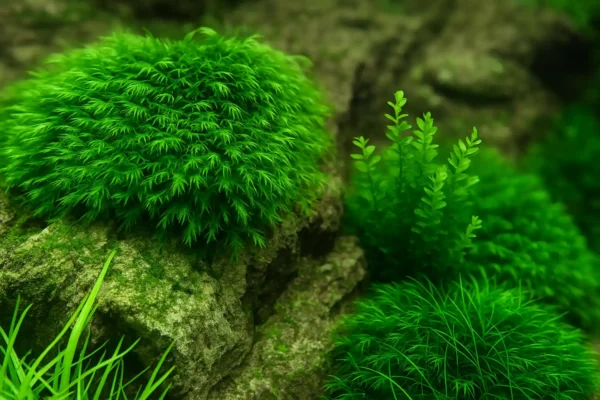
Aquarium moss is one of the most versatile plant groups in freshwater aquariums. It can be attached to driftwood, stones, roots, mesh, caves, shrimp shelters, and foreground structures. It creates a natural aged look, softens hardscape, provides grazing surfaces for shrimp, protects fry, and adds fine texture that most larger aquarium plants cannot create.
Moss is also beginner-friendly when expectations are realistic. It does not need nutrient-rich substrate, it can grow without CO₂, and many types tolerate low to moderate light. But aquarium moss is not maintenance-free. If it grows too thick, collects debris, sits under too much light, or receives poor flow, it can become messy, algae-covered, or brown inside the clump.
This guide explains aquarium moss care in detail: the best moss types, Java moss, Christmas moss, Flame moss, Phoenix moss, Coral moss, attachment methods, lighting, CO₂, fertilizer, trimming, propagation, shrimp tank use, nano aquascaping, moss carpets, moss walls, and common problems. For the broader plant group, read the Epiphyte Aquarium Plants guide. If you want similar hardscape plants, compare the Anubias Aquarium Plant Guide, Java Fern Aquarium Plant Guide, and Bucephalandra Aquarium Plant Guide.
Quick answer: Aquarium moss is a low-demand plant group that grows best attached to hardscape, mesh, stones, or driftwood. Use low to moderate light, avoid excessive direct lighting, trim regularly, keep debris out of dense clumps, and choose the moss type based on the texture and growth pattern you want.
What you’ll learn in this lesson
- Which aquarium moss types are best for planted tanks
- How Java moss, Christmas moss, Flame moss, Phoenix moss and Coral moss compare
- How aquarium moss grows and spreads over hardscape
- How to attach moss to rocks, driftwood and mesh
- How much light aquarium moss needs
- Whether moss needs CO₂ or fertilizer
- How to trim moss without creating a mess
- How to use moss in shrimp tanks, nano tanks and aquascapes
- How to prevent algae, browning, detachment and debris buildup
What Is Aquarium Moss?
Aquarium moss is a group of small aquatic or semi-aquatic mosses used in freshwater aquariums. Unlike stem plants, moss does not grow as upright stems that are planted into substrate. Unlike rosette plants, it does not form a central crown. Instead, moss forms fine branching growth that can attach to hardscape, spread across surfaces, or grow into dense pads over time.
Most aquarium mosses are used as epiphyte-style plants. They are not true root-feeding plants. They absorb nutrients mainly from the water column and can be tied, glued, wedged, or grown over surfaces.
Aquarium moss is commonly used for:
- Covering driftwood and stones
- Creating natural aged hardscape
- Building moss carpets and moss walls
- Adding fine texture in nano aquascapes
- Providing shrimp grazing surfaces
- Supporting biofilm and microhabitats
- Protecting fry and baby shrimp
- Softening hardscape edges
- Creating shaded, natural plant zones
The main advantage of moss is flexibility. The main challenge is control. Moss can look beautiful when maintained, but messy when ignored.
Ready to set up your own tank?
Create a free account to save lessons, plan your setup, and use the Tank Hub to turn ideas into a real aquarium.
Aquarium Moss Care Overview
Aquarium moss is usually easy to grow, but the care style is different from rooted plants. You do not need rich substrate. You do need good placement, clean water movement, controlled light, and regular trimming.
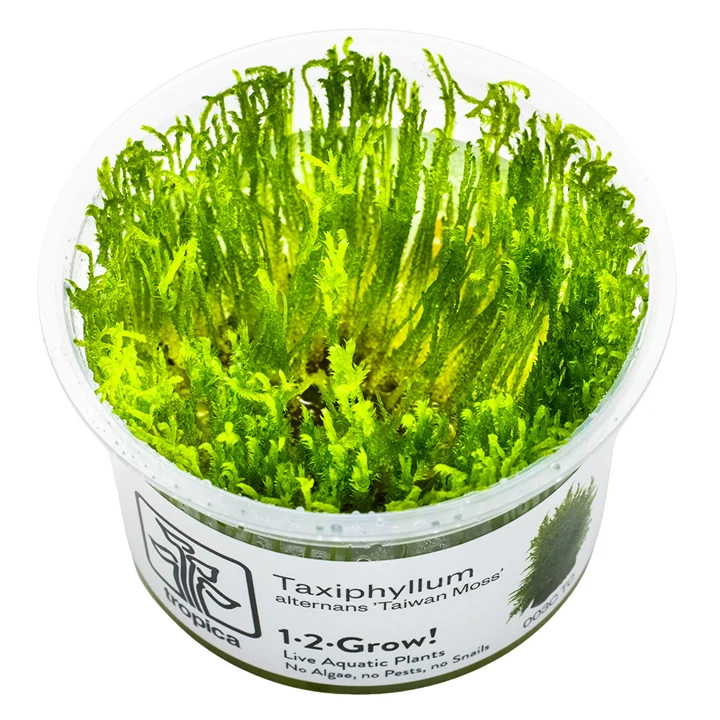 Beginner Friendly
Taxiphyllum alternans "Taiwan Moss"
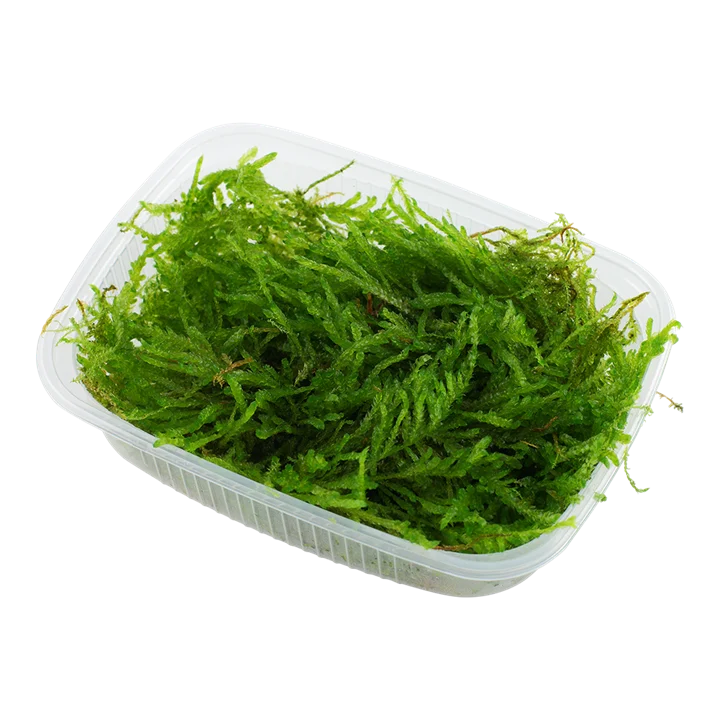 Intermediate
Vesicularia ferriei "Weeping Moss"
 Advanced
Barbula sp.
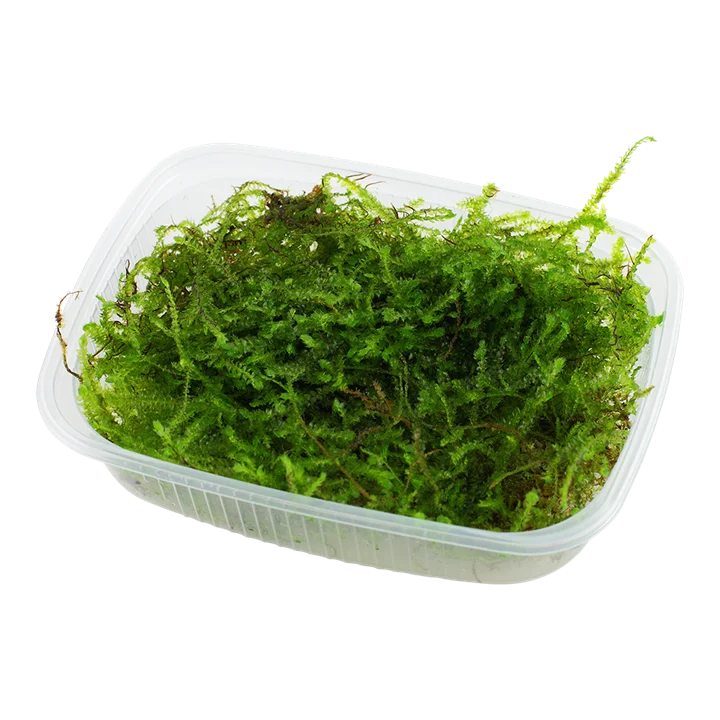 Beginner Friendly
Taxiphyllum barbieri
 Beginner
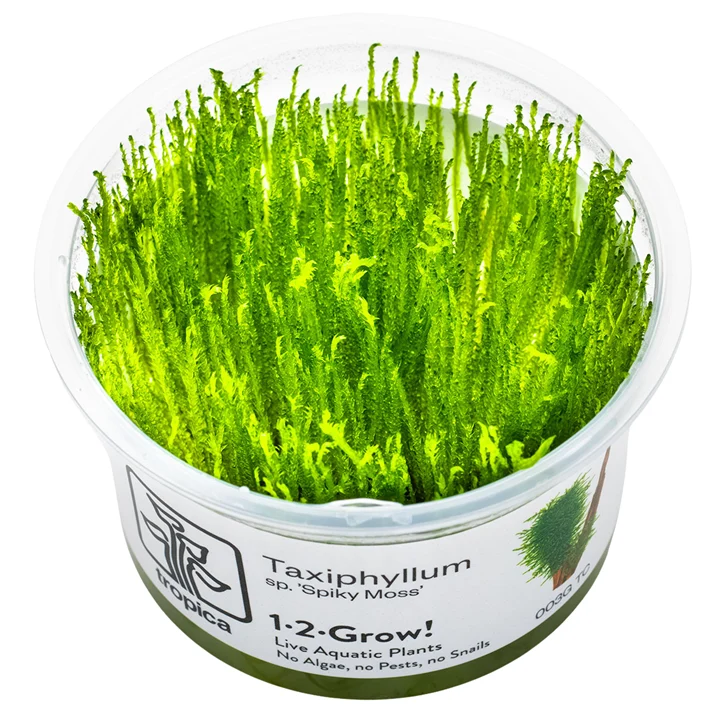
Taxiphyllum sp. "Spiky Moss"
 Intermediate
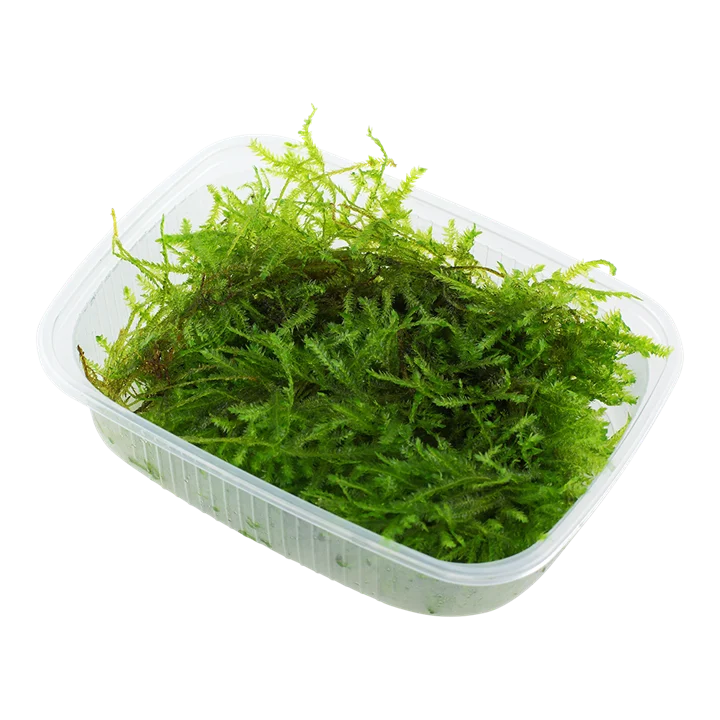
Vesicularia montagnei "Christmas Moss"
 Beginner Friendly
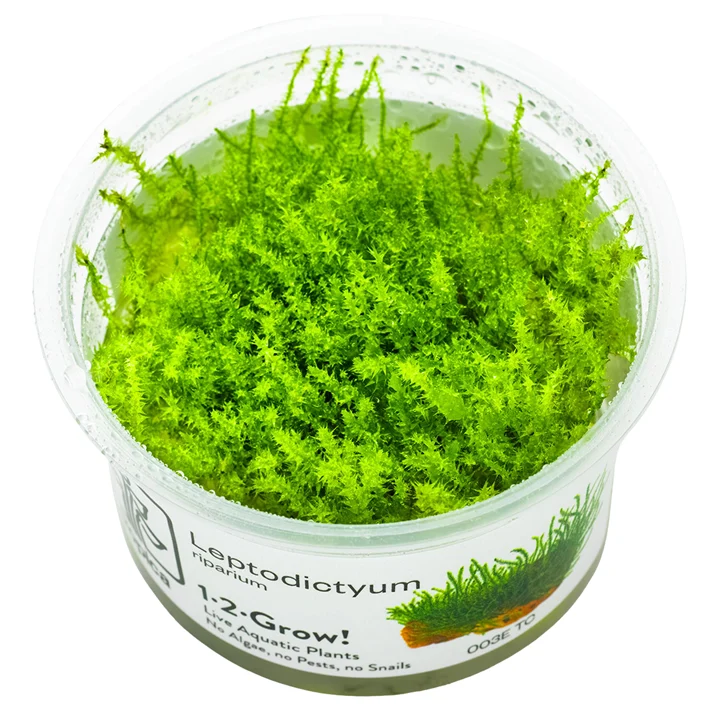
Leptodictyum riparium
 Intermediate
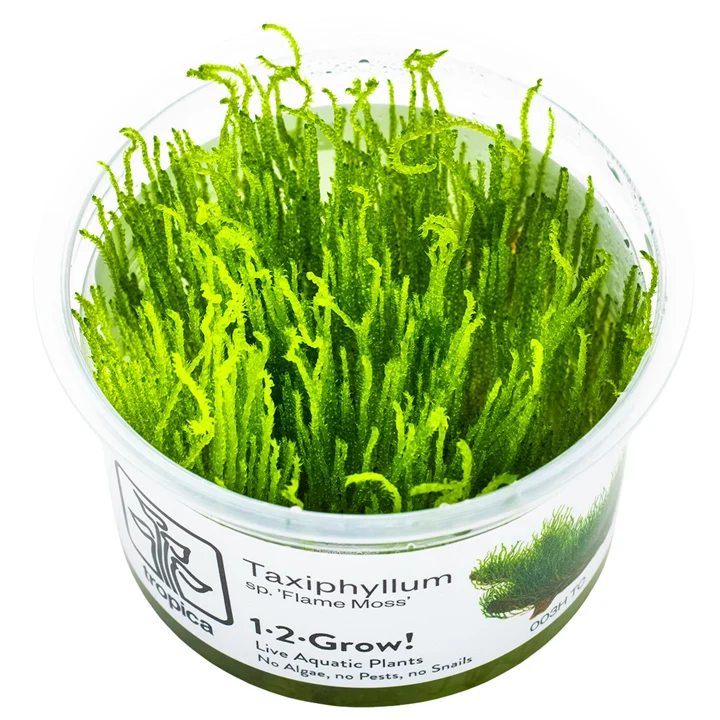
Taxiphyllum sp. "Flame Moss"
| Care Factor | Aquarium Moss Preference | Beginner Note |
|---|---|---|
| Difficulty | Easy to medium | Easy to grow, but needs trimming to stay clean |
| Placement | Wood, rocks, mesh, caves, foreground, shrimp zones | Best attached in thin layers |
| Light | Low to moderate | Too much light can trigger algae |
| CO₂ | Not required | CO₂ can improve growth but is optional |
| Fertilizer | Water-column nutrients | Light fertilization can help in very clean tanks |
| Substrate | Not required | Moss does not need to be planted into soil |
| Water conditions | Typical stable freshwater conditions | Avoid sudden changes, stagnant areas and heavy debris buildup |
| Growth rate | Slow to moderate depending on type | Java moss is usually more forgiving than decorative mosses |
| Maintenance | Regular trimming and debris removal | Dense moss traps waste if neglected |
Moss is beginner-friendly, but the cleanest moss aquascapes are maintained intentionally. Thin, attached moss usually looks better than thick loose clumps.
How Aquarium Moss Grows
Aquarium moss grows by producing fine branching strands, fronds, or compact pads depending on the species. Some mosses spread irregularly in many directions, while others grow in more recognizable patterns such as triangular branches, upright shoots, drooping fronds, or feather-like growth.
This growth habit is what makes moss so useful in aquascaping. It can make hardscape look older, softer, and more natural. However, the same fine structure can also trap detritus, uneaten food, algae spores, and loose plant fragments. That is why moss should usually be attached in thin layers and trimmed before it becomes too dense.
Most moss growth happens from clean, healthy green tips. If the inner layer becomes brown but the outer tips remain green, the moss may still recover after trimming, thinning, and improving water movement.
Best Aquarium Moss Types
Different aquarium moss types create different textures. Some grow wild and irregular. Others form triangular fronds, upright flames, compact pads, drooping branches, or fine delicate detail. Choose the moss based on the aquascape effect you want.
| Moss Type | Best Use | Difficulty | Texture |
|---|---|---|---|
| Java Moss | Beginner tanks, shrimp tanks, driftwood, rocks | Easy | Wild, irregular, forgiving |
| Christmas Moss | Structured branches, moss walls, aquascaping detail | Easy to medium | Layered, triangular, fir-like |
| Flame Moss | Vertical texture on wood or stones | Easy to medium | Upright twisting growth |
| Weeping Moss | Drooping branches on driftwood | Medium | Soft downward growth |
| Spiky Moss | Bold hardscape texture and larger tanks | Medium | Coarser, branching growth |
| Phoenix Moss / Fissidens | Fine detail, nano aquascapes, stone accents | Medium | Refined feather-like texture |
| Riccardia / Coral Moss | Advanced hardscape detail | Medium to advanced | Compact coral-like texture |
If this is your first moss, start with Java moss. If you want a more structured aquascape look, try Christmas moss or Flame moss. If you want fine-scale detail, use Fissidens or Riccardia after you understand basic moss care.
Java Moss: The Best Beginner Aquarium Moss
Java moss is the classic beginner aquarium moss. It is hardy, adaptable, easy to attach, and useful in many freshwater setups. It can grow on driftwood, rocks, mesh, caves, sponge filters, shrimp shelters, and foreground stones.
Java moss is not always the neatest moss. Its growth can look wild and irregular. That makes it excellent for natural tanks, shrimp aquariums, fry cover, and low-maintenance hardscape. It is less ideal if you want a perfectly ordered aquascape texture without trimming.
- Best for: beginners, shrimp tanks, fry cover, natural hardscape.
- Light: low to moderate.
- CO₂: not required.
- Growth: moderate in good conditions.
- Maintenance: trim to prevent loose messy clumps.
- Main mistake: letting it grow too thick and trap debris.
Java moss is the safest starting point if you want to learn how moss behaves before trying more decorative varieties.
Christmas Moss: Structured Aquascaping Moss
Christmas moss is popular because it grows in a more structured, branching pattern than Java moss. Its fronds can resemble small fir tree branches, which makes it attractive for moss walls, driftwood branches, and aquascaped hardscape.
Christmas moss usually looks more intentional than Java moss when trimmed well. It is a good choice when you want a moss that creates layered texture instead of wild growth. It may grow more slowly and appreciate stable conditions.
- Best for: moss walls, driftwood, aquascaped hardscape, structured texture.
- Light: low to moderate.
- CO₂: optional, but helpful for stronger growth.
- Growth: slower than Java moss in many tanks.
- Maintenance: trim to keep the branch structure visible.
- Main mistake: letting it become a thick dark mat with poor flow.
Choose Christmas moss when the visual shape of the moss matters more than maximum beginner forgiveness.
Flame Moss: Upright Texture for Hardscape
Flame moss has a distinct upright growth pattern. Instead of spreading flat like many mosses, it tends to grow upward in twisting vertical shoots. This makes it useful for creating unusual texture on stones, wood, or small hardscape accents.
Flame moss can work in low-tech aquariums, but it looks best when it is kept clean and trimmed. Its upright shape can disappear if it is allowed to become tangled with debris or other mosses.
- Best for: vertical texture, rock accents, wood details, nano layouts.
- Light: low to moderate.
- CO₂: not required, but helpful for growth.
- Growth: moderate when stable.
- Maintenance: trim carefully to keep the upward shape.
- Main mistake: using it where a flat moss carpet is the goal.
Use Flame moss as a texture plant, not as a universal moss replacement.
Weeping Moss, Spiky Moss, Phoenix Moss and Coral Moss
Once you understand Java moss, Christmas moss, and Flame moss, you can explore more decorative mosses. Weeping moss, Spiky moss, Phoenix moss, and Coral moss create more specific aquascaping effects.
Weeping moss is often used on driftwood where a downward, hanging effect is desired. Spiky moss has a larger, more dramatic growth pattern. Phoenix moss, often associated with Fissidens, creates refined feather-like detail and can look excellent in nano aquascapes and stone layouts. Coral moss, often associated with Riccardia, creates a compact, textured appearance that works especially well on hardscape accents.
| Moss | Design Effect | Best Use |
|---|---|---|
| Weeping Moss | Drooping growth | Branches, root layouts, hanging effects |
| Spiky Moss | Bold branching texture | Larger hardscape and background detail |
| Phoenix Moss / Fissidens | Fine feather-like texture | Nano tanks, stones, refined aquascapes |
| Riccardia / Coral Moss | Compact coral-like texture | Advanced hardscape detail |
These mosses are not always difficult, but they are less forgiving than Java moss if the tank has algae, poor flow, unstable lighting, or heavy debris buildup.
How to Attach Aquarium Moss to Rocks and Driftwood
Aquarium moss usually looks best when attached in thin layers. Thick clumps may float away, die off inside, trap debris, or look unnatural. A thin layer attaches more cleanly and creates a better long-term texture.
You can attach moss using cotton thread, fishing line, aquarium-safe cyanoacrylate gel, mesh, or by wedging small pieces into hardscape cracks. Each method has advantages.
| Attachment Method | Best For | Beginner Note |
|---|---|---|
| Cotton thread | Wood, roots, natural scapes | Can break down after moss attaches |
| Fishing line | Secure attachment to rocks or wood | Strong but may remain visible |
| Cyanoacrylate gel | Fast placement on stones and wood | Use tiny amounts to avoid white glue marks |
| Mesh | Moss walls, carpets, flat pads | Useful but can trap debris if too dense |
| Wedging | Cracks, crevices, natural hardscape | Works if moss is secure and not crushed |
For most aquascapes, the best result comes from small pieces spread thinly across the surface. Do not tie a large moss ball onto a stone and expect it to become a clean carpet. Thin, even coverage gives the moss better access to light, flow, and nutrients.
Can Aquarium Moss Be Planted in Substrate?
Aquarium moss does not need to be planted into substrate. It has no true root system like rooted aquarium plants. If you push moss into sand or soil, it may float away, collect debris, or become buried and decay.
If you want moss near the substrate, attach it to small flat stones, mesh pads, or hardscape pieces and place those on top of the substrate. This gives a carpet-like look without burying the moss itself.
- Do not bury moss deeply in sand or soil.
- Attach moss to stones for foreground patches.
- Use mesh only if you can keep it clean.
- Avoid thick layers that trap waste.
- Trim regularly so the lower layer does not die off.
For true rooted carpets, use the Aquarium Carpeting Plants Guide. Moss carpets are possible, but they behave differently from rooted foreground plants.
Can Aquarium Moss Float?
Aquarium moss can float if it is not attached properly, but floating moss is usually harder to control than attached moss. Loose moss may drift into filter intakes, shade other plants, collect debris, or attach itself in places where you do not want it.
Floating moss can be useful in breeding or fry tanks when temporary cover is needed, but it is rarely the best choice for a clean aquascape. In display tanks, attach moss to wood, stones, mesh, or caves so it stays where it belongs.
Aquarium Moss Lighting Requirements
Most aquarium moss grows well in low to moderate light. This makes moss useful in shaded aquascapes, low-tech aquariums, shrimp tanks, and hardscape-heavy layouts.
Stronger light can make moss grow faster, but it also increases algae risk. Moss has fine surfaces that can collect algae easily if the aquarium is overlit, overfed, poorly maintained, or low in healthy plant mass.
| Lighting Situation | Moss Response | Recommendation |
|---|---|---|
| Low light | Slow but stable growth | Good for Java moss and shade-tolerant mosses |
| Moderate light | Healthier density and better visible growth | Best general range for most tanks |
| Strong direct light | Faster growth but higher algae risk | Use only if CO₂, nutrients and maintenance are stable |
| Deep shade | Very slow growth or browning inside clumps | Thin the moss and improve gentle light |
| Long photoperiod | Algae risk increases | Use a timer and keep lighting consistent |
For lighting basics, read the Aquarium Plant Light Requirements, Low Light Aquarium Plants, and Aquarium Lighting Guide.
Does Aquarium Moss Need CO₂?
Aquarium moss does not require pressurized CO₂. Java moss, Christmas moss, Flame moss, and many other mosses can grow in low-tech aquariums without CO₂ injection.
CO₂ can improve growth speed and density, especially in high-light aquascapes. But moss remains relatively simple compared with demanding carpets or red stem plants. Adding CO₂ only for moss is usually unnecessary.
The bigger issue is balance. If you run strong light without CO₂ and stable maintenance, moss can become algae-covered. In a no-CO₂ tank, lower to moderate light is usually safer.
- Moss can grow without CO₂.
- CO₂ is optional, not required.
- CO₂ may improve density and recovery after trimming.
- Strong light without balance can cause algae.
- No-CO₂ moss tanks should use moderate lighting and regular cleaning.
For low-tech setup strategy, read the No CO₂ Planted Tank guide.
Does Aquarium Moss Need Fertilizer?
Aquarium moss absorbs nutrients from the water column. It does not need root tabs or nutrient-rich substrate. In many fish or shrimp tanks, moss may receive enough nutrients from feeding and organic waste. In very clean planted aquariums, light liquid fertilization can help.
Because moss grows slowly to moderately, heavy fertilization is usually unnecessary. The goal is steady, gentle nutrition, not aggressive dosing. If you dose heavily while light and plant uptake are low, algae can become worse.
- Use water-column fertilizer if growth is weak.
- Do not use root tabs for moss itself.
- Keep dosing moderate in low-light tanks.
- Watch for new green growth after trimming.
- Remove debris so nutrients do not accumulate inside thick moss.
For nutrient basics, read Macronutrients for Aquarium Plants and Micronutrients for Aquarium Plants.
How to Trim Aquarium Moss
Trimming is the most important part of aquarium moss care. Moss may look low-maintenance at first, but if it becomes too thick, the inner layers can turn brown, trap detritus, block flow, and collect algae.
Trim moss with sharp scissors and remove cuttings immediately. Loose moss fragments can spread around the aquarium, clog filter intakes, attach where you do not want them, or decay in hidden corners.
- Trim before the moss becomes too thick.
- Use sharp scissors for clean cuts.
- Remove loose fragments with a net or siphon.
- Thin moss from the inside if it becomes dense.
- Trim moss walls and carpets more often than small accents.
- Do not let moss cover filter intakes or outflows.
- Use trimmings to start new moss patches if they are algae-free.
Regular light trimming is usually better than rare heavy trimming. Moss looks cleanest when it is shaped before it becomes a tangled mass.
How to Propagate Aquarium Moss
Aquarium moss is easy to propagate. You simply take healthy, algae-free pieces and attach them to a new surface. Small fragments can grow into new patches over time.
The best propagation pieces are clean, green, and actively growing. Avoid using brown, algae-covered, or decaying moss because it may bring the same problem into the new area.
Basic propagation method
- Select healthy green moss.
- Trim a small amount from an established patch.
- Spread it thinly over rock, wood, or mesh.
- Attach it with thread, line, gel glue, or mesh.
- Place it in low to moderate light.
- Keep flow gentle but not stagnant.
- Trim lightly as the new patch thickens.
Do not start new moss patches with huge clumps. Thin layers attach better and stay cleaner.
Aquarium Moss in Shrimp Tanks
Moss is one of the best plant choices for shrimp tanks. It creates a complex surface where biofilm and tiny food particles collect. Baby shrimp can hide inside fine moss structure, and adult shrimp often graze on the surfaces throughout the day.
Java moss is the classic shrimp tank choice because it is hardy and forgiving. Christmas moss and Fissidens can create a more refined look. Moss attached to small stones, wood, or shrimp caves can be moved and maintained more easily than loose clumps.
- Use moss on stones, wood, or shrimp caves.
- Keep moss clean so waste does not build up.
- Use gentle flow around moss patches.
- Avoid trapping uneaten food inside dense clumps.
- Trim moss so baby shrimp still have access to clean surfaces.
- Combine moss with Bucephalandra, Anubias, and Java Fern for structure.
Moss is not just decoration in shrimp tanks. It helps create a richer microhabitat.
Aquarium Moss in Nano Aquascapes
Moss is extremely useful in nano aquascapes because it creates fine texture without taking much space. It can make small rocks look older, soften miniature driftwood, and create detail that matches the scale of small tanks.
In nano tanks, restraint matters. Too much moss can make the layout look crowded. A few carefully placed moss patches often look better than covering every surface.
- Use fine moss types for small-scale detail.
- Attach moss thinly to stones or wood.
- Leave open sand or foreground space for depth.
- Trim frequently because small tanks overgrow quickly.
- Avoid large messy clumps in tiny aquariums.
- Use moss with Bucephalandra and small Anubias for refined hardscape.
For small tank plant planning, read the Nano Midground Aquarium Plants guide.
Moss Carpets and Moss Walls
Moss carpets and moss walls can look beautiful, but they require maintenance. A moss carpet is usually created by attaching moss to mesh, flat stones, or a grid near the substrate. A moss wall is usually created by sandwiching moss between mesh panels or attaching it vertically.
The risk is debris. Moss carpets and walls have many fine surfaces where waste can collect. If the layer becomes too thick, the inner moss may turn brown and algae may appear.
| Moss Feature | Best Use | Main Maintenance Need |
|---|---|---|
| Moss carpet | Foreground texture, shrimp grazing, natural pads | Trim and siphon debris gently |
| Moss wall | Back wall cover or shrimp shelter | Thin regularly and prevent detritus buildup |
| Moss tree | Decorative aquascape focal point | Trim to maintain crown shape |
| Moss-covered stones | Natural foreground or midground accents | Keep patches thin and clean |
| Moss-covered wood | Aged forest-stream look | Trim loose growth before it becomes messy |
If you want the easiest moss feature, start with moss-covered stones or wood. Moss carpets and walls need more long-term cleaning.
Algae on Aquarium Moss
Algae on moss is one of the hardest moss problems because algae can grow between fine strands. Once a dense moss patch is badly affected, it may be easier to trim away the damaged section than to clean every strand.
Prevention is much easier than repair. Keep light moderate, avoid overfeeding, maintain water changes, remove debris, and do not let moss become too thick.
- Use low to moderate light.
- Avoid long photoperiods.
- Keep moss thin enough for flow.
- Remove trapped food and debris.
- Trim algae-covered sections early.
- Do not overfeed shrimp or fish near moss.
- Add faster plants if the tank lacks nutrient uptake.
- Keep filter flow gentle but consistent.
If algae keeps returning, read the Aquarium Lighting and Algae guide. Algae on moss usually reflects overall system imbalance, not just a moss-specific problem.
Why Is My Aquarium Moss Turning Brown?
Aquarium moss can turn brown for several reasons: poor light, too much shade inside thick clumps, debris buildup, transition stress, algae, weak flow, or unstable conditions. Brown moss does not always mean the entire plant is dead, but it does mean something should be checked.
| Symptom | Likely Cause | What to Do |
|---|---|---|
| Brown inside thick clump | Inner layer lacks light and flow | Thin and trim the moss |
| Brown after purchase | Transition stress or shipping damage | Remove dead parts and wait for new growth |
| Brown with trapped debris | Waste buildup and poor maintenance | Siphon gently and trim dense areas |
| Brown under deep shade | Too little usable light | Move to slightly brighter placement |
| Brown with algae coating | Light and nutrient imbalance | Trim affected areas and review lighting |
Look for healthy green tips. If the tips are still growing, the moss may recover after trimming and better placement.
Common Aquarium Moss Problems
Most aquarium moss problems come from too much light, too little cleaning, thick growth, weak flow, or loose attachment. Use symptoms to identify the most likely issue before replacing the moss.
| Problem | Likely Cause | What to Check |
|---|---|---|
| Moss floats away | Weak attachment or thick clumps | Attach thin layers more securely |
| Moss turns brown | Low light, debris, transition stress, or inner die-off | Trim, thin and improve placement |
| Algae covers moss | Too much light or organic buildup | Reduce light pressure and remove waste |
| Moss traps debris | Growth too thick or flow too weak | Thin moss and siphon gently |
| Moss grows everywhere | Loose fragments spread around tank | Remove trimmings and control fragments |
| Moss wall browns inside | Too dense or poor water movement | Thin the wall and improve flow |
| Moss does not grow | Very low light, low nutrients or adaptation | Wait, then adjust light or fertilization gently |
Moss care is usually about prevention. Once a moss mass becomes dirty, thick, and algae-covered, recovery can be slow.
Aquarium Moss vs Anubias, Java Fern and Bucephalandra
Moss, Anubias, Java Fern, and Bucephalandra all work well on hardscape, but they create very different effects. Moss is the finest and softest texture. Anubias gives broad leaves. Java Fern adds fern-like height. Bucephalandra adds compact detail and subtle color.
| Plant | Main Strength | Best Use |
|---|---|---|
| Aquarium moss | Fine texture, shrimp grazing, natural hardscape aging | Wood, rocks, mesh, shrimp tanks, nano detail |
| Anubias | Broad hardy leaves and beginner durability | Foreground, midground, shaded hardscape |
| Java Fern | Fern texture and stronger vertical structure | Midground, background, driftwood, shaded zones |
| Bucephalandra | Compact detail and subtle colors | Nano aquascapes, rocks, shrimp tanks, collector layouts |
Use moss when you need fine texture. Use Anubias, Java Fern and Bucephalandra when you need clearer plant structure.
Best Tank Setups for Aquarium Moss
Aquarium moss works in many setups, but it is especially useful where hardscape, small animals, and fine detail matter.
| Setup Type | Best Moss Use | Care Tip |
|---|---|---|
| Shrimp tank | Grazing surfaces and baby shrimp shelter | Keep moss clean and avoid trapped food |
| Nano aquascape | Fine-scale hardscape detail | Use thin patches and trim often |
| Low-tech aquarium | Easy hardscape greenery | Use moderate light and gentle fertilization |
| Fry tank | Cover and microhabitat | Use loose or attached moss depending on cleaning access |
| Nature style aquascape | Aged wood, stones and forest-stream texture | Trim so the moss does not hide hardscape shape |
| Biotope-inspired aquarium | Natural texture and habitat detail | Use moss only where it fits the intended habitat impression |
| Betta tank | Soft cover and shaded areas | Keep open swimming and surface access |
Moss is most successful when you can reach it for maintenance. Avoid placing huge moss clumps where you cannot trim or clean them.
Common Mistakes With Aquarium Moss
Aquarium moss is easy, but beginners often make it harder by using too much at once or neglecting maintenance.
| Mistake | Why It Causes Problems | Better Approach |
|---|---|---|
| Attaching thick clumps | Inner moss browns and traps debris | Use thin layers |
| Using too much direct light | Algae grows between strands | Use low to moderate light |
| Never trimming moss | Growth becomes messy and dirty | Trim regularly and remove fragments |
| Letting moss block filter intakes | Reduces flow and traps waste | Keep moss away from equipment openings |
| Leaving cuttings in the tank | Fragments spread or decay | Net or siphon trimmings immediately |
| Using moss as the only plant in a new tank | Low plant mass may not absorb nutrients fast enough | Combine with faster plants if algae-prone |
| Making moss walls too dense | Poor flow and inner browning | Thin the wall and keep it accessible |
The cleanest moss aquariums usually use less moss, placed more carefully, and trimmed more consistently.
Final Aquarium Moss Care Checklist
Use this checklist when adding moss to your aquarium:
- Choose Java moss if this is your first moss.
- Use Christmas moss for structured branches.
- Use Flame moss for upright texture.
- Use Phoenix moss or Fissidens for refined nano detail.
- Use Riccardia or Coral moss for compact hardscape texture.
- Attach moss in thin layers to wood, rocks, or mesh.
- Use low to moderate light.
- Do not bury moss in substrate.
- Trim before moss becomes too thick.
- Remove loose fragments after trimming.
- Keep debris out of dense moss patches.
- Use moss with shrimp, nano layouts, and hardscape detail.
If you follow these rules, aquarium moss can become one of the most useful and attractive plant groups in your tank.
Conclusion
Aquarium moss is one of the most flexible plant groups in freshwater aquariums. It can cover rocks, soften driftwood, create shrimp grazing surfaces, protect fry, build moss carpets, and add fine natural texture to aquascapes.
Java moss is the best beginner option because it is hardy and adaptable. Christmas moss creates more structured branches. Flame moss adds upright texture. Phoenix moss, Fissidens, Weeping moss, Spiky moss and Riccardia offer more specialized aquascaping effects.
The key to success is maintenance. Attach moss thinly, keep lighting controlled, trim regularly, remove debris, and avoid letting moss become a thick dirty mat. When used intentionally, aquarium moss can make a tank look older, softer, more natural, and more alive.
💬 Join the Conversation
Which aquarium moss are you using — Java moss, Christmas moss, Flame moss, Fissidens, Weeping moss, Spiky moss, Riccardia or another variety?
Tag us on Instagram @AquariumLesson — we’d love to see your moss-covered hardscape, shrimp tank, nano aquascape, or moss carpet progress.
FAQ
What is the easiest aquarium moss?
Java moss is usually the easiest aquarium moss for beginners. It is hardy, adaptable, grows in low to moderate light, and can be attached to rocks, driftwood, mesh, or shrimp shelters.
Does aquarium moss need CO₂?
No. Most aquarium moss types can grow without pressurized CO₂. CO₂ can improve growth and density, but it is not required for Java moss, Christmas moss, Flame moss, and many other mosses.
Can aquarium moss grow in low light?
Yes. Many aquarium mosses grow in low to moderate light. Growth may be slower in low light, but moss often stays healthier than it would under excessive direct light that causes algae.
How do you attach aquarium moss to rocks?
Spread a thin layer of moss across the rock and secure it with cotton thread, fishing line, mesh, or small dots of aquarium-safe cyanoacrylate gel. Thin layers attach better and stay cleaner than thick clumps.
Can aquarium moss float?
Yes, aquarium moss can float if it is not attached. Floating moss may provide temporary cover in breeding or fry tanks, but in display aquariums it is usually better to attach moss to wood, stones, mesh, or caves so it stays controlled and easy to maintain.
Why is my aquarium moss turning brown?
Aquarium moss may turn brown because of too little light, transition stress, debris buildup, poor flow, algae, or thick growth that blocks light from the inner layer. Trim and thin the moss, remove debris, and check lighting.
Is aquarium moss good for shrimp?
Yes. Aquarium moss is excellent for shrimp tanks because it creates grazing surfaces, shelter, and hiding places for baby shrimp. Java moss, Christmas moss, and Fissidens are especially useful in shrimp aquariums.
Can aquarium moss be used as a carpet?
Yes, aquarium moss can be used as a carpet by attaching it to mesh or flat stones. However, moss carpets need regular trimming and gentle cleaning because they can trap debris and turn brown inside if they become too thick.
Start building your aquarium with the Tank Hub
Save your favorite lessons, organize your setup, and track your aquarium step by step in your personal Tank Hub.
New to AquariumLesson? Start with our complete Aquarium Lessons Hub or return to the homepage at AquariumLesson.com.
Continue learning
References
- Tropica — Taxiphyllum barbieri “Java Moss” Plant Details
- Tropica — Vesicularia montagnei “Christmas Moss” Plant Details
- Aquarium Co-Op — Java Moss Care Guide
- Aquasabi — Tying Down Aquatic Mosses
- Aquasabi — Taxiphyllum barbieri Java Moss
- Buce Plant — Flame Moss Plant Profile
- Aquarium Gardens — Aquarium Mosses