Aquarium Power Outage: What to Do When Equipment Stops
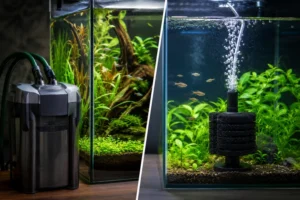
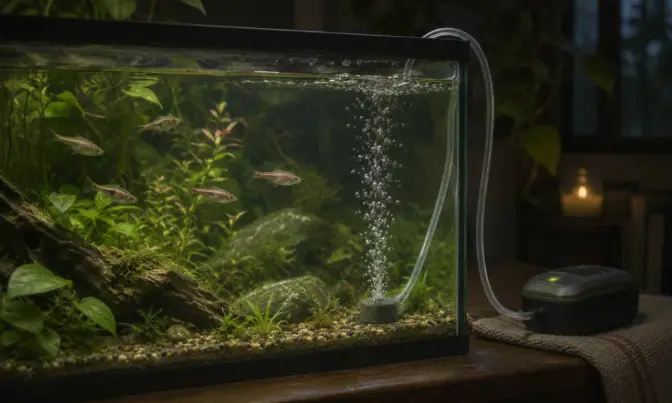
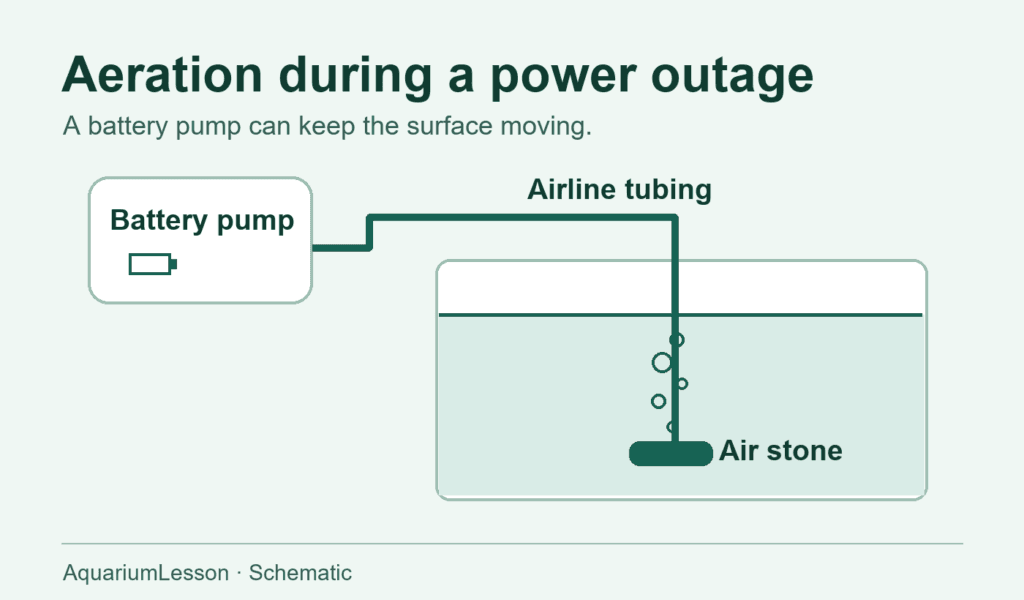
When a filter and air pump stop, start by restoring surface movement. A battery-operated air pump and air stone can aerate the tank while the main equipment is off. If there is water around plugs or electrical equipment, keep clear and isolate power from a dry, safe point before touching anything.
In the first few minutes
- Restore aeration. Set up a battery air pump according to its instructions. Watch whether water moves at the surface. If you have no pump, manually moving aquarium water at the surface can buy time while you arrange a reliable aeration source.
- Check the fish. Gasping or a group crowding the surface is urgent. See low-oxygen signs and response.
- Check the thermometer. Use the species’ normal range. Keep the room stable if possible. If you insulate the sides during a cold outage, leave the top accessible for aeration and monitoring.
- Pause routine feeding while filtration is down. Extra food increases waste. Fry or animals on a special feeding plan need species-specific advice.
When the outage continues
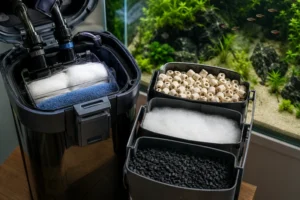
Check how long your battery pump runs in actual use and keep spare batteries. Warm tanks and heavily stocked tanks can lose their oxygen margin quickly. Recheck fish behavior and temperature. If you have suitable equipment, keep biological filter media wet in oxygenated aquarium water while the filter is offline. Prepare tested replacement water in case ammonia or nitrite appears.
Use what you learn in My Aquariums
Follow a new aquarium through cycling or see how water readings and care change over time in an established setup.
Restart one system at a time
Check electrical equipment for leaks or damage before restarting. Confirm the filter has primed and water is moving. If water has sat in a closed canister for an extended period or smells foul, avoid sending that water into the display. Follow the manufacturer’s restart procedure, discard suspect standing water and keep viable media damp. Avoid replacing all biological media at once.
Confirm the heater setting and read a separate thermometer. Keep aeration running until circulation is restored and fish behavior has settled. Test ammonia and nitrite after the restart and again while monitoring the tank. Act on an abnormal result using the water parameters guide. Write down what stopped, when you restored it and what the tests showed.
Sources
UF/IFAS Extension’s fish power-outage handout and UF/IFAS dissolved oxygen guidance.
Lesson marked as read
Your reading progress is saved.
Continue learning →