EI Dosing Guide: Estimative Index for Planted Aquariums
Introduction
This EI dosing guide explains one of the most influential fertilizer methods in planted aquariums: the Estimative Index. EI dosing is built around a simple idea: instead of trying to test every nutrient perfectly, you dose enough macronutrients and micronutrients so plants are not limited, then reset excess buildup with large regular water changes.
For high-tech planted tanks with strong light, CO₂ injection, dense plant mass and fast trimming cycles, EI can be a powerful system. It helps prevent nutrient starvation, supports rapid growth, and makes plant care more predictable when light and carbon are already strong.
But EI is not magic. It is also not the best method for every aquarium. A low-light beginner tank, a lightly planted community aquarium, or a sensitive shrimp setup may not need full-strength EI dosing. In those systems, a leaner method or a simple complete fertilizer may be easier and safer.
This guide explains what EI dosing is, when it works, when it is too much, how macros and micros are usually dosed, why water changes matter, how to adapt EI for different tanks, and how to avoid common mistakes. For the nutrient foundation behind EI, read Macronutrients for Aquarium Plants, Micronutrients for Aquarium Plants, and Trace Elements for Aquarium Plants.
Quick answer: EI dosing, or Estimative Index dosing, is a planted aquarium fertilizer method that intentionally supplies non-limiting nutrients through regular macro and micro dosing, then uses large weekly water changes to reset accumulation. It works best in high-energy planted tanks with stable CO₂, good flow and strong plant growth.
What You’ll Learn in This Lesson
- What EI dosing means in planted aquariums
- Why Estimative Index dosing was created
- How EI dosing uses macros, micros and water changes
- Which tanks benefit most from EI
- When EI dosing is too strong or unnecessary
- How to build a simple EI dosing schedule
- How EI differs from lean dosing and all-in-one fertilization
- How to troubleshoot algae, deficiencies and nutrient accumulation under EI
What Is EI Dosing?
EI dosing stands for Estimative Index dosing. It is a fertilization method for planted aquariums where nutrients are dosed in generous, predictable amounts so plants do not run out of essential elements during the week.
The word “estimative” matters. EI does not try to measure exact plant uptake every day. Instead, it estimates a safe nutrient surplus for plant growth. The weekly water change then prevents the surplus from accumulating endlessly.
In practice, EI usually involves:
- Regular macronutrient dosing: nitrate, phosphate and potassium
- Regular micronutrient dosing: iron and trace elements
- Stable CO₂ injection in high-tech tanks
- Moderate to strong lighting matched to plant demand
- Good water circulation and oxygenation
- Regular trimming and plant maintenance
- A large weekly water change, often around 50%
EI is best understood as a complete growth system. Fertilizer alone is not enough. The method assumes that light, CO₂, flow and maintenance are also strong enough to support the growth that nutrients are trying to fuel.
Ready to set up your own tank?
Create a free account to save lessons, plan your setup, and use the Tank Hub to turn ideas into a real aquarium.
The Core Idea Behind Estimative Index Dosing
The core idea behind Estimative Index dosing is to remove nutrient limitation from the aquarium. If plants have enough nitrate, phosphate, potassium, magnesium, iron and trace elements, then poor growth is less likely to be caused by missing fertilizer.
This makes troubleshooting easier in high-tech aquariums. If nutrients are available but plants still struggle, the problem is more likely to be CO₂, lighting, flow, trimming, substrate, plant adaptation or maintenance.
EI also challenges an older idea that phosphate or nitrate should always be kept near zero to avoid algae. In planted tanks, nitrate and phosphate are plant nutrients. If plants are starved, algae can become worse because healthy plant growth is weakened.
| EI Principle | What It Means | Why It Matters |
|---|---|---|
| Non-limiting nutrients | Plants receive enough macros and micros | Reduces deficiency-driven growth stalls |
| Estimative dosing | You dose based on expected plant demand, not perfect daily testing | Simplifies high-tech fertilization |
| Weekly reset | Large water changes prevent long-term buildup | Keeps nutrient accumulation manageable |
| High plant demand | EI assumes plants can actually use the nutrients | Works best with strong light, CO₂ and plant mass |
| System balance | Fertilizer is only one part of the method | CO₂, flow and maintenance still matter |
EI is not about dumping nutrients randomly. It is about dosing generously inside a controlled routine.
Who Should Use EI Dosing?
EI dosing is most useful for aquarists running high-energy planted tanks. These aquariums usually have strong lighting, CO₂ injection, dense plant growth, frequent trimming and fast nutrient uptake.
If your plants are growing quickly, nutrients can become limiting fast. EI helps prevent that by keeping the water column supplied throughout the week.
| Aquarium Type | EI Suitability | Reason |
|---|---|---|
| High-tech aquascape with CO₂ | Excellent fit | Fast plant growth needs strong nutrient support |
| Dutch-style planted tank | Excellent fit | Dense stems and trimming cycles use nutrients quickly |
| Carpet-heavy aquascape | Good fit | Carpets need stable nutrients, CO₂ and light |
| Red plant layout | Good fit | Color plants benefit from complete nutrition and strong growth |
| Medium-tech planted tank | Possible with reduced dosing | Demand may be lower than full EI assumes |
| Low-tech beginner tank | Usually too much | Lower light and no CO₂ mean lower demand |
| Shrimp-only low-tech tank | Use cautiously | Stability and gentle dosing matter more than maximum growth |
If your tank has low light, slow plants and no CO₂, EI may be more fertilizer than you need. In that case, a lean dosing method or simple complete fertilizer may be more appropriate.
EI Dosing and CO₂: Why Carbon Stability Matters
EI dosing is often associated with high-tech CO₂-injected aquariums because nutrients only help when plants can use them. In strong light, plants need enough carbon. If CO₂ is unstable or too low, adding more fertilizer will not solve the main limitation.
This is one of the biggest EI mistakes: aquarists dose macros and micros correctly but ignore CO₂. The result can be algae, poor growth, melting or weak plant response even though fertilizer is abundant.
- Strong light increases plant demand for CO₂.
- EI supplies nutrients, but not carbon stability by itself.
- Unstable CO₂ can cause algae even with perfect fertilizer dosing.
- Good flow helps distribute CO₂ and nutrients across the tank.
- Plants need time to adapt after CO₂ or dosing changes.
If you are running EI, your CO₂ system should be stable, predictable and safe for livestock. For setup basics, read the Aquarium CO₂ System Guide.
EI Dosing and Light Intensity
Light controls plant demand. The stronger the light, the more nutrients and CO₂ plants need. EI dosing makes the most sense when the aquarium receives enough light to drive strong plant growth, but not so much light that CO₂ and maintenance fall behind.
More light is not automatically better. If your light is too intense, EI dosing may not prevent algae because the real problem is excessive energy. The tank may need lower intensity, shorter photoperiod, better CO₂, more plant mass or improved flow.
| Light Level | EI Relationship | Practical Advice |
|---|---|---|
| Low light | Full EI is usually unnecessary | Use leaner dosing or all-in-one fertilizer |
| Moderate light | Reduced EI may work well | Match dosing to plant mass and CO₂ availability |
| Strong light with CO₂ | Classic EI environment | Use consistent macros, micros and water changes |
| Strong light without CO₂ | High algae risk | Reduce light or add stable CO₂ before pushing EI |
| Uneven light distribution | Patchy plant response | Fix spread and shadowing before blaming fertilizer |
For light planning, use Aquarium PAR Explained and Aquarium Lighting and Algae.
What Nutrients Are Dosed in EI?
EI dosing usually separates nutrients into macronutrients and micronutrients. Macros are needed in larger amounts. Micros are needed in smaller amounts but are still essential for new growth and plant health.
The main EI nutrient groups are:
| Nutrient Group | Examples | Plant Role |
|---|---|---|
| Nitrogen | Nitrate from KNO₃ or complete fertilizer | Leaf growth, proteins, chlorophyll support |
| Phosphorus | Phosphate from KH₂PO₄ or complete fertilizer | Energy transfer, roots, shoot development |
| Potassium | K from KNO₃, KH₂PO₄, K₂SO₄ or fertilizer | Leaf strength, metabolism, transport |
| Magnesium | Mg from GH booster or magnesium sulfate | Chlorophyll and photosynthesis |
| Micronutrients | Iron, manganese, zinc, boron, copper, molybdenum | Enzymes, new growth, color, metabolism |
| Carbon | CO₂ injection | Major growth driver in high-tech tanks |
EI is not only “NPK.” It works best when macros, micros, carbon, light and water changes are all coordinated.
Typical EI Dosing Targets
EI dosing targets vary by tank size, plant mass, light, CO₂ and method. There is no single universal number that works for every aquarium. Still, many EI schedules aim to provide generous weekly nutrient availability rather than tiny deficiency-prevention amounts.
Typical high-energy EI examples often include weekly ranges around nitrate, phosphate, potassium and traces that are clearly non-limiting for plant growth. These values are starting points, not laws.
| Nutrient | Common EI-Style Weekly Idea | Important Note |
|---|---|---|
| Nitrate | Often roughly 20–30 ppm per week in high-energy examples | Adjust for plant mass, livestock and nitrate from fish waste |
| Phosphate | Often several ppm per week in high-energy examples | Low phosphate can limit growth and contribute to green spot algae |
| Potassium | Often dosed generously alongside nitrate and phosphate | Supports leaf strength and general metabolism |
| Magnesium | Added if source water or GH routine is low | Especially important in RO or soft-water setups |
| Iron and traces | Dosed several times weekly or through complete micro dosing | Supports new growth and trace element balance |
Do not copy a dosing chart blindly. Use it as a starting point and adjust based on tank response, plant mass, water changes and source water. For safer calculations, use the Fertilizer Dosing Calculator.
A Simple EI Dosing Schedule
A classic EI schedule alternates macro and micro dosing throughout the week, then resets the aquarium with a large water change. This separation is used by many aquarists to keep dosing organized and reduce unwanted interactions between concentrated macro and micro solutions.
Here is a simple example structure:
| Day | Dosing Action | Purpose |
|---|---|---|
| Monday | Macros | Add nitrate, phosphate and potassium |
| Tuesday | Micros | Add iron and trace elements |
| Wednesday | Macros | Refresh major nutrients |
| Thursday | Micros | Refresh trace elements |
| Friday | Macros | Maintain non-limiting macro supply |
| Saturday | Micros or rest | Depending on routine and plant demand |
| Sunday | Large water change | Reset accumulation and organic waste |
This is not the only valid schedule. Some aquarists dose smaller daily amounts. Others use premixed liquid fertilizers. The important part is consistency: plants should receive nutrients predictably, and the aquarium should be reset regularly.
Why EI Uses Large Weekly Water Changes
The large weekly water change is one of the defining parts of EI dosing. Since EI intentionally doses more nutrients than plants are expected to consume exactly, the water change prevents long-term accumulation.
A 50% weekly water change is often used in classic EI routines because it gives the system a predictable reset. It removes excess nutrients, dissolved organics, plant waste and other accumulating compounds while replacing the tank with fresh water.
Water changes under EI help with:
- Resetting nutrient accumulation
- Removing dissolved organic waste
- Improving water clarity
- Stabilizing the weekly routine
- Reducing the need for exact daily testing
- Supporting fish and shrimp health when done correctly
- Giving aquarists a consistent maintenance rhythm
If you do not want to do large regular water changes, full EI dosing may not be the right fertilizer method. A lean dosing approach may fit your maintenance style better.
Dry Salts vs Liquid EI Fertilizers
EI dosing can be done with dry salts or liquid fertilizers. Dry salts give maximum control and are often cheaper long term, especially for large aquariums. Liquid fertilizers are easier to use and better for aquarists who want convenience.
Dry salts usually involve compounds such as potassium nitrate, monopotassium phosphate, potassium sulfate, magnesium sulfate and a trace element mix. Liquid EI products may combine these into premixed bottles or separate macro and micro solutions.
| Method | Advantages | Disadvantages |
|---|---|---|
| Dry salts | Low cost, precise control, scalable for large tanks | Requires measuring, mixing and understanding dosage |
| Premixed macro and micro liquids | Easier routine, less chemistry work | More expensive per dose and less flexible |
| All-in-one EI-style fertilizer | Most convenient | May not fit every tank or water chemistry perfectly |
| Automated dosing pump | Very consistent daily dosing | Requires calibration and careful setup |
| Manual bottle dosing | Simple and flexible | Easy to forget doses without a routine |
For most beginners moving into EI, premixed liquid dosing is easier. For advanced aquascapers with larger tanks, dry salts can be more efficient and customizable.
EI Dosing With All-In-One Fertilizer
Some aquarists use all-in-one fertilizers in an EI-style routine. This can work if the product provides enough macros and micros for the tank’s plant demand. However, not every all-in-one fertilizer is designed for full EI strength.
Before using an all-in-one product as EI, read the label carefully. Some products are lean. Some are macro-heavy. Some contain no nitrate or phosphate. Some are designed for low-tech community tanks rather than high-tech aquascapes.
- Check whether the fertilizer includes nitrate.
- Check whether it includes phosphate.
- Check whether it includes potassium.
- Check whether it includes iron and trace elements.
- Compare the dose with your tank volume and plant demand.
- Watch plant response after trimming and water changes.
- Do not assume “complete” means “EI strength.”
An all-in-one fertilizer is often a good bridge between simple dosing and full dry-salt EI. It keeps the routine manageable while still supporting stronger growth than very lean fertilization.
EI Dosing for Low-Tech Aquariums
Full-strength EI is usually unnecessary in low-tech aquariums. Without CO₂ injection and strong light, plant demand is lower. Dosing high-energy EI amounts into a slow low-tech system may increase maintenance without giving better results.
That does not mean low-tech tanks need no fertilizer. Many low-tech aquariums still benefit from complete nutrition, especially if they have many plants, floating plants, epiphytes, carpeting attempts or nutrient-poor substrate.
For low-tech tanks, a reduced EI or EI-light approach may make sense:
- Use lower dosing amounts than high-tech EI.
- Reduce dosing frequency if plant growth is slow.
- Keep lighting moderate.
- Use a complete fertilizer rather than separate dry salts if simplicity matters.
- Watch for deficiency symptoms, not maximum growth speed.
- Use water changes consistently, but not as a punishment for overdosing.
- Do not chase high-tech growth without CO₂.
For low-tech setups, also read No CO₂ Planted Tank. A low-energy system should be fertilized differently from a high-energy aquascape.
EI Dosing for Shrimp Tanks
EI dosing can be risky in shrimp tanks if applied without care. Shrimp need stable water chemistry, and many shrimp keepers prefer gentle, predictable fertilization. This does not mean shrimp tanks cannot be planted or fertilized. It means the routine should be conservative and consistent.
Full EI may be too strong for lightly planted shrimp setups, especially if the tank uses soft remineralized water and low-tech plants. A reduced EI method or complete shrimp-safe fertilizer is usually more practical.
- Use aquarium-safe fertilizers only.
- Avoid sudden nutrient and GH swings.
- Be careful with copper-containing products, even though trace copper in fertilizers can be normal.
- Start below full EI strength in sensitive setups.
- Watch shrimp behavior after dosing changes.
- Keep water changes stable and parameter-matched.
- Prioritize consistency over maximum plant speed.
If shrimp health is the priority, do not force a high-tech EI routine unless the whole system is designed and monitored for it.
EI Dosing vs Lean Dosing
EI dosing and lean dosing are two different philosophies. EI aims to prevent nutrient limitation by dosing generously and resetting with water changes. Lean dosing aims to provide enough nutrients for healthy growth while keeping certain nutrients lower, often to influence plant color, growth speed or algae pressure.
Neither method is automatically better. The right choice depends on your tank goals.
| Method | Main Goal | Best For |
|---|---|---|
| EI dosing | Prevent nutrient limitation with generous dosing | High-tech tanks, fast growth, dense plants |
| Lean dosing | Control nutrient availability more tightly | Color control, slower growth, lower-maintenance systems |
| All-in-one dosing | Simplicity and convenience | Beginner and medium-demand planted tanks |
| Deficiency-based dosing | Dose only when symptoms appear | Not ideal for demanding aquascapes |
| Test-based dosing | Adjust nutrients by measured levels | Advanced users who enjoy monitoring |
EI is best when you want strong, fast, non-limited plant growth. Lean dosing is better when you want more controlled growth, lower nutrient input or a different red plant strategy.
Common EI Dosing Mistakes
EI dosing works best when the whole method is followed. Problems usually happen when aquarists copy the fertilizer amounts but ignore CO₂, water changes, light control or plant maintenance.
| Mistake | Why It Causes Problems | Better Approach |
|---|---|---|
| Dosing EI without stable CO₂ | Plants cannot use light and nutrients properly | Stabilize CO₂ before pushing nutrients and light |
| Skipping weekly water changes | Nutrients and organics can accumulate | Keep the reset part of the method |
| Using high light too early | Demand exceeds CO₂ and plant stability | Start with moderate light and increase slowly |
| Copying dosage without tank context | Plant mass, livestock and water differ | Adjust based on real tank response |
| Ignoring flow | CO₂ and nutrients do not reach all plants | Improve circulation and avoid dead zones |
| Not trimming fast plants | Old growth shades new growth and traps debris | Trim and replant healthy tops regularly |
| Blaming fertilizer for every algae issue | Algae often comes from light, CO₂ or organic imbalance | Diagnose the full system |
The strongest EI tanks are not just heavily fertilized. They are stable, well-lit, well-circulated and maintained consistently.
Troubleshooting EI Dosing Problems
If EI dosing is not working, do not immediately increase every fertilizer dose. EI already assumes nutrients are generous. The issue may be CO₂, light, organic waste, poor flow, plant adaptation or inconsistent maintenance.
| Problem | Likely Cause | What to Check First |
|---|---|---|
| Hair algae after starting EI | CO₂ instability, too much light or organic waste | CO₂ timing, flow, photoperiod and cleaning |
| Green spot algae | Low phosphate, strong light or slow plant growth | PO₄ dosing, light intensity and plant health |
| Plants still pale | Micros, iron availability, magnesium or CO₂ issue | New vs old growth pattern |
| Pinholes continue | Potassium shortage or livestock damage | K dosing and damage pattern |
| Carpet grows upward | Low substrate PAR or poor CO₂ | Light distribution and CO₂ stability |
| Stem bottoms melt | Shading, old growth, poor flow or trimming delay | Plant density and circulation |
| Livestock stress after dosing | CO₂, water change shock or chemistry swing | CO₂ level, temperature, GH/KH and dosing concentration |
If symptoms point to a specific nutrient, use the dedicated deficiency guides: Nitrogen Deficiency in Aquarium Plants, Phosphate Deficiency in Aquarium Plants, Potassium Deficiency in Aquarium Plants, Iron Deficiency in Aquarium Plants and Magnesium Deficiency in Aquarium Plants.
How to Adjust EI Dosing
EI is flexible. You do not need to treat the first schedule as permanent. Once the tank is stable, you can adjust dosing based on plant demand, water changes, livestock load and maintenance goals.
The safest way to adjust EI is to change one major factor at a time. If you change light, CO₂, macros, micros and water changes together, you will not know which change helped or hurt.
- Reduce light before reducing nutrients if algae appears under high energy.
- Improve CO₂ stability before increasing fertilizer.
- Increase macros if plant growth is strong and deficiency signs appear.
- Increase micros if new growth is pale while macros are stable.
- Reduce dosing if nutrients accumulate and plant demand is low.
- Use water changes to reset the system when in doubt.
- Track plant response after each change.
EI is not a fixed religion. It is a framework. The best version is the one that fits your tank and stays consistent.
EI Dosing and Water Testing
EI was partly designed to reduce dependence on constant nutrient testing. Because nutrients are dosed generously and reset with water changes, aquarists do not need to chase exact daily values.
That said, testing can still be useful. Nitrate and phosphate tests can help you understand whether nutrients are accumulating, crashing to zero or behaving unexpectedly. GH and KH can help if you use RO water or keep sensitive livestock.
| Test | Why It Can Help | EI Note |
|---|---|---|
| Nitrate | Shows whether nitrogen is accumulating or running low | Useful when fish load is high or plant mass changes |
| Phosphate | Helps with green spot algae and PO₄ management | Useful if plants stall or GSA appears |
| GH | Shows mineral foundation from calcium and magnesium | Important in RO and soft-water systems |
| KH | Helps understand buffering and CO₂/pH behavior | Useful for CO₂-injected tanks |
| Iron | Can provide trend clues, but often hard to interpret | Plant response usually matters more |
| TDS/conductivity | Shows total dissolved ion trend | Can reveal accumulation if water changes are insufficient |
Testing is most useful when it supports decisions. It should not become a reason to constantly change the system without observing plant growth.
Best Plants for EI Dosing
EI dosing shines when plants can use the nutrient supply. Fast-growing and demanding plants usually benefit most. Slow plants can grow under EI too, but they do not require full-strength dosing by themselves.
 Intermediate
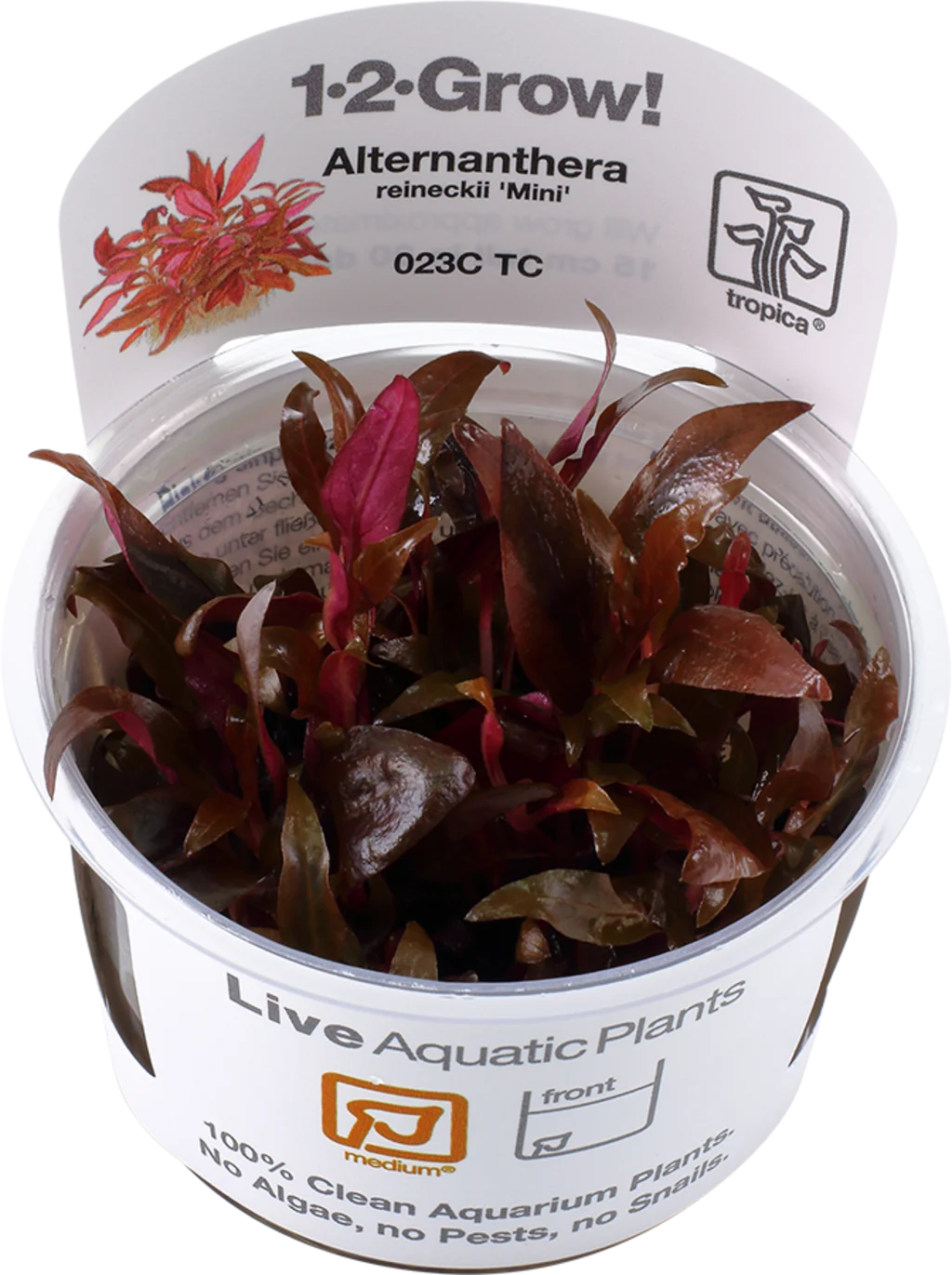
Alternanthera reineckii 'Mini'
 Beginner
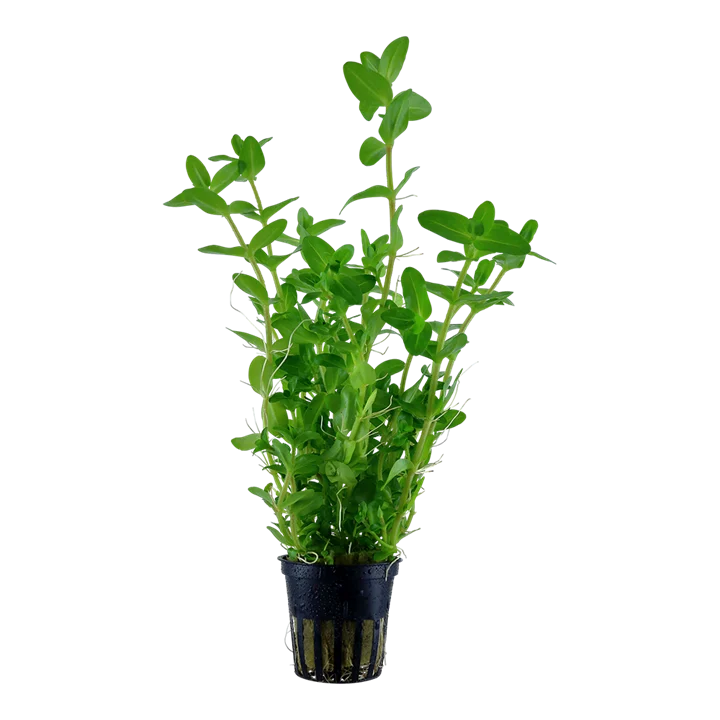
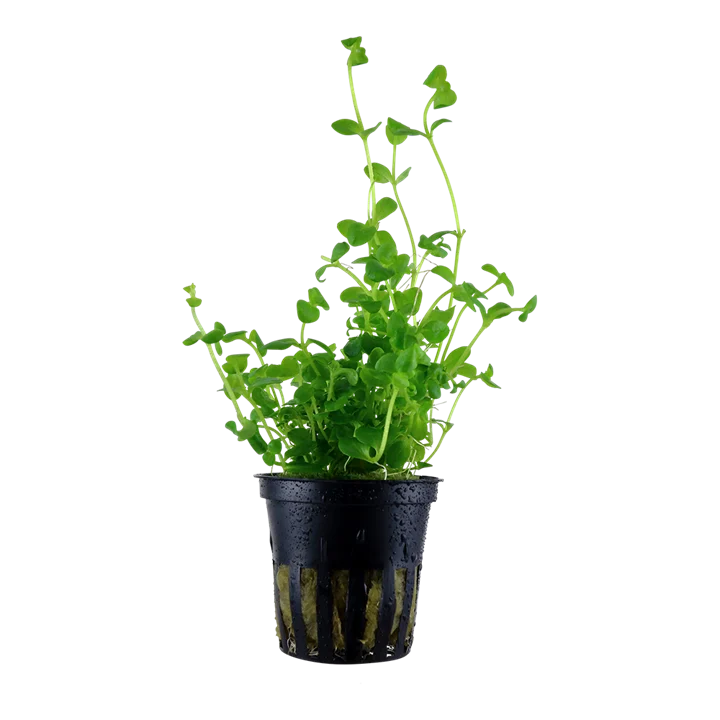
Bacopa caroliniana
 Intermediate
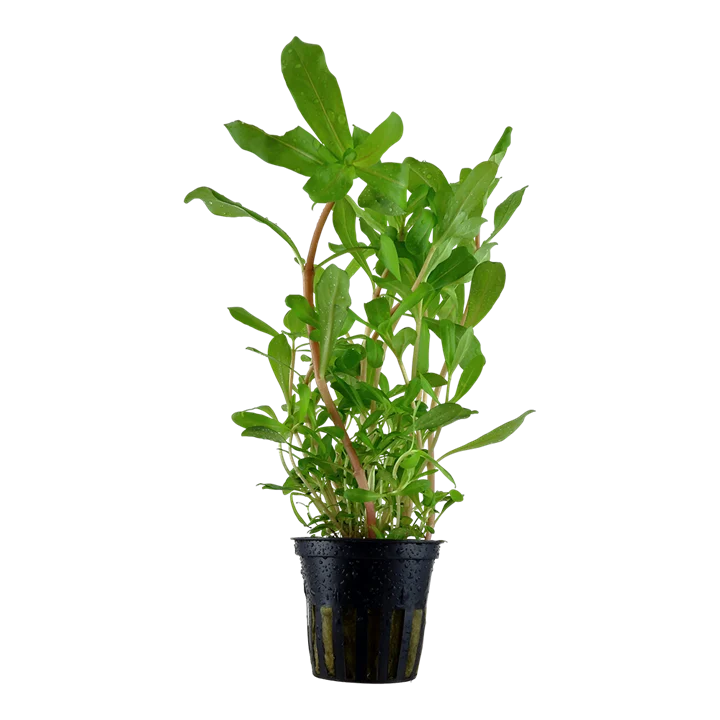
Bacopa australis
 Advanced
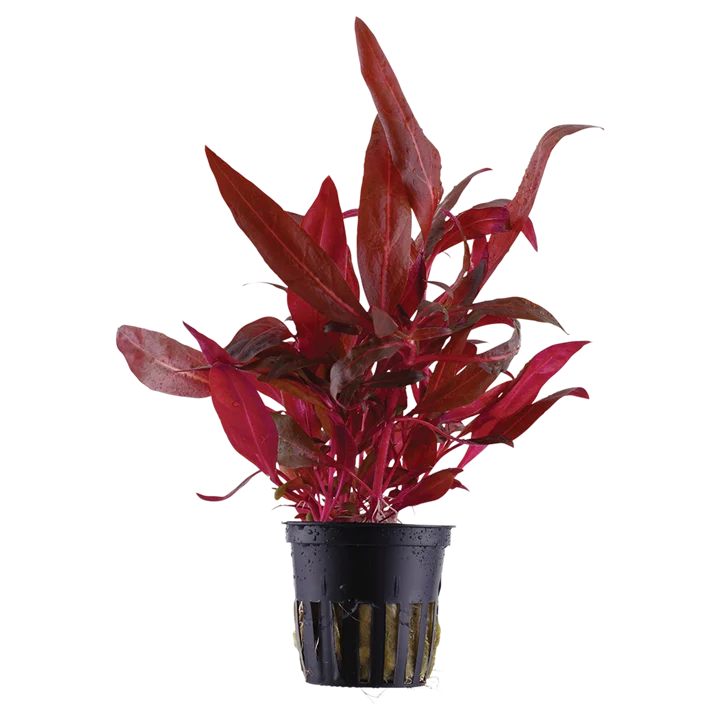
Ammannia crassicaulis
 Intermediate
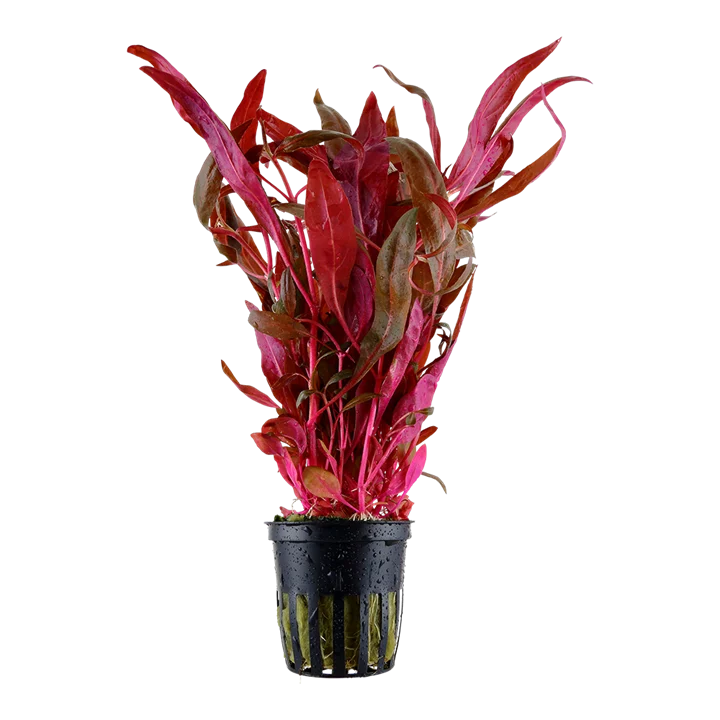
Alternanthera reineckii 'Rosanervig'
 Intermediate
Alternanthera reineckii "Rosaefolia"
| Plant Group | EI Benefit | Care Note |
|---|---|---|
| Fast stem plants | Use nutrients quickly and show strong response | Trim and replant tops often |
| Carpeting plants | Benefit from stable macros, micros, CO₂ and light | Substrate PAR and CO₂ still matter |
| Red plants | Grow better with complete nutrition | Color also depends on light and nitrate strategy |
| Dutch-style plant groups | High demand fits EI well | Requires trimming discipline |
| Floating plants | Can consume nutrients quickly | Thin regularly to avoid shading |
| Slow epiphytes | Need traces but not full EI demand alone | Protect from algae under strong light |
If your tank is mostly Anubias, Java Fern and Bucephalandra under low light, full EI is usually unnecessary. If your tank is dense with Rotala, Ludwigia, carpets and CO₂, EI becomes much more relevant.
EI Dosing Setup Checklist
Before starting EI dosing, check whether your aquarium is ready for it. EI works best when the system can support faster growth.
- You have moderate to strong plant lighting.
- You have stable CO₂ if the tank is high-energy.
- You have enough plant mass to use the nutrients.
- You can perform regular large water changes.
- You understand the difference between macros and micros.
- You can dose consistently each week.
- You have good water circulation across the tank.
- You trim and remove decaying plant material regularly.
- You can observe plant response instead of changing everything at once.
- You are not using EI as a shortcut for poor CO₂ or excessive light.
If several of these are missing, start with a simpler fertilizer routine before moving to EI.
Final Recommendation
Use EI dosing if you run a high-tech planted aquarium with strong light, stable CO₂, dense plant mass and a willingness to do regular water changes. It is one of the most effective methods for preventing nutrient limitation in fast-growing aquascapes.
Use a reduced EI approach if your tank is medium-tech, moderately planted or lower in light. Use lean dosing or a complete all-in-one fertilizer if your tank is low-tech, lightly planted, shrimp-focused or built around slow plants.
The best EI dosing routine is not the most aggressive one. It is the one that keeps plant growth strong, water changes consistent, CO₂ stable and algae manageable. EI works when it supports a balanced system — not when it is used to overpower one.
Conclusion
EI dosing is a powerful fertilization method for planted aquariums. It supplies non-limiting macronutrients and micronutrients so plants have what they need for strong growth, then uses large water changes to reset accumulation.
The method works especially well in high-tech aquascapes with CO₂, strong light, dense plants and frequent trimming. It is less suitable as a full-strength routine for low-tech tanks, lightly planted aquariums or sensitive shrimp setups unless adjusted carefully.
Think of EI as a system: nutrients, CO₂, light, flow, trimming and water changes all need to work together. If you only copy the fertilizer schedule but ignore CO₂ or maintenance, the method will not perform as intended. But when balanced correctly, Estimative Index dosing can make planted tank growth more predictable, more powerful and much easier to troubleshoot.
💬 Join the Conversation
Are you using EI dosing, reduced EI, dry salts, all-in-one fertilizer, or a completely different planted tank fertilizer method?
Tag us on Instagram @AquariumLesson — we’d love to see your planted tank growth, dosing routine and aquascape progress.
FAQ
What does EI dosing mean in planted aquariums?
EI dosing means Estimative Index dosing. It is a fertilizer method that adds generous amounts of macros and micros so plants are not nutrient-limited, then resets the aquarium with large regular water changes.
Is EI dosing good for beginners?
EI dosing can be too complex or too strong for many beginners. It is best for aquarists with high-tech planted tanks, stable CO₂ and consistent maintenance. Beginners with low-tech tanks may prefer simpler complete fertilizers.
Do I need CO₂ for EI dosing?
Full EI dosing works best with stable CO₂ because strong light and heavy fertilization support high plant demand. EI can be reduced for lower-tech tanks, but full high-energy EI without CO₂ often creates imbalance.
How often should I do water changes with EI dosing?
Classic EI routines often use a large weekly water change, commonly around 50%, to reset nutrient accumulation and organic waste. If you do not want regular large water changes, full EI may not be the best method.
Does EI dosing cause algae?
EI dosing does not automatically cause algae. Algae usually appears when light, CO₂, flow, plant mass or maintenance are out of balance. Poor CO₂ under strong light is a common issue in EI tanks.
Can I use EI dosing in a low-tech aquarium?
You can use a reduced EI or EI-light approach in low-tech aquariums, but full-strength EI is usually unnecessary. Low-tech tanks have lower plant demand and often do better with moderate complete fertilization.
What is the difference between EI dosing and lean dosing?
EI dosing supplies generous non-limiting nutrients and resets them with water changes. Lean dosing supplies more controlled nutrient amounts, often to slow growth, influence plant color or reduce nutrient accumulation.
Should I use dry salts or liquid fertilizer for EI?
Dry salts are cheaper and more flexible for advanced aquarists, especially in large tanks. Liquid fertilizers are easier and more convenient. Both can work if the dosing routine matches the tank’s plant demand.
Start building your aquarium with the Tank Hub
Save your favorite lessons, organize your setup, and track your aquarium step by step in your personal Tank Hub.
New to AquariumLesson? Start with our complete Aquarium Lessons Hub or return to the homepage at AquariumLesson.com.
Continue learning
References
- Barr Report — EI Light: For Those Less Techy Folks
- UKAPS — The Estimative Index Dosing with Dry Salts
- Practical Fishkeeping — What You Need to Know About EI Plant Feeding
- Aquarium Science — Estimative Index
- Green Leaf Aquariums — PPS-Pro & Estimative Index Methods
- Aquasabi — Water Tests in a Planted Aquarium
- Aquarium Co-Op — Nutrient Deficiencies in Aquarium Plants