

First Aquarium Checklist: Complete Beginner Setup Guide
Introduction
A first aquarium checklist is not just a shopping list. It is a safety plan for your fish, your equipment, your water quality, and your long-term success as a beginner aquarist.
Most beginner aquarium problems happen because one important step is skipped: the tank is too small, the filter is not ready, the water was not conditioned, fish are added before the aquarium is cycled, or the first stocking plan is built around impulse choices instead of stable husbandry.
This guide gives you a complete beginner-friendly checklist for setting up your first freshwater aquarium in the right order. You will learn what to buy, what to prepare, what to test, when to add fish, and which mistakes to avoid before your aquarium turns into a stressful rescue project.
If you are completely new to aquarium keeping, start with the Beginner Aquarium Guide for the complete beginner roadmap. Use this page when you are ready to work through your first aquarium checklist step by step. For deeper technical guidance, continue with the Aquarium Equipment Guide and Aquarium Cycling Guide.
Quick answer: Your first aquarium should be large enough to stay stable, placed on a safe level surface, equipped with a suitable filter, heater if needed, light, water conditioner, test kit, substrate, decor, and a cycling plan. Do not add fish until ammonia and nitrite are consistently safe.
What You’ll Learn in This Lesson
- What you need before buying fish
- How to choose a beginner-friendly tank size
- Which equipment belongs on a first aquarium checklist
- How to prepare water, substrate, hardscape, and plants
- Why cycling matters before livestock is added
- How to check whether your aquarium is ready for fish
- Which beginner mistakes cause most early aquarium failures
- How to build a simple first stocking plan without overloading the tank

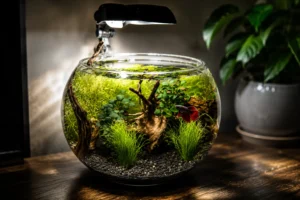
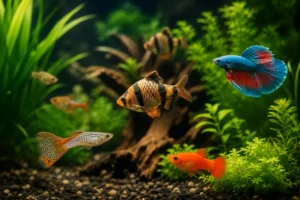
First Aquarium Checklist: The Essentials
Before you think about fish species, colors, aquascape style, or decorations, build the system first. A healthy aquarium depends on stability. That stability comes from enough water volume, suitable filtration, safe equipment, and patient preparation.
Here is the core first aquarium checklist every beginner should complete before adding fish:
| Checklist Item | Why It Matters | Beginner Priority |
|---|---|---|
| Aquarium tank | Provides water volume and swimming space | Essential |
| Stable stand or cabinet | Supports the full filled weight safely | Essential |
| Filter | Supports mechanical and biological filtration | Essential |
| Heater | Needed for most tropical fish | Usually essential |
| Thermometer | Confirms stable temperature | Essential |
| LED light | Supports viewing, plant growth, and day rhythm | Essential |
| Water conditioner | Makes tap water safe from chlorine/chloramine | Essential |
| Liquid test kit | Checks ammonia, nitrite, nitrate, and pH | Essential |
| Substrate | Creates the tank base and supports plants or decor | Essential |
| Plants and hardscape | Creates shelter, structure, and visual stability | Highly recommended |
| Fish food | Must match the chosen species | Essential after stocking |
| Water change tools | Needed for maintenance from the beginning | Essential |
The checklist looks simple, but the order matters. A filter without cycling is not yet biologically mature. A heater without a thermometer cannot be verified. A tank without a proper stand may be unsafe once filled. A beautiful aquarium without water testing is still a guess.
Choose the Right First Aquarium Size
Many beginners assume a very small tank is easier. In reality, small aquariums are usually less forgiving because temperature, waste, oxygen, and water chemistry can change quickly.
For a first aquarium, choose the largest realistic tank you can place, maintain, and afford safely. A bigger water volume gives you more stability, more stocking options, and more room for beginner mistakes.
| Tank Size | Beginner Suitability | Best Use |
|---|---|---|
| Under 20 liters | Poor for most beginners | Specialist nano setups only |
| 20–40 liters | Possible but limited | Shrimp, snails, very careful nano planning |
| 45–75 liters | Good starting range | Small planted tanks and careful beginner fish choices |
| 80–120 liters | Excellent for beginners | Stable community tanks with more flexibility |
| Over 120 liters | Very stable but heavier | Beginners with enough space and proper support |
Do not judge the tank only by the glass price. A larger aquarium also needs a stronger stand, more substrate, more water, a suitable filter, and more maintenance space. Before buying, use the Aquarium Volume Calculator to estimate real water volume and avoid planning around misleading tank dimensions.
Beginner rule: A stable first aquarium is usually better than a tiny “easy” aquarium. More water volume gives you more time to notice and correct problems before fish are harmed.
Pick a Safe Location Before Setting Up
Once an aquarium is filled, moving it is difficult and risky. Choose the location before adding substrate, hardscape, water, or equipment.
A good aquarium location should be level, stable, accessible, and protected from environmental swings. Avoid placing your first tank near windows, heaters, radiators, air-conditioning outlets, doors, speakers, or high-vibration areas.
- Use a level surface: Uneven pressure can stress the glass and seams.
- Check weight support: Water, substrate, hardscape, glass, and equipment become heavy quickly.
- Avoid direct sunlight: It can increase algae risk and temperature swings.
- Keep access around the tank: You need space for water changes, filter cleaning, trimming, and feeding.
- Plan cable safety: Use drip loops so water cannot run directly into plugs.
If your tank is medium or large, do not place it on a random piece of furniture. Aquarium weight is concentrated and constant. A purpose-built cabinet or load-rated stand is part of the setup, not an optional design detail. For deeper guidance, see the Aquarium Stand Guide.
Beginner Aquarium Equipment Checklist
Your first aquarium does not need to be complicated. It does need to be complete. The goal is not to buy every gadget available, but to avoid missing the essentials that keep water safe.
Tank and Stand
Choose a tank with enough volume for your planned fish and a stand that can support the filled aquarium safely. Make sure the aquarium sits flat and does not overhang the surface.
Filter
The filter is one of the most important pieces of beginner aquarium equipment. It removes particles, creates circulation, and provides surface area for beneficial bacteria. Those bacteria help process fish waste during the nitrogen cycle.
Common beginner options include sponge filters, hang-on-back filters, and internal filters. Canister filters can also work well, especially for larger aquariums, but they add cost and maintenance complexity. For a full comparison, read the Aquarium Filter Guide.
Heater and Thermometer
Most tropical freshwater fish need a stable warm temperature. A heater should always be paired with a thermometer because the setting on the heater is not enough proof that the water is correct.
Place the thermometer where you can check it easily. Temperature stability is especially important after water changes, during seasonal changes, and in smaller tanks.
Lighting
A beginner aquarium light should be reliable, adjustable if possible, and suitable for your plant goals. You do not need extreme light for a first planted tank. In fact, too much light without matching plant mass, CO₂, nutrients, and maintenance can make algae harder to control.
For most beginner planted tanks, a moderate LED with a consistent daily schedule is enough. If you want to understand fixture strength, plant demand, and photoperiod planning, use the Aquarium Lighting Guide.
Water Conditioner
Tap water may contain disinfectants that protect drinking water but can harm aquarium life and beneficial bacteria. A water conditioner should be used whenever new tap water is added to the aquarium, including during the initial fill and every water change.
Liquid Test Kit
A first aquarium checklist is incomplete without water tests. At minimum, beginners should be able to test ammonia, nitrite, nitrate, and pH. Test strips can be convenient, but liquid kits usually give better practical control when cycling and troubleshooting a new tank.
To understand which parameters matter most, read the Aquarium Water Parameters Guide.
Substrate, Plants, and Hardscape Checklist
The visual part of your aquarium should still support fish welfare. Substrate, plants, rocks, and driftwood create territories, hiding places, grazing surfaces, shade, and structure.
Substrate
Choose substrate based on the type of aquarium you want. Gravel is simple and easy to clean. Sand looks natural and suits many bottom-dwelling fish, but it needs thoughtful maintenance. Aquarium soil supports plant growth but can affect water chemistry and requires more planning.
For planted tanks, think about root-feeding plants, substrate depth, and whether you want an active aquascaping soil or an inert base. If you want to compare substrate styles, start with the Aquarium Soil Guide and Aquarium Sand Guide.
Hardscape
Rocks and driftwood can make a beginner aquarium look natural, but they must be safe for aquarium use. Avoid random materials unless you know they are inert, clean, and suitable for fish.
Hardscape should be stable before the tank is filled. Heavy rocks should not rest directly on glass in a way that creates pressure points. Wood may float at first and can release tannins, which may tint the water brown. This is often natural, but beginners should know what to expect.
Plants
Live plants are highly recommended for many beginner aquariums. They provide cover, soften the layout, compete with algae, and make the aquarium feel more stable and natural.
Beginner-friendly plants include slow-growing epiphytes, hardy background plants, floating plants, and simple low-light species. If your first tank will be planted, start with the Aquarium Plants Guide before choosing species.
Simple beginner setup: Use a stable tank, moderate light, reliable filter, inert substrate or easy plant substrate, several hardy plants, and a small peaceful stocking plan. Avoid advanced CO₂, high light, difficult carpets, and sensitive fish until the basics feel easy.
Water Preparation Checklist
Water preparation begins before fish are introduced. Your goal is to create a stable environment that is free from chlorine or chloramine, heated if needed, filtered continuously, and tested regularly.
- Condition tap water: Treat all new tap water before it enters the aquarium.
- Match temperature: Avoid sudden temperature swings during fills and water changes.
- Run the filter continuously: Beneficial bacteria need oxygen-rich flow.
- Test baseline water: Know your tap water pH, hardness if possible, nitrate, and general suitability.
- Do not chase perfect numbers: Stability is usually safer than constant chemical adjustment.
Beginners often focus too much on making water “crystal clear” and not enough on whether it is biologically safe. Clear water can still contain harmful ammonia or nitrite. Cloudy water can also happen in new tanks as bacteria populations develop. If your new tank turns cloudy, the Cloudy Aquarium Water Guide explains what to check before panicking.
Cycling Checklist Before Adding Fish
Cycling is the process of establishing beneficial bacteria that help convert toxic fish waste into less harmful nitrate. This is one of the most important parts of your first aquarium checklist.
A new aquarium is not ready for fish just because the filter is running and the water looks clean. The biological filter must mature. Without that, ammonia and nitrite can rise quickly and harm fish.
A Beginner Cycling Checklist
- The aquarium is fully filled, heated if needed, and filtered continuously.
- Water conditioner has been used for all tap water.
- A controlled ammonia source or fishless cycling method is being used.
- Ammonia is tested regularly.
- Nitrite is tested regularly.
- Nitrate is monitored as the cycle develops.
- No fish are added during unsafe ammonia or nitrite readings.
- The tank is considered ready only when ammonia and nitrite are consistently processed safely.
For a detailed process, follow the Fishless Cycle Guide. If you are unsure how long the process may take, read How Long Does Aquarium Cycling Take?.
If fish are added too early, the aquarium may develop New Tank Syndrome, where immature biological filtration allows harmful waste compounds to build up. This is one of the most common beginner aquarium failures and one of the easiest to prevent with patience.
Fish Stocking Checklist for Your First Aquarium
Choosing fish is the exciting part, but it should come after the tank plan. Your aquarium size, water parameters, temperature, filtration, plant cover, and maintenance rhythm should decide which fish are suitable.
A good first stocking plan should answer these questions:
- How large will the fish become as adults?
- Does the species need a group?
- Is the fish peaceful, territorial, shy, active, or predatory?
- Does it need warm tropical water or cooler water?
- Does it prefer soft, hard, acidic, or alkaline water?
- Will it use the top, middle, or bottom area of the aquarium?
- Will the total bioload match the filter and maintenance routine?
Do not stock a new tank to its maximum capacity immediately. Add fish gradually so the biological filter can adapt. Test water after new additions and avoid adding multiple groups at once.
If you are still choosing species, use the Aquarium Fish Guide to think beyond color and popularity. For beginner aquariums, peaceful, hardy, appropriately sized fish are usually better than dramatic species that need specialized care.
| Beginner Question | Better Decision | Risky Decision |
|---|---|---|
| Which fish should I buy? | Choose species that match tank size and water | Buy fish because they look nice in the store |
| How many fish should I add? | Start slowly and test water | Fully stock the tank immediately |
| Should I mix many species? | Build one simple community plan | Create a random mix of incompatible fish |
| Are small fish always easy? | Check group size and sensitivity | Assume small fish need almost no space |
Maintenance Tools Checklist
Maintenance tools are not an afterthought. You need them before the first problem appears. A beginner aquarium becomes easier when water changes, cleaning, feeding, and testing are simple to perform.
- Dedicated aquarium bucket: Never use a bucket that has held chemicals or cleaning products.
- Siphon or gravel cleaner: Helps remove debris and perform water changes.
- Algae scraper or sponge: Keeps viewing glass clean without household cleaners.
- Water conditioner: Needed for every water change.
- Liquid test kit: Especially important during cycling and early stocking.
- Fish net: Useful for emergencies, but should not be used to chase fish unnecessarily.
- Plant scissors or tweezers: Useful if you keep live plants.
- Towel: Simple but essential for safe maintenance.
For water change technique, timing, and common beginner errors, read the Aquarium Water Change Guide. Regular maintenance keeps the system stable, but large chaotic cleaning sessions can disturb the tank if done incorrectly.
Beginner Timeline: From Empty Tank to First Fish
A first aquarium works best when it is built in stages. The exact timing depends on your cycling method, temperature, water chemistry, and whether you use established filter media, bottled bacteria, or a pure ammonia source. Do not use a fixed calendar date as your only signal.
| Stage | What Happens | Do Not Rush This |
|---|---|---|
| Planning | Choose tank size, location, stocking direction, and equipment | Do not buy fish before the system is planned |
| Setup | Add substrate, hardscape, equipment, conditioned water, and plants | Do not move the filled tank afterward |
| Stabilization | Run filter, heater, light schedule, and check for leaks or faults | Do not assume clear water means safe water |
| Cycling | Build biological filtration and test ammonia, nitrite, and nitrate | Do not add fish during unsafe readings |
| First stocking | Add a small number of suitable fish gradually | Do not fully stock the aquarium at once |
| Early monitoring | Test water, observe behavior, and adjust feeding and maintenance | Do not ignore subtle stress signs |
The most important mindset is simple: your aquarium is not a container for fish. It is a living system that needs time to become stable.
Pre-Fish Safety Checklist
Before you add your first fish, run through this safety checklist. If any answer is uncertain, pause and fix the issue first.
- The aquarium has been filled with conditioned water.
- The tank is level and safely supported.
- The filter runs continuously and has suitable media.
- The heater keeps the water stable if tropical fish are planned.
- The thermometer confirms the correct temperature.
- The light schedule is consistent and not excessive.
- Ammonia is safe.
- Nitrite is safe.
- Nitrate is understood and manageable with water changes.
- The first fish species matches the aquarium size and water conditions.
- You have food suitable for the chosen species.
- You have water change tools ready before the fish arrive.
Also prepare for acclimation. Fish should not be dumped straight into the aquarium. Temperature and water differences can stress them, especially after transport. Keep the lights low, avoid chasing fish, and monitor behavior closely during the first days.
Common First Aquarium Mistakes
Most beginner aquarium mistakes are predictable. They happen because the setup is treated like decor instead of a biological system. Avoid these problems and your first tank becomes much easier to manage.
Adding Fish Too Early
This is the biggest beginner mistake. A new tank needs biological filtration before it can safely process fish waste. Do not rely on appearance alone. Test the water.
Choosing a Tank That Is Too Small
Tiny aquariums can look simple, but they leave little room for error. Waste builds up quickly, temperature changes quickly, and stocking choices become extremely limited.
Overfeeding
Extra food does not make fish healthier. Uneaten food decays, increases waste, and can contribute to ammonia and water quality problems. Feed lightly and observe how much is actually eaten.
Cleaning the Filter Too Aggressively
Your filter media holds beneficial bacteria. Do not replace all media at once or scrub everything under untreated tap water. Gentle maintenance is usually safer than deep cleaning the entire system.
Buying Incompatible Fish
Fish compatibility is not only about aggression. It also includes adult size, group needs, temperature, water parameters, swimming behavior, feeding style, and bioload.
Changing Too Many Things at Once
Beginners often react to every issue by changing water chemistry, lighting, food, filter media, decor, and stocking at the same time. That makes cause and effect impossible to understand. Adjust one thing, observe, and test.
Simple First Aquarium Setup Example
Here is a practical beginner setup that keeps complexity low while still allowing a beautiful freshwater aquarium.
| Setup Area | Beginner-Friendly Choice | Why It Works |
|---|---|---|
| Tank | 60–100 liters | Stable enough for beginners with flexible stocking |
| Filter | Reliable internal, HOB, sponge, or canister filter | Supports circulation and biological filtration |
| Light | Moderate LED on timer | Enough for easy plants without excessive algae pressure |
| Substrate | Simple gravel, sand, or beginner plant substrate | Easy to understand and maintain |
| Plants | Hardy low-demand species | Adds cover and improves the natural feel |
| Fish | Small peaceful species suited to the tank | Reduces stress and compatibility problems |
| Maintenance | Regular testing and moderate water changes | Keeps the system predictable |
This kind of setup is more beginner-proof than a tiny bowl, overstocked nano tank, or high-tech aquascape with intense light and demanding plants. You can always upgrade later. The first goal is learning stability.
Conclusion
A strong first aquarium checklist protects you from the mistakes that cause most beginner failures. Start with the right tank size, place it safely, choose complete equipment, condition the water, cycle the aquarium, test before stocking, and add fish slowly.
Your first aquarium does not need to be expensive or complicated. It needs to be stable, patient, and planned around the needs of living animals. When you build the system before buying fish, the hobby becomes far more rewarding.
From here, your best next steps are to understand cycling with the Fishless Cycle Guide, choose suitable livestock with the Aquarium Fish Guide, and build a simple maintenance rhythm with the Aquarium Water Change Guide.
💬 Join the Conversation
What are you planning for your first aquarium: a peaceful community tank, a planted beginner setup, a nano aquarium, or a low-maintenance display?
Tag us on Instagram @AquariumLesson — we’d love to see your first setup, your checklist, and the decisions you made before adding fish.
FAQ
What do I need for my first aquarium?
You need a suitable tank, safe stand, filter, heater if keeping tropical fish, thermometer, light, water conditioner, test kit, substrate, decor or plants, fish food, and water change tools. The most important non-equipment step is cycling the aquarium before adding fish.
How long should I wait before adding fish to a new aquarium?
Do not rely only on a fixed number of days. Wait until the aquarium is biologically ready and water tests show that ammonia and nitrite are consistently safe. A fishless cycle is the safest beginner approach.
Is a small aquarium easier for beginners?
Usually not. Very small aquariums can change quickly and leave less room for error. A moderate tank size is often easier because water temperature and chemistry stay more stable.
Can I set up an aquarium and add fish the same day?
That is not recommended for beginners. A same-day setup usually means the biological filter is not mature enough to handle fish waste. Set up the system first, cycle it properly, then add suitable fish gradually.
Do I need live plants in my first aquarium?
Live plants are not mandatory, but they are very useful. They provide cover, improve the natural look, and support a more balanced aquarium. Choose hardy beginner plants rather than demanding species that need intense light or CO₂.
What is the biggest first aquarium mistake?
The biggest mistake is adding fish before the aquarium is cycled and tested. Other common mistakes include choosing a tank that is too small, overfeeding, overstocking, replacing all filter media, and buying incompatible fish.
New to AquariumLesson? Start with our complete Aquarium Lessons Hub or return to the homepage at AquariumLesson.com.
References
- RSPCA — Choosing an Aquarium for Pet Fish
- RSPCA Knowledgebase — Why Water Quality Is Important When Setting Up a Fish Aquarium
- American Veterinary Medical Association — Selecting a Pet Fish
- MSD Veterinary Manual — Providing a Home for Fish
- Merck Veterinary Manual — Normal Reference Ranges for Routine Water Quality Analysis
- Ornamental Aquatic Trade Association — How to Set Up and Look After a Freshwater Tank


